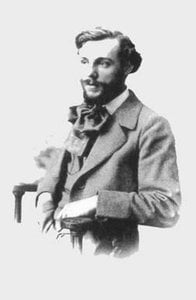
Claude Monet: Capturing the Ephemeral Light
Oscar-Claude Monet, born in Le Havre, Normandy, on November 14, 1840, wasn’t simply a painter; he was a revolutionary. He didn't seek to replicate reality with meticulous detail but rather to capture its fleeting essence – the way light dances across surfaces, the subtle shifts of color in a moment, and the very feeling of being present within a scene. His life story is intertwined with the rise of Impressionism, a movement he not only founded but relentlessly championed, forever altering the course of art history. From his early struggles to gain recognition to his later years spent meticulously documenting the changing seasons at Giverny, Monet’s journey embodies a profound dedication to observing and translating the world around him onto canvas.
Monet's childhood was marked by loss and a yearning for artistic expression. His mother died when he was just sixteen, leaving him under the care of his aunt, Marie-Jeanne Lecadre. Despite his father’s desire for him to pursue a more conventional career in business, Monet’s passion for art burned brightly. He began sketching on the beaches of Normandy, absorbing the lessons of Eugène Boudin, who instilled in him the crucial technique of *plein air* painting – working directly outdoors, capturing the immediate effects of light and atmosphere. This commitment to observing nature firsthand would become a cornerstone of his artistic philosophy.
Paris proved to be both a challenge and an opportunity for young Monet. He enrolled at the École des Beaux-Arts, but quickly found its rigid academic approach stifling. Instead, he sought out inspiration in the works of artists like Gustave Courbet and Manet, absorbing their innovative techniques while forging his own distinct style. It was during this period that he met Camille Doncieux, a model who would become his muse and lifelong companion. Their relationship profoundly influenced his art, particularly through paintings such as “Camille” (La Femme à la Robe Verte), which captures the intimate beauty of their shared life.
The Birth of Impressionism
The 1870s witnessed a seismic shift in the Parisian art world. The Franco-Prussian War and the subsequent upheaval in Paris created a climate ripe for artistic rebellion. Monet, along with fellow artists like Renoir, Sisley, and Pissarro, rejected the Salon’s conservative tastes and sought an alternative venue to showcase their work. In 1874, they organized the first Impressionist exhibition, held in a private studio outside the official Salon. This audacious act marked the formal birth of Impressionism – a movement characterized by loose brushstrokes, vibrant colors, and a focus on capturing fleeting moments rather than precise representations.
The term “Impressionism” itself was coined disparagingly by art critic Louis Leroy in a scathing review of Monet’s “Impression, Sunrise.” He used the word to mock the painting's apparent lack of finish, but ironically, it stuck. The name became synonymous with the movement and, ultimately, with Monet’s revolutionary approach to painting. Monet wasn’t interested in creating polished, idealized images; he wanted to convey his *impression* of a scene – its light, color, and atmosphere.
Giverny and the Series
In 1883, Monet purchased a house and property at Giverny, just outside Paris. This became his lifelong sanctuary and the site of his most iconic works. He transformed the grounds into a meticulously designed landscape, complete with water lilies, Japanese bridges, and vibrant flower gardens – all serving as models for his paintings. It was here that he embarked on a series of ambitious projects, documenting the changing seasons and light conditions at Giverny over decades.
These series—of haystacks, Rouen Cathedral, and, most famously, the water lilies—demonstrate Monet’s relentless pursuit of capturing the ephemeral nature of light. He painted the same subject repeatedly under different lighting conditions, revealing how color and atmosphere shift with the passage of time. His meticulous studies weren't exercises in repetition but rather explorations of perception – a testament to his belief that art should be about seeing, not just representing.
Legacy and Influence
Claude Monet’s impact on the history of art is immeasurable. He shattered traditional artistic conventions, paving the way for modernism and influencing generations of artists. His emphasis on light, color, and subjective perception revolutionized painting techniques and challenged established notions of beauty. His work continues to captivate viewers with its luminous quality and evocative power.
Beyond his technical innovations, Monet’s legacy lies in his unwavering commitment to observing the world around him and translating those observations onto canvas. He taught us to see – not just what is there, but how it *feels* to be present within a scene. Claude Monet died on December 5, 1926, leaving behind a vast body of work that remains a testament to his genius and a celebration of the beauty of the fleeting moment.



 Zobacz w skali 1:1
 Przełącz na wersję drukowaną
 Wyślij
 Udostępnij
 Szczegóły
 Przewodnik

 Pobierz plik obrazu
 Podobne obiekty
 RTG
RTG Pokaz slajdów
 Statystyki
 Czytaj więcej