DARMOWA KONSULTACJA ARTYSTYCZNA

x
Zamów reprodukcję Zamów reprodukcjęKup cyfrowy obraz Kup cyfrowy obraz UdostępnijUdostępnij
DetailsDetails Dodaj do ulubionych Dodaj do ulubionych PobierzPobierz Podobne obiektyPodobne obiekty X-RayX-Ray Pokaz slajdówPokaz slajdów

Untitled

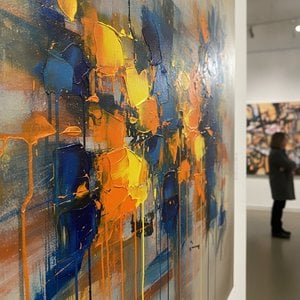
Experience the vibrant energy of Karel Appel's COBRA masterpiece; this abstract burst of color captures raw instinct from 1960—discover your own artistic freedom.

Karel Appel – wybitny malarz CoBrA, znany z dynamicznych kolorów i spontanicznych obrazów. Jego twórczość łączy elementy ekspresjonizmu, surrealizmu i wpływy sztuki dziecięcej oraz prymitywnej. Odkryj jego unikalną wizję po II wojnie światowej!

Giclée / Wydruk artystyczny

Druk giclée lub płótno o jakości muzealnej z szybką realizacją i szerokim wyborem opcji wykończenia.

Standard
custom
CM
INCH

Wybierz spośród naszych predefiniowanych rozmiarów, które zachowują oryginalne proporcje dzieła sztuki.

szerokość
wysokość

Możesz wprowadzić własne wymiary, aby dopasować dzieło do konkretnej ramy lub przestrzeni. Jeśli wybrany rozmiar nie będzie odpowiadał proporcjom oryginalnego obrazu, przytniecie dzieło lub rozszerzymy obraz za pomocą odbicia lustrzanego lub jednolitego wypełnienia krawędzi. Przed rozpoczęciem produkcji prześlemy cyfrową wizualizację do Twojej akceptacji.
Prosimy pamiętać, że podgląd na ekranie nie odzwierciedla faktycznego przycinania ani rozszerzania. Tylko wizualizacja dokładnie pokaże końcową kompozycję.
Mimo dostępności niestandardowych rozmiarów, zalecamy wybór wymiaru z listy zdefiniowanej, aby zachować oryginalne proporcje.

Dostawa na cały świat () w ciągu 2 tygodni zamiast standardowych 4/5 tygodni. (2 Lipiec)

why_choose_icon
Bezpłatna ekspresowa wysyłka na cały świat
why_choose_icon
Wysokiej jakości płótno lniane
why_choose_icon
Pełne ubezpieczenie przesyłki
why_choose_icon
Gwarancja zwrotu należności celnych
why_choose_icon
Gwarancja pełnego zgodności kolorystycznej
why_choose_icon
Polityka 60-dniowego zwrotu (tylko w przypadku wad)
why_choose_icon
Gwarancja 100% zwrotu pieniędzy
why_choose_icon
Zniżka przy większych zamówieniach

Suma całkowita

-

reproduction

Untitled

Giclée / Wydruk artystyczny

Wymiary reprodukcji

-

Cena całkowita

-

Szybkie fakty

  • Title: Untitled
  • Movement: COBRA
  • Notable elements or techniques: Gestural forms, Layered texture
  • Subject or theme: Organic shapes
  • Influences: European Avant-garde
  • Artistic style: Abstract Expressionism
  • Medium: Screenprint

Quiz o sztuce

Na każde pytanie istnieje tylko jedna poprawna odpowiedź.

Pytanie 1:
What avant-garde movement is Karel Appel strongly associated with for this artwork?
Pytanie 2:
Which element of the artwork's composition is described as eschewing traditional perspective?
Pytanie 3:
According to the description, what emotion is often symbolized by the color yellow in Appel's work?
Pytanie 4:
What type of forms populate the artwork, described as rounded and organic, reminiscent of natural elements?
Pytanie 5:
What medium is the artwork most likely to be, given the visible layering and texture?

Opis obiektu kolekcjonerskiego

A Burst of Color and Instinct: Decoding Karel Appel’s Untitled

Karel Appel's "Untitled," a striking print or screenprint from 1960, embodies the rebellious spirit of COBRA – the Dutch avant-garde movement that shook the foundations of postwar European art. More than just pigment on paper, this artwork is an assertion of spontaneous expression and a deliberate rejection of academic formalism, reflecting Appel’s profound connection to the everyday experiences of working-class Holland during his formative years. The image immediately captivates with its bold palette – dominant yellows, blues, reds, and blacks punctuated by flashes of orange and white – applied in broad, gestural strokes that convey an undeniable sense of dynamism.
  • Composition & Rhythm: Appel eschews traditional perspective, opting instead for an asymmetrical arrangement where forms overlap and intersect. This seemingly chaotic composition subtly reveals underlying rhythmic patterns through repeated shapes and colors, guiding the viewer’s eye across the surface in a continuous exploration of visual elements.
  • Form & Texture: The artwork is populated by biomorphic forms – rounded, organic shapes reminiscent of natural elements or abstracted figures – creating a complex textural landscape. Visible brushstrokes contribute to an impression of immediacy and materiality, hinting at Appel’s hand application during the printmaking process.
  • Color Theory & Emotion: The color choices aren't merely decorative; they are deliberately emotive. Yellow symbolizes optimism and energy, while blue conveys tranquility and contemplation. Red injects passion and vitality into the composition, mirroring Appel’s fascination with primal forces and childlike wonder.
The COBRA movement itself was born from a desire to break free from the constraints of Surrealism and Cubism, prioritizing intuition and gesture over meticulous representation. Appel sought inspiration in primitive art forms – African masks and tribal sculptures – believing that these conveyed unfiltered emotion and challenged Western artistic conventions. This influence is palpable in “Untitled,” where the artist abandons rational thought for a visceral response to the world around him.
  • Technique & Medium: Likely produced through screenprinting, the artwork’s layered texture speaks volumes about Appel's meticulous approach to printmaking. The process itself – transferring ink onto paper – was chosen specifically to capture and amplify the artist’s spontaneous marks, ensuring that the energy of his initial gesture remained faithfully reproduced.
  • Symbolism & Interpretation: Beyond its aesthetic qualities, “Untitled” invites contemplation on themes of freedom and spontaneity. Appel's work consistently explores the intersection between human emotion and natural forms, suggesting a belief in the transformative power of unfiltered experience. The absence of recognizable imagery encourages viewers to engage with the artwork on an emotional level, prompting them to consider their own responses to color, shape, and texture.
Ultimately, Karel Appel’s “Untitled” transcends mere visual appeal; it stands as a testament to the enduring legacy of COBRA – a movement that championed artistic liberation and celebrated the beauty of imperfection. Its vibrant colors, dynamic forms, and textured surface continue to inspire artists and collectors alike, securing its place as an iconic exemplar of postwar abstraction.

Podobne dzieła sztuki


Biografia artysty

A Life Painted in Bold Strokes: The World of Karel Appel

Christiaan Karel Appel, known affectionately as ‘Kik’ from childhood, burst onto the post-war art scene like a vibrant explosion of color and energy. Born in Amsterdam in 1921, his early life was steeped in the everyday rhythms of working-class Holland – his father a barber, his lineage tracing back to French Huguenots through his mother. This grounding, however, would soon be superseded by an irrepressible artistic drive that defied convention and ultimately reshaped the landscape of European art. A pivotal moment arrived at age fourteen with his first painting, a still life of fruit, followed shortly after by a paint set and easel gifted by his uncle Karel Chevalier, who also provided early instruction. These gifts weren’t merely tools; they were keys unlocking a world where imagination reigned supreme. The shadow of the Second World War loomed large over Appel’s formative years. Studying at the Rijksakademie van Beeldende Kunsten in Amsterdam during the German occupation proved challenging, yet it was there he forged lifelong bonds with fellow artists Corneille and Constant, friendships that would prove crucial to his artistic evolution. Facing opposition from his parents regarding his chosen path and fearing forced labor under Nazi rule, Appel bravely left home, choosing a life dedicated to art over conformity.

The CoBrA Revolution: Spontaneity and the Childlike Vision

Appel’s artistic journey truly ignited with the formation of the CoBrA group in 1948 – an acronym derived from Copenhagen, Brussels, and Amsterdam, representing the movement's core cities. Alongside Corneille, Constant, Jan Nieuwenhuys, and Christian Dotremont, Appel spearheaded a radical departure from established artistic norms. CoBrA wasn’t merely a style; it was a philosophy rooted in spontaneity, experimentation, and a profound embrace of the untamed creativity found in children's art and primitive cultures. Influenced by masters like Pablo Picasso and Henri Matisse, as well as the raw energy of Jean Dubuffet, Appel rejected rigid formalism in favor of intuitive expression. He began sculpting in 1947, utilizing assemblage techniques – constructing works from found materials painted in a bold palette of white, red, yellow, blue, and black. This period saw him involved with the Experimentele Groep, further solidifying his commitment to artistic innovation. The controversial fresco "Questioning Children" (1949), commissioned for Amsterdam City Hall, exemplified CoBrA’s provocative spirit but also sparked public outcry, ultimately leading to its being covered up – a testament to the movement’s challenging nature. Appel drew inspiration from Danish and Nordic mythology, weaving these ancient narratives into his increasingly abstract compositions.

Early Influences and Artistic Development

Appel’s artistic sensibilities were profoundly shaped by his familial heritage and early exposure to art. His father's profession instilled in him a practical understanding of craftsmanship alongside an appreciation for detail, while his Huguenot ancestry fostered a spirit of intellectual curiosity and questioning tradition. The gift of a paint set from his uncle Karel Chevalier at the age of fourteen proved transformative, sparking his passion for painting and initiating him into the world of artistic exploration. His formative years coincided with the pervasive influence of Surrealism, particularly Picasso’s groundbreaking work, which encouraged him to embrace unconventional techniques and challenge conventional aesthetic standards. The encounter with Jean Dubuffet's sculptural explorations further broadened his artistic horizons, prompting him to experiment with materials beyond traditional mediums and to explore expressive forms rooted in primal instinct.

International Recognition and Artistic Expansion

Appel’s relocation to Paris in 1950 marked a pivotal moment in his artistic career, providing access to a vibrant cultural landscape brimming with inspiration. He cultivated relationships with influential figures like Michel Tapié and Martha Jackson Gallery, securing exhibitions that showcased his distinctive style and garnered critical acclaim. His participation in the Museum of Modern Art’s “The New Decade” exhibition solidified his position within the international art scene and established him as a pioneer of Abstract Expressionism. Throughout the 1950s and beyond, Appel continued to push boundaries, exploring monumental murals and engaging with diverse cultural traditions—from Mexico to Yugoslavia to Brazil—enriching his artistic vocabulary and cementing his legacy as one of Europe’s most innovative artists.

Legacy and Enduring Influence

Karel Appel left an indelible mark on the art world, establishing the Karel Appel Foundation to safeguard his artworks and champion public awareness of his oeuvre. His unwavering belief in spontaneity and experimentation continues to inspire contemporary artists who reject stylistic constraints and embrace unconventional approaches. Appel’s work remains a testament to the transformative power of artistic vision—a bold celebration of childlike creativity and an enduring challenge to established conventions, ensuring that his distinctive style resonates across generations.
Karel Appel

Karel Appel

1921 - 2006 , Holandia

Kluczowe informacje

  • Artistic Movement Or Style: CoBrA, Expressionism
  • Artists Or Movements Influenced By This Artist: ['CoBrA']
  • Artists Who Influenced This Artist:
    • Picasso
    • Matisse
    • Dubuffet
  • Date Of Birth: April 25, 1921
  • Date Of Death: May 3, 2006
  • Full Name: Christiaan Karel Appel
  • Nationality: Dutch
  • Notable Artworks:
    • Square Man
    • Parrot Woman with Bird
  • Place Of Birth: Amsterdam, Netherlands