Przełącz na wydania drukowane Przejdź do wersji cyfrowej Wyślij jako kartkę
Szczegóły dzieła Przewodnik Dodaj do ulubionych Pobierz obraz Podobne obiekty Pokaz slajdów Q&A Statystyki

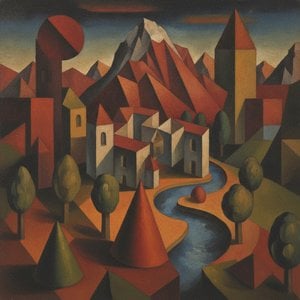
Harlequin

Juan Gris’ ‘Harlequin’ is a fragmented Cubist sculpture embodying modernist anxiety with its geometric forms and muted tones. Explore this iconic 1917 artwork and discover the profound intellectual analysis within.

Juan Gris (1887-1927) – hiszpański malarz kubista, znany z geometrycznych form i kolorytu. Jego dzieła rewolucjonizują percepcję i są inspiracją dla współczesnego sztuki.

Ręcznie malowana reprodukcja olejowa

Ręcznie malowany obraz olejny na płótnie, wykonany na zamówienie przez naszych artystów w wybranym przez Ciebie wymiarze i oprawie. ( Przełącz na wydania drukowane Przejdź do wersji cyfrowej)

Standardowy format
personalizowane
CM
INCH

Wybierz spośród naszych standardowych rozmiarów, które zachowują oryginalne proporcje dzieła sztuki.

szerokość
wysokość

Wpisz wymaganą szerokość i wysokość, aby obraz pasował do Twojej ramy lub ściany. Ponieważ jest to dzieło malowane ręcznie, w przypadku rozmiaru o innych proporcjach artysta może domalować nieco więcej wokół obrazu lub przyciąć jego fragmenty — wybór należy do Ciebie. Przed rozpoczęciem pracy prześlemy Ci cyfrową wizualizację do zatwierdzenia. Obraz widoczny na tej stronie nie przedstawia rzeczywistego efektu — jedynie wizualizacja oddaje realny rezultat.

Przykłady możliwych zmian: Zamień twarz na zdjęcie klienta; Dodaj zwierzę domowe (np. zamień kota na psa); Ukryj wiadomość w tle; Zmień krajobraz lub elementy tła.
Po złożeniu zamówienia zespół WahooArt.com skontaktuje się z klientem drogą mailową w celu uzyskania instrukcji i prześle wizualizację projektu

Dostawa na całym świecie () w ciągu 3–4 tygodni zamiast standardowych 5 tygodni. (29 Październik). Bez kompromisów w kwestii jakości.

Bezpłatna ekspresowa wysyłka na cały świat
Wysokiej jakości płótno lniane
Pełne ubezpieczenie przesyłki
Gwarancja zwrotu należności celnych i podatków importowych
Gwarancja wiernego odwzorowania kolorów
100-dniowa polityka zwrotów (tylko w przypadku wad)
Gwarancja 100% zwrotu pieniędzy
Zniżka przy zakupie wielu sztuk

Suma całkowita

zł 1048

Harlequin

Technika reprodukcji

Wymiary reprodukcji

-

Cena całkowita

zł 1048

Najważniejsze informacje

  • Artistic style: Analytical Cubism
  • Year: 1918
  • Artist: Juan Gris
  • Medium: Oil on Canvas
  • Influences: Paul Cezanne
  • Title: Harlequin

Quiz o sztuce

Do każdego pytania dotyczy tylko jedna poprawna odpowiedź.

Pytanie 1:
What artistic movement is Juan Gris’s ‘Harlequin’ primarily associated with?
Pytanie 2:
The sculpture depicts a stylized human figure inspired by what traditional character?
Pytanie 3:
What is the dominant color palette of ‘Harlequin’?
Pytanie 4:
Which technique characterizes the creation of the sculpture?
Pytanie 5:
What symbolic element does Cubism aim to convey through its fragmented representation?

Juan Gris’ “Harlequin”: A Fragmented Portrait of Modern Anxiety

Juan Gris’ “Harlequin,” completed in 1918, stands as a cornerstone of Cubist art and embodies the anxieties inherent within the burgeoning modernist movement. More than just a depiction of a theatrical character—a nod to the enduring traditions of Commedia dell’arte—the sculpture delves into profound questions about perception, representation, and the disintegration of traditional artistic conventions.

The Visual Language of Fragmentation

Gris’ masterful manipulation of geometric forms is immediately striking. The figure isn't rendered in a conventional manner; instead, it’s constructed from interlocking planes—primarily rectangular blocks—that overlap and intersect to suggest volume without resorting to realistic shading. This technique, pioneered by Picasso and Cézanne before him, deliberately rejects illusionistic depth, prioritizing intellectual analysis over visual accuracy. Lines are crisp and angular, defining the edges of these planes with unwavering precision – a characteristic that reflects the Cubist preoccupation with dissecting objects into their constituent parts.

Color Palette and Texture: Earthy Restraint

The color palette is deliberately muted, dominated by shades of grey, brown, and green. These earthy tones contribute to an atmosphere of solemn contemplation and subtly convey a sense of isolation. Hints of blue and gold appear sparingly, adding visual interest without disrupting the overall tonal harmony. The surface texture appears smooth due to photographic reproduction; however, Gris’ original bronze sculpture would have possessed a matte finish—a deliberate choice that reinforces the artwork's textural ambiguity.

Historical Context: Embracing Uncertainty

"Harlequin with a Guitar" emerged during a period of intense intellectual ferment in Europe. The aftermath of World War I instilled a pervasive feeling of disillusionment and uncertainty, prompting artists to question established norms and explore new modes of expression. Cubism responded directly to this zeitgeist by rejecting academic idealism and embracing the fragmented perspective—a visual metaphor for the fractured realities experienced during the postwar era. As noted in Wikipedia, “Like many European artists before them, Cubists often depicted Harlequin, a stock character in the Italian commedia dell’arte…”

Symbolic Resonance: Beyond Representation

The sculpture's symbolism transcends mere visual depiction. The figure embodies the Cubist ethos of dismantling preconceived notions and challenging viewers to reconsider their understanding of form and space. It evokes a feeling of alienation—a characteristic theme within modernist art—and invites contemplation on the complexities of human experience. Gris’ deliberate abstraction serves as a powerful reminder that art can communicate emotion and intellect without relying solely on visual realism.

Recommended Reproduction

A high-quality reproduction of “Harlequin” captures the essence of Gris’ groundbreaking vision. Offered by The Metropolitan Museum of Art and National Gallery of Art, this artwork exemplifies the enduring appeal of Cubist art—its intellectual rigor combined with its evocative aesthetic qualities. Explore the beauty and depth of this iconic piece.

Pytania i odpowiedzi

Gdzie mogę obejrzeć „Harlequin” – Juan Gris w formie pokazu slajdów?

Dzieło „Harlequin” – Juan Gris można obejrzeć w formie pokazu slajdów na stronie Prezentacja slajdów danego dzieła.

Jaki nastrój wprowadzi Harlequin do wnętrza?

Elegant atmosfera dzieła „Harlequin” – Juan Gris idealnie współgra z polecaną przestrzenią: jest nią Living Room.

Czy dzieło "Harlequin" znajduje się w kraju swojego twórcy?

Nie – dzieło znajduje się poza granicami kraju artysty. Juan Gris urodził(a) się w Hiszpania, natomiast muzeum przechowujące oryginał dzieła „Harlequin” znajduje się w Stany Zjednoczone.


Biografia artysty

A Spanish Visionary of Cubism: The Life and Art of Juan Gris

José Victoriano González-Pérez, born in Madrid in 1887, embarked on a remarkable artistic journey that would cement his place as one of the most significant figures of early 20th-century art. Initially pursuing an engineering degree at the School of Arts and Sciences, a keen analytical mind hinted at a future far removed from blueprints and calculations. Even during these formative years, a creative spark ignited – contributions to local periodicals showcased a burgeoning talent for visual observation. It was in 1905 that he adopted the evocative pseudonym Juan Gris, a name resonating with newfound identity and purpose as he began his formal studies in painting under José Moreno Carbonero. This pivotal shift marked the beginning of his artistic transformation, setting him on a course toward groundbreaking innovation.

Parisian Awakening and the Embrace of Cubism

The year 1906 witnessed a transformative relocation to Paris, a city then brimming with unparalleled artistic energy. Gris immersed himself completely in this vibrant milieu, forging enduring friendships with luminaries such as Henri Matisse, Georges Braque, and Fernand Léger. Initially engaged in satirical illustration for publications like *L'Assiette au Beurre*, he honed his observational skills and developed a sharp wit – a foundation that would later inform his artistic approach. However, the profound influence of Pablo Picasso proved particularly compelling. Around 1910, Gris began to dedicate himself wholeheartedly to painting, deliberately distancing himself from caricature and embracing the burgeoning language of Cubism. This wasn’t mere imitation; it was a deliberate quest to distill the essence of form and space, seeking a new visual order – a radical departure from traditional representation. His early explorations were characterized by a conscious rejection of conventional perspective, embracing abstraction as a means of capturing reality's underlying structure.

The Geometry of Perception: Style and Key Works

Juan Gris’s artistic output is distinguished by an exceptional clarity and intellectual rigor. He didn’t simply deconstruct objects; he meticulously reconstructed them, emphasizing geometric forms and a carefully considered palette. This approach led to what became known as his “crystal period,” exemplified in masterpieces such as *Still Life Before an Open Window* (1912) and *Place Ravignan* (1915). These works showcase a remarkable interplay of planes and angles, creating a sense of depth and solidity while simultaneously challenging conventional notions of perspective. The fragmented forms, rendered with precise lines and vibrant colors, invite the viewer to actively participate in reconstructing the image. Following this period, Gris moved towards Synthetic Cubism, pioneering the innovative use of *papier collé* – collage – incorporating real-world materials like newspaper clippings and textured papers into his compositions. This technique added a layer of complexity and tactile richness to his work, blurring the boundaries between painting and sculpture. Notable examples include *Guitar in front of the sea* (1925), a testament to his simplified forms and adherence to cubist principles, and *Homage à Pablo Picasso* (1912), which signaled his growing recognition within the avant-garde art world.

Influences and Development

Gris’s artistic development was profoundly shaped by a confluence of influences. The early impact of Pablo Picasso, with his exploration of fractured forms and multiple perspectives, is undeniable. However, he also drew inspiration from Henri Matisse's use of color and Georges Braque's analytical approach to deconstructing objects. Crucially, Gris developed a unique style that transcended mere imitation, incorporating elements of Spanish tradition – particularly the vibrant colors and geometric patterns found in Moorish architecture – into his compositions. His move to Paris provided access to a diverse range of artistic ideas and movements, including Futurism and Constructivism, which further broadened his creative horizons. The intellectual rigor evident in his work reflects his engineering background, demonstrating a systematic approach to visual representation.

Legacy and Lasting Influence

Juan Gris’s contribution to Cubism extends far beyond mere stylistic innovation; he brought a unique intellectual depth and structural clarity to the movement. He moved past the analytical phase, towards a more organized and synthetic approach, emphasizing order and precision. His work profoundly influenced the Purist style championed by Amédée Ozenfant and Charles Edouard Jeanneret (Le Corbusier), advocating for a return to classical principles of form and composition. Gris’s emphasis on geometric forms, harmonious color palettes, and the integration of everyday objects into his art established him as a pivotal figure in 20th-century art. His legacy continues to inspire artists today, demonstrating the enduring power of Cubism and the visionary genius of Juan Gris – a Spanish master who reshaped our understanding of perception and representation.
Juan Gris

Juan Gris

1887 - 1927 , Hiszpania

Krótka nota

  • Artistic Movement Or Style: Kubizm, Kubizm syntetyczny
  • Artists Or Movements Influenced By This Artist:
    • Purizm
    • Amédée Ozenfant
  • Artists Who Influenced This Artist:
    • Pablo Picasso
    • Henri Matisse
  • Date Of Birth: 23 marca 1887
  • Date Of Death: 11 maja 1927
  • Full Name: José Victoriano González-Pérez
  • Nationality: Hiszpański
  • Notable Artworks:
    • Hommage à Pablo Picasso
    • Śniadanie
    • Guitar na morzu
  • Place Of Birth: Madryt, Hiszpania
Odkryj dzieła sztuki uporządkowane według tematów, stylów i cech charakterystycznych.