Zobacz w skali 1:1 Zobacz w AR Przełącz na wersję drukowaną Kup ręcznie malowany obraz Wyślij
Szczegóły Przewodnik Dodaj do ulubionych Pobierz plik obrazu Podobne obiekty RTG Pokaz slajdów Statystyki

Standing Male Figure

A masterful charcoal study by John Singer Sargent captures the contemplative stillness of a male figure rendered in meticulous academic draftsmanship—a timeless exploration of anatomy and form from the Gilded Age.

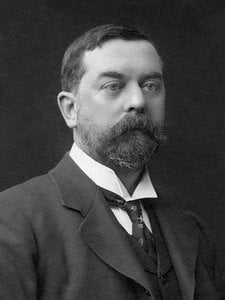
John Singer Sargent – amerykański malarz i portrecista z epoki Złotych Lwów. Znany z luksusowych portretów, pejzaży i impresjonistycznego stylu. Jego dzieła fascynują do dziś.

Kup wysokiej rozdzielczości, ulepszony obraz cyfrowy o jakości znacznie przewyższającej podgląd online.

Każdy plik jest starannie przygotowywany przez naszych specjalistów przy użyciu zaawansowanych narzędzi oraz profesjonalnej, ręcznej retuszy. Dbamy o to, aby każdy obraz cechował się wyjątkową ostrością, precyzyjnym odwzorowaniem kolorów i subtelnymi detalami.

Ostateczny plik dostarczany jest drogą mailową w ciągu 72 godzin, zoptymalizowany do natychmiastowego wykorzystania w profesjonalnych zastosowaniach redakcyjnych i poligraficznych. To ta sama jakość, której ufają czołowe studia projektowe, wydawnictwa oraz galerie sztuki.

Obraz cyfrowy

Pobierz plik o wysokiej rozdzielczości do osobistego użytku, druku oraz projektów kreatywnych. ( Przełącz na wersję drukowaną Kup ręcznie malowany obraz)

Cena całkowita

$ 24,90

W każdym zamówieniu na obraz cyfrowy znajduje się

Profesjonalna dostawa cyfrowa z gwarancją

Wybierając WahooArt.com, nie otrzymujesz jedynie obrazu – otrzymujesz profesjonalnie udoskonalone cyfrowe dzieło sztuki, stworzone z najwyższą precyzją i objęte gwarancją satysfakcji. Oto wszystko, co automatycznie dołączane jest do Twojego zamówienia:

shipping_icon
Błyskawiczna dostawa e-mailowa

Plik z obrazem cyfrowym w wysokiej rozdzielczości zostanie przesłany na Twój adres e-mail w ciągu 72 godzin od złożenia zamówienia – gotowy do natychmiastowego użycia.

canvas_icon
Plik cyfrowy ulepszony przez AI

Twoja grafika została profesjonalnie zoptymalizowana przy użyciu zaawansowanych narzędzi AI oraz ręcznej edycji, co zapewnia maksymalną szczegółowość, klarowność i wierność kolorów.

insurance_icon
Bezpłatna dożywotnia ponowna dostawa

Przypadkowo usunąłeś lub zgubiłeś swój plik? Bez obaw – prześlemy go Tobie ponownie w dowolnym momencie, bez żadnych opłat.

tax_icon
Bez opłat importowych – zawsze

Ciesz się swoją sztuką natychmiast, bez żadnych opłat celnych, należności ani kosztów dostawy – pliki cyfrowe są zawsze wolne od podatku.

color_icon
Gwarancja odwzorowania kolorów

Dzięki zastosowaniu profesjonalnych narzędzi i procesów zarządzania barwą zapewniamy, że Twoje cyfrowe zdjęcie odzwierciedla oryginalne kolory tak wiernie, jak to tylko możliwe.

return_icon
100 dni na satysfakcję

Jeśli nie będziesz zadowolony ze swojego cyfrowego obrazu, poprawimy go lub zwrócimy 100% kosztów w ciągu 100 dni – bez zbędnych pytań.

guarantee_icon
100% Gwarancja zwrotu pieniędzy

Nie jesteś zadowolony? Otrzymaj pełny zwrot kosztów w ciągu 100 dni od otrzymania pliku cyfrowego – bez zbędnych pytań.

discount_icon
Rabaty przy zamówieniach hurtowych

Kup 3 obrazy, oszczędź 10% - Kup 5, oszczędź 15% - Kup 10+, oszczędź 20%. Idealne do projektów kreatywnych, galerii i agencji.

Kluczowe informacje

  • Artist: John Singer Sargent
  • Subject or theme: Human Anatomy
  • Title: Standing Male Figure
  • Dimensions: 61 x 48 cm
  • Movement: Academic Draftsmanship
  • Medium: Charcoal on paper

Quiz wiedzy o sztuce

Do każdego pytania dotyczy tylko jedna poprawna odpowiedź.

Pytanie 1:
What artistic style is predominantly employed in John Singer Sargent’s ‘Standing Male Figure’?
Pytanie 2:
The charcoal drawing utilizes a monochromatic palette characterized by what tonal range?
Pytanie 3:
Which technique is prominently featured in creating depth and texture within the artwork?
Pytanie 4:
How does Sargent achieve a sense of three dimensionality despite the absence of background elements?
Pytanie 5:
What is the primary focus of this artwork's subject matter?

A Study in Form and Reflection: Examining John Singer Sargent’s ‘Standing Male Figure’

The charcoal drawing “Standing Male Figure” by John Singer Sargent transcends mere anatomical representation; it embodies the spirit of academic draftsmanship honed within a lifetime dedicated to capturing fleeting moments of beauty and intellect. Executed sometime before 1925, this piece offers a glimpse into Sargent's artistic process—a meticulous exploration of human musculature rendered with remarkable precision against a starkly minimalist backdrop. It’s not simply a depiction of the body; it’s an invitation to contemplate posture, gesture, and the subtle interplay between stillness and movement.
  • Subject Matter & Anatomy: Sargent's focus is squarely on the human form, specifically capturing the musculature of a male torso viewed from behind. The artist demonstrates masterful observation skills, translating anatomical knowledge into expressive lines that convey strength and grace.
  • Style & Technique – Academic Draftsmanship: Sargent’s approach aligns with the tenets of academic art training prevalent during his era—a commitment to detailed realism achieved through careful study and meticulous rendering. The technique relies heavily on hatching and cross-hatching, skillfully layering charcoal tones to build up tonal values and create convincing shading.
  • Composition & Lighting: The composition prioritizes simplicity, centering the figure within a rectangular frame devoid of distracting background elements. This deliberate restraint emphasizes the subject’s presence while simultaneously utilizing tonal variations—darker areas simulating shadows—to imbue the drawing with depth and dimensionality.
The historical context surrounding Sargent's work illuminates its significance beyond purely aesthetic considerations. Operating during the opulent Gilded Age, he captured the zeitgeist of a society obsessed with appearances and social status – an obsession reflected in his commissions for wealthy patrons eager to immortalize themselves in idealized portraits. However, “Standing Male Figure” stands apart from these grand narratives; it’s a quieter piece—a self-contained study that speaks to the artist's internal dialogue about form and observation.
  • Symbolism & Emotional Impact: Though devoid of overt narrative symbolism, the pose itself conveys a profound sense of introspection. The figure’s stance suggests contemplation, perhaps even anticipation—a moment frozen in time that invites viewers to consider themes of resilience, balance, and inner strength.
  • Materials & Texture: Primarily executed on paper with charcoal, the drawing showcases Sargent's mastery of a traditional medium. The resulting texture is deliberately rough and grainy, mirroring the physicality of charcoal application and contributing to the overall impression of authenticity.
“Standing Male Figure” serves as an exemplary demonstration of Sargent’s artistic vision—a testament to his unwavering dedication to capturing beauty through meticulous technique and profound understanding of human anatomy. Its understated elegance and contemplative spirit continue to resonate with audiences today, cementing its place as a cornerstone of academic art history and a captivating subject for interior designers seeking timeless inspiration.

Biografia artysty

A Life Immersed in Light and Society

John Singer Sargent, a name synonymous with the Gilded Age and its shimmering portraits of elegance, was an American artist who spent most of his life cultivating his craft within the European art world. Born in Florence, Italy, in 1856 to American expatriate parents, Fitzwilliam and Mary Newbold Sargent, his upbringing was anything but conventional. The family’s nomadic existence – constantly traversing France, Germany, Italy, and Switzerland – instilled in young John a cosmopolitan sensibility and an early exposure to the artistic treasures of Europe. Rather than formal schooling, his education unfolded within museum halls and ancient churches, fostering a visual literacy that would profoundly shape his artistic vision. This itinerant childhood, while lacking traditional structure, provided a rich tapestry of cultural experiences that fueled his developing talent. His father, a surgeon, and his mother, an amateur artist, encouraged his inclinations, recognizing early on the remarkable acuity of his observational skills. It was clear from a young age that John’s path lay not in medicine or conventional pursuits, but within the realm of art.

From Parisian Atelier to Portrait Master

In 1874, at the age of eighteen, Sargent embarked on a pivotal chapter of his artistic development by entering the Paris studio of Carolus-Duran. This mentorship proved transformative. Duran’s emphasis on *direct painting* – a technique eschewing preliminary sketches in favor of immediate application of paint to canvas – honed Sargent's already impressive technical facility and instilled within him an astonishing ability to capture likenesses with speed and precision. It was a revolutionary approach, encouraging boldness and spontaneity, and it became the hallmark of Sargent’s style. He absorbed Duran’s lessons wholeheartedly, mastering the art of capturing not just physical resemblance but also the very essence of his sitters. Simultaneously, he enrolled at the École des Beaux-Arts, further refining his skills in drawing from casts and life models. However, it was the influence of Spanish masters like Velázquez, encountered during a formative trip to Spain in 1879, that truly ignited Sargent’s artistic imagination. He became captivated by Velázquez’s masterful use of light, brushwork, and psychological insight – qualities he would strive to emulate throughout his career.

Navigating Fame, Scandal, and Artistic Evolution

Sargent quickly established himself as a sought-after portraitist in Paris, attracting commissions from the city’s elite. However, his ascent was not without its challenges. The unveiling of *Madame X* (Portrait of Madame Pierre Gautreau) at the 1884 Salon ignited a scandal that threatened to derail his burgeoning career. The painting's daring depiction of socialite Virginie Amélie Avegno Gautreau – with her pale complexion, suggestive pose, and fallen strap – was deemed provocative and scandalous by Parisian society. Though Sargent later repainted the strap, the damage was done. Disheartened by the controversy, he relocated to London in 1886, where he found a more receptive audience for his talents. In London, he continued to paint portraits of the wealthy and prominent, capturing the opulence and social dynamics of Edwardian society with unparalleled skill. Yet, Sargent’s artistic ambitions extended beyond the confines of commissioned portraiture. He yearned for greater creative freedom and increasingly devoted himself to landscape painting and plein-air studies, embracing an Impressionistic style characterized by loose brushwork, vibrant colors, and a focus on capturing fleeting moments of light and atmosphere. These landscapes reveal a different side of Sargent – one less concerned with social status and more attuned to the beauty of the natural world.

Influences and Artistic Kinships

  • Carolus-Duran: His teacher, who instilled in him a direct painting technique and encouraged spontaneity.
  • Diego Velázquez: Sargent deeply admired Velázquez’s mastery of light, brushwork, and psychological insight, particularly evident in his Spanish works.
  • Impressionism: The Impressionists' emphasis on capturing fleeting moments and atmospheric effects profoundly impacted his landscape paintings, leading to a looser, more expressive style.
  • James Abbott McNeill Whistler: Sargent shared with Whistler an interest in aestheticism and the pursuit of “art for art’s sake,” influencing his approach to composition and color.

A Lasting Legacy: Beyond Portraiture

While celebrated as “the leading portrait painter of his generation,” John Singer Sargent’s artistic legacy extends far beyond his masterful depictions of society figures. His major works, such as *El Jaleo*, a dynamic portrayal of Spanish flamenco dancers, and *Carnation, Lily, Lily, Rose*, a serene depiction of two young girls in an English garden, demonstrate his versatility and technical brilliance. Later in life, he embarked on ambitious mural projects, including the monumental cycle at the Boston Public Library, showcasing his ability to translate his artistic vision onto a grand scale. His influence can be seen in the work of subsequent generations of artists who admired his technical skill, his bold brushwork, and his ability to capture both physical likeness and psychological depth. The rediscovery of his previously hidden male nudes in the 1980s further broadened our understanding of Sargent’s artistic range and revealed a more complex and nuanced artist than previously recognized. His paintings continue to captivate audiences worldwide, offering a fascinating glimpse into a bygone era while simultaneously transcending time through their enduring beauty and technical mastery. He remains, undeniably, one of the most significant American artists of his generation, whose work continues to inspire and provoke admiration.

John Singer Sargent

John Singer Sargent

1856 - 1925 , Włochy

Najważniejsze informacje

  • Artistic Movement Or Style: Impressionizm
  • Artists Or Movements Influenced By This Artist: ['Whistler']
  • Artists Who Influenced This Artist:
    • Carolus-Duran
    • Velázquez
  • Date Of Birth: 12 stycznia 1856
  • Date Of Death: 15 kwietnia 1925
  • Full Name: John Singer Sargent
  • Nationality: Amerykanin
  • Notable Artworks:
    • Madame X
    • El Jaleo
    • Carnation, Lily, Lily, Rose
  • Place Of Birth: Florencja, Włochy