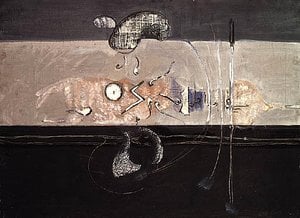
Dzieło sztuki prezentowane na tej stronie podlega ochronie prawem autorskim, co oznacza, że nie mamy prawa do tworzenia ani sprzedaży jego identycznej reprodukcji. Ochrona ta jest egzekwowana na mocy umów międzynarodowych, takich jak Konwencja berneńska oraz przez przepisy prawa krajowego, w tym te określone w Prawo autorskie USA – Tytuł 17.
Metoda ta jest w pełni zgodna z przepisami prawa autorskiego, ponieważ nie polega na kopiowaniu ani powielaniu chronionego dzieła. Stanowi ona kreatywną reinterpretację – nowy obraz, który czerpie inspirację z oryginału, ale nie jest z nim tożsamy.
Wydruki giclée lub płótna o jakości muzealnej, szybka realizacja i szeroki wybór opcji wykończenia. ( Zamów ręcznie malowaną reprodukcję Przejdź do wersji cyfrowej)





























Wybierz spośród naszych standardowych rozmiarów, które zachowują oryginalne proporcje dzieła sztuki.

Wpisz wymaganą szerokość i wysokość, aby dopasować grafikę do ramy lub ściany. Wydruk można jedynie przyciąć, nigdy nie powiększając go poza oryginalny obraz, dlatego format o innych proporcjach spowoduje utratę części kompozycji. Przed rozpoczęciem druku prześlemy Ci cyfrowy podgląd do zatwierdzenia. Obraz wyświetlany na tej stronie nie pokazuje rzeczywistego przycięcia — jedynie podgląd oddaje ten efekt.
Dostawa na cały świat () w ciągu 2 tygodni zamiast standardowych 4/5 tygodni. (8 Listopad)
The Trial
Wymiary reprodukcji
Wśród motywów charakterystycznych dla twórczości John Samuel Tunnard – takich jak modern fabric design, marine life inspiration, jazz music influence, british surrealist vision, festival of britain role – dzieło „The Trial” wprowadza własne skupienie na cornwall, landscape, maritime, perspective, psychological, jazz, symbolism.
„The Trial” – John Samuel Tunnard znajduje się w zbiorach British Council, Londyn, Wielka Brytania. Informacja o muzeum dotyczy oryginału, a nie reprodukcji.
Status praw autorskich do dzieła „The Trial” – nadal objęte ochroną prawa autorskiego – wynika z faktu, że artysta zmarł w 1971.

John Samuel Tunnard (1900-1971) was an English modernist painter and designer. Born in Sandwich, Kent, he initially studied design at the Royal College of Art from 1919 to 1923. This foundational training would prove crucial throughout his artistic career, influencing both his painting style and his later ventures into textile design.
During the 1920s, Tunnard worked in various textile design roles in Manchester. This period provided him with practical experience and an understanding of pattern, color, and form – elements that would later become prominent features of his paintings. In 1926, he married Mary May Robertson, a partnership that would significantly shape both their personal and professional lives.
By 1928, Tunnard began to focus seriously on painting. He taught design at the Central School of Arts and Crafts in London from 1929 onwards, further solidifying his engagement with artistic principles and pedagogy. His work during this time demonstrates a growing interest in modernist aesthetics. Tunnard’s style was notably influenced by Surrealism, although he never formally joined the movement. He participated in several surrealist exhibitions throughout the 1930s, including one at the Gordon Fraser Gallery in Cambridge.
In 1933, Tunnard and his wife moved to Cadgwith, Cornwall. There, they established a business producing printed silks, allowing them to combine their artistic talents with entrepreneurial endeavors. The Cornish landscape profoundly impacted Tunnard’s art, inspiring many of his later landscapes and providing a new source of visual motifs.
Tunnard's oeuvre encompasses both paintings – including notable landscapes and portraits – and textile designs. His painting style is characterized by its lyrical abstraction, dreamlike qualities, and vibrant color palettes. He often blended representational elements with abstract forms, creating a unique visual language that reflects his surrealist leanings.
Tunnard exhibited widely throughout his career. He showed work at the Royal Academy and with the London Group (which he joined in 1934). His participation in surrealist exhibitions further cemented his position within the British avant-garde.
John Samuel Tunnard is now considered one of the most important English modernist painters. His work represents a unique synthesis of Surrealism, abstraction, and landscape painting. Examples of his art can be found in prominent collections such as the National Galleries of Scotland. He contributed significantly to the development of modern British art, bridging the gap between traditional representation and abstract expression.

1900 - 1971 , United Kingdom
Explore the life & work of John Hoppner, a leading Georgian portraitist. Discover his vibrant style, influential patrons, and lasting impact on British art history. Expert insights for collectors.

Odkryj 25 arcydzieł Johna Constable'a – mistrza angielskiego krajobrazu! Poznaj romantyczne pejzaże, technikę malarską i inspiracje z Dedham Vale. Reprodukcje obrazów najwyższej jakości na WahooArt.com. Eksploruj pełną kolekcję online!

Explore the captivating world of John Piper, a celebrated British painter whose evocative landscapes & iconic church art captured the spirit of his time. Discover his legacy and find high-quality reproductions at WahooArt.

Odkryj 25 arcydzieł Johna Singera Sargenta – mistrza portretu i impresjonizmu. Poznaj historie, techniki i inspiracje za jego najsłynniejszymi obrazami. Reprodukcje najwyższej jakości na WahooArt.com. Eksploruj pełną kolekcję online!

Explore the poignant war poetry of Wilfred Owen, a key figure in British Modernism. Discover his innovative style, themes of loss & camaraderie, and lasting impact on 20th-century literature. Analysis & historical context included.
 Podgląd w skali 1:1
 Wyślij jako kartkę
 Udostępnij
 Szczegóły dzieła
 Przewodnik

 Pobierz obraz
 Podobne obiekty
 RTG
RTG Pokaz slajdów
 Pytania i odpowiedzi
 Statystyki


 Rozwiń treść









 Opcja ze szkłem jest dostępna wyłącznie w rozmiarach poniżej 110 cm