

Otrzymaj plik gotowy do druku, którego jakość znacznie przewyższa podgląd internetowy. Każdy sprzedawany przez nas obraz cyfrowy pochodzi z wysokorozdzielczego pliku wzorcowego w naszej bazie — zazwyczaj o szerokości od 5 000 do 15 000 pikseli — dzięki czemu możesz drukować w dużym formacie, mocno kadrować lub z pełnym przekonaniem odwzorowywać najdrobniejsze detale.
Żaden plik nie opuszcza naszego studia bez odpowiedniej obróbki. Ekspert ds. cyfrowej edycji sprawdza zgodność kolorów z oryginałem i w razie potrzeby je koryguje, a następnie za pomocą profesjonalnych narzędzi do retuszu poprawia ostrość oraz szczegółowość — zawsze zachowując wierność pociągnięciom pędzla i stylowi artysty. Rezultatem jest obraz, który wygląda jak prawdziwe dzieło, a nie jak przefiltrowany skan.
Zatwierdzasz przed finalizacją zamówienia: nasz ekspert prześle obraz drogą mailową w ciągu 72 godzin do Twojego wglądu. Nie jesteś zadowolony? Poproś o poprawki lub korektę, bądź o zwrot kosztów, jeśli jakość nie spełnia oczekiwań.
To jakość, na której polegają wydawcy, studia projektowe, galerie oraz drukarnie.
Pobierz plik o wysokiej rozdzielczości do osobistego użytku, druku oraz projektów kreatywnych. ( Przełącz na wydania drukowane Zamów ręcznie malowaną reprodukcję)
Wybierając WahooArt.com, nie otrzymujesz jedynie obrazu – otrzymujesz profesjonalnie udoskonalone cyfrowe dzieło sztuki, stworzone z najwyższą precyzją i objęte gwarancją satysfakcji. Oto wszystko, co automatycznie dołączane jest do Twojego zamówienia:
Plik z obrazem cyfrowym w wysokiej rozdzielczości zostanie przesłany na Twój adres e-mail w ciągu 72 godzin od złożenia zamówienia – gotowy do natychmiastowego użycia.
Twoja grafika została profesjonalnie zoptymalizowana przy użyciu zaawansowanych narzędzi AI oraz ręcznej edycji, co zapewnia maksymalną szczegółowość, klarowność i wierność kolorów.
Przypadkowo usunąłeś lub zgubiłeś swój plik? Bez obaw – prześlemy go Tobie ponownie w dowolnym momencie, bez żadnych opłat.
Ciesz się swoją sztuką natychmiast, bez żadnych opłat celnych, należności ani kosztów dostawy – pliki cyfrowe są zawsze wolne od podatku.
Dzięki zastosowaniu profesjonalnych narzędzi i procesów zarządzania barwą zapewniamy, że Twoje cyfrowe zdjęcie odzwierciedla oryginalne kolory tak wiernie, jak to tylko możliwe.
Jeśli nie będziesz zadowolony ze swojego cyfrowego obrazu, dokonamy jego poprawki lub zwrócimy 100% kosztów w ciągu 100 dni – bez zbędnych pytań.
Nie jesteś zadowolony? Otrzymaj pełny zwrot kosztów w ciągu 100 dni od otrzymania pliku cyfrowego – bez zbędnych pytań.
Kup 3 obrazy, oszczędź 10% - Kup 5, oszczędź 15% - Kup 10+, oszczędź 20%. Idealne do projektów kreatywnych, galerii i agencji.
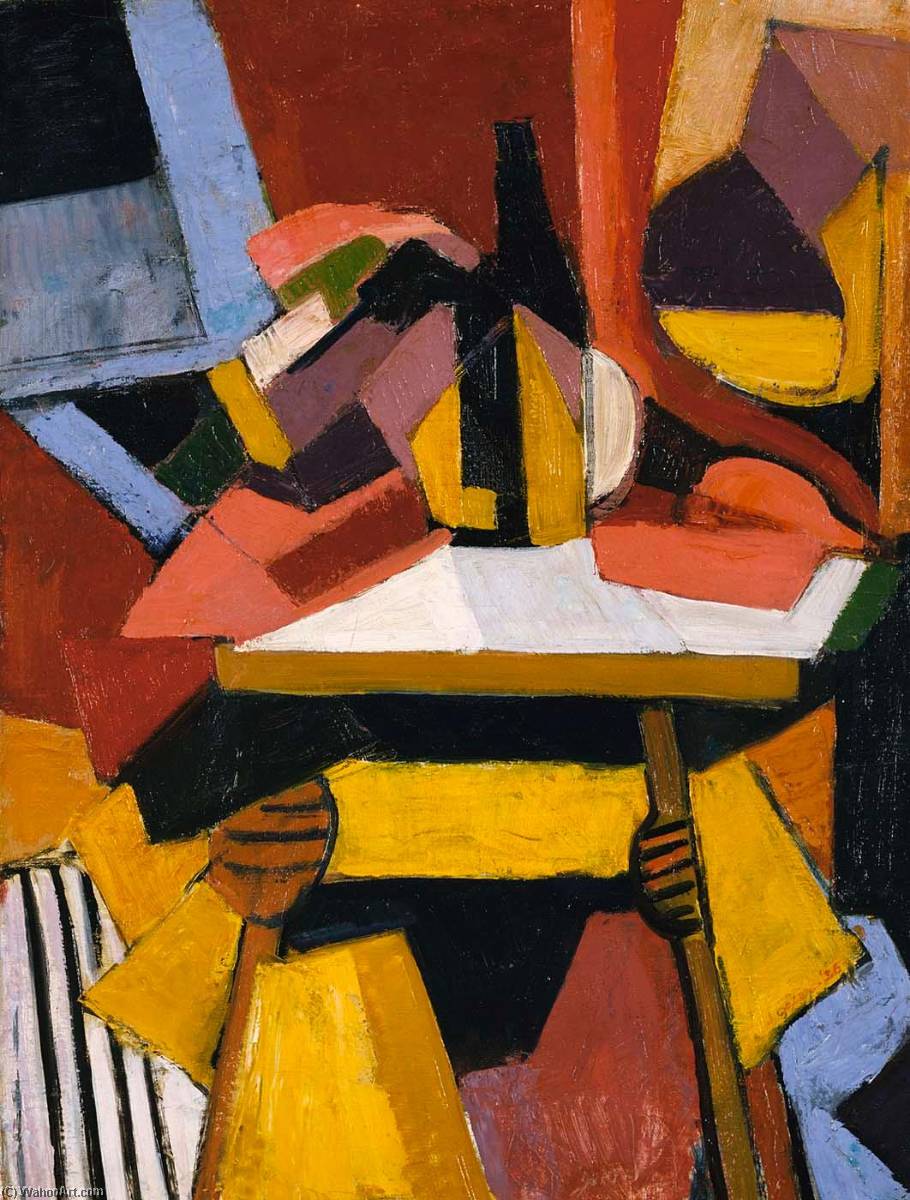
John Opper stworzył/a "Untitled" w wieku 27 lat. Artysta urodził/a się w 1908, a datowanie dzieła to 1935.
Strona Podgląd w pomieszczeniu dzieła „Untitled” pozwala na podgląd obrazu przed złożeniem zamówienia.
„Untitled” – John Opper to kompozycja w formacie Portrait. Warto sprawdzić proporcje przed wyborem rozmiaru wydruku.

In the grand tapestry of American modernism, few threads are as vibrantly woven as those left by John Opper. A painter who mastered the delicate balance between the tangible world and the ethereal realm of pure emotion, Opper’s journey was one of profound transformation. Born in Chicago in 1908, his early years were marked by a burgeoning fascination with the visual language of form, nurtured through rigorous studies at the Cleveland School of Art and the Art Institute of Chicago. This foundational period instilled in him a technical discipline that would later serve as the scaffolding for his most radical experiments. As he moved through the 1930s, Opper began to shed the weight of representational accuracy, moving toward a style that whispered of Cubism while yearning for something far more primal and unconstrained.
The landscape of the American West acted as a silent collaborator in his artistic evolution. During a pivotal expedition to Wyoming in 1937, the vastness of the horizon and the raw, elemental power of the terrain ignited a fascination with color as a vessel for memory and feeling. It was during this era that Opper’s work began to pulse with a new kind of energy, moving away from the structured geometry of his early training toward a more fluid, atmospheric exploration. He viewed the 1930s as a "great gestation period," a time when he learned to perceive the unseen forces and tensions vibrating within the picture plane, preparing him for the monumental stylistic shift that would define his legacy.
As the mid-20th century approached, Opper emerged as a vital voice within the Abstract Expressionist movement. His transition from semi-abstract landscapes to fully realized abstraction in the 1950s was not merely a change in subject matter, but a complete reimagining of what a canvas could achieve. He became a founding member of the American Abstract Artists (AAA), a group dedicated to liberating the medium from the constraints of literal depiction. In his hands, painting became an act of constructing intensity through the juxtaposition of color. He possessed a singular ability to create drama on the picture plane by arranging more-or-less rectangular areas of pigment, creating a rhythmic tension that drew the viewer into a state of deep contemplation.
Opper’s technique was deeply aligned with the principles of Color Field painting, echoing the spiritual depth found in the works of contemporaries like Mark Rothko. However, Opper maintained a unique identity through his specific handling of texture and light. His canvases were not merely flat surfaces but luminous environments where color seemed to breathe. He avoided the coldness of hard-edge abstraction, preferring instead a style that felt organic and evolved from nature itself. To Opper, the essence of art lay in its ability to be more than just a sum of parts; it was an immersive experience where the boundaries between the viewer and the pigment dissolved into a singular, emotive moment.
The historical significance of John Opper lies in his role as a bridge between the structured modernism of the early century and the explosive freedom of the post-war era. His work remains a testament to the power of chromatic exploration, proving that color alone can communicate the complexities of the human condition. Throughout his career, which spanned until his passing in 1994, he remained steadfast in his belief that art should not be bound by rigid definitions or conceptual labels. He famously described his school of art as one that was neither purely geometric nor strictly conceptual, but simply an evolution of natural forces.
Today, the presence of Opper’s work in prestigious institutions like the Smithsonian American Art Museum ensures that his contribution to the American avant-garde is never forgotten. His paintings continue to captivate new generations of enthusiasts, offering a window into a period of unparalleled artistic bravery. To look upon an Opper canvas is to witness a master at work, orchestrating light, color, and space to create a lasting resonance that transcends the boundaries of time.

1908 - 1994 , United States
 Podgląd w skali 1:1
 Wyślij jako kartkę
 Udostępnij
 Szczegóły dzieła
 Przewodnik

 Pobierz obraz
 Podobne obiekty
 RTG
RTG Pokaz slajdów
 Pytania i odpowiedzi
 Statystyki
 Rozwiń treść


