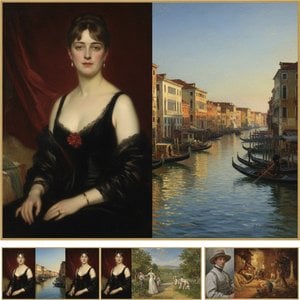
John Schanck (1799) autorstwa John James Masquerier, ręcznie malowana reprodukcja olejowa wykonana przez mistrza
Podgląd w skali 1:1 Podgląd AR Przełącz na wydania drukowane Przejdź do wersji cyfrowej Wyślij jako kartkę
Szczegóły dzieła Przewodnik Dodaj do ulubionych Pobierz obraz Podobne obiekty RTG Pokaz slajdów Pytania i odpowiedzi Pobierz prezentację Statystyki

John Schanck Ręcznie malowana reprodukcja obrazu olejnego

Wymiary
74.0 x 62.0 cm

Discover John James Masquerier: British painter of French Huguenot descent, renowned for his captivating portraits & revolutionary era sketches (Lady Hamilton, Napoleon). Explore his legacy!

Dzieło sztuki prezentowane na tej stronie podlega ochronie prawem autorskim, co oznacza, że nie mamy prawa do tworzenia ani sprzedaży jego identycznej reprodukcji. Ochrona ta jest egzekwowana na mocy umów międzynarodowych, takich jak Konwencja berneńska oraz przez przepisy prawa krajowego, w tym te określone w Prawo autorskie USA – Tytuł 17.

Jako pełną szacunku i legalną alternatywę oferujemy personalizowane, malowane ręcznie dzieła sztuki inspirowane oryginałem. Nasi wykwalifikowani i profesjonalni artyści starannie analizują styl, nastrój oraz artystyczną esencję pierwowzoru, aby stworzyć nowe, unikalne dzieło, które przywołuje te same emocje – pozostając jednocześnie w pełni oryginalną kreacją.

Metoda ta jest w pełni zgodna z przepisami prawa autorskiego, ponieważ nie polega na kopiowaniu ani powielaniu chronionego dzieła. Stanowi ona kreatywną reinterpretację – nowy obraz, który czerpie inspirację z oryginału, ale nie jest z nim tożsamy.

Ręcznie malowana reprodukcja olejowa

Ręcznie malowany obraz olejny na płótnie, wykonany na zamówienie przez naszych artystów w wybranym przez Ciebie wymiarze i oprawie. ( Przełącz na wydania drukowane Przejdź do wersji cyfrowej)

Standardowy format
personalizowane
CM
INCH

Wybierz spośród naszych standardowych rozmiarów, które zachowują oryginalne proporcje dzieła sztuki.

szerokość
wysokość

Wpisz wymaganą szerokość i wysokość, aby obraz pasował do Twojej ramy lub ściany. Ponieważ jest to dzieło malowane ręcznie, w przypadku rozmiaru o innych proporcjach artysta może domalować nieco więcej wokół obrazu lub przyciąć jego fragmenty — wybór należy do Ciebie. Przed rozpoczęciem pracy prześlemy Ci cyfrową wizualizację do zatwierdzenia. Obraz widoczny na tej stronie nie przedstawia rzeczywistego efektu — jedynie wizualizacja oddaje realny rezultat.

Przykłady możliwych zmian: Zamień twarz na zdjęcie klienta; Dodaj zwierzę domowe (np. zamień kota na psa); Ukryj wiadomość w tle; Zmień krajobraz lub elementy tła.
Po złożeniu zamówienia zespół WahooArt.com skontaktuje się z klientem drogą mailową w celu uzyskania instrukcji i prześle wizualizację projektu

Dostawa na całym świecie () w ciągu 3–4 tygodni zamiast standardowych 5 tygodni. (15 Listopad). Bez kompromisów w kwestii jakości.

Bezpłatna ekspresowa wysyłka na cały świat
Wysokiej jakości płótno lniane
Pełne ubezpieczenie przesyłki
Gwarancja zwrotu należności celnych i podatków importowych
Gwarancja wiernego odwzorowania kolorów
100-dniowa polityka zwrotów (tylko w przypadku wad)
Gwarancja 100% zwrotu pieniędzy
Zniżka przy zakupie wielu sztuk

Suma całkowita

zł 1057

John Schanck

Technika reprodukcji

Wymiary reprodukcji

-

Cena całkowita

zł 1057


Biografia artysty

A Life Forged in the Fires of Revolution

The story of John James Masquerier is one inextricably linked to the dramatic shifts of the late eighteenth and early nineteenth centuries. Born in October 1778 in Chelsea, London, his very identity was a tapestry of cultural intersections; he was a British painter of French Huguenot descent, a heritage that placed him at the heart of the intellectual and political currents flowing between London and Paris. His childhood was marked by the vibrant, often perilous atmosphere of the French Revolution. Taken to Paris by his mother, Barbot, who had established a school in the prestigious Champs-Elysées, the young Masquerier found himself a witness to history in its most raw and violent forms. While studying painting under the esteemed François Vincent at the Tuileries Academy, he stood amidst the chaos of the massacre of the Swiss Guards in 1792. This early exposure to political upheaval did more than just shape his biography; it instilled in his art a profound sensitivity to the human condition during times of profound transition.

The volatility of the era eventually forced a retreat to England, but Masquerier carried the spirit of Paris with him. In 1792, he enrolled at the Royal Academy Schools, marking the beginning of a formal engagement with the British artistic establishment. His early talent was so striking that a self-portrait, executed when he was a mere fourteen years old, was presented to King George III—a testament to a precocious mastery of form and character that would define his professional trajectory.

The Art of Observation and the Portraitist's Eye

Masquerier’s oeuvre is characterized by a remarkable ability to capture both the monumental and the intimate. While he is perhaps most celebrated for his portraiture, his work serves as a vital historical record of the era's most notable figures. His brush possessed a unique capacity for psychological depth, moving beyond mere likeness to reveal the inner essence of his subjects. This was particularly evident in his depictions of individuals such as Lady Hamilton, where he utilized masterful chiaroscuro to create a sense of drama and presence that commanded the viewer's attention.

Beyond the studio, Masquerier acted as an ocular chronicler of the French Revolution. Driven by an acute impulse to document the zeitgeist, he produced meticulous sketches from personal observation of pivotal, often harrowing, events. His drawings captured the trial of the King and the tragic demise of the Princesse de Lamballe, offering a visceral connection to the era's political tremors. This duality—the ability to execute refined, neoclassical portraiture while maintaining the gritty, observational eye of a war correspondent—distinguishes his contribution to the history of art.

Legacy and Artistic Significance

As his career progressed, Masquerier’s reputation expanded through significant commissions and high-profile patronage. His work reached new heights of complexity with large-scale religious and historical compositions, such as The Incredulity of St. Thomas, which served as a monumental altar-piece in Westminster. Even as he navigated the complexities of the Napoleonic era, his connection to the French political landscape remained a source of artistic inspiration; he famously claimed to have produced a drawing of Napoleon Bonaparte during his time as First Consul.

The enduring significance of John James Masquerier lies in his role as a bridge between cultures and eras. He was an artist who did not merely paint the world around him but felt its pulse. Through his portraits, he immortalized the faces of the Enlightenment and the Napoleonic age, while his sketches preserved the fleeting, often terrifying moments of revolutionary change. His legacy remains a profound testament to the power of art to act as both a mirror to society and a vessel for historical memory.

John James Masquerier

John James Masquerier

1778 - 1855 , United Kingdom

Krótka nota

  • Full Name: John James Masquerier
  • Nationality: British
  • Date Of Birth: October 1778
  • Place Of Birth: Chelsea, London
  • Notable Artworks:
    • Lady Hamilton Portrait
    • Napoleon Bonaparte Sketch
  • Artistic Movement Or Style: Neoclassical Portraiture
  • Artists Who Influenced This Artist: ['François Vincent']
  • Artists Or Movements Influenced By This Artist: ['George III']