Wydruki giclée lub płótna o jakości muzealnej, szybka realizacja i szeroki wybór opcji wykończenia. ( Zamów ręcznie malowaną reprodukcję Przejdź do wersji cyfrowej)





























Wybierz spośród naszych standardowych rozmiarów, które zachowują oryginalne proporcje dzieła sztuki.

Wpisz wymaganą szerokość i wysokość, aby dopasować grafikę do ramy lub ściany. Wydruk można jedynie przyciąć, nigdy nie powiększając go poza oryginalny obraz, dlatego format o innych proporcjach spowoduje utratę części kompozycji. Przed rozpoczęciem druku prześlemy Ci cyfrowy podgląd do zatwierdzenia. Obraz wyświetlany na tej stronie nie pokazuje rzeczywistego przycięcia — jedynie podgląd oddaje ten efekt.
Dostawa na cały świat () w ciągu 2 tygodni zamiast standardowych 4/5 tygodni. (15 Listopad)
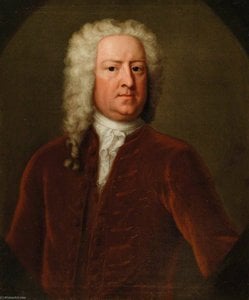
William Pitt
Wymiary reprodukcji
The gaze of William Pitt meets the viewer through this oil on canvas, a work emerging from the studio of John Hoppner. The portrait captures the statesman in a moment of heavy stillness, rendered with a sense of gravity that lingers on the surface. It is a work from circa 1805 or after, a period when the subject's presence in British politics was deeply felt. The scale of the image, measuring 55 1/2 in. x 42 1/2 in. (1410 mm x 1080 mm), gives the figure a physical weight that commands the space around it.
John Hoppner’s studio provides the hand behind this depiction, translating the likeness of the man into a study of light and shadow. The paint sits upon the canvas, building a presence that feels immediate and substantial. Every brushstroke contributes to the quiet intensity of the sitter, holding him in a permanent state of contemplation. The work exists as a direct encounter with a man who shaped the direction of a nation, frozen here in the medium of oil.
The subject emerges from a dark, indistinct background, positioned in a bust-length portrait that feels immediate and heavy with presence. He sits slightly off-center, his gaze directed toward the viewer's left, creating a sense of quiet, internal movement. Light descends from the upper left, carving out the contours of his face and neck with a soft, directional glow. This interplay of light and shadow grants the figure a palpable three-dimensional volume, pulling him forward from the atmospheric gloom behind him.
The color palette remains somber and grounded, relying on a restrained selection of earthy, muted tones. Browns, ochre, and cream dominate the scene, while subtle flesh tones define the skin. There is a tactile quality to the surface, where the texture of the canvas peeks through the layers of paint. The brushwork appears smooth and blended, particularly in the soft transitions of the background and the heavy folds of the clothing, yet it maintains enough definition to trace the sharp structure of the facial features and the weight of the coat.
The origins of this portrait trace back to a private commission by Lord Mulgrave, who sought to capture the likeness of the statesman. The artist began the work in December 1804, and the final brushstrokes were applied on the 28th of October, 1805. This specific version, identified as NPG L267, exists as a studio copy of the original portrait. While the primary work was intended for the Mulgrave family, the demand for the image grew rapidly among the subject's supporters, leading to many bespoke copies being produced by the artist's studio.
The movement of this painting through various collections reflects its enduring presence in British history. It currently resides within the collection of the Tate, though it is frequently seen on loan to the National Portrait Gallery in London. This arrangement allows the work to remain accessible to those tracing the political landscape of the era. The provenance of the piece is deeply intertwined with the social circles of the time, as the portrait's popularity ensured that many versions circulated among the elite of the Regency period.
The portrait stirs a profound tension between those who see its technical brilliance and those who recoil from its unflinching honesty. To some observers, the work represents the artist's finest achievement, a peak of his creative ability. Yet, this praise is met with sharp, visceral condemnation from those who knew the man behind the statesman. One contemporary observer famously dismissed the image as a vile picture, finding the depiction far too harsh to be a true likeness.
The debate centers on the psychological weight carried in the subject's expression. Critics have argued that the face appears anxious and diseased, as if reddened by wine and soured by the heavy burden of disappointment. There is a sense that the portrait captures a man at his breaking point, a version of the statesman that many found difficult to accept. This perceived severity led some to suggest that the likeness was almost too unflattering, questioning if such a grim portrayal should ever have been intended for a man of his standing.
While some find the work's power in its ability to strip away the veneer of political dignity, others see it as a departure from the idealized grace expected in high-society portraiture. The tension remains: is this a profound study of a man weathered by his duties, or a failure to capture the youthful spirit of a leader? The brushstrokes hold both the weight of a statesman's exhaustion and the controversy of a likeness that refuses to look away from the toll of power.
The portrait resides within the National Portrait Gallery in London, United Kingdom. Visitors find the subject waiting for them on the third floor, specifically positioned in Room 18. It exists as a vital part of the National Portrait Gallery collection, though its presence in the gallery is a temporary arrangement. The work is currently on loan from the Tate Gallery, which maintains its primary stewardship.
Walking through the halls of the museum, one encounters this depiction of the statesman in a space dedicated to the faces that shaped a nation. The lighting in the gallery room catches the subtle textures of the oil on canvas, allowing the viewer to observe the heavy shadows and the serious expression of the sitter. It remains a central fixture for those tracing the political history of the United Kingdom through its visual records.
The artist's hand moves through other lives and faces, capturing the essence of the Georgian era with a similar command of light. In one notable work, he presents Mrs. Jordan as Viola in 'Twelfth Night', a piece that highlights his celebrated ability to render women and children. This portrait reveals a specific skill that defined his career, much like the way he handles the textures and shadows in his other commissions. He moves between the heavy gravity of statesmen and the softer, more spirited depictions of his female sitters, always maintaining a sense of physical presence.
His reach extends into the highest circles of British society, where he finds himself painting the very figures who shape the nation. He captures the likeness of the Prince of Wales, a man whose patronage helped secure Hoppner's position among the elite. This ability to navigate the social landscape is evident in his portraits of influential men like Lord Hugh Seymour. Each sitter emerges from the dim, atmospheric backgrounds with a distinct vitality, whether they are members of the royal court or prominent figures of the military and aristocracy.
The artist's brush also finds its way to the faces of those who leave their own marks on history, such as in his portrait of Thomas Williams. Through these various subjects, a pattern of character emerges. He uses chiaroscuro to sculpt forms, pulling his subjects forward from the shadows to create a sense of depth. Whether he is working on a formal bust-length portrait or a more expansive composition, his touch remains loose and free, avoiding a rigid or overly precious finish in favor of a living, breathing likeness.
Reprodukcja "William Pitt" doskonale pasuje do Office.
„William Pitt” – John Hoppner ma Classic atmosferę i jest polecane do Office. Nastrój to to, co dzieło wnosi do otaczającej je przestrzeni.
Aby zamówić wydruk dzieła „William Pitt” – John Hoppner, wystarczy przejść na jego stronę Wydruk artystyczny premium: szlachetna odbitka na płótnie bawełnianym lub archiwalnym papierze o strukturze płótna.

John Hoppner przyszedł na świat w 1758 roku w londyńskiej dzielnicy Whitechapel, w rodzinie niemieckich imigrantów. Jego matka zajmowała stanowisko jednej z niemieckich służek na królewskim dworze, co od samego początku zapewniało rodzinie bliskie relacje z dworem. To wczesne otoczenie ukształtowało jego życiową trajektorię, choć początkowa ścieżka artysty prowadziła przez świat muzyki, a nie sztuk wizualnych. Jako mały chłopiec służył jako kleryk w królewskiej kaplicy – rola ta wymagała ogromnej dyscypliny, lecz ostatecznie nie zdołała zaspokoić jego artystycznej natury, która nieustannie skłaniała go ku malarstwu.
Formalny debiut w świecie sztuki nastąpił w 1775 roku, kiedy to John Hoppner wstąpił do Royal Academy. Szybko udowodnił swoje kompetencje techniczne, zyskując uznanie instytucji. W 1778 roku otrzymał srebrny medal za rysunek z natury, co stanowiło praktyczne potwierdzenie jego niezwykłych umiejętności obserwacyjnych. Już w 1782 roku sięgnął po złoty medal Akademii w kategorii malarstwa historycznego, zdobyty dzięki poruszającej pracy nad tematem króla Lear. Ten wczesny sukces położył solidne fundamenty techniczne pod portretowanie wyższych sfer, które miało stać się znakiem rozpoznawczym jego wielkiej kariery.
John Hoppner trwale zapisał się w najwyższych kręgach brytyjskiego społeczeństwa, utrwalając wizerunki najbardziej wpływowych postaci swojej epoki. Jego niezwykła biegłość w pozyskiwaniu prestiżowych zleceń sprawiła, że portrety księcia Walii, księcia i księżnej York, lorda Rodney’ego oraz lorda Nelsona zagościły w reprezentacyjnych apartamentach Pałacu św. Jakuba. Te eksponowane w tak zaszczytnych miejscach płótna nie były jedynie dekoracją; stanowiły one namacalne świadectwo jego niepodważalnej pozycji zawodowej. Choć to malarstwo historyczne przyniosło mu wczesne laury, to właśnie w przedstawieniach kobiet i dzieci sędziowie nieustannie dostrzegali jego największy triumf artystyczny.
Mistrzowskie oddanie charakteru postaci objawia się najpełniej w dziele Mrs. Jordan jako Viola w „Szwejku”, które obecnie znajduje się w zbiorach English Heritage w Londynie, w Zjednoczonym Królestwie. Obraz ten stanowi kwintesencję talentu, który zdefiniował całą jego karierę. Jednak twórczość Hoppnera wykraczała daleko poza ramy płótna, przenikając w głąb ówczesnej kultury literackiej. W 1803 roku wydał on Serię portretów dam, a do 1805 roku zaprezentował zbiór przekładów wschodnich opowieści na wierszowaną angielszczyznę. Te artystyczne poszukiwania ukazują postać twórcy, którego wpływ sięgał głęboko w intelektualną i społeczną tkankę epoki.
Tożsamość warsztatowa, jaką wypracował John Hoppner, jest nierozerwalnie związana z jego niezwykłą biegłością w operowaniu kolorem. Uważany za wybitnego kolorystę, potrafił z mistrzowską precyzją kontrolować pigment, by nadać swoim modelom głębię i wyrazistość. Jego podejście do malowania nigdy nie było sztywne ani nadmiernie drobiazgowe; zamiast tego, jego pociągnięcia pędzla charakteryzowały się rozmachem i swobodą. Ta malarska wolność pozwoliła mu wyjść poza ramy czystej imitacji rzeczywistości, tchnąc w portrety specyficzną witalność, która odróżniała jego dzieła od bardziej rygorystycznych, akademickich tradycji epoki.
Nad metodą twórczą Hoppnera unosi się wyraźna cień Joshuy Reynoldsa. Artysta czerpał z dorobku mistrza, przyjmując sposób pracy, który odzwierciedlał wrażliwość tak uznanego autorytetu. Wpływ ten jest najbardziej widoczny w subtelnym echu uroku Reynoldsa, które bije z jego płócien, szczególnie w sposobie operowania światłem oraz w miękkiej, malarskiej atmosferze otaczającej portretowane postaci. Hoppner nie ograniczał się jednak do prostego kopiowania stylu; on adaptował jego fundamentalne zasady, by służyły jego własnym, ekspresyjnym potrzebom.
W praktyce zaowocowało to stylem, który w harmonijny sposób łączył naturalizm z pewną szlachetną, arystokratyczną gracją. Wykorzystując światłocień, rzeźbił formy, wydobywając sylwetki z mrocznych, nieokreślonych teł poprzez dramatyczną grę światła i cienia. Technika ta okazała się niezwykle skuteczna w oddawaniu tekstur – od najdelikatniejszych szczegółów ludzkich włosów, po ciężkie, majestatyczne fałdy akademickich szat. Dzięki tej umiejętności jego portrety zyskały niemal fizyczną obecność, która pozostaje w pełni czytelna i poruszająca dla współczesnego widza.
Profesjonalne życie Johna Hoppnera definiowała zaciekła rywalizacja z Thomasem Lawrence’em. Ten pojedynek nie był jedynie kwestią budowania prestiżu, lecz bezpośrednią walką o uwagę londyńskiej elity. Napięcie między tymi dwiema postaciami stało się wręcz namacalne w latach 1803–1809, kiedy to obaj artyści dzielili tego samego asystenta, Samuela Lane’a. To niezwykłe przenikanie się kadrów rzuca światło na niezwykle wąskie i konkurencyjne ramy rynku portretowego tamtego okresu.
Sieć profesjonalnych powiązań artysty obejmowała również znaczące kolaboracje, które przecinały się z najwyższymi szczeblami brytyjskiej sztuki. Około 1788 roku John Hoppner przyczynił się do powstania dzieła autorstwa Thomasa Gainsborough, malując tło do portretu Charlotty, hrabiny Talbot. Współpracował również ściśle z rytownikiem Charlesem Wilkinem, aby wydać swoją serię portretów. Te partnerstwa dowodzą, jak jego twórczość opierała się na ustrukturyzowanym systemie wsparcia technicznych specjalistów, co pozwalało jego dziełom docierać do znacznie szerszego grona odbiorców.
Obecność dzieł, które stworzył John Hoppner, w najważniejszych międzynarodowych kolekcjach jest najlepszym dowodem na to, że jego artystyczny geniusz wykraczał daleko poza granice Wysp Brytyjskich. W Stanach Zjednoczonych w murach Metropolitan Museum of Art w Nowym Jorku można odnaleźć dwa jego wybitne płótna, podczas gdy Taft Museum of Art w Cincinnati skrywa kolejne dwa dzieła. Obrazy te stanowią fascynujące okno na świat wysokiej sztuki portretowej jego epoki, ukazując niezwykłą biegłość artysty w operowaniu kolorem oraz formą.
W samej Wielkiej Brytanii dziedzictwo artysty jest rozproszone pomiędzy kilka kluczowych instytucji, które dbają o zachowanie jego wizji dla przyszłych pokoleń. Organizacja English Heritage w Londynie przechowuje niezwykle istotne dzieło, a mianowicie Mrs Jordan as Viola in 'Twelfth Night', które stanowi wręcz podręcznikowy przykład jego mistrzostwa w dziedzinie portretu. Również National Maritime Museum w Londynie posiada w swoich zbiorach jedno z jego malowideł, co sprawia, że jego wpływ pozostaje żywy w kontekście brytyjskiej historii morskiej i społecznej. Dodatkowo, w zbiorach National Library of Wales w Aberystwyth znajduje się kolejne dzieło tego wybitnego twórcy.
Wśród najważniejszych zachowanych prac warto wymienić:

1758 - 1810 , Wielka Brytania
 Podgląd w skali 1:1
 Wyślij jako kartkę
 Udostępnij
 Szczegóły dzieła
 Przewodnik

 Pobierz obraz
 Podobne obiekty
 RTG
RTG Pokaz slajdów
 Pytania i odpowiedzi
 Statystyki


 Rozwiń treść









 Opcja ze szkłem jest dostępna wyłącznie w rozmiarach poniżej 110 cm