DARMOWA KONSULTACJA ARTYSTYCZNA

x
Zamów reprodukcję Zamów reprodukcjęKup cyfrowy obraz Kup cyfrowy obraz UdostępnijUdostępnij
SzczegółySzczegóły Dodaj do ulubionych Dodaj do ulubionych PobierzPobierz Podobne obiektyPodobne obiekty RTGRTG Pokaz slajdówPokaz slajdów

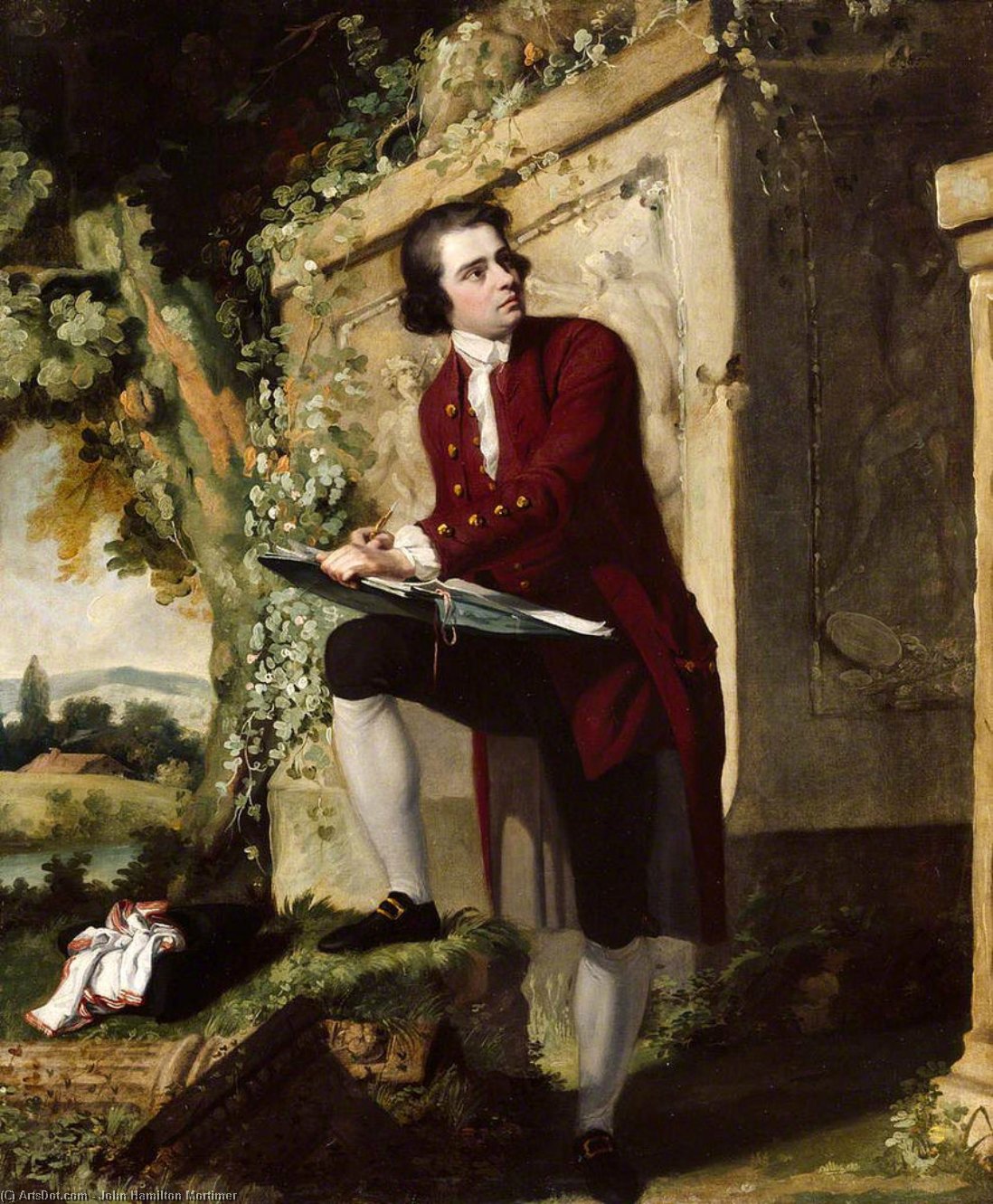
Self Portrait

John Hamilton Mortimer (1740–1779) był brytyjskim malarzem romantyzmu, znanym z obrazów włoskich krajobrazów, scen wojenskich inspirowanych Salvatorem Rosą oraz obrazów historycznych. Prezydent Towarzystwa Artystów.

Giclée / Wydruk artystyczny

Druk giclée lub płótno o jakości muzealnej z szybką realizacją i szerokim wyborem opcji wykończenia.

Standard
custom
CM
INCH

Wybierz spośród naszych predefiniowanych rozmiarów, które zachowują oryginalne proporcje dzieła sztuki.

szerokość
wysokość

Możesz wprowadzić własne wymiary, aby dopasować dzieło do konkretnej ramy lub przestrzeni. Jeśli wybrany rozmiar nie będzie odpowiadał proporcjom oryginalnego obrazu, przytniecie dzieło lub rozszerzymy obraz za pomocą odbicia lustrzanego lub jednolitego wypełnienia krawędzi. Przed rozpoczęciem produkcji prześlemy cyfrową wizualizację do Twojej akceptacji.
Prosimy pamiętać, że podgląd na ekranie nie odzwierciedla faktycznego przycinania ani rozszerzania. Tylko wizualizacja dokładnie pokaże końcową kompozycję.
Mimo dostępności niestandardowych rozmiarów, zalecamy wybór wymiaru z listy zdefiniowanej, aby zachować oryginalne proporcje.

Dostawa na cały świat () w ciągu 2 tygodni zamiast standardowych 4/5 tygodni. (2 Lipiec)

why_choose_icon
Bezpłatna ekspresowa wysyłka na cały świat
why_choose_icon
Wysokiej jakości płótno lniane
why_choose_icon
Pełne ubezpieczenie przesyłki
why_choose_icon
Gwarancja zwrotu należności celnych
why_choose_icon
Gwarancja pełnego zgodności kolorystycznej
why_choose_icon
Polityka 60-dniowego zwrotu (tylko w przypadku wad)
why_choose_icon
Gwarancja 100% zwrotu pieniędzy
why_choose_icon
Zniżka przy większych zamówieniach

Suma całkowita

-

reproduction

Self Portrait

Giclée / Wydruk artystyczny

Wymiary reprodukcji

-

Cena całkowita

-


Biografia artysty

John Hamilton Mortimer (1740–1779): A Life Painted in Romantic Hues

John Hamilton Mortimer, a name perhaps less instantly recognizable than his contemporaries like Reynolds or Wright of Derby, nevertheless occupies a significant and fascinating niche within the landscape of 18th-century British art. His brief but intensely productive life—he died at just thirty-nine years old—was marked by artistic ambition, a restless spirit, and an evolving style that mirrored the shifting tastes of his era. His father, Thomas Mortimer, was a customs officer with mercantile interests, providing a stable if unremarkable background for a young man destined to pursue a path steeped in creativity. By 1757, Mortimer had already gravitated towards London, enrolling at the prestigious Duke of Richmond’s Academy, where he forged a lifelong friendship with Joseph Wright, a bond that would prove mutually supportive throughout their careers. This early immersion into the artistic milieu fostered not only technical skill but also an awareness of the burgeoning intellectual currents shaping British art—the fascination with classical ideals juxtaposed against the stirrings of Romantic sensibility. He studied alongside other promising talents like Thomas Jones and William Pars at St Martin’s Lane Academy, further honing his abilities under the tutelage of masters such as Cipriani, Robert Edge Pine, and Sir Joshua Reynolds himself.

Early Influences and Artistic Training

Mortimer's formative years were characterized by a dedication to classical principles, evident in his prize-winning studies after Michelangelo’s *Bacchus* and meticulous life drawings. These exercises instilled within him a foundational understanding of anatomy, perspective, and composition—skills that would serve as bedrock for his subsequent artistic endeavors. Recognizing the importance of mentorship, he eagerly embraced opportunities to learn from established artists, securing positions at St Martin's Lane Academy where he honed his craft under the guidance of masters like Cipriani, Robert Edge Pine, and Sir Joshua Reynolds. This exposure to influential figures solidified his stylistic sensibilities and nurtured a desire to explore diverse artistic approaches. The Duke of Richmond’s Academy was not merely a place of instruction; it was a crucible for forging connections that would shape Mortimer's artistic trajectory—most notably his enduring friendship with Joseph Wright, whose innovative techniques and dramatic vision would profoundly impact Mortimer’s own style.

From History to Bandits: The Evolution of a Style

Mortimer swiftly gained recognition for his historical paintings, culminating in *St Paul Preaching to the Ancient Druids in Britain*, which remains housed in the Guildhall at High Wycombe. This monumental canvas demonstrated a commitment to narrative storytelling and an ability to capture pivotal moments with arresting immediacy—qualities that would become hallmarks of his oeuvre. However, Mortimer refused to remain tethered to established conventions; he possessed a keen sensitivity to evolving aesthetic preferences. As the decade of the 1770s unfolded, his artistic focus underwent a dramatic transformation. He began to delve into more masculine and even criminal themes, moving away from the prevailing emphasis on refined elegance towards depictions of rugged landscapes populated by bandits and soldiers—a stylistic shift powerfully influenced by the work of Salvator Rosa, the Neapolitan painter celebrated for his wild, untamed scenes of outlaws and dramatic landscapes. Rosa’s rebellious spirit resonated deeply with Mortimer's artistic sensibilities, foreshadowing the burgeoning Romantic movement that would dominate the following century. He even created an etching after Rosa's self-portrait, demonstrating his profound admiration for the artist's uncompromising vision.

Collaboration and Artistic Leadership

Mortimer was not solely a solitary painter; he actively engaged in collaborative projects with fellow artists—a testament to his versatility and willingness to contribute his skills to larger artistic endeavors. He frequently provided figure work for compositions by others, notably assisting Thomas Jones on ambitious canvases like *A Land Storm, with the Story of Dido and Aeneas*, *The Death of Orpheus*, and a pair of paintings inspired by Milton’s *Allegro* and *Penseroso*. These collaborations underscored his ability to synthesize diverse artistic influences and adapt his technique to suit the demands of collaborative projects. Furthermore, Mortimer's talent was sought after for decorative schemes; from 1770 to 1773, he played a crucial role in the opulent decoration of Brocket Hall, Hertfordshire, collaborating alongside prominent artists like Francis Wheatley and James Durno—a project that showcased his mastery of color and composition within a grand architectural setting. His election as President of the Society of Artists in 1774 solidified his position at the forefront of British art, affording him considerable influence and navigating the complex dynamics of the artistic community during a period of significant change.

A Legacy Tempered by Early Loss

Despite his successes, Mortimer’s career was tragically curtailed by an undocumented illness—a poignant reminder of the fragility inherent in creative life. His marriage to Jane Hurrel seemed to impact his artistic output, and he succumbed to this ailment on February 4th, 1779, at the young age of thirty-nine. Though he exhibited at the Royal Academy in 1778—presenting five works including *Sir Arthegal* and bandit scenes—and was elected an Associate shortly before his demise, his potential remained largely unrealized. While Horace Walpole dismissed him as a mere imitator of Salvator Rosa—a critique that arguably underestimated Mortimer’s unique contribution to British art—recent scholarship has illuminated his life, artistic development, and enduring influence. Exhibitions and publications have fostered renewed appreciation for his talent, ensuring that John Hamilton Mortimer will continue to captivate audiences for generations to come. His paintings—characterized by their dramatic compositions, expressive brushwork, and exploration of profound themes—offer a compelling glimpse into the artistic sensibilities of his time—bridging the gap between classical tradition and Romantic innovation.
Jan Hamilton Mortimer

Jan Hamilton Mortimer

1740 - 1779 , Wielka Brytania

Kluczowe informacje

  • Artistic Movement Or Style: Romanticizm
  • Artists Or Movements Influenced By This Artist: ['Romanticizm']
  • Artists Who Influenced This Artist: ['Salvator Rosa']
  • Date Of Birth: 17 September 1740
  • Date Of Death: 4 February 1779
  • Full Name: John Hamilton Mortimer
  • Nationality: Brytyjski
  • Notable Artworks: ['St Paul Preaching to the Ancient Druids in Britain']
  • Place Of Birth: Eastbourne, United Kingdom