Wczesne lata, rodzina i kształcenie
John Constable przyszedł na świat w 1776 roku w malowniczej wiosce East Bergholt w hrabstwie Suffolk. Był drugim synem Goldinga i Anny (Watts) Constable. Jego ojciec, zamożny handlarz zbożem i węglem, był właścicielem Flatford Mill. To nierozerwalne połączenie z rzeką i lokalnym handlem sprawiło, że rytm płynącej wody oraz nieustanny ruch towarów stały się integralną częścią codzienności jego domu. Około 1792 roku zaczął pracować w rodzinnym interesie, poznając praktyczne aspekty handlu zbożem, zanim jego życiowa ścieżka nie skręciła nieodwracalnie w stronę płótna malarskiego.
Prawdziwy proces kształcenia rozpoczął się, gdy w 1799 roku jako adept wstąpił do Royal Academy Schools. Pierwsze lata poświęcił na zgłębianie anatomii oraz kopiowanie dzieł dawnych mistrzów, pragnąc zrozumieć samą strukturę otaczającego go świata. Ta formalna edukacja stała się fundamentem dla jego późniejszych, niezwykle czułych obserwacji krajobrazu. Przesuwając się między spokojnym życiem syna kupca a zdyscyplinowaną nauką rysunku i malarstwa, ostatecznie odnalazł swoją drogę w Londynie, gdzie sztuka stała się jego prawdziwym powołaniem.
Życie zakorzenione w dolinie rzeki Stour
Krajobraz dzieciństwa pozostał dla niego nieustanną obecnością, która kształtowała jego wrażliwość przez całe życie. Urodzony w East Bergholt w Wielkiej Brytanii, dorastał w miejscu, gdzie rytm dnia wyznaczały nurty rzeki. Jego ojciec, zamożny handlarz zbożem, dzierżawił młyny wzdłuż rzeki Stour i posiadał ziemie w malowniczej dolinie Dedham Vale. Ta głęboka więź z wodą i ziemią nie była jedynie kwestią interesów; stała się ona życiową pasją i emocjonalnym fundamentem. Artysta nosił w sobie niegasnącą nostalgię za suffolkskimi wioskami – East Bergholt, Dedham, Stratford St Mary oraz Langham. Nawet gdy los rzucał go daleko od rodzinnych stron, w jego pamięci wciąż żył obraz konkretnej łąki czy sposób, w jaki światło kładło się na brzegach Stour.
Z czasem życie zaczęło wciągać go w stronę wielkiego miasta. Zamieszkał w londyńskiej dzielnicy Bloomsbury, przenosząc się w 1817 roku na Keppel Street, a później, w 1822 roku, na Charlotte Street. Te zgiełkliwe, miejskie ulice stanowiły całkowite przeciwieństwo spokojnych rzecznych brzegów. Choć spędził również czas w Staffordshire, Derbyshire, Lake District oraz w Brighton, mimo tych wszystkich podróży, znajome kontury doliny Stour pozostawały jego głównym punktem odniesienia. Patrzył na świat przez pryzmat miejsc, które znał najlepiej, odnajdując poczucie przynależności w wilgotnej ziemi i nieustannie zmieniających się chmurach swojego rodzinnego regionu.
Mecenasi, pracownia i zlecenia
Droga do profesjonalnej kariery często zależy od odpowiednich znajomości i wprowadzeń w kręgi świata sztuki. W przypadku artysty, jakim był John Constable, kluczową rolę odegrał George Beaumont – kolekcjoner, który otworzył przed nim drzwi do zupełnie nowego sposobu postrzegania rzeczywistości. To właśnie dzięki Beaumontowi artysta poznał dzieła Claude'a Lorraina, których wpływ pomógł ukształtować jego głębokie zrozumienie pejzażu. Te wczesne relacje stały się fundamentem, na którym budował swoją ścieżkę, odchodząc od rodzinnego biznesu handlowego w stronę formalnych studiów nad sztuką. Już w 1805 roku podjął konkretne wyzwanie, przyjmując zlecenie na namalowanie ołtarza do kościoła w Brantham.
Jego pozycja w środowisku akademickim budowała się nieustannie przez kolejne dekady. Wybór na członka stowarzyszenia Associate of the Royal Academy w 1819 roku był krokiem milowym, który potwierdził rosnące uznanie wśród rówieśników. Ostatecznie, w 1829 roku, mając 52 lata, osiągnął prestiżowy stopień Royal Academician. Ta ewolucja zawodowa była odzwierciedleniem kariery opartej na nieustannym, pełnym pokory i ciszy obserwowaniu otaczającego świata, prowadzącym od lokalnych zleceń aż po ugruntowane miejsce w instytucjonalnej strukturze brytyjskiej sztuki.
Technika i styl artystyczny
John Constable nie polegał na teatralnej wirtuozerskiej ekspresji, aby przekazać swój przekaz. Zamiast tego poszukiwał prawdziwego, szczerego przedstawienia świata natury, co wymagało od niego powolnego i metodycznego procesu obserwacji. Często pracował na świeżym powietrzu, wykorzystując szkice plein air, aby uchwycić ulotny sposób, w jaki światło wchodzi w interakcję z krajobrazem. Aby budować swoje większe kompozycje, opierał się na fundamencie wykonanym z olejnych szkiców, rysunków grafitowych oraz studiów akwarelowych. Te wstępne warstwy pozwalały mu zgłębić wszelkie zawiłości danej sceny, zanim ostatecznie zdecydował się na naniesienie farby na płótno.
Jego sposób prowadzenia pędzla niesie ze sobą niemal fizyczny ciężar. Stosował gęste impasto, aby budować teksturę, co nadawało powierzchni poczucie ruchu i życia. To taktyczne, niemal dotykowe podejście pomagało mu uchwycić specyficzny sposób, w jaki światło i atmosfera zmieniają się na polu czy nad rzeką. To studium światła i cienia określał mianem „chiaroscuro natury”. Był to sposób na utrwalenie rzeczywistych, zmiennych warunków panujących na niebie i w wodzie, zamiast tworzenia ich wyidealizowanej wersji.
Kluczowe dzieła i arcydzieła
Rzeka i niebo stanowią centralne punkty jego artystycznych poszukiwań. W 1821 roku stworzył The Hay Wain, scenę nad rzeką Stour, która stała się jego najbardziej rozpoznawalnym dziełem. Często sięgał po formaty wielkoformatowe, aby w pełni oddać dynamikę powietrza i ruchu wody. Doprowadziło to do powstania serii monumentalnych, sześciostopowych płócien, takich jak The Leaping Horse (1825), w których wykorzystywał pełnowymiarowe, przygotowawcze szkice olejowe, by precyzyjnie zaplanować światło i kompozycję. Te ogromne płótna pozwalały mu na drobiazgowe dopracowanie detali krajobrazu jeszcze przed ostatecznym nałożeniem farby.
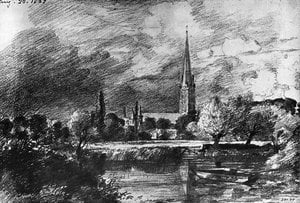
Jego fascynacja lokalnym krajobrazem wykraczała poza dziką naturę, obejmując również posiadłości ziemskie i wkomponowane w nie budowle. W 1816 roku namalował Wivenhoe Park, chwytając wiejską harmonię hrabstwa Essex. Artysta zwracał również uwagę na subtelną grę światła i architektury, co doskonale widać w obrazie Salisbury Cathedral from the Bishop's Grounds z 1823 roku. Umiejętność przekładania atmosfery konkretnego miejsca na język malarstwa objawiała się w niezwykłym sposobie, w jaki oddawał ciężar chmur oraz unikalną teksturę ziemi.
Niektóre z jego płócien osiągnęły zawrotną wartość rynkową długo po ukończeniu prac. Obraz The Lock z 1824 roku został sprzedany w domu aukcyjnym Christie's w 2012 roku za kwotę 22 441 250 funtów. Bogaty dorobek artystyczny obejmował liczne studia oraz ukończone dzieła, wśród których warto wymienić:
Krąg, rywale i inspiracje
Sposób prowadzenia pędzla, który zdefiniował krajobrazy Doliny Stour, został ukształtowany przez cichą obecność kilku wielkich mistrzów. Dzieła Claude’a Lorraina oraz Jacoba van Ruisdaela oferowały sposób patrzenia na świat, który odchodził od teatralnej sztuczności. John Constable zwracał się również ku kompozycjom Thomasa Gainsborough oraz bogatej fakturze malarstwa Petera Paula Rubensa. Te inspiracje pomogły mu wyjść poza sztywne, akademickie reguły Royal Academy. Zamiast wielkich, mitologicznych scen, tak bardzo lubianych przez jego współczesnych, szukał prawdy ukrytej w wilgotnym powietrzu i w tym, w jaki sposób światło kładzie się na tafli rzeki.
Jego artystyczna droga często biegła równolegle do ścieżki JMW Turnera. Byli współczesnymi, a ich rywalizacja wybuchała z pełną siłą podczas wystaw w Royal Academy. Podczas gdy jeden z nich zwracał się ku dramatyzmowi i wzniosłości, drugi pozostawał nierozerwalnie związany z dobrze znanymi, lokalnymi krajobrazami swojego dzieciństwa. To skupienie na bezpośredniej obserwacji natury ostatecznie przeniknęło przez kanał La Manche. Jego podejście do światła i atmosfery odcisnęło trwałe piętno na szkole Barbizon we Francji, gdzie malarze poszukiwali podobnej, głębokiej więzi ze światem przyrody.
W jego wędrówce nie brakowało również osobistych relacji, które kierowały jego krokami. Bliska więź z Johnem Fisherem, siostrzeńcem biskupa Salisbury, który zaprosił go do pobytu w tym regionie, miała kluczowe znaczenie. Te przyjaźnie zapewniały coś więcej niż tylko towarzystwo; otwierały one dostęp do konkretnych krajobrazów, które artysta studiował i malował przez długie lata. Dzięki tym ludziom i tym miejscom, jego twórczość stała się żywym zapisem konkretnej, przeżytej rzeczywistości.
Późne lata i śmierć
Lata następujące po jego ślubie z Marią Bicknell w 1816 roku upłynęły pod znakiem zmieniającego się poczucia przynależności. Choć jego twórczość pozostawała nierozerwalnie związana z rzeką i polami młodości, życie osobiste coraz mocniej dryfowało w stronę metropolii. Do 1827 roku na stałe osiadł w londyńskiej dzielnicy Hampstead. Ten czas naznaczył cień pogarszającego się stanu zdrowia Marii. Jej śmierć na gruźlicę w 1828 roku była wydarzeniem, które pozostawiło głębokie i bolesne piętno w jego duszy. Mimo osobistego cierpienia, nie przestał malować, odnajdując ukojenie w nieustannie zmieniającym się świetle krajobrazów, które studiował przez dziesięciolecia.
Ostatnie lata życia spędził w Bloomsbury w Londynie. Pozostał oddany swojej sztuce, zmagając się jednocześnie z zawiłościami życia prywatnego oraz fizycznymi wymaganiami pracy z farbą olejną. 31 marca 1837 roku John Constable zmarł w Bloomsbury. Został pochowany na cmentarzu kościoła św. Jana w Hampstead – w miejscu, które w jego późnych latach stało się jego prawdziwym domem.
Dziedzictwo i wpływ
Poprzez skierowanie wzroku ku codzienności angielskiej wsi, John Constable zmienił sposób, w jaki postrzegano krajobraz. Odszedł od teatralnych, wyidealizowanych scen faworyzowanych przez akademie, wybierając zamiast tego odnajdywanie głębi w tym, co zwyczajne. Wóz ze sianem czy prosty budynek gospodarczy stały się tematami godnymi uważnej analizy. Ta zmiana pomogła przesunąć punkt ciężkości malarstwa z wielkich narracji mitologicznych ku prawdziwemu przedstawieniu świata natury. Pokazał on, że pejzaż może nieść ze sobą głębokie poczucie osobistego przeżycia, zmieniając widok rzeki czy łąki w sposób wyrażania wewnętrznych nastrojów.
Jego nawyk pracy na świeżym powietrzu, mający na celu uchwycenie sposobu, w jaki światło przenika przez chmury i wilgoć w powietrzu, pozostawił trwały ślad w twórczości następców. To oddanie bezpośredniej obserwacji i badaniu efektów atmosferycznych antycypowało wiele nurtów, którymi później zajmowali się malarze impresjoniści. Jego wpływ przekroczył kanał La Manche, docierając do Francji, gdzie jego podejście współbrzmiało z ideami szkoły Barbizon. Artyści ci dzielili jego pasję do malowania bezpośrednio z natury oraz obserwowania ulotnych, zmieniających się właściwości przyrody. Twórczość Constabla pozostaje ogniwem łączącym nas ze sposobem widzenia, który stawia na pierwszym miejscu autentyczną teksturę ziemi i nieustannie zmieniające się światło nieba.
Gdzie dziś można podziwiać jego dzieła
Śledząc obecność jego twórczości w różnych kolekcjach, można dostrzec, jak na przestrzeni lat gromadzono jego wizje angielskiej wsi. Yale Center for British Art w New Haven skrywa aż 25 jego prac, w tym studium krajobrazu w pobliżu Dedham z około 1802 roku. W Londynie ślad jego geniuszu odnajdziemy w wielu instytucjach. Victoria and Albert Museum przechowuje 6 dzieł, takich jak scena przedstawiająca budowę łodzi w pobliżu Flatford Mill. National Gallery posiada 5 prac, w tym monumentalne płótno The Hay Wain z 1821 roku. Z kolei Tate Gallery opiekuje się 4 dziełami, wśród których znajduje się szczegół przedstawiający Flatford Mill z 1817 roku.
Zasięg oddziaływania artysty wykracza daleko poza Wyspy Brytyjskie, sięgając na kontynent. Paryskie Luwr posiada 2 jego prace, w tym przedstawienie Helmingham Dell. Te płótna ukazują odmienne sposoby, w jakie John Constable chwytał światło i atmosferę – od ciężkich chmur zawieszonych nad rzeką Stour, po ciche, uśpione zakątki wioski. Obcowanie z nimi w tak zróżnicowanych kontekstach pozwala na głębszą analizę tego, jak mistrz wykorzystywał grube warstwy farby, by budować niezwykłą teksturę na płótnie.
The Hay Wain (1821),
Salisbury Cathedral from the Meadows (1831),
The Lock (1824),
Stonehenge at Sunset (1836),
Wivenhoe Park, Essex (1816)


 Podgląd w skali 1:1
 Wyślij jako kartkę
 Udostępnij
 Szczegóły dzieła
 Przewodnik

 Pobierz obraz
 Podobne obiekty
 RTG
RTG Pokaz slajdów
 Pytania i odpowiedzi
 Statystyki

 Rozwiń treść
 Przełącz na wydania drukowane





































 Opcja ze szkłem jest dostępna wyłącznie w rozmiarach poniżej 110 cm