x
Podgląd w skaliPodgląd w skali Podgląd ARPodgląd AR Zamów ręcznie malowaną reprodukcję Zamów ręcznie malowaną reprodukcjęKup obraz wysokiej rozdzielczości Kup obraz wysokiej rozdzielczości Wyślij jako kartkęWyślij jako kartkę
Szczegóły dziełaSzczegóły dzieła Dodaj do ulubionych Dodaj do ulubionych PobierzPobierz Podobne obiektyPodobne obiekty RTGRTG Pokaz slajdówPokaz slajdów

untitled (2616)

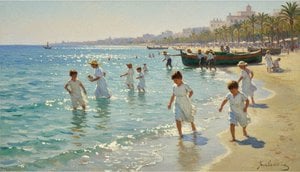
Joaquín Sorolla y Bastida's "untitled (2616)" captures the idyllic tranquility of women resting on grass, surrounded by books – a testament to his masterful use of light and vibrant color reflecting the spirit of Valencia.

Joaquín Sorolla – hiszpański malarz światowego formatu! Jego obrazy oświetlone słońcem, portrety i sceny z plaży uchwycą ducha śródziemnomorskiego życia. Odkryj jego dziedzictwo!

Giclée / Wydruk artystyczny

Druk giclée lub płótno o jakości muzealnej, szybka realizacja i szeroki wybór opcji wykończenia. (Zamów ręcznie malowaną reprodukcję Zamów ręcznie malowaną reprodukcjęKup obraz wysokiej rozdzielczości Kup obraz wysokiej rozdzielczości)

P118B $10
P118H $10
P118W $10
P438Z $10
P508JH $12
P508YH $12
P805H $10
P805Z $10
P919BZ $10
P919G $10
P919XJ $10
P959ZH $10
P968JZ $12
W106C $8
W218G $10
W218JH $8
W218Y $10
W307PJ $10
W316G $10
W316PJ $8
W316Y $10
W398PJ $8
W4111J $10
W500HY $15
W500JH $15
W692G $12
W849H $8
W940BG $15
W953PJ $8

Standardowy rozmiar
na wymiar
CM
INCH

Wybierz spośród naszych standardowych rozmiarów, które zachowują oryginalne proporcje dzieła sztuki.

szerokość
wysokość

Możesz wprowadzić własne wymiary, aby dopasować dzieło do konkretnej ramy lub przestrzeni. Jeśli wybrany rozmiar nie będzie odpowiadał proporcjom oryginalnego obrazu, przytniecie dzieło lub rozszerzymy obraz za pomocą odbicia lustrzanego lub jednolitego wypełnienia krawędzi. Przed rozpoczęciem produkcji prześlemy cyfrową wizualizację do Twojej akceptacji.
Prosimy pamiętać, że podgląd na ekranie nie odzwierciedla faktycznego przycinania ani rozszerzania. Tylko wizualizacja dokładnie pokaże końcową kompozycję.
Mimo dostępności niestandardowych rozmiarów, zalecamy wybór wymiaru z listy zdefiniowanej, aby zachować oryginalne proporcje.

Dostawa na cały świat () w ciągu 2 tygodni zamiast standardowych 4/5 tygodni. (5 Wrzesień)

why_choose_icon
Bezpłatna ekspresowa wysyłka na cały świat
why_choose_icon
Wysokiej jakości płótno lniane
why_choose_icon
Pełne ubezpieczenie przesyłki
why_choose_icon
Gwarancja zwrotu należności celnych i podatków importowych
why_choose_icon
Gwarancja wiernego odwzorowania kolorów
why_choose_icon
Polityka 60-dniowego zwrotu (tylko w przypadku wad)
why_choose_icon
Gwarancja 100% zwrotu kosztów
why_choose_icon
Zniżka przy zamówieniu wielu produktów

Suma całkowita

$ 68

reproduction

untitled (2616)

Giclée / Wydruk artystyczny

Wymiary reprodukcji

-

Cena całkowita

$ 68

Szybki podgląd

  • Movement: Impressionism
  • Artistic style: Painterly; Luminosity
  • Subject or theme: Outdoor scene; Women relaxing
  • Title: untitled (2616)
  • Notable elements or techniques: Loose brushstrokes; Atmospheric perspective
  • Artist: Joaquín Sorolla y Bastida
  • Year: 1893

Quiz o sztuce

Do każdego pytania dotyczy tylko jedna poprawna odpowiedź.

Pytanie 1:
What is the predominant artistic style of Joaquín Sorolla’s “untitled (2616)”?
Pytanie 2:
The painting depicts women lying on grass in a field. Approximately how many people are featured in the artwork?
Pytanie 3:
What objects are scattered throughout the scene, suggesting potential activities of the women?
Pytanie 4:
Sorolla’s use of light is characteristic of which artistic movement?
Pytanie 5:
Where did Sorolla initially pursue his artistic studies?

A Symphony of Sunlight and Serenity

In this breathtaking untitled masterpiece by the legendary Spanish Impressionist Joaquín Sorolla y Bastida, the viewer is invited to step into a sun-drenched sanctuary where time seems to stand still. The canvas unfolds as a pastoral dream, capturing a group of five women reclining amidst the lush, verdant embrace of a summer field. There is an immediate, visceral sense of peace that washes over the observer; the figures are not merely subjects in a landscape, but integral components of a larger, luminous atmosphere. As they lie scattered across the grass—some lost in the quiet contemplation of books, others simply surrendered to the warmth of the afternoon—the painting evokes a profound sense of leisure and the gentle beauty of shared solitude.

Sorolla, often celebrated as the "Master of Light," demonstrates his unparalleled ability to translate the ephemeral magic of the Mediterranean sun into permanent pigment. The scene is far more than a simple depiction of a picnic; it is an exploration of how light interacts with texture and form. One can almost feel the dappled shadows dancing across the women's clothing and the soft, rhythmic movement of the breeze through the meadow. This work serves as a poignant reminder of life's most tranquil moments, making it an evocative centerpiece for any collection that seeks to bring warmth, vitality, and a sense of restorative calm into a living space.

The Alchemy of Impressionism and Realism

Technically, this piece is a triumph of Sorolla’s signature method, blending the spontaneous energy of Impressionism with the structural integrity of Spanish Realism. To achieve such breathtaking luminosity, the artist employed a sophisticated layering of thin oil glazes, meticulously building up tonal gradations that allow light to appear as if it is emanating from within the canvas itself. His use of optical mixing—placing pure, vibrant pigments side-by-side rather than blending them into muddy tones—ensures that the greens of the grass and the highlights on the figures remain strikingly saturated and crisp.

The brushwork further enhances the emotional depth of the work. Rather than static, rigid lines, Sorolla utilizes fluid, gestural strokes that convey a palpable sense of movement and spontaneity. This technique mirrors the very nature of the subject matter: the fleeting, transient quality of sunlight. For the discerning collector or interior designer, this mastery of texture offers a multidimensional visual experience. When rendered as a high-quality reproduction, these nuances of light and shadow are preserved, allowing the painting to breathe life into a room, transforming a mere wall into a window onto a luminous, eternal summer.

A Legacy of Light for the Modern Interior

Beyond its technical brilliance, the painting carries a deep emotional resonance rooted in Sorolla’s own life. Having faced profound personal loss in his youth, the artist developed an acute sensitivity to the beauty of the present moment. This piece embodies that philosophy, acting as a visual celebration of existence and the restorative power of nature. The scattered books and relaxed postures suggest a narrative of intellectual and physical repose, making the artwork a symbol of mindfulness and grace.

For those looking to curate an environment of elegance and inspiration, this work offers unparalleled versatility. Its bright, natural palette complements a wide array of interior styles, from classical European aesthetics to contemporary minimalist settings. As a focal point, it does not merely decorate a space; it defines its mood, infusing the atmosphere with the radiant energy of the Spanish coast and the timeless, sun-soaked spirit of Joaquín Sorolla.


O artyście

A Life Bathed in Light: The World of Joaquín Sorolla

Joaquín Sorolla y Bastida, a name synonymous with the radiant light and vibrant energy of Spain, was more than just a painter; he was a chronicler of his nation’s soul. Born in Valencia in 1863, Sorolla's early life was marked by tragedy. Orphaned at the tender age of two following a cholera epidemic that claimed both parents, young Joaquín and his sister were raised by their maternal aunt and uncle. This early experience with loss perhaps instilled within him a profound appreciation for the fleeting beauty of life – a sentiment that would permeate his art. Though hardship shadowed his beginnings, it did not dim the spark of artistic talent that quickly became apparent. He received initial instruction in Valencia, demonstrating an aptitude that led to studies under established artists like Cayetano Capuz and José Benlliure, eventually culminating in a four-year grant to study in Rome. It was there, amidst the classical grandeur of Italy, that Sorolla began to forge his unique artistic path, absorbing influences while simultaneously developing a style distinctly his own.

From Historical Narratives to Sun-Drenched Realism

Sorolla’s early work reflected the prevailing academic trends of the time – large-scale historical and mythological scenes. He was initially drawn to grand narratives, producing works like *The Return from Fishing* (1893), a monumental depiction of fishermen hauling their boat ashore. However, a pivotal shift occurred as he returned to Spain and began to truly observe the world around him. He found himself captivated by the everyday lives of his countrymen, particularly those along the Valencian coast. The intense Mediterranean sunlight, the shimmering sea, and the vibrant energy of the people became his primary subjects. This transition wasn’t immediate; Sorolla continued to explore social realism with works like Sad Inheritance (1899), a powerful depiction of children afflicted by polio bathing in the sea – a painting that garnered significant acclaim but also revealed a darker, more compassionate side to his artistic vision. *Sad Inheritance*, exhibited at the Universal Exhibition in Paris, brought him widespread recognition and cemented his position as a leading figure in Spanish art. Yet, it was his increasingly focused exploration of light and color, inspired by Impressionism though never fully embracing its tenets, that would define his legacy. He wasn’t merely *depicting* light; he was attempting to *capture* its very essence, the way it danced on water, illuminated skin, and transformed ordinary moments into scenes of extraordinary beauty.

Master of Luminism: A Unique Artistic Voice

Sorolla's technique became instantly recognizable – a bravura display of brushwork, characterized by loose, energetic strokes that conveyed movement and atmosphere. He worked *en plein air* whenever possible, directly confronting the challenges of capturing fleeting light conditions. This dedication to painting outdoors resulted in canvases brimming with life and immediacy. His beach scenes, perhaps his most iconic works, are not simply picturesque representations of leisure; they are studies in luminosity, reflections, and the joyful interaction between people and their environment. Paintings like *Children on the Seashore* and *Sewing the Sail* exemplify this mastery – figures bathed in golden light, rendered with a remarkable sense of spontaneity and vitality. He wasn’t interested in meticulous detail; rather, he sought to convey the *impression* of reality, prioritizing atmosphere and emotion over precise representation. This approach earned him comparisons to Impressionists like Monet and Renoir, but Sorolla's work possessed a unique Spanish character – a warmth, intensity, and emotional depth that set it apart.

Key Achievements & Recognition

  • 1892: Gold medal at the National Exhibition in Madrid for *Another Marguerite*.
  • 1894: Acclaimed for *The Return from Fishing: Hauling the Boat*, acquired by the Musée du Luxembourg.
  • 1899: Grand Prix and medal of honor at the Universal Exhibition in Paris for *Sad Inheritance*.
  • 1900-1923: Extensive exhibitions throughout Europe and the United States, establishing international recognition.
  • 1912-1928: Commissioned to create *Vision of Spain* for the Hispanic Society of America (completed posthumously).
  • Present Day: Works held in major museums worldwide, including the Museo Sorolla in Madrid.

Legacy and Enduring Influence

By the early 20th century, Joaquín Sorolla was internationally renowned. He exhibited widely throughout Europe and the United States, receiving numerous accolades and commissions. His most ambitious undertaking, *Vision of Spain*, a series of fourteen monumental murals commissioned by the Hispanic Society of America, remains a testament to his artistic vision and technical skill. Though he suffered a stroke in 1920 that curtailed his painting activity, Sorolla’s influence continued to grow after his death in 1923. His work inspired generations of artists, not only in Spain but around the world. Today, his paintings are held in major museums globally, including the Museo Sorolla in Madrid – a former home transformed into a dedicated space for showcasing his art. Sorolla’s legacy extends beyond his technical brilliance; he captured a specific moment in Spanish history and culture, immortalizing the beauty of its landscapes and the spirit of its people. He remains a master of light, color, and emotion—a painter whose work continues to resonate with audiences today, reminding us of the power of art to illuminate our world.

Joaquín Sorolla

Joaquín Sorolla

1863 - 1923 , Hiszpania

Krótka nota

  • Artistic Movement Or Style: Luminizm, Impresjonizm
  • Artists Who Influenced This Artist:
    • Pradilla
    • Bastien-Lepage
    • Menzel
  • Date Of Birth: 27 lutego 1863
  • Date Of Death: 10 sierpnia 1923
  • Full Name: Joaquín Sorolla y Bastida
  • Nationality: Hiszpański
  • Notable Artworks:
    • Inna Margarita
    • Powrót z połowu
    • Złota rybka
    • Typowy Sorosianin
  • Place Of Birth: Walencja, Hiszpania
Odkryj dzieła sztuki uporządkowane według tematów, stylów i cech charakterystycznych.