Wydruki giclée lub płótna o jakości muzealnej, szybka realizacja i szeroki wybór opcji wykończenia. ( Zamów ręcznie malowaną reprodukcję Przejdź do wersji cyfrowej)





























Wybierz spośród naszych standardowych rozmiarów, które zachowują oryginalne proporcje dzieła sztuki.

Wpisz wymaganą szerokość i wysokość, aby dopasować grafikę do ramy lub ściany. Wydruk można jedynie przyciąć, nigdy nie powiększając go poza oryginalny obraz, dlatego format o innych proporcjach spowoduje utratę części kompozycji. Przed rozpoczęciem druku prześlemy Ci cyfrowy podgląd do zatwierdzenia. Obraz wyświetlany na tej stronie nie pokazuje rzeczywistego przycięcia — jedynie podgląd oddaje ten efekt.
Dostawa na cały świat () w ciągu 2 tygodni zamiast standardowych 4/5 tygodni. (12 Listopad)
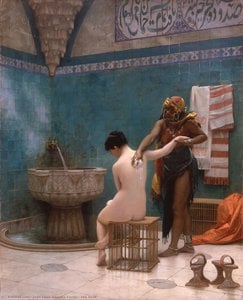
Moorish Bath
Wymiary reprodukcji
In the heart of the nineteenth century, few artists possessed the ability to transport a Parisian salon to the sun-drenched, tile-clad sanctuaries of the Middle East as masterfully as Jean-Léon Gérôme. His 1870 masterpiece, Moorish Bath, serves as more than a mere painting; it is a meticulously crafted window into a world of exotic luxury and quiet intimacy. As a cornerstone of the Orientalist movement, this work captures a profound moment within a Hammam, where the boundaries between reality and romanticized fantasy blur. The scene unfolds with a breathtaking sense of stillness, inviting the viewer to step past the threshold of the everyday and into a space defined by cool shadows, shimmering water, and the rhythmic beauty of ancient rituals.
The composition is anchored by a delicate tension between the figures within the frame. A seated lady, often identified as Circassian, rests amidst the splendor of her surroundings, while an attendant prepares for the ritual of cleansing. This interaction is not merely a depiction of hygiene but a choreographed dance of service and grace. Gér erne’s ability to capture the soft textures of skin against the hard, glazed surfaces of the architecture creates a sensory experience that is almost tactile. For the discerning collector or interior designer, this piece offers an unparalleled depth, providing a focal point that commands attention through its narrative complexity and serene atmosphere.
Technically, Moorish Bath represents the pinnacle of French Academicism. Gérôme was renowned for his photographic precision, a skill honed through rigorous training and fueled by his firsthand observations during travels to North Africa and Egypt. Every element in the painting—from the intricate Arabic calligraphy etched into the blue wall tiles to the subtle reflections dancing upon the surface of the stone basin—is rendered with an almost scientific accuracy. His use of color is particularly evocative; a palette dominated by tranquil blues and earthy tones creates a cooling effect, mirroring the literal temperature of the bathhouse itself.
The artist employs light not just to illuminate, but to sculpt. Light filters into the space as if through high, unseen apertures, catching the glint of gold jewelry and the moisture on the skin, lending the scene a luminous, ethereal quality. This mastery of chiaroscuro—the play between light and shadow—adds a layer of psychological depth to the work. The shadows are not merely dark voids but are filled with the suggestion of heat, humidity, and the heavy, fragrant air of an enclosed sanctuary. Such technical brilliance ensures that a high-quality reproduction of this work retains its ability to transform any room, adding a sense of historical weight and sophisticated texture to a modern interior.
To look upon Moorish Bath is to engage with the complex cultural dialogues of the Victorian era. While Gérôme’s work was deeply rooted in the Orientalist fascination with the "Exotic East," his approach transcends simple caricature. Through his meticulous attention to architectural detail and ethnographic observation, he provides a scholarly, albeit idealized, tribute to Ottoman aesthetics. The bathhouse itself symbolizes a sanctuary of privacy and ritual, a space where the social hierarchies of the era are momentarily suspended in favor of personal rejuvenation.
For those seeking to decorate with art that tells a story, this painting offers a rich tapestry of symbolism. It speaks of the intersection between the domestic and the divine, the private and the public, and the enduring allure of the unknown. Whether placed in a grand library or a contemporary living space, the emotional impact of Gérôme’s work remains potent. It evokes a sense of wanderlust and a deep appreciation for the craftsmanship of a bygone era, making it an essential acquisition for anyone looking to infuse their environment with culture, history, and an everlasting sense of wonder.
Dzieło „Moorish Bath” – Jean-Léon Gérôme jest polecane do Accent, najlepiej w Living Room. Zastosowanie oraz przestrzeń pomagają zdecydować, gdzie najlepiej umieścić reprodukcję.
"Moorish Bath" wpisuje się w nurt Academic Realism w twórczości Jean-Léon Gérôme, której charakterystyczne motywy obejmują historical accuracy, exotic setting, racial dynamics, decorative style, narrative detail.
Jean-Léon Gérôme miał 46 lat w momencie powstania „Moorish Bath” w 1870. Wiek ten obliczono na podstawie roku urodzenia artysty, 1824.

Historia, którą napisał Jean-Léon Gérôme, bierze swój początek w Vesoul w departamencie Haute-Saône, gdzie 11 maja 1824 roku przyszedł na świat talent, który miał wkrótce zachwycić świat. Jego wczesne lata upłynęły pod znakiem naturalnego pociągu do ołówka i pędzla, rozwijanego pod czujnym okiem lokalnego nauczyciela, Claude-Basile Cariage. Ta pierwotna edukacja położyła niezbędne fundamenty pod przyszłość młodego człowieka, którego ambicje wkrótce miały wyrwać go z kojącej ciszy rodzinnych stron, by skierować ku tętniącemu życiem sercu Francji.
W wieku szesnastu lat, w 1840 roku, przybył do Paryża, pragnąc sięgać po wyższe cele. Trafił do pracowni Paula Delaroche, mistrza, którego biegłość w kreśleniu scen historycznych wywarła niezatarte piętno na młodym uczniu. Do 1843 roku Jean-Léon Gérôme towarzyszył swojemu mentorowi w podróży do Włoch – wyprawie, która fundamentalnie odmieniła jego postrzeganie formy i historii. Wędrując przez Florencję i Rzym, przemierzał sale Watykanu i błądził wśród antycznych ruin Pompejów. Te spotkania z pozostałościami starożytności dostarczyły mu wizualnego słownika, z którego czerpał przez resztę swojego twórczego życia.
Po powrocie do Paryża, w 1844 roku, szukał dalszego doskonalenia w atelier Charlesa Gleyre'a, by ostatecznie trafić do prestiżowej École des Beaux-Arts. Jego droga nie była jednak wolna od trudności. W 1846 roku doświadczył dotkliwej porażki, nie dostając się na prestiżowy konkurs Prix de Rome – odrzucenie to było wynikiem niedoskonałego rysunku postaci. Ten moment zmagania, zamiast go zniechęcić, zdawał się jedynie wyostrzyć jego determinację, by do perfekcji opanować te właśnie techniczne rygory, które niegdyś mu umykały.
Jean-Léon Gérôme poruszał się w świecie sztuki z przekonaniem, które graniczyło z militarną wręcz żarliwością. Był gorliwym obrońcą tradycji malarstwa akademickiego, człowiekiem, który pragnął zachować rygorystyczne standardy przeszłości w obliczu nadciągającej fali zmian. To zaangażowanie nie miało charakteru wyłącznie zawodowego, lecz było głęboko osobiste; wypowiedział on wojnę nowoczesnym nurtom swoich czasów, takim jak impresjonizm, który postrzegał jako odejście od dyscypliny, którą tak bardzo cenił. Jego sukces był niepodważalny – stał się jednym z trzech najsłynniejszych artystów Drugiego Cesarstwa, ciesząc się sławą, dzięki której jego wizerunki były reprodukowane na całym świecie.
Jego ręka prowadzona była przez oddanie skrupulatnemym detalom oraz niezwykły talent do kreowania dramatyzmu. Nie ograniczał się do zwykłego malowania sceny; on ją konstruował z precyzją, która wydawała się niemal naukowa. Był człowiekiem, który wierzył, że sztuka musi być sprzymierzeńcem rozumu, wymagając matematycznej dokładności w każdej linii i cieniu. W swojej pracowni zaszczepiał tę samą surowość u swoich uczniów, kładąc nacisk na prymat rysunku. Uważał, że zanim ktokolwiek podejmie próbę uchwycenia złożoności żywego, oddychającego modelu, musi najpierw opanować statyczną formę gipsowego odlewu. Dla Jean-Léon Gérôme prawda dzieła artystycznego spoczywała na fundamencie poprawnego, zdyscyplinowanego rysunku.
Jean-Léon Gérôme posiadał niepokojącą ciekawość świata, która wciągała go daleko poza paryskie pracownie, ku skąpanym w słońcu krajobrazom Turcji, Egiptu i Afryki Północnej. Te podróże stały się paliwem dla jego orientalistycznych wizji, w których dążył do rekonstrukcji atmosfery odległych krain poprzez pryzmat intensywnego realizmu. Jego fascynacja egzotyką nie była jedynie kwestią malowniczych widoków; stanowiło to głębokie zaangażowanie w tekstury i obyczaje Wschodu. Ta obsesja stała się tak kluczowa dla jego sławy, że jego obraz Wężyarz został później wybrany na okładkę znaczącej publikacji analizującej zachodnie postrzeganie Orientu. Nie ograniczał się on do zwykłej obserwacji tych kultur; on je rekonstruował, często łącząc bezpośrednie doświadczenia z niezwykle zdyscyplinowanym poczuciem narracji historycznej.
Ta dążność do odtwarzania przeszłości rozciągała się również na jego fascynację antykiem i mitologią grecką. Szczególnie przyciągały go małe, delikatne figurki z antycznej Tanagry, temat, który zajmował znaczną część jego twórczych myśli. Tworzył złocone, brązowe wersje tych postaci, a nawet namalował dwa płótna przedstawiające wyobrażoną, starożytną pracownię rzeźbiarską w Tanagrze. Jego więź z tymi klasycznymi formami była tak intymna, że w swoim paryskim atelier namalował dwa autoportrety, przedstawiające go w trakcie rzeźbienia figurki tanagrańskiej. Tworzył również miniaturowe wersje Tańczącej z obręczą, wykazując wszechstronność, która zacierała granicę między monumentalną skalą malarstwa historycznego a intymną precyzją rzeźby.
Wznosząca się kariera Jean-Léon Gérôme rozpoczęła się od nagłego przypływu uznania w 1847 roku, kiedy to jego dzieło Pojedynek kogutów po raz pierwszy przykuło wzrok paryskiej publiczności. Ten wczesny sukces wytyczył ścieżkę dla twórczości definiowanej przez nieustanną ciekawość przeszłości oraz odległych krain Wschodu. Do 1872 roku artysta stworzył Pollice Verso – obraz, który uchwycił napięty moment w rzymskim Koloseum, gdzie los gladiatora zależy od jednego, pojedynczego gestu. Następnie, w 1873 roku, zaprezentował Szarego Kardynała, dzieło ukazujące jego niezwykłą zdolność do oddania powagi władzy poprzez ciężkie szaty i pełną spokoju godność. Pędzel artysty wędrował od tematów politycznych i monumentalnych ku tym bardziej pierwotnym i ludzkim, czego dowodem jest przedstawiona w 1884 roku Giełda niewolników w Rzymie.
Wraz z upływem lat Jean-Léon Gérôme nieustannie zgłębiał punkty styku między mitem a rzeczywistością. Latem 1890 roku zwrócił swoją uwagę ku legendzie o Pygmalionie i Galatei, pragnąc uchwycić tę ulotną chwilę, w której posąg zaczyna nabierać tchu. Jego fascynacja egzotyką również pozostała stałą siłą napędową; około 1894 roku namalował Kobiety z haremu karmiące gołębie na dziedzińcu, a później, w 1895 roku, oddał cichą intensywność obrazu Tygrysy i jej młode. Dzieła te ukazują artystę, który z równą swobodą odnajdywał się w bezruchu dziedzińca, co w dramatyzmie antycznej historii.
Wpływ, jaki wywarł Jean-Léon Gérôme, wykraczał daleko poza mury jego własnej pracowni, sięgając samych fundamentów nowoczesnej edukacji artystycznej. Jako wybitna postać nurtu akademizmu, stworzył on w École des Beaux-Arts rygorystyczne środowisko szkoleniowe, które przyciągało ambitne dusze z całej Europy i Ameryki. Jego metoda była niezwykle wymagająca, zakorzeniona w głębokim przekonaniu, że sztuka musi być ściśle powiązana z nauką. Wymagał od swoich uczniów pełnego opanowania formy statycznej poprzez studia nad gipsowymi odlewami antycznych rzeźb, zanim w ogóle pozwolono im stanąć przed żywym modelem. Ta żmudna dyscyplina była nieustannym badaniem światła i cienia, często wymagającym całego tygodnia intensywnych studiów, aby w pełni zrozumieć i oddać pojedynczą pozę.
W swojej pracowni był znany jako surowy mistrz, który domagał się matematycznej precyzji w każdej linii. Dwa razy w tygodniu przemierzał zatłoczone sale, wytykając błędy z bezlitosną szczerością, która potrafiła doprowadzić studentów do łez lub zniszczyć rysunek, by udowodnić istotną kwestię techniczną. Jednak ta surowość miała na celu zbudowanie fundamentu dyscypliny, zdolnego udźwignąć każdą, nawet najbardziej złożoną tematykę. Dzięki tym metodom prowadził dłonie dwóch tysięcy innych twórców, kształtując możliwości techniczne całego pokolenia. Jego nauczanie sprawiło, że nawet gdy style ulegały zmianom, znaczenie poprawnego rysunku pozostało centralnym filarem dla wszystkich, którzy kształcili się pod jego okiem.
Wielu jego uczniów zdołało odnaleźć własny, unikalny głos, przenosząc jego nacisk na biegłość techniczną na zupełnie nowe terytoria. Wśród tych, którzy przeszli przez jego progi, znaleźli się Thomas Eakins, John Singer Sargent oraz Mary Cassatt. Inni znamienici studenci, jak choćby Shinn, poznali ciężar i wagę formalnego wykształcenia w ramach paryskiego systemu. Choć jego własne dzieła były szeroko dystrybuowane i promowane przez galerię Goupil, jego prawdziwe dziedzictwo odnajdywano najczęściej w precyzji i warsztacie artystów, których pomógł uformować.
Do roku 1880 nazwisko Jean-Léon Gérôme wykraczało daleko poza mury paryskich pracowni, osiągając skalę sławy, która uczyniła go prawdopodobnie najsłynniejszym żyjącym artystą swoich czasów. Niezwykła zdolność do oddawania detali z taką precyzją sprawiała, że jego wizje były masowo reprodukowane, przenikając do domów i galerii na całym świecie. Ta powszechna cyrkulacja dzieł sprawiła, że jego reputacja nie ograniczała się jedynie do elitarnych kręgów Francji, lecz stała się przedmiotem publicznej fascynacji. Jego prace zyskały poziom uznania, o jakim niewielu współcześestom mogło marzyć, a obrazy te stały się bliskie widzom oddalonym o tysiące mil od jego własnego atelier.
Ten międzynarodowy zasięg był szczególnie widoczny w Stanach Zjednoczonych, gdzie jego malarstwo zajęło prestiżowe miejsca w najważniejszych kolekcjach. Obecność jego dzieł w amerykańskich instytucjach pomogła ugruntować jego status jako postaci o fundamentalnym znaczeniu dla historii sztuki. Nawet gdy upływały kolejne dekady, jego płótna nie przestawały prowokować do myślenia i budzić podziwu w każdym, kto na nie natrafił. Depictions przeszłości oraz odległego Orientu pozostają na tyle sugestywne, by przyciągać uwagę, zapraszając odbiorców do kontemplacji złożonych sposobów, w jakie reprezentowane są historia i kultura.
Aby na własne oczy ujrzeć niezwykłą precyzję jego pędzla, należy udać się do wielkich skarbców historii. W Paryżu Musée d'Orsay przechowuje jego płótna, oferując bezpośredni kontakt z akademicką rygorystycznością, którą niegdyś tak żarliwie bronił. Po drugiej stronie Atlantyku, Metropolitan Museum of Art w Nowym Jorku posiada kilka jego dzieł, pozwalając widzom obcować z jego szczegółowymi narracjami w ramach tej ogromnej, międzynarodowej kolekcji. Te sale muzealne zapewniają spokojną przestrzeń do kontemplacji technicznego mistrzostwa, które niegdyś budziło tak ogromne zainteresowanie publiczne.
Zasięg jego wizji wykracza daleko poza granice Francji. W Stanach Zjednoczonych Art Institute of Chicago prezentuje jego przedstawienie Circus Maximus, podczas gdy Phoenix Art Museum w Arizonie skrywa słynne Pollice Verso. Dla tych, którzy poszukują jego bardziej mrocznych lub duchowych tematów, Joslyn Art Museum w Omaha zawiera Muezzina. Nawet w wspaniałych galeriach Ermitażu w Sankt Petersburgu można odnaleźć Slave Market in Rome – dzieło, które w mistrzowski sposób demonstruje jego zdolność do odtwarzania atmosfery antyku za pomocą gry światła i cienia.

1824 - 1904 , Francja

Explore the captivating allure of Orientalism through 19th-century masterpieces. Discover the academic brilliance of Gérôme and Boulanger, and bring the exotic elegance of the East into your home with our museum-quality, hand-painted oil reproductions and bespoke art commissions.

Immerse yourself in the tranquil beauty of Jean-Baptiste-Camille Corot. Explore 25 iconic landscapes that defined the Barbizon school through light and atmosphere. Find inspiration for museum-quality art reproductions and decor. Discover all masterpieces on WahooArt.com.

Step into the dreamlike world of Gustave Moreau. Explore 25 iconic Symbolist masterpieces, from mythic tales to opulent textures. Find inspiration for museum-quality art reproductions and curated decor. Discover all masterpieces on WahooArt.com.

Explore iconic Orientalism masterpieces by Gérôme and Decamps. Discover timeless art and curated decor at WahooArt.com.
 Podgląd w skali 1:1
 Wyślij jako kartkę
 Udostępnij
 Szczegóły dzieła
 Przewodnik

 Pobierz obraz
 Podobne obiekty
 RTG
RTG Pokaz slajdów
 Pytania i odpowiedzi
 Statystyki


 Rozwiń treść









 Opcja ze szkłem jest dostępna wyłącznie w rozmiarach poniżej 110 cm