Zobacz w skali 1:1 Zobacz w AR Przełącz na wersję drukowaną Kup ręcznie malowany obraz Wyślij
Szczegóły Dodaj do ulubionych Pobierz plik obrazu Podobne obiekty RTG Pokaz slajdów Statystyki

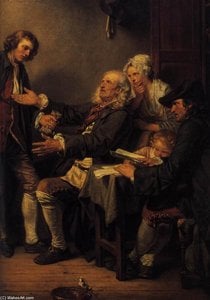
The Broken Pitcher

Experience the poignant emotion of The Broken Pitcher by Jean-Baptiste Greuze (1771), a masterpiece capturing sentimental 18th-century life; bring this timeless sorrow home.

"meta_description": "Jean-Baptiste Greuze (1725–1805): Francuski malarz moralista słynący z emocjonalnych scen rodzajowych i portretów, oddający życie codzienne i moralne lekcje. Jego dzieła charakteryzują się głębokim przesłaniem i wrażliwością na ludzkie uczucia."

Kup wysokiej rozdzielczości, ulepszony obraz cyfrowy o jakości znacznie przewyższającej podgląd online.

Każdy plik jest starannie przygotowywany przez naszych specjalistów przy użyciu zaawansowanych narzędzi oraz profesjonalnej, ręcznej retuszy. Dbamy o to, aby każdy obraz cechował się wyjątkową ostrością, precyzyjnym odwzorowaniem kolorów i subtelnymi detalami.

Ostateczny plik dostarczany jest drogą mailową w ciągu 72 godzin, zoptymalizowany do natychmiastowego wykorzystania w profesjonalnych zastosowaniach redakcyjnych i poligraficznych. To ta sama jakość, której ufają czołowe studia projektowe, wydawnictwa oraz galerie sztuki.

Obraz cyfrowy

Pobierz plik o wysokiej rozdzielczości do osobistego użytku, druku oraz projektów kreatywnych. ( Przełącz na wersję drukowaną Kup ręcznie malowany obraz)

Cena całkowita

$ 24,90

W każdym zamówieniu na obraz cyfrowy znajduje się

Profesjonalna dostawa cyfrowa z gwarancją

Wybierając WahooArt.com, nie otrzymujesz jedynie obrazu – otrzymujesz profesjonalnie udoskonalone cyfrowe dzieło sztuki, stworzone z najwyższą precyzją i objęte gwarancją satysfakcji. Oto wszystko, co automatycznie dołączane jest do Twojego zamówienia:

shipping_icon
Błyskawiczna dostawa e-mailowa

Plik z obrazem cyfrowym w wysokiej rozdzielczości zostanie przesłany na Twój adres e-mail w ciągu 72 godzin od złożenia zamówienia – gotowy do natychmiastowego użycia.

canvas_icon
Plik cyfrowy ulepszony przez AI

Twoja grafika została profesjonalnie zoptymalizowana przy użyciu zaawansowanych narzędzi AI oraz ręcznej edycji, co zapewnia maksymalną szczegółowość, klarowność i wierność kolorów.

insurance_icon
Bezpłatna dożywotnia ponowna dostawa

Przypadkowo usunąłeś lub zgubiłeś swój plik? Bez obaw – prześlemy go Tobie ponownie w dowolnym momencie, bez żadnych opłat.

tax_icon
Bez opłat importowych – zawsze

Ciesz się swoją sztuką natychmiast, bez żadnych opłat celnych, należności ani kosztów dostawy – pliki cyfrowe są zawsze wolne od podatku.

color_icon
Gwarancja odwzorowania kolorów

Dzięki zastosowaniu profesjonalnych narzędzi i procesów zarządzania barwą zapewniamy, że Twoje cyfrowe zdjęcie odzwierciedla oryginalne kolory tak wiernie, jak to tylko możliwe.

return_icon
100 dni na satysfakcję

Jeśli nie będziesz zadowolony ze swojego cyfrowego obrazu, poprawimy go lub zwrócimy 100% kosztów w ciągu 100 dni – bez zbędnych pytań.

guarantee_icon
100% Gwarancja zwrotu pieniędzy

Nie jesteś zadowolony? Otrzymaj pełny zwrot kosztów w ciągu 100 dni od otrzymania pliku cyfrowego – bez zbędnych pytań.

discount_icon
Rabaty przy zamówieniach hurtowych

Kup 3 obrazy, oszczędź 10% - Kup 5, oszczędź 15% - Kup 10+, oszczędź 20%. Idealne do projektów kreatywnych, galerii i agencji.

Kluczowe informacje

  • Year: 1771
  • Artist: Jean-Baptiste Greuze
  • Subject or theme: Distress, loss, heartbreak
  • Artistic style: Sentimental genre painting
  • Dimensions: 109 x 87 cm

Quiz wiedzy o sztuce

Do każdego pytania dotyczy tylko jedna poprawna odpowiedź.

Pytanie 1:
What is the primary emotional atmosphere suggested by 'The Broken Pitcher'?
Pytanie 2:
Who is the artist credited with painting 'The Broken Pitcher'?
Pytanie 3:
In what year was 'The Broken Pitcher' painted?
Pytanie 4:
Which element is NOT mentioned as being in the background of the painting?
Pytanie 5:
Jean-Baptiste Greuze was known for his talent in capturing which aspect of human life?

A Whisper of Melancholy: Exploring The Broken Pitcher

To stand before Jean-Baptiste Greuze's The Broken Pitcher is to step directly into the heart of eighteenth-century sentimentality. This painting, executed in 1771, is far more than a mere portrait; it is a carefully composed tableau vivant of human vulnerability. The subject—a woman enveloped in a simple white dress—commands immediate attention, her posture speaking volumes without uttering a single word. Her hands, clasped together near her chest, suggest a profound internal dialogue, perhaps one tinged with loss or deep contemplation. Greuze masterfully captures that fleeting moment when emotion crests just before it breaks.

The Art of Sentiment: Context and Style

Greuze himself was a pivotal figure whose career blossomed during the rise of genre painting, an art form deeply attuned to the everyday dramas and emotional nuances of bourgeois life. While academic tastes often favored grand historical epics or mythological grandeur, Greuze found his voice in the intimate sphere. The Broken Pitcher exemplifies this shift toward sentimentality. The inclusion of secondary elements—the watchful dog and the sturdy chair—are not mere props; they are silent witnesses to the woman's emotional state. They ground the ethereal quality of her sorrow in a tangible, domestic reality, making her heartbreak feel immediate and deeply relatable to the viewer.

Technique and Emotional Resonance

The technical brilliance at play here lies in Greuze’s ability to render texture and gesture with exquisite care. Observe the soft fall of the white drapery against the darker tones of the background; this contrast serves to isolate and illuminate the figure's emotional core. The brushwork, while skilled enough for a high-quality reproduction, retains the characteristic warmth of an artist deeply invested in narrative feeling. It is through these subtle gradations of light and shadow that Greuze guides our eye directly to the poignant expression on her face, inviting us into the quiet drama unfolding within the frame.

Symbolism of Loss and Connection

The title itself, The Broken Pitcher, hints at a narrative tragedy or a broken promise—a potent symbol of shattered domestic peace or emotional wholeness. The pitcher, though unseen in its broken state, acts as an emotional proxy for the woman's own fractured spirit. The dog, often symbolizing unwavering loyalty, adds a layer of poignant companionship to her solitude. For the modern collector or decorator, this piece offers more than just aesthetic beauty; it offers a contemplation point—a beautiful meditation on resilience found within moments of perceived breakage.

Bringing Sentiment Home

Reproducing such an emotionally charged work allows one to infuse a space with history and deep feeling. Whether displayed in a formal drawing-room or a more intimate study, The Broken Pitcher acts as a soulful anchor. It speaks to the enduring human capacity for profound feeling—joy, sorrow, longing—and reminds us that the most powerful art often resides not in what is grandly depicted, but in what is quietly felt.


Biografia artysty

Jean-Baptiste Greuze: A Life Etched in Sentiment

Jean-Baptiste Greuze, a name synonymous with the poignant and morally charged genre paintings of the late 18th century, was born in Tournus, a small Burgundian town steeped in history, on August 21st, 1725. His early life, far from the grand salons of Parisian art, was shaped by his father’s profession as a roofer – a humble background that would profoundly influence the themes and subjects he later explored through his brushstrokes. Initially discouraged from pursuing artistic endeavors, young Greuze found an unexpected mentor in Grandon, a Lyon artist who recognized within him a nascent talent deserving of cultivation. This early guidance proved pivotal, leading to studies first in Lyon and then, crucially, at the prestigious Royal Academy in Paris under Charles-Joseph Natoire – an institution that would ultimately shape his artistic trajectory, though not always in ways he desired. It was within these hallowed halls that Greuze began to hone his skills, developing a distinctive style characterized by its intense emotionality and meticulous attention to detail.

The Rise of a Genre Painter

Greuze’s breakthrough arrived with breathtaking speed in 1755, with the unveiling of *Le Père de famille expliquant la Bible à ses enfants* (The Father Explaining the Bible to His Children). This wasn't merely a depiction of domestic life; it was an embodiment of Enlightenment ideals – a powerful statement on familial piety and moral instruction. The painting resonated deeply with contemporary audiences, capturing a spirit of bourgeois virtue that was rapidly gaining prominence within French society. Remarkably, this work was acquired by the discerning collector Ange-Laurent de La Live de Jully, catapulting Greuze to immediate fame. He swiftly followed this success with a series of further genre scenes – intimate glimpses into everyday life imbued with profound emotional depth and subtle moral undertones. These weren’t grand historical narratives or mythological allegories; instead, they focused on the lives of ordinary people—peasants, mothers, children—and explored themes of love, loss, poverty, and redemption. A journey to Italy in 1755, undertaken with his patron Abbé Louis Gougenot, broadened his artistic horizons, exposing him to the works of the Old Masters and influencing his technique. However, he ultimately found greater inspiration not in classical antiquity but in the realities of French society – its struggles, its joys, and its inherent complexities. His ability to evoke genuine feeling—joy, sorrow, remorse—set him apart from many of his contemporaries and firmly established him as a leading figure in the emerging Rococo style, albeit one with a distinctly moralizing bent.

Mastering Emotion and Moral Narrative

Greuze’s artistic strength lay not just in technical skill but in his profound understanding of human psychology and his ability to translate that understanding onto canvas. His paintings are characterized by an almost theatrical intensity—a heightened sense of drama and emotion that draws the viewer into the scene. Works like *La Jeune Fille qui pleure son oiseau mort* (The Young Girl Weeping for Her Dead Bird) and *Savoyard with a Dancing Doll* exemplify this mastery, demonstrating his remarkable talent for capturing subtle nuances of expression and conveying inner turmoil with breathtaking sensitivity. He possessed an extraordinary ability to depict the vulnerability of childhood, the heartbreak of loss, and the complexities of human relationships—all within the confines of seemingly simple domestic settings. His compositions were often carefully staged, utilizing dramatic lighting, expressive gestures, and meticulously rendered details to heighten emotional impact. Crucially, Denis Diderot, a leading intellectual of the Enlightenment, became a fervent champion of Greuze’s work, praising his ability to depict “morality in paint.” This recognition solidified Greuze's position as a significant voice within the artistic landscape of his time.

The Shifting Sands of Recognition and Later Works

Despite this initial success, Greuze faced considerable challenges throughout his career. He aspired to be recognized as a history painter – the most prestigious category within the Academy – and attempted a transition with *Septimius Severus Reproaching Caracalla* (1769). This ambitious work, depicting the Roman emperor’s confrontation with his son, was met with harsh criticism from the established academic establishment. The painting's lack of adherence to classical conventions and its somewhat unsettling emotional intensity ultimately led to Greuze’s rejection by the Academy – a devastating blow that profoundly affected him. He was subsequently accepted only as a genre painter, a decision that deeply wounded his pride and marked a turning point in his artistic trajectory. In the years following this setback, Greuze's work began to shift in tone, exploring themes of seduction, moral transgression, and social injustice with increasing boldness. These paintings, while technically proficient, often lacked the emotional resonance and moral clarity of his earlier masterpieces. He became increasingly reclusive and embittered, retreating from public life and struggling financially.

A Lasting Legacy

Despite this decline in fortune and recognition, Jean-Baptiste Greuze’s influence on French art remains undeniable. He pioneered a new form of genre painting that focused on contemporary life and explored universal human emotions—a departure from the traditional historical and mythological subjects favored by the Academy. His work paved the way for later artists who sought to depict the realities of everyday existence with honesty, sensitivity, and a profound understanding of the human condition. Greuze’s legacy endures not only through his paintings themselves but also through their ability to evoke powerful emotions in viewers centuries after they were created. He left behind a body of work that continues to captivate audiences with its emotional power, technical brilliance, and enduring relevance—a testament to the genius of an artist who dared to paint the complexities of human experience.

Key Works & Their Significance

  • Le Père de famille expliquant la Bible à ses enfants (1755): A cornerstone of his early success, embodying Enlightenment ideals of familial piety.
  • La Jeune Fille qui pleure son oiseau mort (c. 1765): Demonstrates Greuze’s mastery of emotional expression and poignant storytelling.
  • Savoyard with a Dancing Doll (c. 1763): Captures the spirit and vulnerability of childhood, showcasing his skill in portraiture.
  • Septimius Severus Reproaching Caracalla (1769): A failed attempt at historical painting that highlighted his strengths lay elsewhere.
  • The Broken Pitcher (c. 1770s): Represents a shift towards more sensual and morally ambiguous themes in his later work.

Jean-Baptiste Greuze

Jean-Baptiste Greuze

1725 - 1805 , Francja

Najważniejsze informacje

  • Artistic Movement Or Style: Rokoko, Malarstwo rodzajowe
  • Artists Or Movements Influenced By This Artist: ['Holenderskie malarstwo rodzajowe']
  • Artists Who Influenced This Artist: ['Grondom (Grandon)']
  • Date Of Birth: 1725
  • Date Of Death: 1805
  • Full Name: Jean-Baptiste Greuze
  • Nationality: Francuz
  • Notable Artworks:
    • Ojciec tłumaczący Biblię
    • Młoda dziewczyna płacząca nad martwym ptakiem
    • Savoyard z tańczącą lalką
  • Place Of Birth: Tournus, Francja