Podgląd w skaliPodgląd w skali Podgląd ARPodgląd AR Zamów ręcznie malowaną reprodukcję Zamów ręcznie malowaną reprodukcjęPrzełącz na obraz cyfrowy Przełącz na obraz cyfrowy Wyślij jako kartkęWyślij jako kartkę
Szczegóły dziełaSzczegóły dzieła Dodaj do ulubionych Dodaj do ulubionych PobierzPobierz Podobne obiektyPodobne obiekty RTGRTG Pokaz slajdówPokaz slajdów StatystykiStatystyki

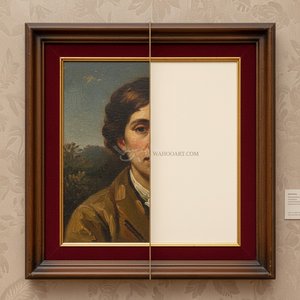
Self-Portrait

Experience the meticulous Neo-Classical style of Jean-Auguste-Dominique Ingres's iconic Self-Portrait, a masterful 1804 oil painting showcasing his precise lines and classical themes – perfect for art lovers seeking timeless elegance.

Jean-Auguste-Dominique Ingres – mistrz neoklasycyzmu, znany z precyzyjnych rysunków i idealizowanych portretów. Jego dzieła inspirują artystów od ponad 150 lat! Odkryj świat Ingresa.

Giclée / Wydruk artystyczny

Druk giclée lub płótno o jakości muzealnej, szybka realizacja i szeroki wybór opcji wykończenia. (Zamów ręcznie malowaną reprodukcję Zamów ręcznie malowaną reprodukcjęPrzełącz na obraz cyfrowy Przełącz na obraz cyfrowy)

P118B $10
P118H $10
P118W $10
P438Z $10
P508JH $12
P508YH $12
P805H $10
P805Z $10
P919BZ $10
P919G $10
P919XJ $10
P959ZH $10
P968JZ $12
W106C $8
W218G $10
W218JH $8
W218Y $10
W307PJ $10
W316G $10
W316PJ $8
W316Y $10
W398PJ $8
W4111J $10
W500HY $15
W500JH $15
W692G $12
W849H $8
W940BG $15
W953PJ $8

Standardowy rozmiar
na wymiar
CM
INCH

Wybierz spośród naszych standardowych rozmiarów, które zachowują oryginalne proporcje dzieła sztuki.

szerokość
wysokość

Możesz wprowadzić własne wymiary, aby dopasować dzieło do konkretnej ramy lub przestrzeni. Jeśli wybrany rozmiar nie będzie odpowiadał proporcjom oryginalnego obrazu, przytniecie dzieło lub rozszerzymy obraz za pomocą odbicia lustrzanego lub jednolitego wypełnienia krawędzi. Przed rozpoczęciem produkcji prześlemy cyfrową wizualizację do Twojej akceptacji.
Prosimy pamiętać, że podgląd na ekranie nie odzwierciedla faktycznego przycinania ani rozszerzania. Tylko wizualizacja dokładnie pokaże końcową kompozycję.
Mimo dostępności niestandardowych rozmiarów, zalecamy wybór wymiaru z listy zdefiniowanej, aby zachować oryginalne proporcje.

Dostawa na cały świat () w ciągu 2 tygodni zamiast standardowych 4/5 tygodni. (8 Wrzesień)

why_choose_icon
Bezpłatna ekspresowa wysyłka na cały świat
why_choose_icon
Wysokiej jakości płótno lniane
why_choose_icon
Pełne ubezpieczenie przesyłki
why_choose_icon
Gwarancja zwrotu należności celnych i podatków importowych
why_choose_icon
Gwarancja wiernego odwzorowania kolorów
why_choose_icon
100-dniowa polityka zwrotów (tylko w przypadku wad)
why_choose_icon
Gwarancja 100% zwrotu kosztów
why_choose_icon
Zniżka przy zamówieniu wielu produktów

Suma całkowita

$ 68

reproduction

Self-Portrait

Giclée / Wydruk artystyczny

Wymiary reprodukcji

-

Cena całkowita

$ 68

Szybki podgląd

  • Artist: Jean-Auguste-Dominique Ingres
  • Location: Private Collection
  • Year: 1804
  • Dimensions: 86 x 69 cm
  • Artistic style: Neoclassical, Realistic
  • Subject or theme: Self-portrait
  • Medium: Oil on canvas

A Study in Classical Restraint: Ingres' Self-Portrait

Jean-Auguste-Dominique Ingres’s “Self-Portrait,” painted in 1804, is more than just a likeness; it’s an embodiment of the Neoclassical ideals that defined his career and continues to resonate with viewers today. Executed in oil on canvas at a modest 86 x 69 cm, this work reveals Ingres' meticulous approach – a hallmark of his style – and offers a glimpse into the mind of one of France’s most influential artists. The painting immediately draws the eye to the artist himself, presented with an almost austere dignity within the confines of a dark robe accented by a crisp white collar. His gaze is direct, serious, hinting at the intellectual rigor that underpinned his artistic practice.

  • Subject and Composition: The self-portrait immediately establishes Ingres as both artist and subject, inviting contemplation on the role of the creative spirit. The composition is remarkably balanced, with the figure occupying a central space within the frame, emphasizing his importance and authority.
  • Technique – A Masterclass in Detail: Ingres’s technique is characterized by its precision and control. Notice the smooth blending of colors, particularly in rendering the fabric of the robe, and the subtle modeling of the face. These details demonstrate a dedication to observation and an almost obsessive attention to accuracy—a trait that would become synonymous with his name.

The Echoes of Antiquity

Ingres’s work is deeply rooted in the classical tradition, reflecting the Neoclassical movement's fascination with ancient Greece and Rome. The formal pose, reminiscent of Roman portrait busts, speaks to this influence. The artist deliberately evokes a sense of timelessness, suggesting that he is not merely depicting himself but participating in an unbroken chain of artistic endeavor stretching back through the centuries. This isn’t simply a representation; it's a deliberate engagement with history and its most celebrated figures.

The inclusion of a piece of paper or cloth – a subtle detail often overlooked – further reinforces this connection to antiquity. Such objects were frequently used by ancient artists for sketching and preliminary studies, suggesting that Ingres is not just a painter but also an apprentice, learning from the masters of old. The overall effect is one of quiet contemplation and scholarly devotion.

Historical Context and Artistic Legacy

Created in 1804, during a period of significant artistic change in Europe, “Self-Portrait” represents a reaction against the Rococo style that had dominated the preceding decades. Ingres’s commitment to classical forms and techniques aligned him with a growing movement seeking to restore order and reason after the excesses of the Enlightenment. His work anticipated the later developments of Academic painting, establishing a standard for realism and formal correctness that would influence generations of artists.

The painting's enduring appeal lies not only in its technical mastery but also in its ability to evoke a sense of intellectual curiosity and artistic aspiration. It’s a reminder of the power of observation, discipline, and a deep respect for tradition – qualities that remain relevant to artists today. It stands as a testament to Ingres's profound understanding of art history and his unwavering commitment to creating works of lasting beauty and significance.

A Timeless Masterpiece

Handmade oil paintings reproductions of Ingres’s “Self-Portrait” offer an exceptional opportunity to bring this iconic work into your home or studio. Each reproduction meticulously recreates the original's nuanced details, color palette, and textural qualities, allowing you to experience the full impact of Ingres’s artistic vision. This piece is more than just a decoration; it’s an investment in art history, a celebration of classical beauty, and a reminder of the enduring power of human creativity.


O artyście

A Legacy of Line and Form: The World of Jean-Auguste-Dominique Ingres

Jean-Auguste-Dominique Ingres, a name synonymous with Neoclassical precision and an almost sculptural approach to painting, occupies a unique position in the history of art. Born in Montauban, France, in 1780, his artistic journey was one of unwavering dedication to classical ideals, tempered by a burgeoning sensuality and a willingness to challenge convention. Ingres wasn’t merely replicating the past; he was engaging in a profound dialogue with it, forging a style that would both define an era and anticipate the revolutions to come. His work stands as a testament to the power of line, form, and idealized beauty—qualities that continue to captivate viewers centuries later.

Early Influences and Artistic Training

Ingres’s artistic sensibilities were nurtured from a remarkably young age. His father, Jean-Marie-Joseph Ingres, was himself an artist and sculptor, instilling in Dominique a deep appreciation for form and technique—a foundation built upon meticulous observation and a love of the visual world. This early exposure to art was further solidified by his studies at the Académie Royale de Peinture, Sculpture et Architecture in Toulouse, under the guidance of Guillaume-Joseph Roques. However, it was his move to Paris in 1797 and subsequent apprenticeship with Jacques-Louis David, the leading figure of Neoclassicism, that truly shaped his artistic trajectory. David imparted a rigorous discipline—a focus on line, form, and historical subject matter—principles that would remain central to Ingres’s work throughout his career. The influence of David is undeniable, yet Ingres ultimately developed a distinct style, one characterized by a subtle sensuality and psychological depth that set him apart from his mentor.

The Pursuit of Ideal Beauty and Early Masterpieces

Ingres' artistic philosophy was profoundly rooted in admiration for the Italian Renaissance masters—Raphael, in particular, served as a constant source of inspiration. He believed in the power of line to define form and convey emotion, striving for an idealized beauty that transcended mere representation. This pursuit is vividly evident in his early works, such as *The Ambassadors of Agamemnon in the Tent of Achilles* (1801), which earned him the prestigious Prix de Rome. The painting showcases Ingres’s meticulous attention to detail, precise draftsmanship, and a clear narrative focus—hallmarks of Neoclassical style. The composition is remarkably balanced, the figures rendered with an almost sculptural quality, reflecting Ingres's fascination with classical antiquity. This early success established him as a rising star in the Parisian art scene, setting the stage for his subsequent explorations of form and beauty.

Beyond Raphael: Experimentation and Innovation

While deeply influenced by Raphael, Ingres didn’t simply imitate his style. He gradually developed a distinctive voice, infusing classical principles with a unique blend of sensuality and psychological insight. His portraits, in particular, demonstrate this evolution. He wasn't content to merely depict the outward appearance of his subjects; he sought to capture their inner lives, their emotions, and their personalities. This is particularly evident in *Portrait of Monsieur Bertin* (1833-1834), where the subject’s intense gaze and elongated hands convey a sense of both power and vulnerability. Ingres's use of line—particularly his emphasis on precise contours and subtle gradations of tone—creates an effect that is both elegant and unsettling, foreshadowing the expressive distortions of later movements like Cubism.

Orientalism and Late Masterpieces

Beyond his historical and mythological paintings, Ingres also explored other genres, most notably Orientalism. His depictions of exotic scenes and female nudes, such as *The Turkish Bath* (1862), completed when he was an astonishing 83 years old, reveal a fascination with the sensual and the mysterious. These works, though sometimes criticized for their idealized representations, demonstrate his continued willingness to experiment and push boundaries. Ingres’s late period is characterized by a remarkable intensity of color and a heightened sense of drama—qualities that are particularly evident in *Grande Odalisque* (1814). The painting captures the essence of an exotic beauty, rendered with a masterful command of line and form.

A Lasting Influence on Art History

Jean-Auguste-Dominique Ingres died in Paris in 1867, leaving behind a legacy that continues to resonate today. His emphasis on line, form, and idealized beauty profoundly influenced artists across generations. Remarkably, his work captivated even those who championed radically different styles—artists like Henri Matisse and Pablo Picasso admired his innovative approach to composition and his ability to imbue classical forms with a sense of vitality and emotion. Ingres’s paintings are now housed in major museums around the world, serving as testaments to his enduring artistic vision. He remains a pivotal figure in art history—a master who not only preserved the traditions of the past but also paved the way for the future. His work invites us to contemplate the nature of beauty, the power of line, and the timeless allure of classical ideals.

Notable Works

  • The Ambassadors of Agamemnon in the Tent of Achilles (1801)
  • The Vow of Louis XIII (1827)
  • Portrait of Monsieur Bertin (1833-1834)
  • The Turkish Bath (1862)
  • Grande Odalisque (1814)
Jean-Auguste-Dominique Ingres

Jean-Auguste-Dominique Ingres

1780 - 1867 , Francja

Krótka nota

  • Artistic Movement Or Style: Neoklasycyzm
  • Artists Or Movements Influenced By This Artist:
    • Henri Matisse
    • Pablo Picasso
  • Artists Who Influenced This Artist:
    • Jacques-Louis David
    • Raphael
    • Nicolas Poussin
  • Date Of Birth: 29 sierpnia 1780
  • Date Of Death: 14 stycznia 1867
  • Full Name: Jean-Auguste-Dominique Ingres
  • Nationality: Francuz
  • Notable Artworks:
    • Ambasadorzy Agamemnona
    • Przymiarki króla Ludwika XIII
    • Portret Mon. Bertina
    • Prywatny kąpiel
  • Place Of Birth: Montauban, Francja
Odkryj dzieła sztuki uporządkowane według tematów, stylów i cech charakterystycznych.