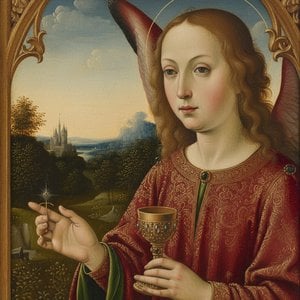
Podgląd w skali 1:1 Podgląd AR Przełącz na wydania drukowane Przejdź do wersji cyfrowej Wyślij jako kartkę
Szczegóły dzieła Przewodnik Dodaj do ulubionych Pobierz obraz Podobne obiekty RTG Pokaz slajdów Q&A Statystyki

Deesis Hand-painted oil painting reproduction

Discover Jan Gossaert’s ‘Deesis,’ a stunning 1527 Renaissance masterpiece! Admire its rich detail, dramatic lighting & profound religious symbolism in this exquisite oil painting.

Odkryj Jana Gossaerta (Mabuse), flamandzkiego malarza z XV-XVI wieku! Poznaj jego styl romanistyczny, sceny religijne i portrety – kluczową postać sztuki renesansu.

Ręcznie malowana reprodukcja olejowa

Ręcznie malowany obraz olejny na płótnie, wykonany na zamówienie przez naszych artystów w wybranym przez Ciebie wymiarze i oprawie. ( Przełącz na wydania drukowane Przejdź do wersji cyfrowej)

Corner sample of the P118B picture frame: polistyren formowany, 5 cm wide and 3 cm thick
P118B zł10
Corner sample of the P118H picture frame: polistyren formowany, 5 cm wide and 3 cm thick
P118H zł10
Corner sample of the P118W picture frame: polistyren formowany, 5 cm wide and 3 cm thick
P118W zł10
Corner sample of the P438Z picture frame: polistyren formowany, 5.5 cm wide and 3.5 cm thick
P438Z zł10
Corner sample of the P508JH picture frame: polistyren formowany, 7 cm wide and 3.5 cm thick
P508JH zł12
Corner sample of the P508YH picture frame: polistyren formowany, 7 cm wide and 3.5 cm thick
P508YH zł12
Corner sample of the P805H picture frame: polistyren formowany, 5 cm wide and 3.5 cm thick
P805H zł10
Corner sample of the P805Z picture frame: polistyren formowany, 5 cm wide and 3.5 cm thick
P805Z zł10
Corner sample of the P919BZ picture frame: polistyren formowany, 7 cm wide and 3.5 cm thick
P919BZ zł10
Corner sample of the P919G picture frame: polistyren formowany, 7 cm wide and 3.5 cm thick
P919G zł10
Corner sample of the P919XJ picture frame: polistyren formowany, 7 cm wide and 3.5 cm thick
P919XJ zł10
Corner sample of the P959ZH picture frame: polistyren formowany, 5 cm wide and 3 cm thick
P959ZH zł10
Corner sample of the P968JZ picture frame: polistyren formowany, 6 cm wide and 4 cm thick
P968JZ zł12
Corner sample of the W106C picture frame: lite drewno, 5 cm wide and 3 cm thick
W106C zł8
Corner sample of the W218G picture frame: lite drewno, 5 cm wide and 3 cm thick
W218G zł10
Corner sample of the W218JH picture frame: lite drewno, 5 cm wide and 3 cm thick
W218JH zł8
Corner sample of the W218Y picture frame: lite drewno, 5 cm wide and 3 cm thick
W218Y zł10
Corner sample of the W307PJ picture frame: lite drewno, 6 cm wide and 3 cm thick
W307PJ zł10
Corner sample of the W316G picture frame: lite drewno, 6 cm wide and 3 cm thick
W316G zł10
Corner sample of the W316PJ picture frame: lite drewno, 6 cm wide and 3 cm thick
W316PJ zł8
Corner sample of the W316Y picture frame: lite drewno, 6 cm wide and 3 cm thick
W316Y zł10
Corner sample of the W398PJ picture frame: lite drewno, 5 cm wide and 3 cm thick
W398PJ zł8
Corner sample of the W4111J picture frame: lite drewno, 6.5 cm wide and 3.5 cm thick
W4111J zł10
Corner sample of the W500HY picture frame: lite drewno, 7 cm wide and 5 cm thick
W500HY zł15
Corner sample of the W500JH picture frame: lite drewno, 7 cm wide and 5 cm thick
W500JH zł15
Corner sample of the W692G picture frame: lite drewno, 8 cm wide and 4 cm thick
W692G zł12
Corner sample of the W849H picture frame: lite drewno, 5 cm wide and 3 cm thick
W849H zł8
Corner sample of the W940BG picture frame: lite drewno, 7.5 cm wide and 4.5 cm thick
W940BG zł15
Corner sample of the W953PJ picture frame: lite drewno, 6 cm wide and 3.5 cm thick
W953PJ zł8

Standardowy format
personalizowane
CM
INCH

Wybierz spośród naszych standardowych rozmiarów, które zachowują oryginalne proporcje dzieła sztuki.

szerokość
wysokość

Wpisz wymaganą szerokość i wysokość, aby obraz pasował do Twojej ramy lub ściany. Ponieważ jest to dzieło malowane ręcznie, w przypadku rozmiaru o innych proporcjach artysta może domalować nieco więcej wokół obrazu lub przyciąć jego fragmenty — wybór należy do Ciebie. Przed rozpoczęciem pracy prześlemy Ci cyfrową wizualizację do zatwierdzenia. Obraz widoczny na tej stronie nie przedstawia rzeczywistego efektu — jedynie wizualizacja oddaje realny rezultat.

Przykłady możliwych zmian: Zamień twarz na zdjęcie klienta; Dodaj zwierzę domowe (np. zamień kota na psa); Ukryj wiadomość w tle; Zmień krajobraz lub elementy tła.
Po złożeniu zamówienia zespół WahooArt.com skontaktuje się z klientem drogą mailową w celu uzyskania instrukcji i prześle wizualizację projektu

Dostawa na całym świecie () w ciągu 3–4 tygodni zamiast standardowych 5 tygodni. (30 Październik). Bez kompromisów w kwestii jakości.

Bezpłatna ekspresowa wysyłka na cały świat
Wysokiej jakości płótno lniane
Pełne ubezpieczenie przesyłki
Gwarancja zwrotu należności celnych i podatków importowych
Gwarancja wiernego odwzorowania kolorów
100-dniowa polityka zwrotów (tylko w przypadku wad)
Gwarancja 100% zwrotu pieniędzy
Zniżka przy zakupie wielu sztuk

Suma całkowita

zł 1251

Deesis

Technika reprodukcji

Wymiary reprodukcji

-

Cena całkowita

zł 1251

Najważniejsze informacje

  • Influences:
    • Italian Renaissance
    • Flemish tradition
  • Movement: Romanism / Northern Renaissance
  • Artist: Jan Gossaert (Mabuse)
  • Title: Deesis
  • Notable elements or techniques: Gold leaf, glazing, dramatic lighting

A Divine Encounter: The Sacred Majesty of Jan Gossaert’s Deesis

In the quiet, hallowed atmosphere of the early sixteenth century, few works captured the intersection of earthly realism and celestial glory as profoundly as Jan Gossaert’s Deesis. Created in 1527, this masterpiece serves as a breathtaking window into the soul of the Northern Renaissance. The painting presents a sacred triad: Christ at the apex, flanked by the Virgin Mary and St. John the Baptist. This traditional iconographic arrangement, known as the Deësis—or "supplication"—depicts the holy figures in a moment of eternal intercession for humanity. As one gazes upon the composition, there is an immediate sense of being drawn into a divine court, where the boundaries between the viewer and the heavens begin to dissolve.

The emotional resonance of the piece lies in its delicate balance of power and tenderness. Gossaert, often referred to by his evocative moniker Mabuse, masterfully utilizes a triangular composition to guide the eye upward toward the central figure of Christ. The lighting is nothing short of dramatic; a soft yet piercing radiance emanicates from the center, illuminating the faces of the saints with a glow that feels both physical and spiritual. This chiaroscuro effect creates deep, velvety shadows within the dark wooden arch that frames the scene, lending the work a sculptural weight and an air of profound mystery. For the collector or designer, this painting offers more than mere decoration; it provides a focal point of intense contemplation and quiet strength.

The Alchemy of Technique and Texture

To appreciate the Deesis is to marvel at the technical virtuosity of the Netherlandish tradition blended with the burgeoning influences of Italian Romanism. Gossaert was a pioneer, an artist who breathed the air of Rome and brought its classical elegance back to the Low Countries. In this work, we see the meticulous attention to detail characteristic of his Flemish roots—the heavy, tactile folds of the drapery, the subtle translucency of skin, and the rich, opulent textures of gold and deep crimson pigments. The use of oil on wood panel allows for a layering of glazes that gives the colors an inner luminosity, making the gold leaf appear to shimmer as if caught in a flickering candlelight.

Every brushstroke serves a purpose in building a sense of tangible reality. The organic shapes of the flowing robes and rounded, compassionate faces contrast beautifully with the rigid, geometric architecture of the arched frame. This interplay between the soft and the structured creates a rhythmic harmony that is deeply pleasing to the eye. For those seeking to incorporate such a piece into a curated interior, the painting’s rich palette of earth tones, golds, and deep reds offers a sophisticated foundation for any classical or transitional design scheme, bringing an aura of historical prestige and timeless elegance to a room.

A Legacy of Faith and Humanism

Beyond its aesthetic brilliance, the Deesis is a profound theological statement. It captures the precise moment in art history when the medieval preoccupation with symbolic representation began to embrace the humanistic focus on anatomical accuracy and spatial depth. The gestures within the painting—Mary’s prayerful tilt and John the Baptist’s outstretched hand—are not merely poses; they are silent prayers captured in oil. They represent the bridge between the mortal struggle and divine mercy.

Owning a high-quality reproduction of this work allows one to invite this spirit of reverence into the modern home. It is an invitation to slow down, to observe the intricate details of Gossaert’s genius, and to find beauty in the intersection of the human and the divine. Whether placed in a private study, a grand library, or a sophisticated living space, the Deesis stands as a testament to the enduring power of Renaissance mastery, offering an unparalleled sense of peace, history, and artistic splendor.

Pytania i odpowiedzi

Jaki jest format oraz wymiary dzieła „Deesis” – Jan Gossaert (Mabuse)?

„Deesis” – Jan Gossaert (Mabuse) ma proporcje pracy w formacie Square o wymiarach 133 x 122 cm.

Jaki format i orientacja druku są sugerowane dla „Deesis” – Jan Gossaert (Mabuse)?

Zalecany rozmiar wydruku dzieła „Deesis” – Jan Gossaert (Mabuse) to Large w orientacji Square.

Gdzie mogę kupić cyfrową wersję dzieła „Deesis” – Jan Gossaert (Mabuse)?

Aby otrzymać plik cyfrowy dzieła „Deesis” – Jan Gossaert (Mabuse), zamów wysokiej rozdzielczości cyfrowe zdjęcie do pobrania na stronie Cyfrowy obraz.


Biografia artysty

Pionier Renesansu: Życie i Dziedzictwo Jana Gossaerta

W zmieniającym się krajobrazie wczesnego szesnastego wieku, niewielu artystów z taką biegłością jak Jan Gossaert potrafiło połączyć skrupulatne tradycje Północy z rozkwitającym humanizmem Południa. Znany historii pod sugestywnym przydomkiem Mabuse, ten wizjonerski malarz wyłonił się z Maubeuge we Francji, by stać się fundamentem ruchu romanistycznego. Jego dorobek życia stanowi głęboką metamorfozę sztuki niderlandzkiej, w której ostry, dotykowy realizm flamandzkich mistrzów spotkał się z monumentalną, rzeźbiarską elegancją włoskiego renesansu. Studiowanie dzieł Gossaerta to bycie świadkiem samej chwili, w której średniowieczna dusza zaczęła przyjmować klasyczne światło antyku.

Choć precyzyjne szczegóły jego wczesnej edukacji pozostają spowite mgłą czasu, artystyczne DNA Gossaerta było głęboko zakorzenione w tradycjach Niderlandów. Powszechnie uważa się, że lata formacyjne spędził na chłonięciu technicznej rygorystyczności takich mistrzów jak Rogier van der Weyden czy Hugo van der Goes. Od tych poprzedników odziedziczył niezrównane oddanie detalom – sposób przedstawiania tekstur, tkanin i światła, który wydawał się widzowi niemal namacalny. Gossaert był jednak daleki od bycia jedynie naśladowcą przeszłości; posiadał nienasyconą ciekawość tego, co nowe, zwracając wzrok ku południu, aby zintegrować anatomiczną precyzję i architektoniczny przepych włoskiego renesansu ze swoim rodzimym stylem.

Synteza Północy i Południa

Prawdziwy geniusz Mabuse tkwi w jego zdolności do harmonizowania dwóch pozornie odległych światów. Jego rozwój jako malarza romanistycznego stanowił odejście od czysto gotyckiej wrażliwości, która przez długi czas dominowała w Europie Północnej. Tam, gdzie wcześniejsi artyści skupiali się na symbolicznej głębi i duchowej ikonografii, Gossaert wprowadził poczucie fizycznej masy i klasycznych proporcji. Studiował ludzką formę z nową, naukową energią, pozwalając swoim postaciom zajmować przestrzeń z rzeźbiarską obecnością, która w jego epoce wydawała się rewolucyjna.

Ta stylistyczna ewolucja jest najbardziej widoczna w jego traktowaniu światła i atmosfery. W jego rękach światło nie tylko oświetla scenę; ono ją rzeźbi. Wykorzystywał perspektywę powietrzną, by tworzyć rozległe, immersyjne krajobrazy, które zdają się nieskończenie wycofywać w dal, stanowiąc dramatyczną scenę dla jego bohaterów. Jego kompozycje często cechuje złożona gra cieni i blasku, technika nadająca scenom religijnym i mitologicznym niemal teatralną intensywność. Ta biegłość pozwoliła mu poruszać się po delikatnej granicy między głęboką kontemplacją duchową, wymaganą przez zlecenia religijne, a intelektualnym przepychem, którego domagali się humaniści jego czasów.

Arcydzieła i Znaczenie Historyczne

Prężna kariera Gossaerta była wspierana przez prestiżową sieć mecenasów, od bogatych kupców po wysokich rangą duchownych i arystokrację. Jego twórczość była niezwykle różnorodna, obejmując zarówno monumentalne ołtarze stanowiące serce katedr, jak i intymne portrety, które chwytały psychologiczną esencję modelowanych osób. Do jego najbardziej trwałych dokonań należą:

  • Ikonografia religijna: Dzieła takie jak Deesis demonstrują jego zdolność do wykorzystania światła i koloru w celu wywołania głębokiej czci duchowej, przedstawiając Chrystusa z majestatem, który jest jednocześnie ludzki i boski.
  • Narracje mitologiczne: W dziełach takich jak Herkuł i Dejanira, Gossaert zaprezentował swoją biegłość w tematach klasycznych, wykorzystując muskulaturę antycznego mitu do przesuwania granic północnego malarstwa anatomicznego.
  • Portret: Jego portrety stanowią żywe dokumenty historyczne, charakteryzujące się skrupulatnym oddaniem kostiumu i godnym, stałym spojrzeniem, które odzwierciedla rosnący status jednostki w społeczeństwie renesansowym.

Znaczenia historycznego Jana Gossaerta nie można przecenić. Pełnił on rolę kluczowego łącznika, transportując klasyczne ideały Włoch przez Alpy i osadzając je mocno w żyznej glebie Niderlandów. Łącząc skrupulatne rzemiosło tradycji flamandzkiej z strukturalnymi innowacjami rzymskiego renesansu, utorował drogę przyszłym pokoleniom artystów Północy. Jego dziedzictwo pozostaje wyryte w samej tkance historii sztuki, reprezentując triumfujący okres kulturowej syntezy i artystycznego odrodzenia.

Jan Gossaert (Mabuse)

Jan Gossaert (Mabuse)

1478 - 1532 , Francja

Krótka nota

  • Artistic Movement Or Style: Malarstwo romanistyczne
  • Artists Who Influenced This Artist:
    • Andrea Mantegna
    • Leonardo da Vinci
  • Date Of Birth: Maubeuge, Francja
  • Date Of Death: 1532
  • Full Name: Jan Gossaert (Mabuse)
  • Nationality: Flamandzki
  • Notable Artworks:
    • Deesis
    • Herkuł i Dejanira
    • Święta Rodzina
  • Place Of Birth: Francja