


Dzieło sztuki prezentowane na tej stronie podlega ochronie prawem autorskim, co oznacza, że nie mamy prawa do tworzenia ani sprzedaży jego identycznej reprodukcji. Ochrona ta jest egzekwowana na mocy umów międzynarodowych, takich jak Konwencja berneńska oraz przez przepisy prawa krajowego, w tym te określone w Prawo autorskie USA – Tytuł 17.
Metoda ta jest w pełni zgodna z przepisami prawa autorskiego, ponieważ nie polega na kopiowaniu ani powielaniu chronionego dzieła. Stanowi ona kreatywną reinterpretację – nowy obraz, który czerpie inspirację z oryginału, ale nie jest z nim tożsamy.
Wydruki giclée lub płótna o jakości muzealnej, szybka realizacja i szeroki wybór opcji wykończenia. ( Zamów ręcznie malowaną reprodukcję Przejdź do wersji cyfrowej)





























Wybierz spośród naszych standardowych rozmiarów, które zachowują oryginalne proporcje dzieła sztuki.

Wpisz wymaganą szerokość i wysokość, aby dopasować grafikę do ramy lub ściany. Wydruk można jedynie przyciąć, nigdy nie powiększając go poza oryginalny obraz, dlatego format o innych proporcjach spowoduje utratę części kompozycji. Przed rozpoczęciem druku prześlemy Ci cyfrowy podgląd do zatwierdzenia. Obraz wyświetlany na tej stronie nie pokazuje rzeczywistego przycięcia — jedynie podgląd oddaje ten efekt.
Dostawa na cały świat () w ciągu 2 tygodni zamiast standardowych 4/5 tygodni. (8 Listopad)
Orange Impulse
Wymiary reprodukcji
A red circle with a yellow center anchors the composition, acting as a focal point amidst a field of shifting shapes. Surrounding this central form, various colors and dark, black elements create a sense of tension and contrast. The arrangement suggests a sudden release of energy, a visual pulse captured in 1955. The work moves away from literal representation, favoring a language of pure color and form to communicate movement and cosmic force.
The application of pigment creates a sense of depth, inviting a close examination of the interplay between the organic and the geometric. Through this abstraction, the canvas attempts to translate the intangible rhythms of life into a tangible visual experience.
Created during a period of significant transformation in Canadian modernism, this work reflects a departure from traditional landscape painting. It aligns with the mid-century movement toward spiritualized abstraction, where the artist seeks to express the essence of time and space rather than the physical world.
The piece exemplifies the shift toward a universal, modernist dialogue, moving beyond regionalism to explore the internal mechanics of emotion and motion. It remains a significant example of the era's push to redefine the boundaries of North American art through non-representational expression.
Jasność zarejestrowana dla „Orange Impulse” – James Williamson Galloway Macdonald wynosi Soft Shadow.
Zalecane zastosowanie (Focal) oraz przestrzeń (Coworking) to dwie rekomendacje dla dzieła „Orange Impulse” – James Williamson Galloway Macdonald.
„Orange Impulse” – James Williamson Galloway Macdonald emanuje Energetic emocjami, wpisując się w ogólnie Bold nastrój.

James Williamson Galloway Macdonald, known affectionately to the art world as Jock Macdonald, stands as a monumental figure in the evolution of Canadian modernism. Born in the rugged, atmospheric landscape of Thurso, Scotland, in 1897, his early life was steeped in the dramatic textures of his homeland. This foundational connection to nature would later become the heartbeat of his abstract explorations. After honing his technical prowess at the prestigious Glasgow School of Art, Macdonald embarked on a transformative journey across the Atlantic in 1926. Arriving in Canada, he did not merely join an existing art scene; he arrived to ignite a revolution, bringing with him a sophisticated understanding of European avant-garde movements such as Cubism and Surrealism that would eventually dismantle the boundaries of representational painting in North America.
As his career unfolded, Macdonald’s work underwent a profound metamorphosis, moving away from the literal depiction of the world toward a deeper, more spiritualized abstraction. He became a master of capturing the intangible, seeking to translate the very essence of movement, time, and cosmic energy onto the canvas. His palette was as diverse as his imagination, utilizing traditional oils and watercolors alongside experimental industrial materials like Duco and Lucite. This willingness to embrace new media allowed him to achieve a unique sense of depth and luminosity. In masterpieces such as Orange Impulse, one witnesses a vibrant explosion of red and yellow shapes that pulse with the dynamic energy of mid-century modernism, inviting the viewer into a realm where color itself becomes a language of pure emotion.
Macdonald’s contribution to art history extends far beyond his individual canvases; he was a pivotal educator and a catalyst for collective change. Through his influential teaching positions at the Vancouver School of Decorative and Applied Arts and the Ontario College of Art, he nurtured a new generation of Canadian artists, encouraging them to look inward and toward the abstract. As a prominent member of the Painters Eleven, he helped establish a movement that challenged the dominance of landscape painting in Canada, pushing the national identity toward a more universal, modernist dialogue.
His thematic preoccupations often revolved around the organic rhythms of life, frequently utilizing motifs such as birds and aquatic forms to explore the concept of space, time, and motion. Whether it is the whimsical, mid-century charm found in Music Hour, where a vibrant yellow fish serves as a captivating centerpiece, or the more somber, textured reflections in works like Rust of Antiquity, Macdonald’s oeuvre remains a testament to the power of abstraction to touch upon the profound. His ability to blend the organic with the geometric created a visual vocabulary that continues to resonate, ensuring his place as a pioneer who redefined the limits of Canadian art.

1897 - 1960 , United Kingdom

Odkryj 10 arcydzieł abstrakcji geometrycznej! Poznaj historię Mondriana, Kandinskiego i Maleвича. Inspiracje wnętrzarskie z malarstwem abstrakcyjnym – reprodukcje najwyższej jakości na WahooArt.com. Eksploruj kolekcję online!
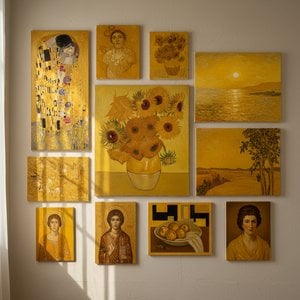
Odkryj 10 najsłynniejszych obrazów w odcieniach ochry żółtej! Van Gogh, Monet i inni mistrzowie. Poznaj historię sztuki, inspiracje kolorystyczne i techniki malarskie. Reprodukcje najwyższej jakości na WahooArt.com – udekoruj swój dom arcydziełami!

Odkryj 10 arcydzieł ekspresjonizmu abstrakcyjnego – Pollock, Rothko, de Kooning i inni. Poznaj historie artystów, techniki i inspiracje dla Twojego wnętrza. Reprodukcje najwyższej jakości na WahooArt.com!

Odkryj 25 arcydzieł Marka Rothko – mistrza abstrakcji i koloru. Poznaj historie, techniki i emocje kryjące się za jego płótnami. Reprodukcje obrazów najwyższej jakości na WahooArt.com. Eksploruj kolekcję online!

Odkryj 25 arcydzieł Wassily Kandinskiego – pioniera abstrakcji i ekspresjonizmu! Poznaj historie, techniki i emocje kryjące się za jego kolorowymi kompozycjami. Reprodukcje obrazów najwyższej jakości na WahooArt.com. Eksploruj pełną kolekcję online!
 Podgląd w skali 1:1
 Wyślij jako kartkę
 Udostępnij
 Szczegóły dzieła
 Przewodnik

 Pobierz obraz
 Podobne obiekty
 RTG
RTG Pokaz slajdów
 Pytania i odpowiedzi
 Statystyki


 Rozwiń treść









 Opcja ze szkłem jest dostępna wyłącznie w rozmiarach poniżej 110 cm


