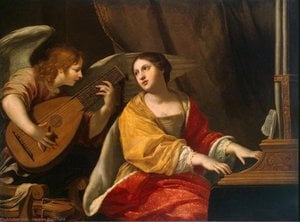
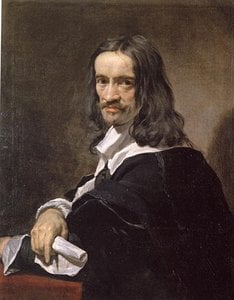
Jacques de Stella: A Classicist Bridging Florence and Paris
Jacques de Stella (1596-1657) stands as a pivotal figure in 17th-century French art, a painter whose career seamlessly blended the rigorous principles of Florentine classicism with the burgeoning dynamism of Roman influence. Born in Lyon to a family steeped in artistic tradition – his father, François Stella, was a painter and merchant of Flemish origin – Stella’s early life laid the foundation for a remarkable trajectory. Despite his father's untimely death before providing formal training, Stella’s siblings, including sculptor Madeleine and artist François the Younger, fostered an environment rich with creative discourse and artistic practice. This familial legacy, coupled with his uncle Antoine Stella’s own artistic pursuits, propelled him towards a life dedicated to visual expression.
Stella's artistic journey commenced in Lyon, where he honed his skills before embarking on a transformative period in Florence between 1616 and 1621. This sojourn within the court of Cosimo II de Medici proved profoundly influential. Working alongside Jacques Callot, Stella immersed himself in the ideals of Renaissance art, absorbing the meticulous detail, balanced compositions, and profound moral narratives characteristic of Florentine painting. The influence of Florence is undeniably evident throughout his oeuvre, particularly in his masterful use of perspective, drapery, and the depiction of religious figures with a dignified solemnity.
The Roman Years: Poussin’s Shadow and Papal Patronage
Following Cosimo II's death in 1621, Stella relocated to Rome, where he spent the next decade establishing himself as a respected artist. This period witnessed a significant shift in his artistic sensibilities, marked by an increasing engagement with classical antiquity and, crucially, the teachings of Nicolas Poussin. Poussin’s emphasis on light, color, and idealized forms resonated deeply with Stella, shaping his approach to composition and subject matter. Their friendship fostered a shared pursuit of clarity, restraint, and spiritual depth – qualities that would become hallmarks of Stella's style.
Stella’s Roman career was further distinguished by his patronage from Pope Urban VIII, who recognized the artist’s talent and commissioned numerous works, including intricate paintings on stone (onyx, lapis-lazuli, or slate) alongside more traditional panel paintings. These commissions showcased Stella's technical virtuosity and his ability to translate complex narratives into visually compelling forms. His work during this time demonstrated a masterful command of technique, evident in the precise rendering of textures, the subtle gradations of light and shadow, and the harmonious integration of figures within their environments.
Religious Themes and Royal Recognition
Stella’s artistic output was particularly focused on religious subjects, most notably his poignant depictions of the “Childhood of Christ.” Five distinct versions of this iconic scene exist, each offering a subtly different interpretation of the narrative. These paintings are not merely representations of biblical events; they are imbued with a profound sense of tenderness, vulnerability, and spiritual contemplation. The meticulous detail with which Stella portrays the infant Jesus’s interactions with his parents – Mary and Joseph – speaks to his deep understanding of human emotion and his ability to convey complex theological ideas through visual imagery.
In 1634, Stella returned to Lyon before moving to Paris in 1635. His arrival in the capital marked a significant turning point in his career. Presented to King Louis XIII by Cardinal Richelieu, he was granted the prestigious title of ‘Peintre du Roi’ (King's Painter), a position that afforded him royal patronage and a guaranteed pension of 1000 livres. This recognition solidified Stella’s status as one of France’s leading artists, allowing him to continue his artistic pursuits with relative security and freedom.
A Collector and Legacy
Beyond his prolific painting and engraving activities, Jacques Stella was an avid art collector throughout his life. He amassed a remarkable collection of works by Poussin, Raphael, and Michelangelo, alongside drawings by Leonardo da Vinci – demonstrating a deep appreciation for the artistic heritage of the past. His dedication to preserving and studying these masterpieces underscores his commitment to both artistic creation and historical scholarship.
Stella’s career spanned several decades, marked by a remarkable adaptability and a willingness to embrace diverse artistic styles. He died in Paris, leaving behind a substantial body of work that continues to be admired for its elegance, technical skill, and profound spiritual depth. His influence on subsequent generations of French painters is undeniable, cementing his place as a key figure in the transition from Mannerism to Classicism and a vital link between the artistic traditions of Florence and France.



 Podgląd w skali
 Przełącz na wydruki
 Wyślij jako kartkę
 Udostępnij
 Szczegóły dzieła

 Pobierz
 Podobne obiekty
 RTG
RTG Pokaz slajdów
 Statystyki


 Rozwiń treść