Zobacz w skali 1:1 Zobacz w AR Kup ręcznie malowany obraz Przełącz na wersję cyfrową Wyślij
Szczegóły Przewodnik Dodaj do ulubionych Pobierz plik obrazu Podobne obiekty RTG Pokaz slajdów Statystyki

Thursday April 17

Discover iosu aramburu, a Peruvian visual artist renowned for exploring modernity, Andean history, and architecture through innovative painting, sculpture, and installation. Dive into his impactful work on Latin American modernism.

Giclée / Wydruk artystyczny

Wydruki giclée lub płótna o jakości muzealnej, szybka realizacja i szeroki wybór opcji wykończenia. ( Kup ręcznie malowany obraz Przełącz na wersję cyfrową)

Standardowy
na zamówienie
CM
INCH

Wybierz spośród naszych standardowych rozmiarów, które zachowują oryginalne proporcje dzieła sztuki.

szerokość
wysokość

Możesz wprowadzić własne wymiary, aby dopasować dzieło do konkretnej ramy lub przestrzeni. Jeśli wybrany rozmiar nie będzie odpowiadał proporcjom oryginalnego obrazu, przytniecie dzieło lub rozszerzymy obraz za pomocą odbicia lustrzanego lub jednolitego wypełnienia krawędzi. Przed rozpoczęciem produkcji prześlemy cyfrową wizualizację do Twojej akceptacji.
Prosimy pamiętać, że podgląd na ekranie nie odzwierciedla faktycznego przycinania ani rozszerzania. Tylko wizualizacja dokładnie pokaże końcową kompozycję.
Mimo dostępności niestandardowych rozmiarów, zalecamy wybór wymiaru z listy zdefiniowanej, aby zachować oryginalne proporcje.

Dostawa na cały świat () w ciągu 2 tygodni zamiast standardowych 4/5 tygodni. (25 Wrzesień)

why_choose_icon
Bezpłatna ekspresowa wysyłka na cały świat
why_choose_icon
Wysokiej jakości płótno lniane
why_choose_icon
Pełne ubezpieczenie transportowe
why_choose_icon
Gwarancja zwrotu należności celnych i podatków importowych
why_choose_icon
Gwarancja idealnego odwzorowania barw
why_choose_icon
100-dniowy okres na zwrot dzieła w przypadku wykrycia wad produkcyjnych
why_choose_icon
Gwarancja 100% zwrotu pieniędzy
why_choose_icon
Oferta przy zakupie wielu sztuk

Cena całkowita

$ 68

reproduction

Thursday April 17

Giclée / Wydruk artystyczny

Rozmiar reprodukcji

-

Suma do zapłaty

$ 68


Biografia artysty

A Reimagining of Modernity: The Visionary World of iosu aramburu

iosu aramburu emerges as a compelling voice in contemporary art, a Peruvian visual artist whose work transcends simple categorization. He isn’t merely painting or sculpting; he is excavating and reassembling the fragmented narratives of modernity within the Andean context. Born in Peru, aramburu dedicates his practice to exploring the utopian potentials inherent in early and mid-century modernism as it manifested—and was often reimagined—in Latin America. His research isn’t a nostalgic glance backward but a dynamic interrogation of how these architectural forms, social ideals, and artistic movements took root in a region grappling with its own unique history and identity.

Early Influences and Artistic Development

Aramburu's fascination stems from a deep engagement with the built environment of Peru and the broader Andean region. He doesn’t approach modernism as an imported style but rather as a localized phenomenon, shaped by indigenous traditions, political upheavals, and the specific geographical challenges of the Andes. His early work hinted at this preoccupation, often featuring abstracted landscapes punctuated by geometric forms reminiscent of modernist architecture. These weren't depictions of existing structures so much as echoes—ghosts of ambition and progress embedded within the natural world. This initial phase laid the groundwork for his more ambitious explorations into sculpture and installation, where he began to physically reconstruct fragments of this architectural past. The artist’s development is marked by a shift from representation towards reconstruction, from observing modernity to actively building its potential anew. He seeks not to replicate but to *reactivate* these forms, imbuing them with new meaning for a contemporary audience.

Themes and Symbolism in Aramburu's Work

At the heart of aramburu’s practice lies an investigation into the relationship between architecture, social utopias, and the human imagination. His installations often feature fragmented architectural elements—walls, staircases, windows—arranged in ways that disrupt traditional notions of space and functionality. These disruptions aren't arbitrary; they are deliberate attempts to challenge the perceived stability of modernist ideals. The recurring motif of the staircase, for example, can be interpreted as a symbol of both progress and impasse, representing the aspirations of modernity alongside its inherent limitations. His paintings frequently incorporate bold geometric shapes and vibrant colors, evoking the aesthetic language of early Latin American modernism while simultaneously introducing an element of surrealism. This juxtaposition creates a sense of uncanny familiarity, inviting viewers to question their own assumptions about history and progress. The artist’s work is deeply concerned with memory—the collective memories embedded within architectural structures and the individual experiences shaped by these spaces.

Major Achievements and Historical Significance

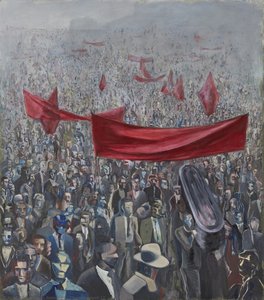
While still developing his career, aramburu has already garnered attention for his innovative approach to sculpture and installation. His piece “Thursday April 17” exemplifies his ability to create immersive environments that challenge viewers’ perceptions of space and history. The work, a fragmented architectural reconstruction, invites contemplation on the utopian ideals of modernism and their often-unfulfilled promises. Aramburu's significance lies in his refusal to treat Latin American modernism as a derivative of European or North American movements. He positions it as a distinct phenomenon—a unique response to specific historical, social, and geographical conditions. By excavating and reassembling the fragments of this past, he offers a powerful critique of colonial legacies and a hopeful vision for a more inclusive future. His work contributes to a broader conversation about the complexities of modernity and the importance of reclaiming marginalized narratives within art history. He is not simply documenting the past; he is actively shaping its future interpretation.

Najważniejsze informacje

  • Artistic Movement Or Style: Modernism, Installation
  • Full Name: iosu aramburu
  • Nationality: Peruvian
  • Notable Artworks: ['Thursday April 17']
  • Place Of Birth: Peru