Przełącz na wydruki Przełącz na wydrukiZamów ręcznie malowaną reprodukcję Zamów ręcznie malowaną reprodukcję Wyślij jako kartkęWyślij jako kartkę
Szczegóły dziełaSzczegóły dzieła Dodaj do ulubionych Dodaj do ulubionych PobierzPobierz Podobne obiektyPodobne obiekty Pokaz slajdówPokaz slajdów StatystykiStatystyki

INTERIEUR DU TEMPLE DE DIANE A NIMES

Hubert Robert (1733-1808): Francuski malarz rokokowy znany z romantycznych krajobrazów i fantastycznych ruin. Łączył historię, piękno rozpadu i wyobraźnię w unikalnym stylu. Odkryj jego dzieła!

Kup wysokiej rozdzielczości, ulepszony obraz cyfrowy o znacznie wyższej jakości niż podgląd online.

Każdy plik jest starannie przygotowywany przez naszych specjalistów przy użyciu zaawansowanych narzędzi oraz profesjonalnej, ręcznej retuszy. Dbamy o to, aby każdy obraz cechował się wyjątkową ostrością, precyzyjnym odwzorowaniem kolorów i subtelnymi detalami.

Ostateczny plik dostarczany jest drogą mailową w ciągu 72 godzin, zoptymalizowany do natychmiastowego wykorzystania w profesjonalnych zastosowaniach redakcyjnych i poligraficznych. To ta sama jakość, której ufają czołowe studia projektowe, wydawnictwa oraz galerie sztuki.

Obraz cyfrowy

Pobierz plik o wysokiej rozdzielczości do osobistego wyświetlania, druku oraz projektów kreatywnych. (Przełącz na wydruki Przełącz na wydrukiZamów ręcznie malowaną reprodukcję Zamów ręcznie malowaną reprodukcję)

Suma do zapłaty

$ 24,90

W każdym zamówieniu na obraz cyfrowy znajduje się

Profesjonalna dostawa cyfrowa z gwarancją

Wybierając WahooArt.com, nie otrzymujesz jedynie obrazu – otrzymujesz profesjonalnie udoskonalone cyfrowe dzieło sztuki, stworzone z najwyższą precyzją i objęte gwarancją satysfakcji. Oto wszystko, co automatycznie dołączane jest do Twojego zamówienia:

shipping_icon
Błyskawiczna wysyłka e-mailowa

Plik z obrazem cyfrowym w wysokiej rozdzielczości zostanie przesłany na Twój adres e-mail w ciągu 72 godzin od złożenia zamówienia – gotowy do natychmiastowego użycia.

canvas_icon
Plik cyfrowy wzbogacony przez AI

Twoja grafika została profesjonalnie zoptymalizowana przy użyciu zaawansowanych narzędzi AI oraz ręcznej edycji, co zapewnia maksymalną szczegółowość, klarowność i wierność kolorów.

insurance_icon
Dożywotnia darmowa ponowna dostawa

Przypadkowo usunąłeś lub zgubiłeś swój plik? Bez obaw – prześlemy go Tobie ponownie w dowolnym momencie, bez żadnych opłat.

tax_icon
Bez opłat importowych – zawsze

Ciesz się swoją sztuką natychmiast, bez żadnych opłat celnych, należności ani kosztów dostawy – pliki cyfrowe są zawsze wolne od podatku.

color_icon
Gwarancja wierności kolorów

Dzięki zastosowaniu profesjonalnych narzędzi i procesów zarządzania barwą zapewniamy, że Twoje cyfrowe zdjęcie odzwierciedla oryginalne kolory tak wiernie, jak to tylko możliwe.

return_icon
100-dniowa gwarancja satysfakcji

Jeśli nie będziesz zadowolony ze swojego cyfrowego obrazu, poprawimy go lub zwrócimy 100% kosztów w ciągu 100 dni – bez zbędnych pytań.

guarantee_icon
100% Gwarancja zwrotu pieniędzy

Nie jesteś zadowolony? Otrzymaj pełny zwrot kosztów w ciągu 100 dni od otrzymania pliku cyfrowego – bez zbędnych pytań.

discount_icon
Rabaty przy zamówieniach hurtowych

Kup 3 obrazy, oszczędź 10% - Kup 5, oszczędź 15% - Kup 10+, oszczędź 20%. Idealne do projektów kreatywnych, galerii i agencji.

Szybki podgląd

  • Movement: Neoclassicism
  • Title: Interieur du Temple de Diane
  • Medium: Painting
  • Influences:
    • Rococo
    • Roman art
  • Artistic style: Romanticism, Realism
  • Location: Private Collection

Quiz o sztuce

Do każdego pytania dotyczy tylko jedna poprawna odpowiedź.

Pytanie 1:
The painting ‘INTERIEUR DU TEMPLE DE DIANE A NIMES’ primarily depicts:
Pytanie 2:
Hubert Robert’s artistic style is best described as:
Pytanie 3:
The presence of figures within the temple interior suggests:
Pytanie 4:
What artistic technique is most prominently used in ‘INTERIEUR DU TEMPLE DE DIANE A NIMES’?

A Silent Echo of Antiquity: Hubert Robert’s *Interieur du Temple de Diane à Nismes*

Hubert Robert's 18th-century masterpiece, *Interieur du Temple de Diane à Nismes*, isn’t merely a depiction of an abandoned Roman temple; it’s a carefully constructed meditation on time, memory, and the enduring power of the past. The painting, lost to us in its original form but meticulously documented through Robert's sketches and engravings, transports the viewer to a realm where classical grandeur meets poignant decay. Robert, a master of capturing light and atmosphere, possessed an almost preternatural ability to imbue ruins with a haunting beauty—a quality that resonated deeply with his contemporaries and continues to captivate audiences today. The scene unfolds within a dimly lit interior, dominated by the skeletal remains of arched doorways and colossal stone pillars, hinting at a once-magnificent temple dedicated to Diane, the Roman goddess of the hunt.

The Painter’s Vision: Romanticism in Decay

Robert's artistic identity was shaped early on by his mentor, Michel-Ange Slodtz, who recognized Robert’s sensitivity to light and form. However, it was Robert’s own fascination with ruins that truly defined his career. He wasn’t simply recording the physical deterioration of buildings; he was actively constructing narratives around them. *Interieur du Temple de Diane à Nismes* exemplifies this approach. The figures within the space – a small group engaged in what appears to be restoration work, their forms rendered subtly and almost indistinctly – serve not as primary subjects but as anchors for our own contemplation of the scene’s history. Their presence suggests that even in abandonment, memory persists, and the echoes of past rituals still linger within these weathered walls.

Technique and Atmosphere: Light, Shadow, and Subdued Color

Robert's technical skill is immediately apparent in his masterful manipulation of light and shadow. The painting’s palette is deliberately restrained – dominated by earthy tones of ochre, umber, and gray—creating a somber, almost melancholic atmosphere. He expertly utilizes the natural light filtering through the open arches to sculpt dramatic shadows across the stone surfaces, emphasizing their texture and revealing the intricate details of the architecture. This chiaroscuro effect not only adds depth and three-dimensionality but also evokes a sense of mystery and timelessness. The artist’s attention to detail is remarkable; one can almost feel the cool dampness of the stone and hear the silence of centuries.

Symbolism and Historical Context: A Reflection on Roman Legacy

*Interieur du Temple de Diane à Nismes* speaks powerfully to the broader historical context of 18th-century France. Following the upheaval of the French Revolution, there was a renewed interest in classical antiquity—a desire to reconnect with the perceived stability and order of the Roman Empire. Robert’s paintings of ruins were not simply aesthetic exercises; they were symbolic gestures, reminding viewers of a glorious past that had been lost but could be reimagined. The temple itself, dedicated to Diane, represents a connection to ancient religious practices and the enduring power of nature—themes central to the Romantic movement which was gaining momentum during Robert’s lifetime. The deliberate inclusion of figures engaged in restoration work further reinforces this idea: an attempt to resurrect the past, albeit through a romanticized lens.

A hand-painted reproduction of *Interieur du Temple de Diane à Nismes* offers a remarkable opportunity to bring this evocative scene into your home or office. WahooArt’s meticulous reproductions capture the painting's atmospheric depth and subtle nuances, allowing you to experience Robert’s artistic vision with stunning clarity. More than just a decorative piece, it is a portal to another time—a silent echo of antiquity that invites contemplation and wonder.


Biografia artysty

Hubert Robert: A Painter of Ruins and Visions

Hubert Robert, a name inextricably linked to the evocative beauty of decaying grandeur, stands as a pivotal figure in 18th-century French art. Born in Paris in 1733, his life unfolded against a backdrop of profound artistic transformation—a journey from the playful elegance of Rococo to the nascent spirit of Neoclassicism, all while navigating the dramatic upheavals of the French Revolution. Robert’s genius lay not merely in depicting ruins; he possessed an extraordinary ability to conjure visions, seamlessly blending meticulous observation with boundless imagination to create scenes that resonated with a poignant nostalgia for the past and a tantalizing anticipation of the future. His artistic odyssey began within the structured confines of formal training, initially under the tutelage of sculptor Michel-Ange Slodtz, who recognized Robert’s innate talent but wisely steered him towards painting, sensing an unparalleled capacity to capture light, atmosphere, and the subtle poetry inherent in form.

Roman Reveries: Shaping an Artistic Identity

The defining moment in Robert's artistic development arrived with his extended sojourn to Rome between 1754 and 1765. Accompanying Étienne-François de Choiseul, a key figure in the French diplomatic service, he immersed himself completely within the ancient city’s captivating world—a realm steeped in history, architectural magnificence, and the palpable weight of centuries past. This wasn't simply an act of observation; it was a profound transformation. For eleven years, Rome became Robert’s open-air studio, its crumbling temples, majestic arches, and overgrown gardens fueling his artistic imagination with unparalleled intensity. He didn’t merely replicate what he saw; he actively reimagined it, imbuing the ruins with a sense of melancholic beauty—a poignant awareness of time's relentless passage. His early works, often categorized as *capriccio* compositions, exemplify this approach. These fantastical views skillfully juxtaposed classical ruins with contemporary life, creating dreamlike scenarios that blurred the boundaries between past and present. A crucial influence during this period was Giovanni Paolo Panini, a renowned landscape painter known for his meticulous depictions of Roman architecture. Robert absorbed Panini’s techniques—particularly his mastery of atmospheric perspective—and integrated them into his own distinctive style. His sketchbook pages from this era are invaluable records, revealing not just the physical details of Rome but also his artistic process – countless studies of architectural nuances and landscape compositions, demonstrating a keen eye for detail and an understanding of how light interacts with form.

Parisian Acclaim and Royal Patronage

Robert’s return to Paris in 1765 marked a significant shift in his career trajectory. He swiftly gained recognition within the artistic establishment, securing admission to the Académie Royale de Peinture et de Sculpture—a prestigious institution that served as the gatekeeper of artistic legitimacy. His debut exhibition at the Salon showcased “The Port of Rome, Ornamented with Different Monuments of Architecture, Ancient and Modern,” a work immediately lauded for its dramatic composition and evocative atmosphere. This success propelled Robert to the forefront of Parisian art circles, attracting the attention of influential critics and collectors alike. Denis Diderot, a leading figure of the Enlightenment and a prominent member of the *Encyclopédie*, famously praised Robert’s paintings, recognizing his ability to transport viewers to another time and place—to evoke a sense of history and mystery through his masterful use of light, color, and composition. This acclaim led to royal patronage, with commissions from King Louis XV for decorative projects within Versailles and other royal residences. He was subsequently appointed “Designer of the King’s Gardens,” a position that allowed him to shape the aesthetic landscape of some of France's most magnificent estates. Robert’s work resonated deeply with the prevailing taste for *capriccio* painting—a genre that captured the imagination of collectors fascinated by history, archaeology, and the romantic allure of the picturesque—but he elevated it beyond mere decorative art, imbuing it with a unique sensibility rooted in his profound understanding of Roman ruins.

Revolution, Resilience, and Lasting Legacy

The French Revolution presented an unprecedented challenge to Robert’s artistic career. As the monarchy crumbled and societal norms were overturned, many artists found themselves struggling to navigate the turbulent political climate. Robert, however, demonstrated remarkable resilience, continuing to paint prolifically despite the upheaval. He even endured a brief period of imprisonment during the Reign of Terror—a harrowing experience that undoubtedly informed his later works, which often explored themes of loss and transience. Following the Revolution, Robert was appointed curator of the newly established Muséum Central des Arts—the future Musée du Louvre—a testament to his expertise and dedication to preserving France’s artistic heritage. He played a crucial role in organizing and cataloging the museum's vast collection, ensuring that its treasures were safeguarded for generations to come. Hubert Robert died in Paris in 1808, leaving behind an extraordinary body of work that continues to captivate viewers with its evocative beauty and profound insights into the nature of time and memory. His legacy extends beyond his technical mastery—his ability to seamlessly blend historical accuracy with imaginative vision solidified his place as a pivotal figure bridging the Rococo and Neoclassical periods, anticipating aspects of Romanticism through his fascination for history and the sublime.
  • Key Influences: Giovanni Paolo Panini, Piranesi, the architectural landscape of Rome.
  • Major Themes: Ruins, landscapes, *capriccio* paintings, historical memory, the passage of time.
  • Artistic Style: Meticulous detail, atmospheric perspective, evocative lighting, blending observation with imagination.

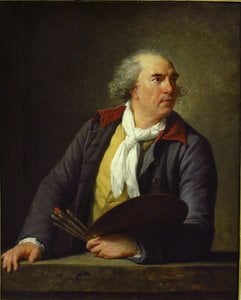
Hubert Robert

Hubert Robert

1733 - 1808 , Francja

Krótka nota

  • Artistic Movement Or Style: Rokokizm, Neoklasycyzm
  • Artists Or Movements Influenced By This Artist: ['Rokokizm']
  • Artists Who Influenced This Artist:
    • Giovanni Panini
    • Piranesi
  • Date Of Birth: 22 maja 1733
  • Date Of Death: 15 kwietnia 1808
  • Full Name: Hubert Robert
  • Nationality: Francuz
  • Notable Artworks:
    • Port Rzymu
    • Lot Galatei
    • Galerie Luwr
  • Place Of Birth: Paryż, Francja