Wydruki giclée lub płótna o jakości muzealnej, szybka realizacja i szeroki wybór opcji wykończenia. ( Zamów ręcznie malowaną reprodukcję Przejdź do wersji cyfrowej)





























Wybierz spośród naszych standardowych rozmiarów, które zachowują oryginalne proporcje dzieła sztuki.

Wpisz wymaganą szerokość i wysokość, aby dopasować grafikę do ramy lub ściany. Wydruk można jedynie przyciąć, nigdy nie powiększając go poza oryginalny obraz, dlatego format o innych proporcjach spowoduje utratę części kompozycji. Przed rozpoczęciem druku prześlemy Ci cyfrowy podgląd do zatwierdzenia. Obraz wyświetlany na tej stronie nie pokazuje rzeczywistego przycięcia — jedynie podgląd oddaje ten efekt.
Dostawa na cały świat () w ciągu 2 tygodni zamiast standardowych 4/5 tygodni. (8 Listopad)
The Republic
Wymiary reprodukcji
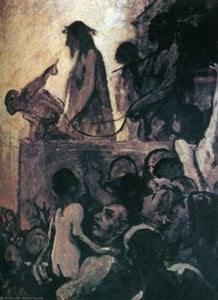
Honoré Daumier’s “The Republic” (1848) isn't merely a painting; it’s a potent distillation of the anxieties and aspirations swirling within post-revolutionary France. Captured with his signature blend of realism and biting satire, this oil on canvas presents a scene both familiar and profoundly unsettling – a woman, presumably a mother, holding her children close while simultaneously embodying the ideals of republican virtue. The composition immediately draws the eye to her central position; she’s not a regal figure or an idealized Madonna, but a common woman, weathered yet resolute, clutching a flag and a bottle—symbols that speak volumes about the precarious balance between nourishment and civic duty in a nation grappling with its new identity.
Daumier was deeply invested in documenting the social realities of his time. Born in Marseille in 1808, he witnessed firsthand the upheavals of the French Revolution and the subsequent political instability. His art became a relentless critique of the established order – the monarchy, the aristocracy, the Church, and the burgeoning bourgeoisie—all perceived as obstacles to genuine republicanism. “The Republic” is no exception; it’s a pointed commentary on the challenges faced by women in particular during this period of transition. The flag she holds isn't simply a symbol of national pride, but a visual representation of the ideals – liberty, equality, fraternity – that were supposed to underpin the new republic. The bottle, often interpreted as representing sustenance and motherhood, subtly suggests the vital role of family in sustaining these values.
Daumier’s technique is characterized by a remarkable directness and emotional intensity. He eschewed the polished surfaces and idealized forms favored by many of his contemporaries, opting instead for a rougher, more immediate style. The brushstrokes are visible, conveying a sense of urgency and immediacy. The palette is muted—earthy browns, ochres, and greys—reflecting the somber mood of the scene and emphasizing the weight of responsibility borne by the central figure. Notice how he uses light and shadow to sculpt her face, highlighting the lines etched by hardship yet radiating an undeniable strength. The background, featuring a simple chair and hinting at a boat, grounds the scene in a domestic setting, further emphasizing the woman’s role as the heart of the family and the embodiment of republican values.
He was heavily influenced by artists like Rubens, particularly in his use of dramatic chiaroscuro – the stark contrast between light and dark—to create a sense of theatricality. This technique amplifies the emotional impact of the painting, drawing attention to the woman’s face and gestures while simultaneously suggesting the turbulent political landscape surrounding her. Daumier's skill lay not just in his technical proficiency but also in his ability to imbue ordinary subjects with extraordinary significance.
Beyond its immediate depiction, “The Republic” is laden with symbolism. The flag, as mentioned earlier, represents the ideals of the republic, while the bottle speaks to the fundamental needs of family and community. However, the scene isn’t entirely optimistic. The woman's posture suggests a quiet determination rather than triumphant celebration. She’s not basking in victory; she’s enduring—a testament to the ongoing struggle for republican values. Some scholars have suggested that the children represent the future of France, entrusted to this woman’s care as she navigates the complexities of the new political order.
Daumier's work was often controversial during his lifetime, and “The Republic” is no exception. His unflinching critique of social injustice earned him both admirers and enemies. Yet, it remains a powerful and enduring image—a poignant reminder of the challenges inherent in establishing a truly democratic society and the vital role played by ordinary citizens in upholding its ideals.
Reproductions of “The Republic” capture the essence of Daumier’s artistic vision. Available in various sizes, this iconic artwork offers a unique opportunity to bring a touch of historical significance and social commentary into any space. The rich textures and dramatic lighting are faithfully reproduced, allowing you to appreciate the depth and complexity of Daumier's masterful technique. Whether displayed as a statement piece or incorporated into a more subtle interior design scheme, “The Republic” is sure to spark conversation and inspire reflection on the enduring values of liberty, equality, and fraternity.
Wymiary dzieła „The Republic” – Honoré Daumier to 73 x 60 cm. Reprodukcje można zamówić w innych rozmiarach, zachowując te same proporcje.
Pod względem postrzeganej jasności, „The Republic” – Honoré Daumier jest deep_shadow.
Status praw autorskich dla „The Republic” – Honoré Daumier: dzieło znajduje się w należy do domeny publicznej – autorskie prawa majątkowe wygasły. Określa to, czy reprodukcje obrazu mogą być sporządzane swobodnie.

Honoré-Victorin Daumier, postać niezwykle złożona i fascynująca, to artysta, którego twórczość wciąż wywołuje silne emocje i prowokuje do refleksji. Urodzony w 1808 roku w Marsylii, a zmarły w Valmondois w 1879 roku, Daumier był nie tylko malarzem, grafikiem i rzeźbiarzem, ale przede wszystkim obserwatorem ludzkiej natury – cynicznym, lecz pełnym współczucia. Jego życie, naznaczone trudami i niesprawiedliwością, stało się tłem dla jego niezwykle bogatego i różnorodnego dorobku artystycznego, który zrewolucjonizował świat grafiki i malarstwa.
Daumier, syn szklarza i poety, wyjechał do Paryża wraz z rodziną w 1814 roku. Wkrótce po przybyciu, rozpoczął naukę rysunku, a jego talent szybko stał się widoczny. Jego edukacja, choć nieformalna, była niezwykle wszechstronna – od klasycznych wpływów, przez obserwację życia ulicznego, aż po kontakty z wybitnymi artystami tamtych czasów. To właśnie ta mieszanka doświadczeń i inspiracji pozwoliła mu stworzyć unikalny styl, łączący realizm z ekspresją i satyrą.
Przełom w karierze Daumiéra nastąpił wraz z rewolucją z 1830 roku. To wydarzenie otworzyło mu drogę do publikacji satyrycznych rysunków, które szybko zdobyły popularność. Zaczynając jako anonimowy ilustrator dla czasopism, szybko stał się znany dzięki swojej pracy w *Le Charivari*, gdzie pod kierownictwem Charlesa Philipona mógł swobodnie rozwijać swój talent. Rysunki Daumiéra nie były jedynie humorystycznymi portretami – to ostre i bezkompromisowe komentarze na temat francuskiego społeczeństwa, polityki i obyczajów. Jego satyra, często brutalna i prowokacyjna, dotykała najwrażliwszych tematów, od korupcji w sądzie po dekadencję arystokracji.
Jego najbardziej znane karykatury, takie jak "Robert Macaire" czy "Typy paryskie", stały się symbolem krytyki społecznej i politycznej. W 1832 roku, za szczególnie ostre rysunki, Daumier został aresztowany i osadzony w więzieniu na sześć miesięcy. Ta sytuacja, zamiast go zniechęcić, tylko wzmocniła jego determinację w dążeniu do prawdy i obnażaniu niesprawiedliwości.
Mimo że Daumier jest najbardziej znany ze swoich grafik, nie można zapominać o jego twórczości malarskiej i rzeźbiarskiej. Jego obrazy, często przedstawiające sceny z życia codziennego paryskiego proletariatu – łazienników, kucharzy, prawników – charakteryzują się niezwykłą wrażliwością i empatią. Daumier nie malował idealizowanych portretów, lecz wiernie oddawał surowość i trudności życia, wykorzystując do tego celu dynamiczne kompozycje i dramatyczne oświetlenie.
Jego rzeźby, tworzone głównie z gliny (wiele z nich pozostaje niezakończonych), są świadectwem jego niezwykłego talentu modelarskiego. Poprzez gesty i mimikę, Daumier potrafił oddać całe bogactwo emocji i psychologicznych stanów, co czyni jego rzeźby prawdziwymi portretami duszy ludzkiej.
Honoré Daumier był artystą, który zrewolucjonizował świat grafiki. Jego innowacyjne techniki litograficzne, jego bezkompromisowa satyra i jego niezwykła wrażliwość na los ludzki wywarły ogromny wpływ na kolejne pokolenia artystów. Jego twórczość zainspirowała takich mistrzów jak Gustave Courbet i Édouard Manet, a jego prace do dziś są źródłem inspiracji dla artystów i krytyków sztuki.
Daumier nie był tylko artystą – był obserwatorem, komentatorem i świadkiem swojej epoki. Jego dzieła, dostępne w wielu muzeach na całym świecie, wciąż prowokują do refleksji nad kondycją ludzką i wyzwaniami współczesnego świata. Jego legacy jest dowodem na to, że sztuka może być potężnym narzędziem zmiany społecznej i obrony prawdy.

1808 - 1879 , Francja

Poznaj historię sztuki krytycznej społecznej – od realizmu XIX wieku po współczesne nurty. Analiza social realismu, socrealizmu i muralizmu meksykańskiego. Ekspercka analiza dzieł i artystów.
Poznaj historię satyry w sztuce – od Hogartha do współczesności! Krytyczna analiza dzieł, wpływ na społeczeństwo i politykę. Ekspercka wiedza dla miłośników historii i sztuki.

Odkryj fascynującą historię satyra w sztuce! Analiza ikonografii, symboliki i krytycznej funkcji tego mitologicznego stworzenia od starożytności po współczesność. Ekspercka interpretacja dzieł sztuki.

Explore the satirical world of John Leech, Victorian England's master caricaturist! Discover his iconic work for Punch magazine, illustrations with Dickens, and lasting impact on social commentary & art history. A comprehensive analysis.

Explore the life & work of Honoré Daumier, a master of 19th-century French realism and satire. Discover his powerful lithographs, paintings, and sculptures critiquing society – and his lasting influence on modern art.
 Podgląd w skali 1:1
 Wyślij jako kartkę
 Udostępnij
 Szczegóły dzieła
 Przewodnik

 Pobierz obraz
 Podobne obiekty
 RTG
RTG Pokaz slajdów
 Pytania i odpowiedzi
 Statystyki


 Rozwiń treść









 Opcja ze szkłem jest dostępna wyłącznie w rozmiarach poniżej 110 cm