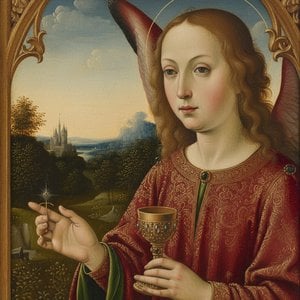
Farba olejna na płycie
Early Netherlandish Painting
1500
Renesans
60.0 x 71.0 cm
Städel MuseumRęcznie malowany obraz olejny na płótnie, wykonany na zamówienie przez naszych artystów w wybranym przez Ciebie wymiarze i oprawie. ( Przełącz na wydruki
Przełącz na obraz cyfrowy)
Wybierz spośród naszych standardowych rozmiarów, które zachowują oryginalne proporcje dzieła sztuki.
Możesz wprowadzić własne wymiary, aby dopasować obraz do konkretnej ramy lub przestrzeni. Jeśli wybrany rozmiar nie będzie odpowiadał proporcjom oryginału, przytniecie dzieło sztuki lub rozszerzymy je o dodatkowe elementy, ręcznie domalowane przez artystę. Przed rozpoczęciem produkcji wyślemy projekt cyfrowy do Twojej akceptacji.
Należy pamiętać, że podgląd na ekranie nie odzwierciedla rzeczywistego przycinania ani rozszerzania obrazu. Tylko projekt dokładnie pokaże ostateczną kompozycję.
Choć oferujemy możliwość zamówienia niestandardowych rozmiarów, zalecamy wybór wymiaru z gotowej listy, aby zachować oryginalne proporcje dzieła.
Dostawa na całym świecie () w ciągu 3–4 tygodni zamiast standardowych 5 tygodni. (11 Wrzesień). Bez kompromisów w kwestii jakości.
Ecce Homo
Wymiary reprodukcji
The painting before us – Hieronymus Bosch’s “Ecce Homo,” created around 1490, is far more than a simple depiction of a biblical scene. It's a visceral exploration of human fallibility, spiritual torment, and the weighty consequences of power, rendered with Bosch’s signature blend of meticulous realism and unsettling symbolism. This work, housed within the Indianapolis Museum of Art, invites prolonged contemplation, drawing the viewer into a crowded tableau brimming with emotional intensity and layered meaning.
At its core, “Ecce Homo” portrays the pivotal moment described in John 19:5 – Pontius Pilate presenting a scourged Jesus Christ to a hostile crowd. Bosch doesn’t offer a straightforward historical account; instead, he constructs a dynamic composition designed to evoke a profound sense of unease and moral questioning. The scene unfolds within a meticulously rendered architectural setting—a towering doorway leading into a cityscape, symbolizing perhaps the transition between earthly suffering and the promise of salvation, or alternatively, the confines of worldly existence and temptation.
The painting’s narrative is immediately arresting. Jesus, stripped bare and bearing the marks of his torment, is lowered by Nicodemus and John, figures who represent a glimmer of compassion amidst the surrounding chaos. Around him swirl a multitude of onlookers – Roman soldiers, grieving women, and ordinary citizens—each expressing a range of emotions: sorrow, suspicion, indifference, and even outright hostility. Bosch masterfully captures this diverse spectrum of human response, highlighting the complex moral landscape surrounding Christ’s trial and crucifixion. The sheer density of figures creates a claustrophobic atmosphere, intensifying the sense of drama and urgency.
Bosch's genius lies not just in depicting the scene itself, but in imbuing it with potent symbolism. The presence of the Roman soldiers underscores the political context—the authority of the empire complicit in Christ’s fate. The gestures of the onlookers – some pointing accusingly, others averted in shame – speak to the collective responsibility for his suffering. Even seemingly minor details, such as the animals present (a dog gnawing at a loaf of bread, a snake coiled around a column), contribute to the painting's rich symbolic tapestry, hinting at themes of corruption, betrayal, and divine judgment.
“Ecce Homo” is a prime example of Bosch’s distinctive artistic style—a captivating synthesis of realism and fantastical elements. Executed in oil on wood panel, the painting showcases his remarkable technical skill and meticulous attention to detail. Bosch's style is instantly recognizable for its blend of realism and fantastical elements. While grounded in observable reality – evident in the architectural setting and anatomical rendering of figures – a subtle undercurrent of unease permeates the scene, hinting at the artist’s broader concerns with human fallibility and spiritual struggle.
The technique involves layering glazes to build up color and form, creating a luminous effect and rich textures achieved through visible brushstrokes (impasto). Lines are used extensively to define forms, particularly in the drapery of the figures and the stonework of the architecture. The artist’s use of perspective is carefully considered, drawing the viewer into the crowded scene while maintaining a sense of spatial depth. The overall effect is one of intense realism combined with an otherworldly quality—a hallmark of Bosch's unique vision.
Created around 1490, “Ecce Homo” reflects the religious fervor and social anxieties of late medieval Europe. The *Ecce Homo* motif – "Behold the Man" – was a common subject in Christian art, serving as a constant reminder of Christ’s sacrifice and the consequences of sin. However, Bosch transcends mere historical representation; he transforms this familiar image into a profound meditation on human nature. The painting doesn't simply depict suffering; it compels us to confront our own mortality, our capacity for cruelty, and the enduring need for redemption.
“Ecce Homo” evokes a complex range of emotions: sorrow, piety, contemplation, and even a sense of foreboding. It’s a work that demands engagement—a challenge to viewers to consider their place within the larger narrative of human history and faith. For collectors and interior designers, this painting offers more than just aesthetic appeal; it provides a powerful statement about humanity's capacity for both great good and profound evil.
Photo Description: --Overall Impression-- The artwork is a detailed oil painting depicting the deposition of Christ after his crucifixion. It’s a narrative scene from Christian iconography, rendered in a realistic style characteristic of the Northern Renaissance. The composition is crowded and dynamic, with numerous figures tightly packed within a defined architectural space – a tower doorway leading to a city skyline. The central focus is on Jesus' body being lowered by Nicodemus and John, surrounded by grieving onlookers and soldiers. Lines are used extensively to define forms, particularly the drapery of the figures and the stonework of the architecture. Shapes are predominantly organic (human bodies) and geometric (building blocks). Textures appear rich and layered, achieved through impasto techniques – visible brushstrokes create a sense of depth and physicality. Lighting is dramatic, with strong contrasts between light and shadow emphasizing key figures and details. Perspective is employed to create a sense of recession into the city background, though it’s not entirely consistent due to the crowded composition. Depth is further enhanced by overlapping figures and varying levels of detail. The subject matter centers on a pivotal moment in Christian belief – the removal of Christ’s body from the cross. Symbolic elements include the grief of the onlookers, the presence of soldiers representing Roman authority, and the gestures of reverence shown by Nicodemus and John. Emotionally, the scene evokes sorrow, piety, contemplation, and even a sense of foreboding. The style is firmly rooted in Early Netherlandish painting, with meticulous detail, realistic representation, and a focus on narrative clarity. The technique involves layering glazes to build up color and form, creating a luminous effect.
1450 - 1516 , Holandia