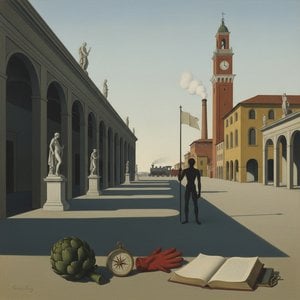
Giorgio de Chirico: A Dreamscape of the Mind
Giorgio de Chirico, urodzony w 1888 roku w Wolosie, Grecji, jako syn włoskich rodziców – genuejskiej matki i sycylijskiego ojca, rozpoczął swoją artystyczną podróż od połączenia dziedzictwa klasycznego z narastającym poczuciem nowoczesnej alienacji. Wczesna edukacja w Ateńskim Politechnice zapewniła mu solidne podstawy techniczne, jednak to studia w Monachium zapaliły prawdziwego ognia jego kreatywności. Tam, w intelektualnym fermentie przedwojennej Europy, spotkał prace Arnolda Böcklina i Maxa Klingera – artystów, których symbolistyczne krajobrazy i przerażające obrazy głęboko rezonowały z rozwijającym się jego estetycznym światem. Równie wpływowe były prądy filozoficzne tamtej epoki – pisma Fryderyka Nietzschego, Artura Schopenhauera i Otto Weiningera – które badały tematy egzystencjalizmu, nielojalność ludzkich pragnień i subiektywność rzeczywistości. Te idee stały się centralne dla przełomowej artystycznej wizji de Chirico.
Narodziny Sztuki Metafizycznej
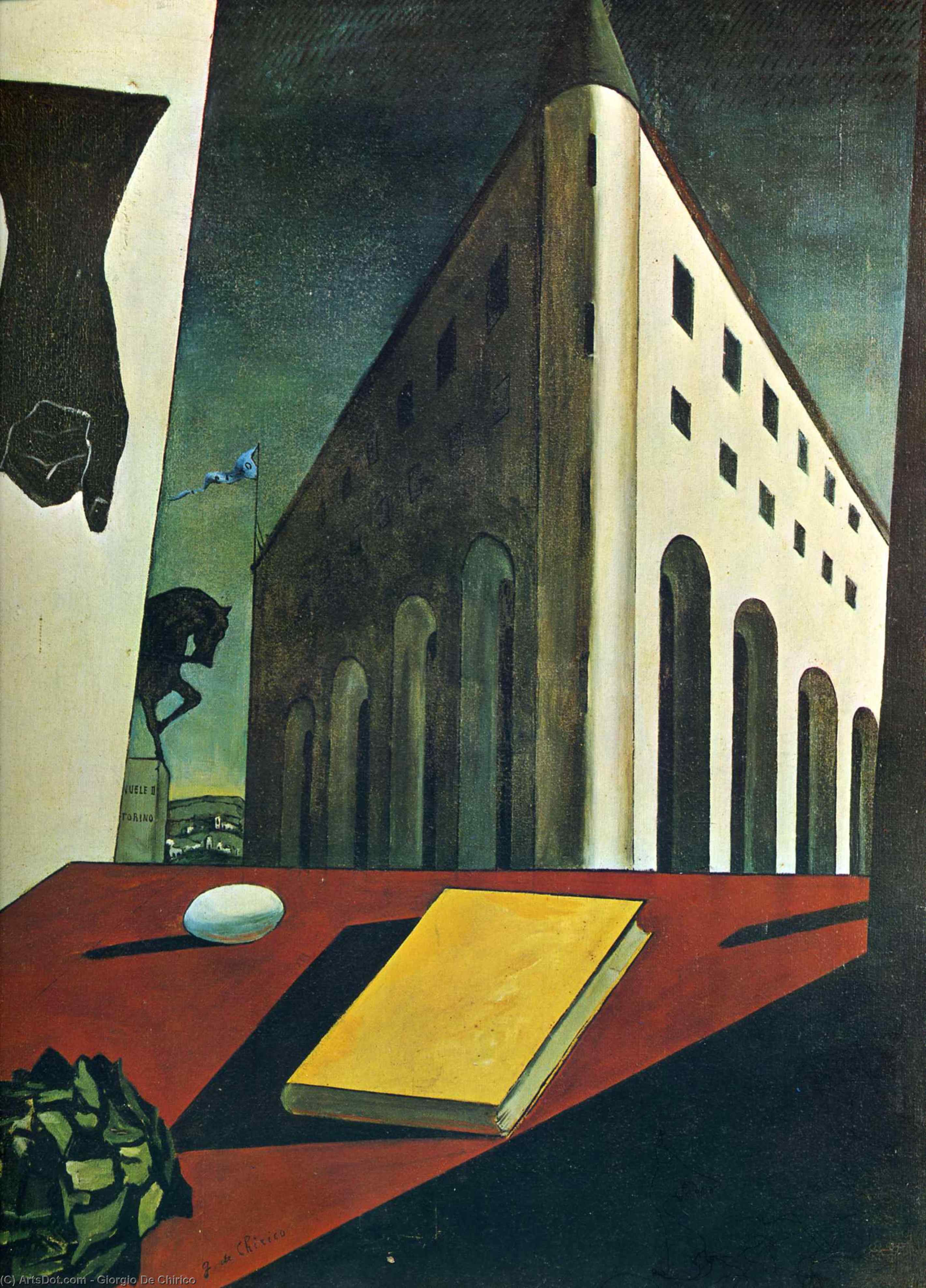
W około 1909 roku zaczęła kształtować się unikalny styl, który sam określił jako “sztukę metafizyczną”. Nie była to jedynie innowacja stylistyczna; była to głęboka próba uchwycenia ukrytych rzeczywistości pod powierzchnią codziennego życia, ujawnienia niepokojącej poezji skrywającej się w znanych przestrzeniach. Kluczowym momentem stała się wizyta we Florencji i doświadczenie na Piazza Santa Croce, która zainspirowała jego ikonową serię “Metafizycznych Placów”. Obrazy te charakteryzują się ich dziwaczną ciszą, długimi dramatycznymi cieniami, iluzorycznymi perspektywami oraz obecnością klasycznej architektury zestawionej z niepokojącymi elementami, takimi jak bezimienne manekiny i potężne posągi. Efekt jest głęboko zniekształcający, wywołujący poczucie nostalgii, izolacji i niemalże niewyobrażalnego pragnienia czegoś straconego lub niedostępnego. De Chirico założył Scuola Metafisica, która znacząco wpłynęła na Surrealizm, choć później odsunął się od interpretacji jego twórczości przez ten nurt. Jego obrazy nie były przeznaczone do ilustrowania snów, lecz raczej do przedstawiania rzeczywistości poza widzialnym światem – królestwa, w którym czas i przestrzeń są płynne, a granice między świadomością a podświadomieniem się zacierają. Znaczące dzieła takie jak *“Wzburzenie Myśliciela”*, *“Enigma Popołudnia Jesiennego”* i *“Pieśń Miłości”* ilustrują ten przerażający estetyczny świat, zapraszając widza do kontemplacji tajemnic istnienia i kruchości ludzkiej percepcji.
Zmiana Stylu i Trwała Dziedzictwa
Po I wojnie światowej, około 1919 roku, artystyczna ścieżka de Chirico podjęła niespodziewany zwrot. Odrzucił swój wczesny styl metafizyczny, przyjmując zamiast tego bardziej tradycyjną, neoklasyczną lub neobarokową estetykę. Ta zmiana spotkała się z poważnymi kontrowersjami; wielu krytyków żałował utraty innowacyjnego ducha, który definiował jego wczesne dzieło. Jednak de Chirico pozostał wierny swoim artystycznym wyborom, powracając do tematów przeszłości, ale przedstawiając je odmienioną wrażliwością. Kontynuował malowanie i wystawy przez całe życie, eksplorując różne style i tematy, zachowując jednocześnie stałą zaangażowaną w rzemiosło i umiejętności techniczne. Pomimo krytyki, jego wpływ na kolejne pokolenia artystów nie może być przeceniony. Jego innowacyjne wykorzystanie przestrzeni, perspektywy i symboliki podważało konwencjonalne normy artystyczne i wytyczył drogę dla nowych form ekspresji.
Wpływy i Trwałe Dziedzictwo
Prace de Chirico stanowią kluczowy most między późniejszym ruchem Symbolistycznym a wczesnym Surrealizmem w XX wieku. Był bezpośrednio zainspirowany artystami takimi jak Arnold Böcklin i Max Klinger, których sugestywne obrazy rezonowały z jego fascynacją mitologią i podświadomością. Filozofowie tacy jak Nietzsche i Schopenhauer dostarczyli mu ramy do badania tematów egzystencjalnego lęku, alienacji i poszukiwania sensu w pozornie bezsensownym świecie. Jednak wpływ de Chirico wykraczał daleko poza Surrealizm. Artystami takimi jak René Magritte i Salvador Dalí byli głęboko zainspirowani jego obrazami metafizycznymi, przyjmując jego techniki zestawiania, iluzorycznej perspektywy i symbolicznej reprezentacji do tworzenia własnych, marzących światów. Jego dzieła wpłynęły również na późniejsze nurty takie jak Realizm magiczny, który dążył do przedstawienia codziennej rzeczywistości z podniesionym poczuciem tajemnicy i psychologicznej głębi. Dzisiaj obrazy de Chirico są wystawiane w renomowanych muzeach na całym świecie, w tym w Muzeum poświęconym jego twórczości w samym sercu Rzymu, zapewniając, że jego dziedzictwo jako jednego z najważniejszych postaci sztuki XX wieku pozostaje trwałe. Zostawił za sobą nie tylko zbiór dzieł sztuki, ale także nowy sposób postrzegania świata – sposób na dostrzeganie rzeczywistości jako miejsca ukrytych znaczeń, niepokojącej piękności i trwałej tajemnicy.
Kluczowe Wpływy & Linia Artystyczna
- Zainspirowany przez: Arnold Böcklin, Max Klinger, Fryderyk Nietzsche, Arthur Schopenhauer.
- Zainspirował: Surrealizm, szczególnie artystów takich jak René Magritte i Salvador Dalí. Jego dzieła również wpłynęły na późniejsze nurty takie jak Realizm magiczny.


 Podgląd w skali 1:1
 Przełącz na wydania drukowane
 Wyślij jako kartkę
 Udostępnij
 Szczegóły dzieła
 Przewodnik

 Pobierz obraz
 Podobne obiekty
 RTG
RTG Pokaz slajdów
 Q&A
Q&A Statystyki


 Rozwiń treść






































 Opcja ze szkłem jest dostępna wyłącznie w rozmiarach poniżej 110 cm