Zobacz w skali 1:1 Zobacz w AR Przełącz na wersję drukowaną Kup ręcznie malowany obraz Wyślij
Szczegóły Przewodnik Dodaj do ulubionych Pobierz plik obrazu Podobne obiekty RTG Pokaz slajdów Statystyki

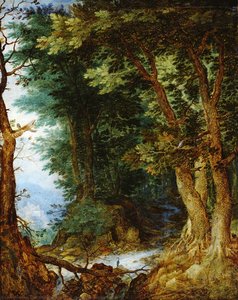
Forest Landscape

Gillis Van Coninxloo’s ‘Forest Landscape’ (1598) is a stunning oil on panel depicting a dark woodland scene. Explore its intricate details, chiaroscuro & Flemish Golden Age style.

A pioneer of Northern landscape art, Gillis van Coninxloo mastered the forest landscape through iconic works like Forest Landscape and Landscape with Leto and Peasants of Lykia, inviting you to wander into his lush worlds.

Kup wysokiej rozdzielczości, ulepszony obraz cyfrowy o jakości znacznie przewyższającej podgląd online.

Każdy plik jest starannie przygotowywany przez naszych specjalistów przy użyciu zaawansowanych narzędzi oraz profesjonalnej, ręcznej retuszy. Dbamy o to, aby każdy obraz cechował się wyjątkową ostrością, precyzyjnym odwzorowaniem kolorów i subtelnymi detalami.

Ostateczny plik dostarczany jest drogą mailową w ciągu 72 godzin, zoptymalizowany do natychmiastowego wykorzystania w profesjonalnych zastosowaniach redakcyjnych i poligraficznych. To ta sama jakość, której ufają czołowe studia projektowe, wydawnictwa oraz galerie sztuki.

Obraz cyfrowy

Pobierz plik o wysokiej rozdzielczości do osobistego użytku, druku oraz projektów kreatywnych. ( Przełącz na wersję drukowaną Kup ręcznie malowany obraz)

Cena całkowita

zł 94,62

W każdym zamówieniu na obraz cyfrowy znajduje się

Profesjonalna dostawa cyfrowa z gwarancją

Wybierając WahooArt.com, nie otrzymujesz jedynie obrazu – otrzymujesz profesjonalnie udoskonalone cyfrowe dzieło sztuki, stworzone z najwyższą precyzją i objęte gwarancją satysfakcji. Oto wszystko, co automatycznie dołączane jest do Twojego zamówienia:

Błyskawiczna dostawa e-mailowa

Plik z obrazem cyfrowym w wysokiej rozdzielczości zostanie przesłany na Twój adres e-mail w ciągu 72 godzin od złożenia zamówienia – gotowy do natychmiastowego użycia.

Plik cyfrowy ulepszony przez AI

Twoja grafika została profesjonalnie zoptymalizowana przy użyciu zaawansowanych narzędzi AI oraz ręcznej edycji, co zapewnia maksymalną szczegółowość, klarowność i wierność kolorów.

Bezpłatna dożywotnia ponowna dostawa

Przypadkowo usunąłeś lub zgubiłeś swój plik? Bez obaw – prześlemy go Tobie ponownie w dowolnym momencie, bez żadnych opłat.

Bez opłat importowych – zawsze

Ciesz się swoją sztuką natychmiast, bez żadnych opłat celnych, należności ani kosztów dostawy – pliki cyfrowe są zawsze wolne od podatku.

Gwarancja odwzorowania kolorów

Dzięki zastosowaniu profesjonalnych narzędzi i procesów zarządzania barwą zapewniamy, że Twoje cyfrowe zdjęcie odzwierciedla oryginalne kolory tak wiernie, jak to tylko możliwe.

100 dni na satysfakcję

Jeśli nie będziesz zadowolony ze swojego cyfrowego obrazu, poprawimy go lub zwrócimy 100% kosztów w ciągu 100 dni – bez zbędnych pytań.

100% Gwarancja zwrotu pieniędzy

Nie jesteś zadowolony? Otrzymaj pełny zwrot kosztów w ciągu 100 dni od otrzymania pliku cyfrowego – bez zbędnych pytań.

Rabaty przy zamówieniach hurtowych

Kup 3 obrazy, oszczędź 10% - Kup 5, oszczędź 15% - Kup 10+, oszczędź 20%. Idealne do projektów kreatywnych, galerii i agencji.

The Forest Landscape painting by Gillis Van Coninxloo is a remarkable artwork that showcases the artist's skill and attention to detail. Created in 1598, this oil on panel painting measures 42 x 61 cm and is housed at the Liechtenstein Museum in Vienna, Austria.

Composition and Color Palette

The painting features a winding path that invites viewers into the heart of the forest, surrounded by dense trees with trunks and branches intertwining to form a canopy overhead. The leaves are painted in various hues of green, adding a touch of life to the otherwise somber palette. In the background, a small village can be glimpsed, creating a sense of depth and distance. Key Features of the painting include:
  • The use of oil on panel, which lends the artwork a rich texture and depth
  • The attention to detail, from individual leaves on the trees to distant houses in the village
  • The harmonious balance between light and shadow, nature and civilization

Artist and Style

Gillis Van Coninxloo was a Flemish painter known for his landscapes and forest scenes. His style is characterized by the use of dark colors and intricate details, creating a sense of depth and atmosphere in his paintings. The Forest Landscape painting is a prime example of his skill and craftsmanship. For more information on Gillis Van Coninxloo and his artworks, visit /art/list/?Filter=8Y34YR-Gillis-Van-Coninxloo-Forest-Landscape. To learn more about the Liechtenstein Museum and its collections, check out /en/art/show/art-8y34yr-en/
The Forest Landscape painting is a beautiful representation of a forest landscape from the late 16th century, and its intricate details and harmonious color palette make it a captivating artwork that continues to inspire art lovers today.

Pytania i odpowiedzi

Jaki poziom kontrastu prezentuje „Forest Landscape” autorstwa Gillis Van Coninxloo?

Kontrast jasności w dziele "Forest Landscape" wynosi Serene. Kontrast określa stopień zróżnicowania między obszarami jasnymi a ciemnymi.

Czy kolory w "Forest Landscape" wydają się intensywne czy łagodne?

Forest Landscape” autorstwa Gillis Van Coninxloo charakteryzuje się Monochromatic intensywnością kolorów.

Co wyjaśnia sytuację prawną dotyczącą praw autorskich do „Forest Landscape” autorstwa Gillis Van Coninxloo?

Status praw autorskich do dzieła „Forest Landscape” – stanowi domenę publiczną – autorskie prawa majątkowe wygasły – wynika z daty śmierci artysty, która przypada na 1606.


Biografia artysty

A Master of the Verdant Realm

Gillis van Coninxloo stands as a pivotal figure in the evolution of Northern landscape art, serving as a vital bridge between the intricate Mannerist traditions and the burgeoning atmospheric depth of the early Baroque. Born in Antwerp, Belgium, his life was deeply intertwined with the rich artistic lineage of the Low Countries. The son of a painter, he was immersed in a world where craftsmanship and natural observation were paramount. His early training under masters such as Pieter Coecke van Aelst the Younger and Lenaert Kroes provided him with a rigorous foundation, but it was his time working in the workshop of Gillis Mostaert that truly allowed his talent to flourish, permitting him to contribute to professional works while honing his unique vision.

His journey was one of movement and expansion, reflecting the shifting political and cultural tides of the era. While his career found its roots in Antwerp, the latter portion of his life saw him traversing much of Europe, working in Germany and eventually settling in the Dutch Republic. This nomadic existence allowed his style to absorb various regional influences, ultimately contributing to a sophisticated development of the forest landscape. He became renowned for his ability to transform a mere depiction of woodland into a profound sensory experience, where the viewer is not merely looking at trees, but is invited to step into a living, breathing ecosystem.

The Alchemy of Light and Forest

The true brilliance of Coninxloo lies in his unparalleled mastery of the forest landscape. He possessed a singular ability to manipulate light and shadow—a technique often associated with chiaroscuro—to sculpt the dense thickets and intertwining branches that define his compositions. In works such as his Forest Landscape, one can observe an almost obsessive attention to detail; every vein of a leaf and every texture of bark is rendered with meticulous care. He utilized the medium of oil on panel and copper to achieve a luminous quality, allowing light to filter through a canopy of various greens, creating a sense of atmospheric depth that feels both tangible and ethereal.

Beyond the mere technical execution, his landscapes are imbued with a sense of narrative and quiet symbolism. A winding path might lead the eye toward a distant, humble village or an imposing castle on the horizon, suggesting themes of isolation, protection, or the coexistence of civilization and the wild. His work captures a transition in art history where the landscape ceased to be a mere backdrop for human drama and instead became the protagonist itself. Through his careful construction of light, shadow, and depth, Coninxloo created worlds that invite serene contemplation, leaving an indelible mark on the development of the Dutch and Flemish Golden Age.