


 Acrylic On CanvasWallArtDutch Golden Age
 1655
1655 73.0 x 71.0 cm
 Rijksmuseum
Druk giclée lub płótno o jakości muzealnej, szybka realizacja i szeroki wybór opcji wykończenia. ( Zamów ręcznie malowaną reprodukcję Kup obraz wysokiej rozdzielczości)





























Wybierz spośród naszych standardowych rozmiarów, które zachowują oryginalne proporcje dzieła sztuki.

Możesz wprowadzić własne wymiary, aby dopasować dzieło do konkretnej ramy lub przestrzeni. Jeśli wybrany rozmiar nie będzie odpowiadał proporcjom oryginalnego obrazu, przytniecie dzieło lub rozszerzymy obraz za pomocą odbicia lustrzanego lub jednolitego wypełnienia krawędzi. Przed rozpoczęciem produkcji prześlemy cyfrową wizualizację do Twojej akceptacji.
Prosimy pamiętać, że podgląd na ekranie nie odzwierciedla faktycznego przycinania ani rozszerzania. Tylko wizualizacja dokładnie pokaże końcową kompozycję.
Mimo dostępności niestandardowych rozmiarów, zalecamy wybór wymiaru z listy zdefiniowanej, aby zachować oryginalne proporcje.
Dostawa na cały świat () w ciągu 2 tygodni zamiast standardowych 4/5 tygodni. (6 Wrzesień)


Gallant Conversation, known as
Wymiary reprodukcji
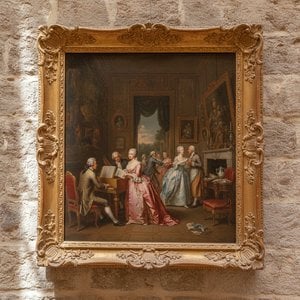
Gerard ter Borch's *Gallant Conversation*, painted in 1655, is not merely a portrait; it’s an exquisitely rendered tableau of veiled secrets and subtle anxieties. Initially known as “The paternal admonition,” the painting quickly revealed a far more complex narrative – one that challenged viewers at the time and continues to intrigue today. It's a masterful example of Dutch Golden Age genre painting, showcasing ter Borch’s unparalleled ability to capture not just appearances but the very essence of human interaction, particularly within the confines of a private, almost clandestine setting.
The scene unfolds within a modestly furnished room, bathed in a muted red light that casts long shadows and adds an air of mystery. A young soldier, strikingly handsome yet undeniably youthful, occupies a central position, engaged in conversation with a woman of considerable elegance – likely a courtesan or prostitute. A third figure, a woman holding a glass, observes the interaction from a distance, her expression hinting at both amusement and perhaps a degree of control. The inclusion of a dog, casually observing the scene, further contributes to the feeling that this is a carefully constructed tableau, a staged moment rather than an impromptu gathering. The deliberate ambiguity surrounding the relationships – who is admonishing whom? – is precisely what makes this painting so compelling.
Ter Borch's genius lies in his painstaking attention to detail and his revolutionary approach to light. Unlike many of his contemporaries, he eschewed the dramatic chiaroscuro favored by Rembrandt, opting instead for a subtle, almost photographic realism. He meticulously built up layers of translucent glazes, creating an astonishingly delicate surface texture that captures the sheen of silk, the gleam of metal, and the softness of skin with remarkable precision. Notice how the light catches the folds of the woman’s dress, revealing the intricate weave, or how it subtly illuminates the soldier's face, highlighting his youthful features and a hint of vulnerability. This technique wasn’t simply about realism; it was about capturing the *atmosphere* of the scene – a sense of quiet contemplation punctuated by unspoken tensions.
The painting’s true subject matter – a clandestine meeting within a brothel – was initially met with considerable debate. The original title, “The paternal admonition,” suggested a familial setting, leading to confusion about the nature of the scene. However, clues abound that point towards a more illicit reality: the bed in the background, the table with a mirror (a common feature in such establishments), and the overall atmosphere of intimacy and veiled intent. This ambiguity reflects the social realities of 17th-century Amsterdam – a city rife with wealth, commerce, and a thriving underworld. Ter Borch’s willingness to depict this darker side of society was remarkably bold for his time.
The soldier's youth is particularly significant. He isn’t a father dispensing wisdom; he’s a young man indulging in the pleasures of the flesh, suggesting themes of youthful folly and the corrupting influence of wealth. The woman observing from afar embodies a certain power – perhaps ownership or control – while the courtesan herself represents allure and danger.
*Gallant Conversation* is not a painting that shouts; it whispers. It’s a study in restraint, conveying a complex web of emotions through subtle gestures and averted glances. The figures are caught in a moment of quiet contemplation, their faces betraying a mixture of curiosity, amusement, and perhaps even apprehension. The overall effect is profoundly unsettling – a reminder that appearances can be deceiving and that beneath the surface of polite conversation often lie hidden desires and unspoken truths. This painting’s enduring power lies in its ability to evoke a sense of unease and intrigue, prompting viewers to question what they are seeing and, more importantly, what they *aren't* being told.

Gerard ter Borch lub Terborch (ur. w grudniu 1617 w Zwolle, zm. 8 grudnia 1681 w Deventer) – holenderski malarz i rysownik okresu baroku, przedstawiciel malarstwa rodzajowego.
Jego ojciec, Gerard ter Borch starszy, także był malarzem. W 1635 roku Gerard ter Borch młodszy wyruszył w 5-letnią podróż, podczas której odwiedził Anglię, Włochy i Francję. Jego edukacja otrzymał od ojca, który również posiadał umiejętności artystyczne, co stanowiło doskonałe przygotowanie do dalszego rozwoju talentu.
W latach 1640–41 przebywał we Włoszech i Hiszpanii, a między 1646 i 1648 odwiedził Münster, gdzie namalował obraz Traktat pokojowy z Münster. Przede wszystkim jednak malował sceny rodzajowe i portrety.
Początkowo jego twórczość koncentrowała się na przedstawieniach ubogich ludzi, co odzwierciedlało wpływ stylu manierystycznego, który był wówczas popularny wśród europejskich artystów.
Gerard ter Borch urodził się w grudniu 1617 roku w Zwolle, prowincji Overijssel, Republiki Holenderskiej.
Jego ojciec, Gerard ter Borch starszy, także był malarzem i posiadał doskonałą wiedzę anatomiczną oraz umiejętności rysunkowe. Dzięki temu młodszy Gerard otrzymał wyjątkową edukację.
W 1635 roku odbył podróż do Londynu, gdzie studiował prawdopodobnie pod wpływem Willema Cornelisa Duystera lub Piotra Codde. Jego zainteresowania sztuką kształtowały się również dzięki kontaktom z innymi artystami europejskimi, co wpłynęło na jego indywidualny styl.
Jego siostra Gesina także zajęła się twórczością i stała się znaną malarką, co dodatkowo wzmocniło rodzinne tradycje artystyczne.
Największym osiągnięciem Gerarda ter Borcha był obraz „List” (ok. 1655), który znajduje się w Mauritshuisie w Hadze.
Jest to doskonałe przykładowe dzieło jego twórczości, ukazujące umiejętność artysty uchwycenia faktury i światła.
Jego prace charakteryzują się niezwykłą szczegółowością oraz emocjonalną głębią. Ter Borch wykorzystywał technikę olejową na płótnie, która pozwalała mu uzyskać realistyczne odwzorowanie obrazu.
Znane są również jego sceny rodzajowe przedstawiające życie codziennego ludzi – „Chłopiec iskający psa” oraz „Dziewczyna obierająca jabłko”. Obrazy te świadczą o jego umiejętności obserwacji i zdolności przekazywania emocji odbiorcy.
Obrazy Gerarda ter Borcha znajdują się w zbiorach wielu renomowanych muzeów na całym świecie.
Największą kolekcję posiada Ermitaż w Sankt Petersburgu, gdzie prezentowane są sześć jego dzieł.
Kolekcję Berlina liczy również sześć obrazów Terborcha i stanowi jedno z najważniejszych źródeł wiedzy o twórczości tego artysty.
Getty Center posiada trzy obrazy Gerarda ter Borch i jest jednym z najbardziej prestiżowych miejsc wystawienniczych na świecie.
Gerard ter Borch wyznaczył nowy kierunek dla malarstwa rodzajowego, koncentrując się na przedstawieniach codziennego życia ludzi.
Jego twórczość zainspirowała innych artystów, takich jak Gabriel Metsu, Gerrit Dou oraz Johannes Vermeer.
Jego umiejętność uchwycenia emocji i atmosfery obrazu wpłynęła na rozwój stylu baroku w Holandii.
Ter Borch jest uznawany za jednego z pionierów holenderskiego malarstwa rodzajowego i jego dzieła stanowią ważną część historii sztuki.

1617 - 1681 , Holandia
Explore the profound beauty of genre painting. From Dutch Golden Age masters to global traditions, discover how artists capture the essence of everyday life through masterful realism and timeless storytelling.

 Podgląd w skali
 Wyślij jako kartkę
 Udostępnij
 Szczegóły dzieła

 Pobierz
 Podobne obiekty
 RTG
RTG Pokaz slajdów
 Rozwiń treść







 Opcja ze szkłem jest dostępna wyłącznie w rozmiarach poniżej 110 cm


