Podgląd w skali 1:1 Podgląd AR Zamów ręcznie malowaną reprodukcję Przejdź do wersji cyfrowej Wyślij jako kartkę
Szczegóły dzieła Przewodnik Dodaj do ulubionych Pobierz obraz Podobne obiekty RTG Pokaz slajdów Q&A Statystyki

The Red Pedestal

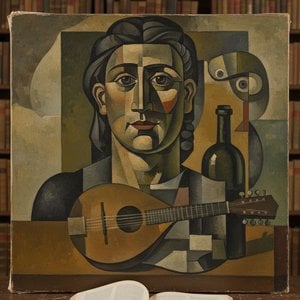
A striking red pedestal anchors this masterful Cubist deconstruction by Georges Braque, where fragmented geometric forms redefine reality through an evocative interplay of shape and color ready to transform your collection.

Poznaj Georges’a Braque'a (1882-1963): pioniera Kubizmu i mistrza Fauwizmu! Eksploruj jego innowacyjne dzieła sztuki, od „Domów przy L’Estaque” po oszałamiające kolaże. Jego twórczość zmieniła oblicze sztuki nowoczesnej!

Dzieło sztuki prezentowane na tej stronie podlega ochronie prawem autorskim, co oznacza, że nie mamy prawa do tworzenia ani sprzedaży jego identycznej reprodukcji. Ochrona ta jest egzekwowana na mocy umów międzynarodowych, takich jak Konwencja berneńska oraz przez przepisy prawa krajowego, w tym te określone w Prawo autorskie USA – Tytuł 17.

Metoda ta jest w pełni zgodna z przepisami prawa autorskiego, ponieważ nie polega na kopiowaniu ani powielaniu chronionego dzieła. Stanowi ona kreatywną reinterpretację – nowy obraz, który czerpie inspirację z oryginału, ale nie jest z nim tożsamy.

Giclée / Wydruk artystyczny

Wydruki giclée lub płótna o jakości muzealnej, szybka realizacja i szeroki wybór opcji wykończenia. ( Zamów ręcznie malowaną reprodukcję Przejdź do wersji cyfrowej)

Corner sample of the P118B picture frame: polistyren formowany, 5 cm wide and 3 cm thick
P118B zł10
Corner sample of the P118H picture frame: polistyren formowany, 5 cm wide and 3 cm thick
P118H zł10
Corner sample of the P118W picture frame: polistyren formowany, 5 cm wide and 3 cm thick
P118W zł10
Corner sample of the P438Z picture frame: polistyren formowany, 5.5 cm wide and 3.5 cm thick
P438Z zł10
Corner sample of the P508JH picture frame: polistyren formowany, 7 cm wide and 3.5 cm thick
P508JH zł12
Corner sample of the P508YH picture frame: polistyren formowany, 7 cm wide and 3.5 cm thick
P508YH zł12
Corner sample of the P805H picture frame: polistyren formowany, 5 cm wide and 3.5 cm thick
P805H zł10
Corner sample of the P805Z picture frame: polistyren formowany, 5 cm wide and 3.5 cm thick
P805Z zł10
Corner sample of the P919BZ picture frame: polistyren formowany, 7 cm wide and 3.5 cm thick
P919BZ zł10
Corner sample of the P919G picture frame: polistyren formowany, 7 cm wide and 3.5 cm thick
P919G zł10
Corner sample of the P919XJ picture frame: polistyren formowany, 7 cm wide and 3.5 cm thick
P919XJ zł10
Corner sample of the P959ZH picture frame: polistyren formowany, 5 cm wide and 3 cm thick
P959ZH zł10
Corner sample of the P968JZ picture frame: polistyren formowany, 6 cm wide and 4 cm thick
P968JZ zł12
Corner sample of the W106C picture frame: lite drewno, 5 cm wide and 3 cm thick
W106C zł8
Corner sample of the W218G picture frame: lite drewno, 5 cm wide and 3 cm thick
W218G zł10
Corner sample of the W218JH picture frame: lite drewno, 5 cm wide and 3 cm thick
W218JH zł8
Corner sample of the W218Y picture frame: lite drewno, 5 cm wide and 3 cm thick
W218Y zł10
Corner sample of the W307PJ picture frame: lite drewno, 6 cm wide and 3 cm thick
W307PJ zł10
Corner sample of the W316G picture frame: lite drewno, 6 cm wide and 3 cm thick
W316G zł10
Corner sample of the W316PJ picture frame: lite drewno, 6 cm wide and 3 cm thick
W316PJ zł8
Corner sample of the W316Y picture frame: lite drewno, 6 cm wide and 3 cm thick
W316Y zł10
Corner sample of the W398PJ picture frame: lite drewno, 5 cm wide and 3 cm thick
W398PJ zł8
Corner sample of the W4111J picture frame: lite drewno, 6.5 cm wide and 3.5 cm thick
W4111J zł10
Corner sample of the W500HY picture frame: lite drewno, 7 cm wide and 5 cm thick
W500HY zł15
Corner sample of the W500JH picture frame: lite drewno, 7 cm wide and 5 cm thick
W500JH zł15
Corner sample of the W692G picture frame: lite drewno, 8 cm wide and 4 cm thick
W692G zł12
Corner sample of the W849H picture frame: lite drewno, 5 cm wide and 3 cm thick
W849H zł8
Corner sample of the W940BG picture frame: lite drewno, 7.5 cm wide and 4.5 cm thick
W940BG zł15
Corner sample of the W953PJ picture frame: lite drewno, 6 cm wide and 3.5 cm thick
W953PJ zł8

Standardowy format
personalizowane
CM
INCH

Wybierz spośród naszych standardowych rozmiarów, które zachowują oryginalne proporcje dzieła sztuki.

szerokość
wysokość

Wpisz wymaganą szerokość i wysokość, aby dopasować grafikę do ramy lub ściany. Wydruk można jedynie przyciąć, nigdy nie powiększając go poza oryginalny obraz, dlatego format o innych proporcjach spowoduje utratę części kompozycji. Przed rozpoczęciem druku prześlemy Ci cyfrowy podgląd do zatwierdzenia. Obraz wyświetlany na tej stronie nie pokazuje rzeczywistego przycięcia — jedynie podgląd oddaje ten efekt.

Dostawa na cały świat () w ciągu 2 tygodni zamiast standardowych 4/5 tygodni. (29 Październik)

Bezpłatna ekspresowa wysyłka na cały świat
Wysokiej jakości płótno lniane
Pełne ubezpieczenie przesyłki
Gwarancja zwrotu należności celnych i podatków importowych
Gwarancja wiernego odwzorowania kolorów
100-dniowa polityka zwrotów (tylko w przypadku wad)
Gwarancja 100% zwrotu pieniędzy
Zniżka przy zakupie wielu sztuk

Suma całkowita

zł 262

The Red Pedestal

Giclée / Wydruk artystyczny

Wymiary reprodukcji

-

Cena całkowita

zł 262

Najważniejsze informacje

  • style: Abstract
  • subject: Still Life
  • movement: Cubism

Quiz o sztuce

Do każdego pytania dotyczy tylko jedna poprawna odpowiedź.

Pytanie 1:
Georges Braque is most closely associated with which artistic movement?
Pytanie 2:
What is a prominent feature of 'The Red Pedestal' that contributes to its Cubist style?
Pytanie 3:
Besides a chair, what other common household items are depicted in 'The Red Pedestal'?
Pytanie 4:
What role did Braque play alongside Pablo Picasso in the development of Cubism?

A Fragmented World: Exploring Braque’s “The Red Pedestal”

Georges Braque's "The Red Pedestal" is a compelling example of his pivotal role in the development of Cubism, painted during a period of intense artistic experimentation in the early 20th century. This work isn’t simply a depiction of objects; it’s a radical deconstruction and re-presentation of reality, challenging traditional notions of perspective and form.

Deconstructing Reality: Style & Technique

The painting exemplifies Analytical Cubism – a style Braque pioneered alongside Pablo Picasso. Notice how recognizable forms—a chair, bottle, bowls, and cups—are broken down into geometric shapes and fragmented planes. These facets are then reassembled on the canvas in a way that rejects single viewpoint perspective. Braque employs a muted palette dominated by ochres, browns, greys, and blacks, punctuated by the striking presence of the titular red pedestal. This limited color scheme focuses attention on the interplay of forms and textures rather than vibrant hues. The technique involves layering these fragmented shapes, creating a sense of depth and ambiguity. It’s not about *seeing* objects as they are, but rather *understanding* their essential structure through intellectual analysis.

Subject Matter & Composition

The composition centers around the red pedestal, acting as a stage for an assortment of everyday objects. The chair is particularly noteworthy; it's been almost entirely abstracted, its recognizable form dissolving into angular planes. This isn’t merely a stylistic choice—it reflects Cubism’s aim to represent not just what *is* seen, but also what *is known* about the object. The inclusion of commonplace items like bottles and bowls elevates them beyond their utilitarian function, transforming them into subjects worthy of artistic investigation. The arrangement isn't accidental; Braque carefully balances these elements to create a dynamic yet harmonious composition.

Historical Context & Artistic Innovation

“The Red Pedestal” was created during a period when artists were questioning the very foundations of representation. Traditional academic painting, with its emphasis on realism and illusionism, was being challenged by new movements like Impressionism and Post-Impressionism. Braque and Picasso responded to this shift by developing Cubism—a revolutionary style that sought to depict objects from multiple viewpoints simultaneously. This work demonstrates a move *away* from depicting the surface appearance of things and *towards* exploring their underlying structure. Braque’s contribution was crucial in refining the analytical approach, focusing on dissecting forms with precision and intellectual rigor.

Symbolism & Emotional Impact

While Cubism isn't inherently symbolic, “The Red Pedestal” evokes a sense of fragmentation and dislocation—reflecting the anxieties and uncertainties of the modern world. The broken-down forms can be interpreted as representing the breakdown of traditional values and beliefs. The red pedestal itself might symbolize a platform for these fragmented ideas, or perhaps a grounding element amidst the chaos. However, the painting isn’t necessarily pessimistic; there's also a sense of intellectual curiosity and artistic liberation in its radical approach. The overall emotional impact is one of quiet contemplation—an invitation to engage with the artwork on an intellectual and aesthetic level.

For Collectors & Interior Designers

“The Red Pedestal” – or a high-quality reproduction thereof – offers a sophisticated statement piece for any collection or interior space. Its muted palette and geometric forms lend themselves well to modern and contemporary settings, adding depth and intellectual intrigue.
  • Its abstract nature allows it to complement a variety of color schemes.
  • The painting’s historical significance makes it a conversation starter.
  • It embodies the spirit of innovation and artistic experimentation.
This artwork is not just a visual experience; it's an invitation to explore the complexities of perception, representation, and the modern world.

Pytania i odpowiedzi

Do jakiego wnętrza polecane jest dzieło „The Red Pedestal” – Georges Braque?

Reprodukcja "The Red Pedestal" doskonale pasuje do Living Room.

Jak kolory w dziele "The Red Pedestal" współgrają ze sobą?

„The Red Pedestal” – Georges Braque prezentuje Strong Color Unity harmonię kolorystyczną.

Dlaczego „The Red Pedestal” – Georges Braque jest polecane jako prezent?

Reflective nastrój dzieła „The Red Pedestal” – Georges Braque idealnie pasuje do rekomendowanej okazji na prezent: Corporate Gift.


Biografia artysty

Early Life and Artistic Foundations

Georges Braque, urodzony w Argenteuil, Francja, w 1882 roku, rozpoczął drogę artystyczną głęboko związana z ewolucją krajobrazu sztuki nowoczesnej. Jego wychowanie w rodzinie malarzy i dekoratorów nie tylko zapewniło mu biegłość techniczną w materiałach, ale także od najmłodszych lat rozwijało go docenianie formy i struktury. Początkowo podążając za ścieżką ojca, intuicja artystyczna Braque szybko popchnęła go ku formalnemu szkoleniu w École des Beaux-Arts w Le Havre, otwierając drogę do zostania jednym z najbardziej wpływowych malarzy XX wieku. Ta fundacja – połączenie praktycznej rzemiosła i studiów akademickich – okazała się kluczowa, ponieważ później dekonstruował i odtwarzał tradycyjne konwencje artystyczne.

Przenosząc się do Paryża w 1902 roku, Braque kontynuował studia w Académie Humbert, zanurzając się w tętniącym życiem środowisku artystycznym miasta. To właśnie tutaj poznał takich artystów jak Marie Laurencin i Francis Picabia, tworząc więzi, które ukształtowały jego rozwój wczesny. Jego początkowe prace odzwierciedlały wpływy impresjonizmu i postimpresjonizmu, ale kluczowe spotkanie z odważnymi kolorami i ekspresyjną wolnością fauwistów w 1905 roku zapaliło nową drogę w jego eksploracji artystycznej.

The Embrace of Fauvism and the Dawn of Cubism

Adopcja przez Braque zasad fauwizmu – charakteryzująca się intensywnymi, nienaturalistycznymi kolorami i ekspresją emocjonalną – doskonale ilustruje się w obrazach takich jak The Patience. Okres ten widniał przy jego boku artyści, tacy jak Henri Matisse i André Derain, eksperymentując z żywymi paletami i uproszczonymi formami. Jednak zaangażowanie Braque w fauwizm nie było jedynie naśladowcze; wzbogacił je o unikalną wrażliwość, łagodząc niekontrolowaną ekscytację ruchu, wprowadzając bardziej powściągliwy i analityczny podchod.

Przełom nastąpił w 1907 roku dzięki spotkaniu z wystawą retrospektywną dzieł Paula Cézanne’a. Nacisk Cézanne'a na formy geometryczne i wielotomowe perspektywy głęboko wpłynął na Braque, przygotowując grunt pod jego przełomową współpracę z Pablo Picasso. Od 1908 roku ci dwaj artyści-legenda rozpoczęli intensywne intelektualne wymiany, które dały początek kubizmowi – rewolucyjnemu ruchowi, który zburzył tradycyjne koncepcje reprezentacji. Braque i Picasso wspólnie opracowywali analizujący kubizm, rozkładając obiekty na geometryczne kształty i prezentując je z wielu perspektyw jednocześnie, kwestionując percepcję przestrzeni, formy i rzeczywistości widza.

Wczesne prace, takie jak Houses at L'Estaque, demonstrują ten wczesny etap, ukazując radykalną odmienność od konwencjonalnej perspektywy i skupienie na podstawowej strukturze form. Paleta była celowo przygaszona, podkreślając formę nad kolorem, aby reprezentować całość obecności obiektu, a nie tylko jego wygląd.

Innovation Through Fragmentation and Collage

Współpraca Braque z Picasso kontynuowała rozszerzanie granic ekspresji artystycznej, prowadząc do rozwoju syntetycznego kubizmu około 1912 roku. Ta faza obejmowała wprowadzenie kolażu – włączania rzeczywistych materiałów, takich jak wycinki gazet, papier ścierny i tkaniny, do obrazów. Ta innowacja podważała tradycyjną hierarchię między malarstwem a rzeźbiarstwem, zacierając granice między sztuką a życiem.

Pionierskie użycie Braque’a *papier collé* (pasted paper) stanowiło znaczący punkt zwrotny w jego rozwoju artystycznym. Włączając fragmenty codziennych przedmiotów do swoich kompozycji, zakłócał iluzoryczną przestrzeń tradycyjnego malarstwa i wprowadzał nowy poziom materialności i faktury.

Wypadek I wojny światowej w 1914 roku przerwał tę intensywną współpracę, ponieważ Braque został wezwany do służby wojskowej. Doświadczenia wojenne głęboko wpłynęły na jego wizję artystyczną, prowadząc go do eksploracji bardziej osobistych i lirycznych tematów w swojej twórczości powojennej.

Later Years and Enduring Legacy

Po wojnie Braque’s style ewoluował poza ścisłe ramy kubizmu, integrując elementy klasycznej kompozycji i odnowione zainteresowanie pejzażem. Mimo że zachowywał geometryczne wpływy, które definiowały jego wcześniejsze prace, rozwijał bardziej wyrafinowaną i kontemplacyjną metodę malowania. Jego późniejsze krajobrazy i wnętrza charakteryzują się spokojną atmosferą i subtelnymi harmoniami kolorów.

Przez całą karierę Braque pozostawał zaangażowany w eksplorację podstawowych zasad formy, przestrzeni i reprezentacji. Kontynuował eksperymentowanie z różnymi materiałami i technikami, rozszerzając granice ekspresji artystycznej do śmierci w 1963 roku. Jego wpływ na kolejne pokolenia artystów jest niezrównany, kształtując bieg historii sztuki nowoczesnej i inspirując wielu malarzy, rzeźbiarzy i twórców kolażu.

Influences and Notable Works

  • Influenced By: Henri Matisse, André Derain, Paul Cézanne
  • Key Works: Houses at L'Estaque, The Patience, Violin and Palette, Mandola
  • Impact on Art History: Revolutionized 20th-century art through Cubism; challenged traditional notions of perspective and representation.

Georges Braque

Georges Braque

1882 - 1963 , Francja

Krótka nota

  • Artistic Movement Or Style: Kubizm, Fauwizm
  • Artists Or Movements Influenced By This Artist:
    • Pablo Picasso
    • Sztuka nowoczesna
  • Artists Who Influenced This Artist:
    • Henri Matisse
    • Paul Cézanne
  • Date Of Birth: 13 maja 1882
  • Date Of Death: 31 sierpnia 1963
  • Full Name: Georges Braque
  • Nationality: Francuz
  • Notable Artworks:
    • Domki w L'Estaque
    • Cierpliwość
    • Skrzypce i dzban
  • Place Of Birth: Argenteuil, Francja
Odkryj dzieła sztuki uporządkowane według tematów, stylów i cech charakterystycznych.