Zobacz w skali 1:1 Zobacz w AR Kup ręcznie malowany obraz Przełącz na wersję cyfrową Wyślij
Szczegóły Przewodnik Dodaj do ulubionych Pobierz plik obrazu Podobne obiekty RTG Pokaz slajdów Statystyki

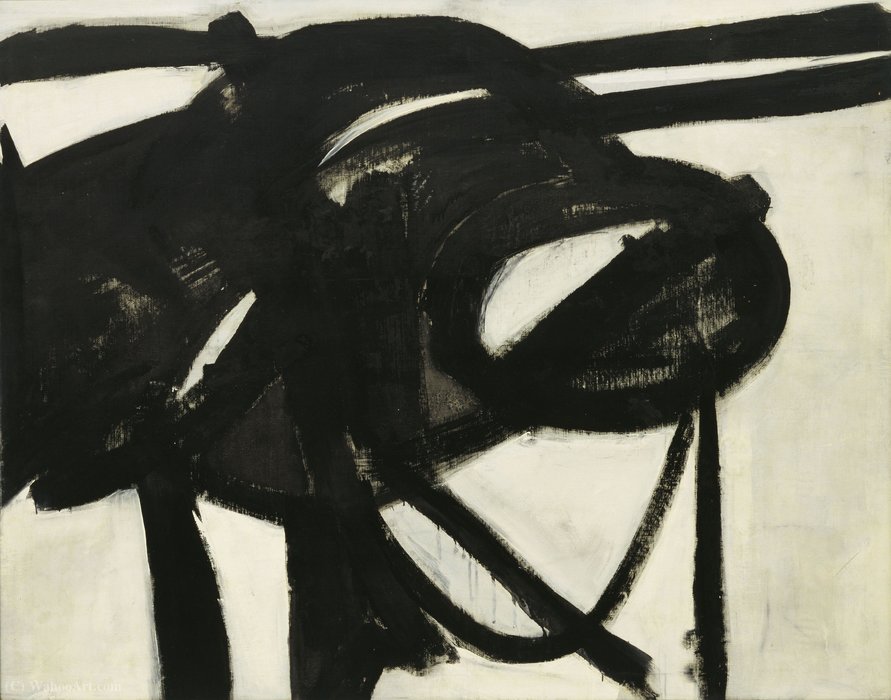
Chief

Experience Franz Kline’s iconic Abstract Expressionist paintings – bold black strokes on white canvas. Explore his unique style & legacy at WahooArt.com.

Franz Kline (1910-1962): Pionier ekspresjonizmu abstrakcyjnego, słynący z dynamicznych czarnych pociągów i mocnych obrazów akcji. Poznaj jego dziedzictwo!

Dzieło sztuki prezentowane na tej stronie podlega ochronie prawem autorskim, co oznacza, że nie mamy prawa do tworzenia ani sprzedaży jego identycznej reprodukcji. Ochrona ta jest egzekwowana na mocy umów międzynarodowych, takich jak Konwencja berneńska oraz przez przepisy prawa krajowego, w tym te określone w Prawo autorskie USA – Tytuł 17.

Metoda ta jest w pełni zgodna z przepisami prawa autorskiego, ponieważ nie polega na kopiowaniu ani powielaniu chronionego dzieła. Stanowi ona kreatywną reinterpretację – nowy obraz, który czerpie inspirację z oryginału, ale nie jest z nim tożsamy.

Giclée / Wydruk artystyczny

Wydruki giclée lub płótna o jakości muzealnej, szybka realizacja i szeroki wybór opcji wykończenia. ( Kup ręcznie malowany obraz Przełącz na wersję cyfrową)

Corner sample of the P118B picture frame: moulded polystyrene, 5 cm wide and 3 cm thick
P118B zł10
Corner sample of the P118H picture frame: moulded polystyrene, 5 cm wide and 3 cm thick
P118H zł10
Corner sample of the P118W picture frame: moulded polystyrene, 5 cm wide and 3 cm thick
P118W zł10
Corner sample of the P438Z picture frame: moulded polystyrene, 5.5 cm wide and 3.5 cm thick
P438Z zł10
Corner sample of the P508JH picture frame: moulded polystyrene, 7 cm wide and 3.5 cm thick
P508JH zł12
Corner sample of the P508YH picture frame: moulded polystyrene, 7 cm wide and 3.5 cm thick
P508YH zł12
Corner sample of the P805H picture frame: moulded polystyrene, 5 cm wide and 3.5 cm thick
P805H zł10
Corner sample of the P805Z picture frame: moulded polystyrene, 5 cm wide and 3.5 cm thick
P805Z zł10
Corner sample of the P919BZ picture frame: moulded polystyrene, 7 cm wide and 3.5 cm thick
P919BZ zł10
Corner sample of the P919G picture frame: moulded polystyrene, 7 cm wide and 3.5 cm thick
P919G zł10
Corner sample of the P919XJ picture frame: moulded polystyrene, 7 cm wide and 3.5 cm thick
P919XJ zł10
Corner sample of the P959ZH picture frame: moulded polystyrene, 5 cm wide and 3 cm thick
P959ZH zł10
Corner sample of the P968JZ picture frame: moulded polystyrene, 6 cm wide and 4 cm thick
P968JZ zł12
Corner sample of the W106C picture frame: solid wood, 5 cm wide and 3 cm thick
W106C zł8
Corner sample of the W218G picture frame: solid wood, 5 cm wide and 3 cm thick
W218G zł10
Corner sample of the W218JH picture frame: solid wood, 5 cm wide and 3 cm thick
W218JH zł8
Corner sample of the W218Y picture frame: solid wood, 5 cm wide and 3 cm thick
W218Y zł10
Corner sample of the W307PJ picture frame: solid wood, 6 cm wide and 3 cm thick
W307PJ zł10
Corner sample of the W316G picture frame: solid wood, 6 cm wide and 3 cm thick
W316G zł10
Corner sample of the W316PJ picture frame: solid wood, 6 cm wide and 3 cm thick
W316PJ zł8
Corner sample of the W316Y picture frame: solid wood, 6 cm wide and 3 cm thick
W316Y zł10
Corner sample of the W398PJ picture frame: solid wood, 5 cm wide and 3 cm thick
W398PJ zł8
Corner sample of the W4111J picture frame: solid wood, 6.5 cm wide and 3.5 cm thick
W4111J zł10
Corner sample of the W500HY picture frame: solid wood, 7 cm wide and 5 cm thick
W500HY zł15
Corner sample of the W500JH picture frame: solid wood, 7 cm wide and 5 cm thick
W500JH zł15
Corner sample of the W692G picture frame: solid wood, 8 cm wide and 4 cm thick
W692G zł12
Corner sample of the W849H picture frame: solid wood, 5 cm wide and 3 cm thick
W849H zł8
Corner sample of the W940BG picture frame: solid wood, 7.5 cm wide and 4.5 cm thick
W940BG zł15
Corner sample of the W953PJ picture frame: solid wood, 6 cm wide and 3.5 cm thick
W953PJ zł8

Standardowy
na zamówienie
CM
INCH

Wybierz spośród naszych standardowych rozmiarów, które zachowują oryginalne proporcje dzieła sztuki.

szerokość
wysokość

Możesz wprowadzić własne wymiary, aby dopasować dzieło do konkretnej ramy lub przestrzeni. Jeśli wybrany rozmiar nie będzie odpowiadał proporcjom oryginalnego obrazu, przytniecie dzieło lub rozszerzymy obraz za pomocą odbicia lustrzanego lub jednolitego wypełnienia krawędzi. Przed rozpoczęciem produkcji prześlemy cyfrową wizualizację do Twojej akceptacji.
Prosimy pamiętać, że podgląd na ekranie nie odzwierciedla faktycznego przycinania ani rozszerzania. Tylko wizualizacja dokładnie pokaże końcową kompozycję.
Mimo dostępności niestandardowych rozmiarów, zalecamy wybór wymiaru z listy zdefiniowanej, aby zachować oryginalne proporcje.

Dostawa na cały świat () w ciągu 2 tygodni zamiast standardowych 4/5 tygodni. (10 Październik)

Bezpłatna ekspresowa wysyłka na cały świat
Wysokiej jakości płótno lniane
Pełne ubezpieczenie transportowe
Gwarancja zwrotu należności celnych i podatków importowych
Gwarancja idealnego odwzorowania barw
100-dniowy okres na zwrot dzieła w przypadku wykrycia wad produkcyjnych
Gwarancja 100% zwrotu pieniędzy
Oferta przy zakupie wielu sztuk

Cena całkowita

zł 253

Chief

Giclée / Wydruk artystyczny

Rozmiar reprodukcji

-

Suma do zapłaty

zł 253


Biografia artysty

Franz Kline: Pioneer of Abstract Expressionism

Franz Kline, a pivotal figure in the Abstract Expressionist movement, remains an artist whose work resonates with raw power and emotional depth. Born in Wilkes-Barre, Pennsylvania, in 1910, his life was marked by early hardship – the suicide of his father when he was just seven years old cast a long shadow, influencing a sensibility that would later find expression in the stark contrasts defining his art. This formative experience led to a nomadic youth and eventual enrollment at Girard College, a Philadelphia boarding school for boys who had lost their fathers. It was here, amidst structured discipline, that Kline’s artistic inclinations began to surface, nurtured by traditional training in illustration and drafting. He continued his studies at Boston University and later honed his skills at the Heatherley School of Fine Art in London, immersing himself in the works of the Old Masters – Rembrandt, Velázquez, El Greco, Goya, Dürer – and absorbing the nuances of Japanese prints. These early influences, though seemingly distant from his eventual abstract style, laid a foundation for his understanding of composition, light, and the expressive potential of line.

Early Life and Artistic Training

Kline’s childhood was profoundly shaped by tragedy; his father’s suicide instilled in him a deep preoccupation with loss and vulnerability—themes that would permeate his artistic vision throughout his life. Seeking refuge from this sorrowful beginning, he moved to Lehighton, Pennsylvania, where he attended high school, developing an appreciation for the natural world alongside formal academic instruction. Recognizing his burgeoning talent, Kline pursued studies at Boston University and Heatherley’s School of Fine Art in London, immersing himself in the stylistic innovations of European masters. Notably, he was captivated by Rembrandt’s masterful use of chiaroscuro—the dramatic interplay of light and dark—and Velázquez’s meticulous observation of detail, informing his approach to rendering form and texture. Simultaneously, Kline absorbed the aesthetic principles of Japanese prints—particularly *ukiyo-e*—where bold lines and simplified shapes conveyed emotion and narrative with remarkable efficiency. These formative experiences instilled in him a disciplined eye for technique and a sensitivity to visual harmony that would prove invaluable as he transitioned toward abstraction.

From Representation to Simplification: The Emergence of Abstract Style

Kline’s artistic journey began with figurative painting, producing landscapes, cityscapes, portraits, and murals—works characterized by meticulous realism and detailed observation. However, his artistic trajectory took a decisive turn in 1940 when he undertook the ambitious commission for “Hot Jazz,” a mural series celebrating jazz music for Greenwich Village tavern. This project signaled a deliberate simplification of form, foreshadowing the monumental black-and-white canvases that would define his mature style. Influenced by Willem de Kooning’s suggestion to project sketches onto a wall using a Bell-Opticon projector—an act that dramatically enlarged and transformed the image—Kline experienced a revelation. This transformative process underscored the importance of reducing visual complexity to its essential strokes, prioritizing gesture and line over precise depiction. The resulting paintings weren't merely imitations of reality but expressions of inner feeling—a radical departure from traditional artistic conventions.

The Influence of De Kooning and Japanese Prints

Kline’s encounter with Willem de Kooning proved pivotal in unlocking his abstract potential. Recognizing the transformative power of projection, Kline embraced a technique that mirrored the dynamism of Japanese calligraphy—where bold lines convey emotion and meaning with remarkable conciseness. This stylistic affinity reflected Kline’s belief that art should transcend literal representation, prioritizing visceral experience over intellectual analysis. He sought to capture the essence of his subjects through expressive marks—thick, sweeping strokes of black paint on a white ground—creating canvases that pulsated with energy and immediacy. The influence of Rembrandt and Velázquez remained palpable in his early works, informing his understanding of tonal gradation and compositional balance. Similarly, Kline absorbed the aesthetic principles of Japanese prints—particularly *ukiyo-e*—where bold lines and simplified shapes conveyed emotion and narrative with remarkable efficiency. These formative experiences instilled in him a disciplined eye for technique and a sensitivity to visual harmony that would prove invaluable as he transitioned toward abstraction.

Legacy and Recognition: A Lasting Impact on Modern Art

Franz Kline’s contribution to Abstract Expressionism cemented his place among the most influential artists of the postwar era. His monumental black-and-white canvases—characterized by their stark contrasts and forceful gestures—became synonymous with the movement's ethos—a rejection of academic conventions in favor of spontaneous expression. Critics initially dismissed Kline’s work as “scribbles,” labeling it devoid of intellectual merit, yet collectors recognized its profound emotional depth and visual power. His paintings gained acclaim at prestigious venues like the Guggenheim Museum and Sidney Janis Gallery, securing his reputation as a visionary artist whose legacy continues to inspire generations of painters. Notably, Kline's influence extended beyond Abstract Expressionism, subtly shaping the development of Minimalism—a movement championed by Donald Judd and Richard Serra—who sought to reduce art to its fundamental forms. His unwavering commitment to gesture and line—coupled with his rejection of representational illusion—established him as a pioneer of a new aesthetic language that remains relevant today. Kline died in New York City in 1962, leaving behind an oeuvre that embodies the spirit of artistic innovation and emotional intensity—a testament to a life dedicated to exploring the expressive possibilities of abstraction.
Franciszko Klin”

Franciszko Klin”

1910 - 1962 , Stany Zjednoczone

Najważniejsze informacje

  • Artistic Movement Or Style: Abstract Expressionism
  • Artists Who Influenced This Artist:
    • Rembrandt
    • Velasquez
    • De Kooning
  • Date Of Birth: May 23, 1910
  • Date Of Death: May 13, 1962
  • Full Name: Franz Kline
  • Nationality: American
  • Notable Artworks:
    • Lehighton
    • Mahoning
  • Place Of Birth: Wilkes-Barre, USA
Odkryj dzieła sztuki uporządkowane według tematów, stylów i cech charakterystycznych.