Podgląd w skali 1:1 Podgląd AR Zamów ręcznie malowaną reprodukcję Przejdź do wersji cyfrowej Wyślij jako kartkę
Szczegóły dzieła Przewodnik Dodaj do ulubionych Pobierz obraz Podobne obiekty RTG Pokaz slajdów Q&A Statystyki

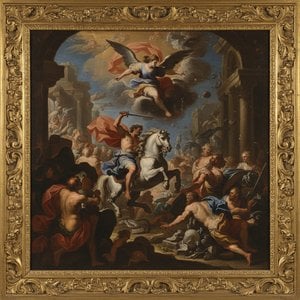
Hercules and Omphale

François Lemoyne’s "Hercules & Omphale" (1724) – a stunning Baroque oil painting of mythological love. Explore its dynamic composition, rich textures & classical beauty.

François Lemoyne (1688-1737): Francuski malarz okresu rokoka, odradzający monumentalne alegorie i inspirowany Rubensem! Odkryj elegancję i barokową świetność!

Giclée / Wydruk artystyczny

Wydruki giclée lub płótna o jakości muzealnej, szybka realizacja i szeroki wybór opcji wykończenia. ( Zamów ręcznie malowaną reprodukcję Przejdź do wersji cyfrowej)

Corner sample of the P118B picture frame: polistyren formowany, 5 cm wide and 3 cm thick
P118B zł10
Corner sample of the P118H picture frame: polistyren formowany, 5 cm wide and 3 cm thick
P118H zł10
Corner sample of the P118W picture frame: polistyren formowany, 5 cm wide and 3 cm thick
P118W zł10
Corner sample of the P438Z picture frame: polistyren formowany, 5.5 cm wide and 3.5 cm thick
P438Z zł10
Corner sample of the P508JH picture frame: polistyren formowany, 7 cm wide and 3.5 cm thick
P508JH zł12
Corner sample of the P508YH picture frame: polistyren formowany, 7 cm wide and 3.5 cm thick
P508YH zł12
Corner sample of the P805H picture frame: polistyren formowany, 5 cm wide and 3.5 cm thick
P805H zł10
Corner sample of the P805Z picture frame: polistyren formowany, 5 cm wide and 3.5 cm thick
P805Z zł10
Corner sample of the P919BZ picture frame: polistyren formowany, 7 cm wide and 3.5 cm thick
P919BZ zł10
Corner sample of the P919G picture frame: polistyren formowany, 7 cm wide and 3.5 cm thick
P919G zł10
Corner sample of the P919XJ picture frame: polistyren formowany, 7 cm wide and 3.5 cm thick
P919XJ zł10
Corner sample of the P959ZH picture frame: polistyren formowany, 5 cm wide and 3 cm thick
P959ZH zł10
Corner sample of the P968JZ picture frame: polistyren formowany, 6 cm wide and 4 cm thick
P968JZ zł12
Corner sample of the W106C picture frame: lite drewno, 5 cm wide and 3 cm thick
W106C zł8
Corner sample of the W218G picture frame: lite drewno, 5 cm wide and 3 cm thick
W218G zł10
Corner sample of the W218JH picture frame: lite drewno, 5 cm wide and 3 cm thick
W218JH zł8
Corner sample of the W218Y picture frame: lite drewno, 5 cm wide and 3 cm thick
W218Y zł10
Corner sample of the W307PJ picture frame: lite drewno, 6 cm wide and 3 cm thick
W307PJ zł10
Corner sample of the W316G picture frame: lite drewno, 6 cm wide and 3 cm thick
W316G zł10
Corner sample of the W316PJ picture frame: lite drewno, 6 cm wide and 3 cm thick
W316PJ zł8
Corner sample of the W316Y picture frame: lite drewno, 6 cm wide and 3 cm thick
W316Y zł10
Corner sample of the W398PJ picture frame: lite drewno, 5 cm wide and 3 cm thick
W398PJ zł8
Corner sample of the W4111J picture frame: lite drewno, 6.5 cm wide and 3.5 cm thick
W4111J zł10
Corner sample of the W500HY picture frame: lite drewno, 7 cm wide and 5 cm thick
W500HY zł15
Corner sample of the W500JH picture frame: lite drewno, 7 cm wide and 5 cm thick
W500JH zł15
Corner sample of the W692G picture frame: lite drewno, 8 cm wide and 4 cm thick
W692G zł12
Corner sample of the W849H picture frame: lite drewno, 5 cm wide and 3 cm thick
W849H zł8
Corner sample of the W940BG picture frame: lite drewno, 7.5 cm wide and 4.5 cm thick
W940BG zł15
Corner sample of the W953PJ picture frame: lite drewno, 6 cm wide and 3.5 cm thick
W953PJ zł8

Standardowy format
personalizowane
CM
INCH

Wybierz spośród naszych standardowych rozmiarów, które zachowują oryginalne proporcje dzieła sztuki.

szerokość
wysokość

Wpisz wymaganą szerokość i wysokość, aby dopasować grafikę do ramy lub ściany. Wydruk można jedynie przyciąć, nigdy nie powiększając go poza oryginalny obraz, dlatego format o innych proporcjach spowoduje utratę części kompozycji. Przed rozpoczęciem druku prześlemy Ci cyfrowy podgląd do zatwierdzenia. Obraz wyświetlany na tej stronie nie pokazuje rzeczywistego przycięcia — jedynie podgląd oddaje ten efekt.

Dostawa na cały świat () w ciągu 2 tygodni zamiast standardowych 4/5 tygodni. (30 Październik)

Bezpłatna ekspresowa wysyłka na cały świat
Wysokiej jakości płótno lniane
Pełne ubezpieczenie przesyłki
Gwarancja zwrotu należności celnych i podatków importowych
Gwarancja wiernego odwzorowania kolorów
100-dniowa polityka zwrotów (tylko w przypadku wad)
Gwarancja 100% zwrotu pieniędzy
Zniżka przy zakupie wielu sztuk

Suma całkowita

zł 264

Hercules and Omphale

Giclée / Wydruk artystyczny

Wymiary reprodukcji

-

Cena całkowita

zł 264

Najważniejsze informacje

  • Influences: Rubens
  • Notable elements: Mythological scene
  • Medium: Oil on canvas
  • Location: Louvre Museum, Paris
  • Dimensions: 184 x 149 cm
  • Artist: François Lemoyne

Quiz o sztuce

Do każdego pytania dotyczy tylko jedna poprawna odpowiedź.

Pytanie 1:
What mythological scene is depicted in François Lemoyne’s ‘Hercules and Omphale’?
Pytanie 2:
In ‘Hercules and Omphale’, what symbolic element does Omphale hold that represents Hercules's former strength?
Pytanie 3:
The painting ‘Hercules and Omphale’ is primarily associated with which artistic movement?
Pytanie 4:
What technique did François Lemoyne employ to create the rich textures and detailed figures in ‘Hercules and Omphale’?

A Dance of Desire: François Lemoyne’s “Hercules and Omphale”

François Lemoyne's "Hercules and Omphale," painted in 1724, isn’t merely a depiction of a mythological tale; it’s an exquisitely rendered exploration of desire, power, and the blurring lines between masculine and feminine. This captivating work, housed within the opulent confines of the Louvre Museum in Paris, offers a glimpse into the heart of the Rococo era – a period defined by its embrace of sensuality, playful extravagance, and a deliberate rejection of the rigid formality of preceding artistic movements. Lemoyne, a master painter deeply influenced by the grandeur of Rubens, skillfully translates this spirit into a scene brimming with dynamic energy and subtle emotional complexity.

The narrative itself is rooted in Greek mythology – Hercules, famed for his strength and twelve labors, finds himself unexpectedly bound to Omphale, the alluring queen of Lydia. Initially a consequence of servitude, their relationship swiftly evolves into an intense, almost unsettling, exchange of roles. The painting captures this pivotal moment: Hercules, rendered with a youthful vitality that belies his legendary status, leans towards Omphale, his gaze fixed upon her with unmistakable admiration. She, in turn, holds him gently, her expression a captivating blend of amusement and desire. The scene unfolds within a lavishly decorated boudoir – a testament to the queen’s wealth and influence – where crimson velvet drapes cascade from the bed, scattering decorative objects across the floor, creating an atmosphere of delightful chaos.

A Baroque Embrace: Technique and Composition

Lemoyne's technical prowess is immediately evident in the painting’s rich textures and masterful use of chiaroscuro. The artist employs a layering technique – a hallmark of Baroque painting – to build up color and create an astonishingly tactile surface. The folds of fabric ripple with life, each thread seemingly rendered with meticulous detail; the musculature of Hercules is both powerful and subtly idealized, while Omphale’s form is presented with a delicate grace. Notice how light dramatically sculpts their bodies, highlighting key features and casting intriguing shadows that deepen the sense of intimacy. The composition itself is carefully orchestrated – a diagonal arrangement of figures creates a dynamic flow, drawing the viewer's eye through the scene and emphasizing the central interaction.

The use of color is particularly noteworthy. Lemoyne employs a palette dominated by warm ochres, earthy browns, and vibrant reds, creating a visual feast that’s both luxurious and emotionally resonant. The bold red of the velvet canopy serves as a dramatic backdrop, further intensifying the scene's sensual atmosphere. Furthermore, the artist subtly incorporates symbolic elements – the lion’s pelt draped over Omphale’s shoulder represents Hercules’ former status as a slave, while her possession of his club signifies a temporary reversal of power dynamics. The presence of Cupid, a small but significant detail, underscores the theme of passionate love and transformation.

Symbolism and the Shifting Power Dynamic

“Hercules and Omphale” is far more than a simple retelling of a mythological story; it’s a complex meditation on themes of gender roles, desire, and the fluidity of power. The painting deliberately subverts traditional depictions of Hercules – typically portrayed as an imposing figure of strength and authority – by presenting him in a vulnerable, almost effeminate pose. His embrace of Omphale's breast is not one of dominance but of surrender, suggesting a willingness to relinquish control and indulge in the pleasures of the moment.

Omphale’s role is equally significant. She isn’t merely a passive recipient of Hercules’ affections; she actively participates in the exchange, holding his club and wearing his lion's skin – symbols of his former status. This act of appropriation challenges conventional notions of masculinity and femininity, suggesting that power can be fluid and subject to change. The painting invites us to question established hierarchies and consider the possibility of a more reciprocal relationship between men and women.

A Legacy of Rococo Grandeur

François Lemoyne’s “Hercules and Omphale” stands as a quintessential example of Rococo art – a style characterized by its elegance, sensuality, and playful exuberance. Influenced by the works of Rubens, Lemoyne masterfully blends classical subject matter with contemporary French tastes, creating a work that is both visually stunning and intellectually stimulating. The painting’s enduring appeal lies in its ability to capture the complexities of human desire and the shifting dynamics of power – themes that continue to resonate with audiences today. Reproductions of this masterpiece offer a chance to bring this captivating scene into your own home, adding a touch of Rococo grandeur and timeless allure to any space.

Pytania i odpowiedzi

Gdzie i w jakim celu zaleca się użycie "Hercules and Omphale"?

Dzieło „Hercules and Omphale” – François Lemoyne jest polecane do Statement, najlepiej w Living Room. Zastosowanie oraz przestrzeń pomagają zdecydować, gdzie najlepiej umieścić reprodukcję.

Kto stworzył "Hercules and Omphale" i w jakim stylu jest to dzieło?

Za dziełem "Hercules and Omphale" stoi François Lemoyne oraz nurt Baroque.

Jaki rozmiar i orientacja są zalecane dla wydruku dzieła „Hercules and Omphale” – François Lemoyne?

W przypadku "Hercules and Omphale" zalecanym formatem wydruku jest rozmiar Large w orientacji Portrait.


Biografia artysty

François Lemoyne: Paryskie Dziedzictwo w Blasku Rokoko

François Lemoyne, nazwisko być może mniej znane niż ci jego ówczesnych współtwórców, takich jak Boucher czy Watteau, zajmuje jednakże znaczące miejsce w mozaice francuskiego malarstwa XVIII wieku. Urodzony w Paryżu w 1688 roku, Lemoyne poświęcił swoje życie na ożywienie monumentalności malarstwa alegorycznego na dużą skalę – tradycji, która nieco osłabła od czasów Charlesa Le Bruna, którego Lemoyne głęboko podziwiał i pragnął mu sprostać. Jego ambicją nie było jedynie zdobnictwo, lecz tworzenie dzieł nacechowanych intelektualną treścią i rezonansem emocjonalnym, odzwierciedlających złożony duch epoki rokoko, jednocześnie nawiązując do bardziej klasycznego ideału. Od wczesnego szkolenia pod opieką swojego macocha Roberta le Vrac, a później w surowym środowisku Académie Royale de peinture et de sculpture, Lemoyne wykazywał oddanie opanowaniu zarówno umiejętności technicznych, jak i ekspresji artystycznej. Jego formalna edukacja u Louisa Galloche’a i Pierre-Jacques Cazes była przełomowa, szczególnie w rozwijaniu subtelnego zrozumienia koloru – cechy, która stawała się coraz bardziej widoczna na przestrzeni jego kariery. Pożądany Prix de Rome w 1711 roku oznaczał przełomowy moment, choć ograniczenia finansowe początkowo opóźniły jego podróż do Włoch; podróż, którą ostatecznie podjął w 1723 roku wraz z François Bergerem.

Włoskie Echo i Rokokowe Urody

Pobyt we Włoszech okazał się transformujący dla Lemoyne’a. Zanurzając się w dzieła mistrzów renesansu, takich jak Rafael, Koreggio i Tycjan, przyswoił sobie ich techniki i zasady estetyczne, wzbogacając swój artystyczny słownik. Jednak to dynamiczna energia Petera Paula Rubensa pozostawiła niezatarte ślady na jego stylu – widoczne w jego żywych paletach kolorów i dramatycznych kompozycjach. Ekspozycja na malarstwo weneckie w renomowanej kolekcji Pierre’a Crozata dodatkowo wyrafinowała jego wrażliwość, sprzyjając miłości do bogatych tekstur i efektów atmosferycznych. Te wpływy ukształtowały odrębny styl rokoko charakteryzujący się elegancją, zdobnictwem i skupieniem na dekoracyjnej urodzie. Niemniej jednak Lemoyne nigdy nie porzucił ambicji narracji monumentalnej, która definiowała wcześniejsze francuskie akademickie malarstwo; dążył do syntezy tych pozornie odmiennych elementów – lekkości i wdzięku rokoko z intelektualnego rygoru tradycji klasycznej. To unikalne połączenie wyróżnia jego pracę i przyczynia się do jej trwałego uroku.

Wersal i Królewskie Uznanie

Artystyczna biegłość Lemoyne’a znalazła swoje najbardziej spektakularne wyrazisty w monumentalnych freskach, szczególnie w L'Apothéose d'Hercule (Apotheozie Herkulesa) w Sali Herkulesa na Wersalu. To arcydzieło – oszałamiająca ekspozycja iluzjonistycznej techniki i dynamicznej kompozycji – natychmiast zyskała szerokie uznanie. Współcześni, tacy jak Voltaire i kardynał Fleury, chwalili jego blask, uznając Lemoyne’a za mistrza swojego fachu. Poza Wersalem podjął się również znaczących zleceń religijnych, takich jak The Transfiguration (Przemienienie) w apsydzie kościoła Saint-Jacques (obecnie Parish Church of St. Thomas d’Aquin) w Paryżu, demonstrując jego wszechstronność i zdolność do dostosowywania swojego stylu do różnych tematów. W 1736 roku Lemoyne osiągnął szczyt swojej kariery dzięki mianowaniu na stanowisko Premier peintre du roi (Pierwszy Malarz Króla) pod rządami Ludwika XV – świadectwo jego artystycznych osiągnięć i pozycji na francuskim dworze.

Tragiczny Koniec i Trwała Inspiracja

Pomimo osiągnięcia tak wielkich wysokości, życie Lemoyne’a zostało tragicznie skrócone przez samobójstwo w 1737 roku. Jego przedwczesna śmierć oznaczała nie tylko stratę osobistą, ale także sygnał zmiany gustów artystycznych; zbiegła się ona ze spadkiem popularności monumentalnych alegorycznych fresków na sufitych, które tak gorliwie propagował. Niemniej jednak jego dziedzictwo przetrwało dzięki jego uczniom, w tym znanym artystom takim jak Charles-Joseph Natoire i François Boucher, którym przekazał swoją wiedzę i umiejętności. Choć być może nie jest dziś tak powszechnie celebrowany jak niektórzy z jego współczesnych, wkład Lemoyne’a we francuskie malarstwo rokoko jest coraz bardziej doceniany za jego techniczną biegłość, artystyczną ambicję i unikalną syntezę ideałów klasycznych z panujących wrażliwości estetycznych jego czasów. Jego prace pozostają świadectwem oddanego artysty, który dążył do podniesienia malarstwa do najwyższej formy – dziedzictwa, które nadal inspiruje i zachwyca publiczność wieki później.

Kluczowe Dzieła i Wkład Artystyczny

  • Freski na Sufitach: Jego najbardziej znane osiągnięcia, uosobione w L'Apothéose d'Hercule, ukazują jego mistrzostwo iluzjonistycznych technik i dynamicznej kompozycji.
  • Sceny Mitologiczne: Dzieła takie jak Hercules and Omphale demonstrują jego zdolność do przedstawiania narracji klasycznych z zarówno dramatyczną intensywnością, jak i zmysłową gracją.
  • Obrazy Religijne: The Transfiguration ukazuje jego umiejętności w oddawaniu tematów religijnych z emocjonalną głębią i techniczną precyzją.
  • Portrety: Jego portret Głowy Króla Ludwika XV ujawnia subtelne zrozumienie charakteru i mistrzostwo w technikach pastelowych i sgraffito.
François Lemoyne

François Lemoyne

1688 - 1737 , Francja

Krótka nota

  • Artyści-Inspiracje:
    • Rubens
    • Raphael
    • Correggio
    • Titian
  • Artyści-Wpływ:
    • Natoire
    • Boucher
  • Data Urodzenia: 1688
  • Data Śmierci: 1737
  • Miejsce Urodzenia: Paryż, Francja
  • Narodowość: Francuski
  • Pełne Imię: François Lemoyne
  • Styl Artystyczny: Rokoko
  • Znaczące Dzieła:
    • Apotheozę Herkulesa
    • Herkules i Omphale
    • Perseusz i Andromeda
    • Transfigurację