Zobacz w skali 1:1 Zobacz w AR Kup ręcznie malowany obraz Przełącz na wersję cyfrową Wyślij
Szczegóły Przewodnik Dodaj do ulubionych Pobierz plik obrazu Podobne obiekty RTG Pokaz slajdów Statystyki

Saint Lucy

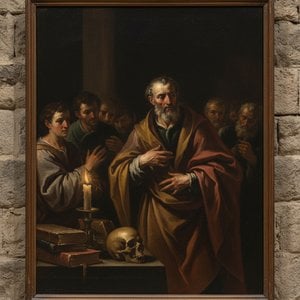
Zurbarán’s Saint Lucy exemplifies the Baroque preoccupation with idealized beauty and spiritual contemplation. The masterful use of light—particularly the dramatic illumination highlighting the woman's face—creates a sense of solemn grandeur and draws viewers into the scene’s contemplative atmosphere.

Francisco de Zurbarán (1598-1664): Hiszpański malarz epoki baroku, znany z dramatycznego światłocienia i obrazów religijnych. 'Hiszpański Caravaggio' – mistrz kontrasty i duchowości!

Giclée / Wydruk artystyczny

Wydruki giclée lub płótna o jakości muzealnej, szybka realizacja i szeroki wybór opcji wykończenia. ( Kup ręcznie malowany obraz Przełącz na wersję cyfrową)

P118B $10
P118H $10
P118W $10
P438Z $10
P508JH $12
P508YH $12
P805H $10
P805Z $10
P919BZ $10
P919G $10
P919XJ $10
P959ZH $10
P968JZ $12
W106C $8
W218G $10
W218JH $8
W218Y $10
W307PJ $10
W316G $10
W316PJ $8
W316Y $10
W398PJ $8
W4111J $10
W500HY $15
W500JH $15
W692G $12
W849H $8
W940BG $15
W953PJ $8

Standardowy
na zamówienie
CM
INCH

Wybierz spośród naszych standardowych rozmiarów, które zachowują oryginalne proporcje dzieła sztuki.

szerokość
wysokość

Możesz wprowadzić własne wymiary, aby dopasować dzieło do konkretnej ramy lub przestrzeni. Jeśli wybrany rozmiar nie będzie odpowiadał proporcjom oryginalnego obrazu, przytniecie dzieło lub rozszerzymy obraz za pomocą odbicia lustrzanego lub jednolitego wypełnienia krawędzi. Przed rozpoczęciem produkcji prześlemy cyfrową wizualizację do Twojej akceptacji.
Prosimy pamiętać, że podgląd na ekranie nie odzwierciedla faktycznego przycinania ani rozszerzania. Tylko wizualizacja dokładnie pokaże końcową kompozycję.
Mimo dostępności niestandardowych rozmiarów, zalecamy wybór wymiaru z listy zdefiniowanej, aby zachować oryginalne proporcje.

Dostawa na cały świat () w ciągu 2 tygodni zamiast standardowych 4/5 tygodni. (25 Wrzesień)

why_choose_icon
Bezpłatna ekspresowa wysyłka na cały świat
why_choose_icon
Wysokiej jakości płótno lniane
why_choose_icon
Pełne ubezpieczenie transportowe
why_choose_icon
Gwarancja zwrotu należności celnych i podatków importowych
why_choose_icon
Gwarancja idealnego odwzorowania barw
why_choose_icon
100-dniowy okres na zwrot dzieła w przypadku wykrycia wad produkcyjnych
why_choose_icon
Gwarancja 100% zwrotu pieniędzy
why_choose_icon
Oferta przy zakupie wielu sztuk

Cena całkowita

$ 68

reproduction

Saint Lucy

Giclée / Wydruk artystyczny

Rozmiar reprodukcji

-

Suma do zapłaty

$ 68

Kluczowe informacje

  • Subject or theme: Religious iconography; Martyrdom
  • Notable elements or techniques: Dramatic chiaroscuro; meticulous detail
  • Artist: Francisco de Zurbarán
  • Influences: Italian Renaissance
  • Location: Private Collection
  • Dimensions: 134 x 106 cm
  • Year: 1630

Quiz wiedzy o sztuce

Do każdego pytania dotyczy tylko jedna poprawna odpowiedź.

Pytanie 1:
What is the primary subject of Francisco de Zurbarán’s Saint Lucy?
Pytanie 2:
The painting utilizes dramatic lighting to emphasize which aspect?
Pytanie 3:
What is notable about Zurbarán’s stylistic approach?
Pytanie 4:
According to the image description, what adds depth and interest to the scene?
Pytanie 5:
What symbolic significance is attributed to the plate held by Saint Lucy?

A Portrait of Faith Illuminated: Exploring Francisco de Zurbarán’s Saint Lucy

Francisco de Zurbarán's “Saint Lucy,” completed around 1625/1630, stands as a testament to the Baroque mastery achieved in Seville during its golden age. More than just a depiction of a saint—Lucille—the painting transcends mere representation, delving into profound themes of piety, sacrifice, and spiritual contemplation. It’s a work that continues to captivate viewers centuries later due to Zurbarán's unparalleled ability to convey emotion through meticulous observation and masterful technique.

  • Subject Matter: The portrait focuses on Saint Lucy, a Roman martyr venerated for her unwavering devotion to Christianity. She is portrayed from the hips upwards, emphasizing her dignity and serenity—a deliberate choice reflecting the Baroque ideal of idealized beauty within religious context.
  • Style & Technique: Zurbarán’s signature style embodies the austere grandeur characteristic of Spanish Baroque art. He employs tenebrismo – dramatic chiaroscuro – skillfully manipulating light and shadow to sculpt the figure, creating an illusionistic depth that draws the eye inward. The stark contrast between illuminated flesh tones and enveloping darkness amplifies the saint's solemn presence and underscores her spiritual purity.
  • Historical Context: Seville in the early 17th century was a vibrant center of artistic innovation, fueled by royal patronage and influenced by Italian Mannerism. Zurbarán’s work aligns perfectly with this period’s preoccupation with religious iconography and its desire to evoke profound emotional responses from the viewer. The painting reflects the broader cultural climate of Spain during the Counter-Reformation, where art served as a powerful tool for reaffirming Catholic faith.

Symbolism: Light, Sacrifice, and Divine Grace

The pervasive use of light is paramount to understanding “Saint Lucy.” It isn’t merely illumination; it's divine grace—a radiant glow emanating from above the saint’s head, symbolizing God’s benevolent presence. This haloed luminescence highlights her face, casting a soft shadow over the rest of her body and emphasizing her spiritual radiance. The inclusion of the pewter plate bearing two human eyes serves as a poignant reminder of Lucy’s martyrdom – she willingly endured torture to protect her faith and refused to renounce Christianity.

  • The Plate with Eyes: Representing Lucy's unwavering gaze upon God, the plate symbolizes her steadfast devotion and willingness to endure suffering for righteousness.
  • Palm Frond & Flowers: The palm frond signifies victory over death and resurrection—a visual allusion to Christ’s triumph over mortality—while the flowers adorning Lucy’s crown symbolize purity and divine grace.

A Masterpiece of Composition and Detail

Zurbarán's compositional choices contribute significantly to the painting’s impact. The vertical orientation draws the viewer’s eye upwards, mirroring Lucy’s gaze toward heaven. The careful positioning of her body—angled slightly to our right but facing towards us—creates a dynamic interplay between stillness and contemplation. Furthermore, Zurbarán’s meticulous attention to detail—from the texture of her dress to the subtle nuances of facial expression—elevates “Saint Lucy” beyond mere representation, transforming it into an emotionally resonant experience.

  • Clothing Detail: The scarlet bodice and white sleeves exemplify Baroque fashion while simultaneously conveying a sense of nobility and spiritual refinement.
  • Jewelry & Accessories: The gold brooch and pearl necklace symbolize wealth and piety—elements carefully integrated into the saint’s attire to reinforce her status as a holy figure.

“Saint Lucy” remains an enduring symbol of faith, resilience, and spiritual beauty. Its masterful technique, evocative symbolism, and profound emotional impact solidify Zurbarán's place among the greatest artists of his era—a timeless masterpiece that continues to inspire admiration and contemplation.


Biografia artysty

Early Life and Formation in Extremadura

Francisco de Zurbarán, born in Fuente de Cantos, Extremadura, Spain, in 1598, emerged from a region steeped in religious fervor and rural austerity—qualities that would profoundly shape his artistic vision. Though details of his earliest training remain somewhat elusive, we know he initially apprenticed with the local painter Alejandro de la Mina before moving to Seville to study under Alonso de Najera. It was within Najera’s workshop that Zurbarán began to absorb the burgeoning Baroque style, a dramatic departure from the more restrained artistic traditions of previous generations. Even in these formative years, a remarkable talent for capturing realistic detail and imbuing his subjects with emotional weight became apparent, hinting at the distinctive path he would forge as an artist. The stark landscapes and devout atmosphere of Extremadura instilled within him a sensibility that favored simplicity, solemnity, and a deep engagement with spiritual themes—characteristics that would define his mature work. His father, Luis Zurbarán, was a haberdasher, and his mother, Isabel Marquet, provided a modest upbringing. From a young age, Francisco displayed an aptitude for drawing, imitating objects with charcoal – a skill honed during his childhood in Fuente de Cantos.

The Seville Period: Establishing a Singular Style

By 1614, Zurbarán had established himself in Seville, a vibrant cultural hub and the gateway to Spain’s vast American colonies. He quickly rose to prominence, establishing a successful workshop and attracting numerous commissions, primarily for religious paintings intended for churches, monasteries, and private devotional use. This period witnessed the full flowering of his signature style—a compelling blend of stark realism and intense spirituality. His early works already showcased a masterful command of *tenebrism*, a technique borrowed from Caravaggio that employed dramatic contrasts between light and shadow to create a sense of drama and emphasize the emotional intensity of his subjects. He wasn’t merely replicating what he saw; he was striving to reveal an inner truth, a profound spiritual presence within each figure. The influence of earlier Spanish masters like Juan Sánchez Cotán, known for his austere still lifes and precise realism, is also evident in Zurbarán’s early work, as well as the sculptural traditions prevalent in Seville at the time. His use of light was not merely decorative; it served to highlight the holiness and dignity of his subjects, drawing the viewer's eye to their spiritual essence.

Master of Tenebrism and Religious Devotion

Zurbarán’s artistic prowess lay in his ability to transform religious narratives into powerfully moving visual experiences. He became renowned for his depictions of monks, nuns, martyrs, and saints—figures often portrayed in moments of profound contemplation or suffering. His *Immaculate Conception* (c. 1635), housed in the Museo de Bellas Artes in Bilbao, exemplifies this mastery; the Virgin Mary is depicted with a serene dignity, bathed in ethereal light against a dark background, conveying both purity and divine grace. Similarly, his *Agnus Dei* (c. 1640), now part of the Metropolitan Museum of Art collection, presents a poignant image of Christ as the sacrificial lamb, radiating an aura of solemnity and sacrifice. The *Sudarium of St Veronica*, with its haunting depiction of the veil bearing the imprint of Christ’s face, showcases his exceptional control over tenebrism and emotional depth. He didn't shy away from portraying the physical realities of faith—the austerity of monastic life, the pain of martyrdom—but always infused these scenes with a sense of reverence and spiritual significance. His *St Francis Receiving the Stigmata* demonstrates his ability to depict profound spiritual experiences with remarkable sensitivity and realism. The series of paintings depicting Carthusian monks further exemplifies his skill in portraying austere religious life, capturing their quiet devotion and inner peace.

Royal Patronage and Lasting Legacy

Around 1630, Zurbarán achieved a significant milestone in his career when he became a court painter to Philip IV. This appointment brought him increased recognition and access to royal commissions, further solidifying his reputation as one of Spain’s leading artists. Despite this success, his popularity waned somewhat in later years with the rise of different artistic tastes. The economic hardships facing Spain during the mid-17th century also impacted his ability to secure large-scale projects. Nevertheless, Zurbarán continued to work diligently, adapting his style and exploring new themes. His influence on Spanish Baroque art is undeniable; his dramatic use of chiaroscuro and his focus on religious themes inspired generations of artists. A circle of followers, known as the “Zurbaranistas,” emerged, continuing to push the boundaries of tenebrism and explore the expressive possibilities of light and shadow. Though he passed away in 1664, Francisco de Zurbarán left behind a rich artistic legacy that continues to be celebrated today, securing his place as one of Spain’s most important Baroque painters—a master of religious art whose works continue to resonate with viewers centuries later.
  • Notable Works: Immaculate Conception (c. 1635), Agnus Dei (c. 1640), Sudarium of St Veronica, St Francis Receiving the Stigmata, Paintings of Carthusian Monks.
  • Historical Significance: Zurbarán’s influence on Spanish Baroque is undeniable; his use of chiaroscuro and his focus on religious themes inspired generations of artists.

Francisco de Zurbarán

Francisco de Zurbarán

1598 - 1664 , Hiszpania

Najważniejsze informacje

  • Artistic Movement Or Style: Barok, Tenebrism
  • Artists Or Movements Influenced By This Artist: ['Caravaggio']
  • Artists Who Influenced This Artist: ['Juan Sánchez Cotán']
  • Date Of Birth: 1598
  • Date Of Death: 1664
  • Full Name: Francisco de Zurbarán
  • Nationality: Hiszpański
  • Notable Artworks:
    • Immaculate Conception
    • Agnus Dei
    • St Francis Receiving Stigmata
  • Place Of Birth: Fuente de Cantos, Hiszpania
Odkryj dzieła sztuki uporządkowane według tematów, stylów i cech charakterystycznych.