x
Podgląd w skaliPodgląd w skali Podgląd ARPodgląd AR Zamów wydruk Zamów wydrukKup obraz wysokiej rozdzielczości Kup obraz wysokiej rozdzielczości Wyślij jako kartkęWyślij jako kartkę
Szczegóły dziełaSzczegóły dzieła Dodaj do ulubionych Dodaj do ulubionych PobierzPobierz Podobne obiektyPodobne obiekty RTGRTG Pokaz slajdówPokaz slajdów

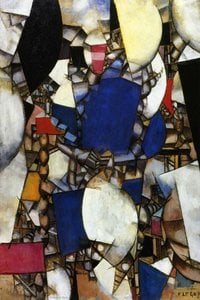
untitled (7433)

Explore Fernand Léger’s ‘untitled (7433)’ – a stylized cityscape blending Cubism & Art Deco. Bold colors, geometric forms, & an evocative, detached atmosphere.

Fernand Léger (1881-1955) – francuski malarz i rzeźbiarz, pionier Kubizmu i Tubismu. Jego obrazy celebrują nowoczesność, maszynę i ludzką formę. Kluczowy dla sztuki XX wieku.

Ręcznie malowana reprodukcja olejowa

Ręcznie malowany obraz olejny na płótnie, wykonany na zamówienie przez naszych artystów w wybranym przez Ciebie wymiarze i oprawie. (Zamów wydruk Zamów wydrukKup obraz wysokiej rozdzielczości Kup obraz wysokiej rozdzielczości)

P118B $10
P118H $10
P118W $10
P438Z $10
P508JH $12
P508YH $12
P805H $10
P805Z $10
P919BZ $10
P919G $10
P919XJ $10
P959ZH $10
P968JZ $12
W106C $8
W218G $10
W218JH $8
W218Y $10
W307PJ $10
W316G $10
W316PJ $8
W316Y $10
W398PJ $8
W4111J $10
W500HY $15
W500JH $15
W692G $12
W849H $8
W940BG $15
W953PJ $8

Standardowy rozmiar
na wymiar
CM
INCH

Wybierz spośród naszych standardowych rozmiarów, które zachowują oryginalne proporcje dzieła sztuki.

szerokość
wysokość

Możesz wprowadzić własne wymiary, aby dopasować obraz do konkretnej ramy lub przestrzeni. Jeśli wybrany rozmiar nie będzie odpowiadał proporcjom oryginału, przytniecie dzieło sztuki lub rozszerzymy je o dodatkowe elementy, ręcznie domalowane przez artystę. Przed rozpoczęciem produkcji wyślemy projekt cyfrowy do Twojej akceptacji.
Należy pamiętać, że podgląd na ekranie nie odzwierciedla rzeczywistego przycinania ani rozszerzania obrazu. Tylko projekt dokładnie pokaże ostateczną kompozycję.
Choć oferujemy możliwość zamówienia niestandardowych rozmiarów, zalecamy wybór wymiaru z gotowej listy, aby zachować oryginalne proporcje dzieła.

Przykłady możliwych zmian: Zamień twarz na zdjęcie klienta; Dodaj zwierzę domowe (np. zamień kota na psa); Ukryj wiadomość w tle; Zmień krajobraz lub elementy tła.
Po złożeniu zamówienia zespół WahooArt.com skontaktuje się z klientem drogą mailową w celu uzyskania instrukcji i prześle wizualizację projektu

Dostawa na całym świecie () w ciągu 3–4 tygodni zamiast standardowych 5 tygodni. (4 Wrzesień). Bez kompromisów w kwestii jakości.

why_choose_icon
Bezpłatna ekspresowa wysyłka na cały świat
why_choose_icon
Wysokiej jakości płótno lniane
why_choose_icon
Pełne ubezpieczenie przesyłki
why_choose_icon
Gwarancja zwrotu należności celnych i podatków importowych
why_choose_icon
Gwarancja wiernego odwzorowania kolorów
why_choose_icon
Polityka 60-dniowego zwrotu (tylko w przypadku wad)
why_choose_icon
Gwarancja 100% zwrotu kosztów
why_choose_icon
Zniżka przy zamówieniu wielu produktów

Suma całkowita

$ 272

reproduction

untitled (7433)

Technika reprodukcji

Wymiary reprodukcji

-

Cena całkowita

$ 272

Szybki podgląd

  • movement:
    • Cubism
    • Art Deco
  • influences:
    • Impressionism
    • Cézanne
  • artist: Fernand Léger
  • style: Abstraction
  • notable elements:
    • Geometric cityscape
    • Abstract tree-like structures
    • Flattened perspective

Quiz o sztuce

Do każdego pytania dotyczy tylko jedna poprawna odpowiedź.

Pytanie 1:
Fernand Léger is most closely associated with which artistic movement, characterized by fragmented forms and geometric shapes?
Pytanie 2:
The artwork 'untitled (7433)' is characterized by a strong emphasis on what type of forms?
Pytanie 3:
What stylistic element, alongside Cubism, is suggested in the description of 'untitled (7433)'?
Pytanie 4:
The artwork's perspective is described as 'flattened.' What effect does this have on the overall impression?
Pytanie 5:
Based on the description, what is a potential emotional interpretation of 'untitled (7433)'?

A Geometric Vision of Modernity

In the vibrant tapestry of twentieth-century avant-garde art, few threads are as bold and structurally sound as those woven by Fernand Léger. His untitled (743 3) composition serves as a breathtaking window into an abstracted reimagining of urban existence, where the chaotic pulse of the city is distilled into a rhythmic dance of geometry. Rather than offering a literal window onto a streetscape, Léger invites us into a dreamlike realm where buildings and organic forms merge into a singular, stylized vision. The canvas is dominated by striking, bold shapes that suggest the soaring heights of architecture and the skeletal grace of abstracted trees, all arranged in a deliberate asymmetry that compels the viewer’s eye to wander across the surface, discovering new intersections of color and form with every glance.

The emotional resonance of this piece lies in its unique ability to balance tension with harmony. There is a subtle, almost haunting sense of detachment within the flattened perspective; by minimizing depth, Léger distances the scene from the grit of everyday reality, elevating the cityscape to a plane of pure aesthetic contemplation. For the collector or interior designer, this work offers a sophisticated emotional anchor—a piece that conveys the controlled chaos of modern life while maintaining an air of serene, structured elegance. It is a visual symphony of modernity, capturing that fleeting moment where the industrial and the organic exist in a state of perfect, geometric equilibrium.

The Pulse of the Machine Age

To understand this masterpiece, one must delve into Léger’s revolutionary "Tubism," a distinctive evolution of Cubism that replaced the fragmented planes of his contemporaries with cylindrical, tubular forms. This technique breathes a muscular, mechanical energy into the work, celebrating the strength and dynamism of the industrial age. The application of color is remarkably purposeful; using what appears to be the flat, decisive strokes of gouache or acrylic, Léger employs a palette that is both vibrant and carefully curated. There is no room for the ambiguity of soft brushwork here; instead, every edge is sharply defined, creating a sense of order and architectural permanence that mirrors the very structures it depicts.

This stylistic choice reflects Léger’s profound fascination with the aesthetics of progress. As a pioneer who found beauty in the metallic sheen and rhythmic precision of machinery, he utilized clean lines and streamlined patterns that whisper of the Art Deco movement. The artwork does not merely represent a city; it engineers an experience of one. For those seeking to infuse a contemporary space with intellectual depth and historical significance, this reproduction offers more than just decoration. It provides a profound connection to a period of radical transformation, bringing the high-voltage hum of the machine age into the quiet sanctuary of the modern home.

A Legacy of Form and Color

Beyond its striking visual impact, untitled (7433) stands as a testament to Léger’s enduring legacy as a bridge between the abstract experiments of the early 1900s and the populist energy of later movements like Pop Art. His ability to translate the complex, often alienating experience of urban industrialization into an accessible, figurative aesthetic is nothing short of masterful. The work avoids the coldness of pure abstraction by retaining a sense of recognizable life, even if that life is reimagined through a lens of geometric precision.

Integrating such a piece into a curated collection or a high-end interior design project allows for a dialogue between history and modernity. The verticality of the composition lends itself to creating a sense of height and grandeur in a room, while the bold, primary-adjacent tones can serve as a focal point that energizes neutral palettes. Owning a reproduction of this caliber is an invitation to inhabit Léger’s world—a world where every cylinder, every stripe, and every shape vibrates with the eternal heartbeat of human progress and the unyielding beauty of form.


O artyście

A Life Forged in Form: The World of Fernand Léger

Fernand Léger, born Joseph Fernand Henri Léger in 1881 amidst the rural landscapes of Argentan, Normandy, stands as a pivotal figure in the evolution of modern art. His journey from the farmlands of his youth to the forefront of Parisian avant-garde circles is a testament to an unwavering artistic vision and a relentless pursuit of capturing the spirit of the machine age. Unlike many of his contemporaries who embraced abstraction as a retreat from representation, Léger sought to *integrate* modernity – its dynamism, its mechanical forms, its very essence – into a new visual language that was both powerfully abstract and deeply rooted in the observable world. His early life, steeped in the physicality of agricultural labor, provided a grounding contrast to the industrialized future he would so passionately depict. Initially destined for architecture, Léger’s path shifted towards painting after arriving in Paris around 1900, supporting himself through drafting work while honing his artistic skills. This period was marked by traditional academic training, but it wasn't until encountering the groundbreaking work of Paul Cézanne that a true transformation began to unfold.

The Birth of ‘Tubism’ and the Section d’Or

Cézanne’s retrospective in 1907 acted as a catalyst, liberating Léger from conventional representation and propelling him towards a more geometric and structural approach. He began dismantling forms, analyzing their underlying structures, and rebuilding them on canvas with a newfound emphasis on solidity and volume. This exploration quickly led him into the orbit of Cubism, but Léger wasn’t content to simply replicate the styles of Picasso or Braque. Instead, he developed his own distinct idiom – a personal form of Cubism that critics playfully dubbed “Tubism.” Characterized by cylindrical forms, flattened planes, and bold color contrasts, Tubism celebrated the machine aesthetic long before it became a widespread artistic preoccupation. It was an art born from observing the burgeoning industrial world, recognizing beauty in its functional shapes and mechanical rhythms. Léger’s approach differed significantly; he retained a sense of volume and depth, unlike some Cubists who completely flattened their subjects. This resulted in a dynamic interplay between solidity and flatness, creating a unique visual experience. The period also saw him actively participating in the avant-garde scene, joining forces with artists like Jean Metzinger, Henri Le Fauconnier, Francis Picabia, and Marcel Duchamp within the Puteaux Group, also known as the Section d’Or (The Golden Section). This group, comprised of intellectuals and artists, explored mathematical principles of harmony and proportion, seeking to infuse their art with a sense of order and rationality. Their collective investigations pushed the boundaries of artistic expression, laying the groundwork for future developments in abstract art.

War, Mechanization, and a New Aesthetic

The outbreak of World War I profoundly impacted Léger’s life and work. Serving at the front from 1914 to 1916 exposed him to the brutal realities of modern warfare – artillery barrages, aerial combat, and the dehumanizing effects of mechanized conflict. This experience didn't lead to disillusionment or a rejection of modernity; rather, it solidified his fascination with machines and their power. Sketches made during his service documented the stark beauty of military technology, transforming instruments of destruction into subjects of artistic contemplation. The repetitive patterns of trenches, the gleaming metal of tanks, and the angular forms of aircraft became sources of inspiration for his later paintings. Upon returning to civilian life, Léger’s aesthetic underwent a further evolution. His paintings began to reflect a more streamlined, mechanistic sensibility, celebrating the dynamism and efficiency of the industrial world. *Soldier with a Pipe* (1916) exemplifies this shift, showcasing simplified forms and bold colors that evoke the feeling of mechanical precision. This wasn't merely an aesthetic choice; it was a philosophical statement – an affirmation of modernity’s potential for progress and renewal, even in the wake of devastating conflict.

The Development of Style: From Cubism to ‘Tubism’ and Beyond

Léger’s artistic journey wasn’t static. While “Tubism” defined his early work, he continually experimented with different approaches. He moved away from the strict geometric forms of his initial Tubist paintings, incorporating more figurative elements and exploring new color palettes. During the 1920s, influenced by Surrealism and the rise of urban life, Léger’s style became increasingly dynamic and expressive. His *Paysages animés* (Animated Landscapes) series from 1921 showcased figures and animals seamlessly integrated into streamlined compositions, blurring the boundaries between organic and inorganic forms. He also experimented with sculpture and filmmaking, creating innovative works that combined painting, ceramics, and moving images. The influence of Marcel Duchamp’s “ready-mades” is evident in Léger's use of industrial objects as subjects for his paintings, further demonstrating his engagement with the modern world. His work during this period can be characterized by a vibrant energy, a sense of movement, and an optimistic vision of the future.

Legacy and Lasting Influence

In his post-war years, Léger continued to explore the intersection of art and industry, creating works that celebrated modern life with a unique blend of abstraction and figuration. His *Cityscapes* series reflected the bustling energy of urban centers, while his portraits captured the essence of everyday people. Léger’s influence on subsequent generations of artists is undeniable. His bold simplification of form, his embrace of industrial imagery, and his celebration of popular culture anticipated the emergence of Pop Art decades later. Artists like Roy Lichtenstein and Andy Warhol owe a clear debt to Léger's pioneering work. He bridged the gap between abstract art and figurative representation, demonstrating that it was possible to create works that were both intellectually rigorous and visually engaging. Today, Fernand Léger’s paintings are held in major museums worldwide, including the Musée d'Art et d'Histoire in France and the Musée National Fernand Léger, dedicated solely to his work. He remains a towering figure of 20th-century art – a visionary who dared to find beauty in the machine age and to translate its energy onto canvas with unparalleled boldness and originality. His legacy is not merely as a painter, but as a prophet of modernity. A true pioneer whose work continues to resonate with audiences today.

Fernand Léger

Fernand Léger

1881 - 1955 , Francja

Krótka nota

  • Artistic Movement Or Style: Cubizm, Tubizm
  • Artists Or Movements Influenced By This Artist: ['Pop Art']
  • Artists Who Influenced This Artist: ['Paul Cézanne']
  • Date Of Birth: 4 lutego 1881
  • Date Of Death: 17 sierpnia 1955
  • Full Name: Fernand Léger
  • Nationality: Francuz
  • Notable Artworks:
    • Nudes in the Forest
    • Machine Element
    • The Great Parade
  • Place Of Birth: Argentan, Francja
Odkryj dzieła sztuki uporządkowane według tematów, stylów i cech charakterystycznych.