Podgląd w skali 1:1 Podgląd AR Zamów ręcznie malowaną reprodukcję Przejdź do wersji cyfrowej Wyślij jako kartkę
Szczegóły dzieła Przewodnik Dodaj do ulubionych Pobierz obraz Podobne obiekty RTG Pokaz slajdów Q&A Statystyki

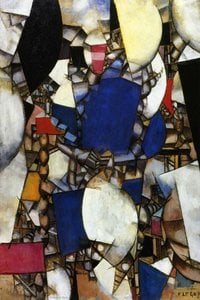
The acrobats in the circus

Fernand Léger (1881-1955) – francuski malarz i rzeźbiarz, pionier Kubizmu i Tubismu. Jego obrazy celebrują nowoczesność, maszynę i ludzką formę. Kluczowy dla sztuki XX wieku.

Giclée / Wydruk artystyczny

Wydruki giclée lub płótna o jakości muzealnej, szybka realizacja i szeroki wybór opcji wykończenia. ( Zamów ręcznie malowaną reprodukcję Przejdź do wersji cyfrowej)

Corner sample of the P118B picture frame: polistyren formowany, 5 cm wide and 3 cm thick
P118B zł10
Corner sample of the P118H picture frame: polistyren formowany, 5 cm wide and 3 cm thick
P118H zł10
Corner sample of the P118W picture frame: polistyren formowany, 5 cm wide and 3 cm thick
P118W zł10
Corner sample of the P438Z picture frame: polistyren formowany, 5.5 cm wide and 3.5 cm thick
P438Z zł10
Corner sample of the P508JH picture frame: polistyren formowany, 7 cm wide and 3.5 cm thick
P508JH zł12
Corner sample of the P508YH picture frame: polistyren formowany, 7 cm wide and 3.5 cm thick
P508YH zł12
Corner sample of the P805H picture frame: polistyren formowany, 5 cm wide and 3.5 cm thick
P805H zł10
Corner sample of the P805Z picture frame: polistyren formowany, 5 cm wide and 3.5 cm thick
P805Z zł10
Corner sample of the P919BZ picture frame: polistyren formowany, 7 cm wide and 3.5 cm thick
P919BZ zł10
Corner sample of the P919G picture frame: polistyren formowany, 7 cm wide and 3.5 cm thick
P919G zł10
Corner sample of the P919XJ picture frame: polistyren formowany, 7 cm wide and 3.5 cm thick
P919XJ zł10
Corner sample of the P959ZH picture frame: polistyren formowany, 5 cm wide and 3 cm thick
P959ZH zł10
Corner sample of the P968JZ picture frame: polistyren formowany, 6 cm wide and 4 cm thick
P968JZ zł12
Corner sample of the W106C picture frame: lite drewno, 5 cm wide and 3 cm thick
W106C zł8
Corner sample of the W218G picture frame: lite drewno, 5 cm wide and 3 cm thick
W218G zł10
Corner sample of the W218JH picture frame: lite drewno, 5 cm wide and 3 cm thick
W218JH zł8
Corner sample of the W218Y picture frame: lite drewno, 5 cm wide and 3 cm thick
W218Y zł10
Corner sample of the W307PJ picture frame: lite drewno, 6 cm wide and 3 cm thick
W307PJ zł10
Corner sample of the W316G picture frame: lite drewno, 6 cm wide and 3 cm thick
W316G zł10
Corner sample of the W316PJ picture frame: lite drewno, 6 cm wide and 3 cm thick
W316PJ zł8
Corner sample of the W316Y picture frame: lite drewno, 6 cm wide and 3 cm thick
W316Y zł10
Corner sample of the W398PJ picture frame: lite drewno, 5 cm wide and 3 cm thick
W398PJ zł8
Corner sample of the W4111J picture frame: lite drewno, 6.5 cm wide and 3.5 cm thick
W4111J zł10
Corner sample of the W500HY picture frame: lite drewno, 7 cm wide and 5 cm thick
W500HY zł15
Corner sample of the W500JH picture frame: lite drewno, 7 cm wide and 5 cm thick
W500JH zł15
Corner sample of the W692G picture frame: lite drewno, 8 cm wide and 4 cm thick
W692G zł12
Corner sample of the W849H picture frame: lite drewno, 5 cm wide and 3 cm thick
W849H zł8
Corner sample of the W940BG picture frame: lite drewno, 7.5 cm wide and 4.5 cm thick
W940BG zł15
Corner sample of the W953PJ picture frame: lite drewno, 6 cm wide and 3.5 cm thick
W953PJ zł8

Standardowy format
personalizowane
CM
INCH

Wybierz spośród naszych standardowych rozmiarów, które zachowują oryginalne proporcje dzieła sztuki.

szerokość
wysokość

Wpisz wymaganą szerokość i wysokość, aby dopasować grafikę do ramy lub ściany. Wydruk można jedynie przyciąć, nigdy nie powiększając go poza oryginalny obraz, dlatego format o innych proporcjach spowoduje utratę części kompozycji. Przed rozpoczęciem druku prześlemy Ci cyfrowy podgląd do zatwierdzenia. Obraz wyświetlany na tej stronie nie pokazuje rzeczywistego przycięcia — jedynie podgląd oddaje ten efekt.

Dostawa na cały świat () w ciągu 2 tygodni zamiast standardowych 4/5 tygodni. (31 Październik)

Bezpłatna ekspresowa wysyłka na cały świat
Wysokiej jakości płótno lniane
Pełne ubezpieczenie przesyłki
Gwarancja zwrotu należności celnych i podatków importowych
Gwarancja wiernego odwzorowania kolorów
100-dniowa polityka zwrotów (tylko w przypadku wad)
Gwarancja 100% zwrotu pieniędzy
Zniżka przy zakupie wielu sztuk

Suma całkowita

zł 264

The acrobats in the circus

Giclée / Wydruk artystyczny

Wymiary reprodukcji

-

Cena całkowita

zł 264

Najważniejsze informacje

  • Artistic style: Geometric abstraction
  • Medium: Oil on canvas
  • Notable elements or techniques: Fragmented forms, bold colors
  • Movement: Cubism
  • Influences: Expressionism

Quiz o sztuce

Do każdego pytania dotyczy tylko jedna poprawna odpowiedź.

Pytanie 1:
What artistic movement is Fernand Léger’s ‘Acrobats in the Circus’ primarily associated with?
Pytanie 2:
The painting depicts a circus scene. What is one prominent element that contributes to its visual atmosphere?
Pytanie 3:
What symbolic significance might the clocks in the painting represent?
Pytanie 4:
According to biographical information, Fernand Léger initially pursued a career in what field before dedicating himself to painting?
Pytanie 5:
The image description mentions objects like vases and chairs. How do these elements contribute to the overall impression of the artwork?

A Symphony of Form and Movement: Exploring Fernand Léger’s “The Acrobats in the Circus”

Fernand Léger's "The Acrobats in the Circus," painted in 1918, transcends mere depiction; it embodies a profound engagement with the burgeoning spirit of modernity. Born Joseph Fernand Henri Léger in Argentan, Normandy, in 1881, Léger’s formative years amidst rural labor instilled a grounding appreciation for physicality that would later fuel his revolutionary artistic vision. Unlike many contemporaries preoccupied with abstract idealism, Léger resolutely sought to synthesize observation and abstraction—to capture the dynamism of the machine age while retaining an undeniable connection to tangible reality. This duality is exquisitely realized in “The Acrobats,” cementing Léger’s position as a pioneer of Cubism and a prophet of visual language poised to influence generations of artists.

Cubist Fragmentation: Capturing Illusion Through Geometry

“The Acrobats” exemplifies Léger's signature Cubist style, a movement born from Picasso and Braque’s experimentation with representing subjects from multiple viewpoints simultaneously. The painting abandons traditional perspective, fracturing the circus scene into geometric planes—bold cubes and cylinders—that overlap and intersect to create an illusion of depth. This deliberate distortion isn’t merely stylistic; it reflects Léger's fascination with industrial forms and his desire to convey a sense of movement and instability. As evidenced by WikiArt’s detailed analysis, the artist meticulously rendered these fractured shapes using a technique characterized by precise hatching and cross-hatching—a masterful demonstration of tonal control that enhances the painting’s sculptural quality. The sketch for “The Acrobats in the Circus” (Metropolitan Museum of Art) further illuminates Léger's process, revealing his initial explorations of compositional arrangements before committing to the final canvas.

Symbolism Within Chaos: Clocks and Objects as Vessels of Time

Beyond its formal innovation, "The Acrobats" is laden with symbolic significance. The prominent clocks—one positioned at the top left corner and another dominating the lower right—serve as visual anchors, representing both time’s relentless march and the pervasive influence of industrial progress. These objects aren't merely decorative; they actively contribute to the painting’s narrative tension, mirroring the fragmented nature of perception itself. Similarly, the inclusion of a chair and two vases underscores Léger’s preoccupation with everyday life—a deliberate contrast to the idealized landscapes favored by Impressionists. The artist’s careful placement of these elements reinforces the idea that even seemingly mundane objects can hold profound expressive potential.

Emotional Resonance: A Celebration of Energy and Vitality

Ultimately, “The Acrobats in the Circus” succeeds in conveying a palpable sense of energy and vitality—a testament to Léger's ability to translate intellectual concepts into visceral emotional experience. The bold color palette—primarily reds, yellows, and blues—amplifies this dynamism, mirroring the vibrant atmosphere of a circus performance. As WikiArt’s description notes, “Acrobats at the Circus” (WikiArt) captures the spirit of the era with remarkable precision. Léger's masterful technique ensures that every brushstroke resonates with movement and rhythm, inviting viewers to contemplate not only the visual spectacle but also the underlying philosophical inquiry into how we perceive and interpret the world around us. This artwork embodies a powerful fusion of form and feeling—a legacy that continues to inspire artists and collectors alike.

Pytania i odpowiedzi

Jaką kolorystykę wykorzystuje "The acrobats in the circus"?

Kolory dzieła "The acrobats in the circus" tworzą Dark paletę barw. Klasyfikacja ta opisuje dominujące rodziny kolorystyczne.

Co wyjaśnia sytuację prawną dotyczącą praw autorskich do „The acrobats in the circus” – Fernand Léger?

„The acrobats in the circus” – Fernand Léger jest należy do domeny publicznej – autorskie prawa majątkowe wygasły. Okres ochrony praw autorskich liczony jest od śmierci artysty, która nastąpiła w 1955.

Do jakiego pomieszczenia, biorąc pod uwagę kolorystykę, polecane jest dzieło „The acrobats in the circus” – Fernand Léger?

Kolorystyka Dark w dziele „The acrobats in the circus” – Fernand Léger idealnie współgra z rekomendowanym wnętrzem: Living Room.


Biografia artysty

A Life Forged in Form: The World of Fernand Léger

Fernand Léger, born Joseph Fernand Henri Léger in 1881 amidst the rural landscapes of Argentan, Normandy, stands as a pivotal figure in the evolution of modern art. His journey from the farmlands of his youth to the forefront of Parisian avant-garde circles is a testament to an unwavering artistic vision and a relentless pursuit of capturing the spirit of the machine age. Unlike many of his contemporaries who embraced abstraction as a retreat from representation, Léger sought to *integrate* modernity – its dynamism, its mechanical forms, its very essence – into a new visual language that was both powerfully abstract and deeply rooted in the observable world. His early life, steeped in the physicality of agricultural labor, provided a grounding contrast to the industrialized future he would so passionately depict. Initially destined for architecture, Léger’s path shifted towards painting after arriving in Paris around 1900, supporting himself through drafting work while honing his artistic skills. This period was marked by traditional academic training, but it wasn't until encountering the groundbreaking work of Paul Cézanne that a true transformation began to unfold.

The Birth of ‘Tubism’ and the Section d’Or

Cézanne’s retrospective in 1907 acted as a catalyst, liberating Léger from conventional representation and propelling him towards a more geometric and structural approach. He began dismantling forms, analyzing their underlying structures, and rebuilding them on canvas with a newfound emphasis on solidity and volume. This exploration quickly led him into the orbit of Cubism, but Léger wasn’t content to simply replicate the styles of Picasso or Braque. Instead, he developed his own distinct idiom – a personal form of Cubism that critics playfully dubbed “Tubism.” Characterized by cylindrical forms, flattened planes, and bold color contrasts, Tubism celebrated the machine aesthetic long before it became a widespread artistic preoccupation. It was an art born from observing the burgeoning industrial world, recognizing beauty in its functional shapes and mechanical rhythms. Léger’s approach differed significantly; he retained a sense of volume and depth, unlike some Cubists who completely flattened their subjects. This resulted in a dynamic interplay between solidity and flatness, creating a unique visual experience. The period also saw him actively participating in the avant-garde scene, joining forces with artists like Jean Metzinger, Henri Le Fauconnier, Francis Picabia, and Marcel Duchamp within the Puteaux Group, also known as the Section d’Or (The Golden Section). This group, comprised of intellectuals and artists, explored mathematical principles of harmony and proportion, seeking to infuse their art with a sense of order and rationality. Their collective investigations pushed the boundaries of artistic expression, laying the groundwork for future developments in abstract art.

War, Mechanization, and a New Aesthetic

The outbreak of World War I profoundly impacted Léger’s life and work. Serving at the front from 1914 to 1916 exposed him to the brutal realities of modern warfare – artillery barrages, aerial combat, and the dehumanizing effects of mechanized conflict. This experience didn't lead to disillusionment or a rejection of modernity; rather, it solidified his fascination with machines and their power. Sketches made during his service documented the stark beauty of military technology, transforming instruments of destruction into subjects of artistic contemplation. The repetitive patterns of trenches, the gleaming metal of tanks, and the angular forms of aircraft became sources of inspiration for his later paintings. Upon returning to civilian life, Léger’s aesthetic underwent a further evolution. His paintings began to reflect a more streamlined, mechanistic sensibility, celebrating the dynamism and efficiency of the industrial world. *Soldier with a Pipe* (1916) exemplifies this shift, showcasing simplified forms and bold colors that evoke the feeling of mechanical precision. This wasn't merely an aesthetic choice; it was a philosophical statement – an affirmation of modernity’s potential for progress and renewal, even in the wake of devastating conflict.

The Development of Style: From Cubism to ‘Tubism’ and Beyond

Léger’s artistic journey wasn’t static. While “Tubism” defined his early work, he continually experimented with different approaches. He moved away from the strict geometric forms of his initial Tubist paintings, incorporating more figurative elements and exploring new color palettes. During the 1920s, influenced by Surrealism and the rise of urban life, Léger’s style became increasingly dynamic and expressive. His *Paysages animés* (Animated Landscapes) series from 1921 showcased figures and animals seamlessly integrated into streamlined compositions, blurring the boundaries between organic and inorganic forms. He also experimented with sculpture and filmmaking, creating innovative works that combined painting, ceramics, and moving images. The influence of Marcel Duchamp’s “ready-mades” is evident in Léger's use of industrial objects as subjects for his paintings, further demonstrating his engagement with the modern world. His work during this period can be characterized by a vibrant energy, a sense of movement, and an optimistic vision of the future.

Legacy and Lasting Influence

In his post-war years, Léger continued to explore the intersection of art and industry, creating works that celebrated modern life with a unique blend of abstraction and figuration. His *Cityscapes* series reflected the bustling energy of urban centers, while his portraits captured the essence of everyday people. Léger’s influence on subsequent generations of artists is undeniable. His bold simplification of form, his embrace of industrial imagery, and his celebration of popular culture anticipated the emergence of Pop Art decades later. Artists like Roy Lichtenstein and Andy Warhol owe a clear debt to Léger's pioneering work. He bridged the gap between abstract art and figurative representation, demonstrating that it was possible to create works that were both intellectually rigorous and visually engaging. Today, Fernand Léger’s paintings are held in major museums worldwide, including the Musée d'Art et d'Histoire in France and the Musée National Fernand Léger, dedicated solely to his work. He remains a towering figure of 20th-century art – a visionary who dared to find beauty in the machine age and to translate its energy onto canvas with unparalleled boldness and originality. His legacy is not merely as a painter, but as a prophet of modernity. A true pioneer whose work continues to resonate with audiences today.
Fernand Léger

Fernand Léger

1881 - 1955 , Francja

Krótka nota

  • Artistic Movement Or Style: Cubizm, Tubizm
  • Artists Or Movements Influenced By This Artist: ['Pop Art']
  • Artists Who Influenced This Artist: ['Paul Cézanne']
  • Date Of Birth: 4 lutego 1881
  • Date Of Death: 17 sierpnia 1955
  • Full Name: Fernand Léger
  • Nationality: Francuz
  • Notable Artworks:
    • Nudes in the Forest
    • Machine Element
    • The Great Parade
  • Place Of Birth: Argentan, Francja
Odkryj dzieła sztuki uporządkowane według tematów, stylów i cech charakterystycznych.