Otrzymaj plik gotowy do druku, którego jakość znacznie przewyższa podgląd internetowy. Każdy sprzedawany przez nas obraz cyfrowy pochodzi z wysokorozdzielczego pliku wzorcowego w naszej bazie — zazwyczaj o szerokości od 5 000 do 15 000 pikseli — dzięki czemu możesz drukować w dużym formacie, mocno kadrować lub z pełnym przekonaniem odwzorowywać najdrobniejsze detale.
Żaden plik nie opuszcza naszego studia bez odpowiedniej obróbki. Ekspert ds. cyfrowej edycji sprawdza zgodność kolorów z oryginałem i w razie potrzeby je koryguje, a następnie za pomocą profesjonalnych narzędzi do retuszu poprawia ostrość oraz szczegółowość — zawsze zachowując wierność pociągnięciom pędzla i stylowi artysty. Rezultatem jest obraz, który wygląda jak prawdziwe dzieło, a nie jak przefiltrowany skan.
Zatwierdzasz przed finalizacją zamówienia: nasz ekspert prześle obraz drogą mailową w ciągu 72 godzin do Twojego wglądu. Nie jesteś zadowolony? Poproś o poprawki lub korektę, bądź o zwrot kosztów, jeśli jakość nie spełnia oczekiwań.
To jakość, na której polegają wydawcy, studia projektowe, galerie oraz drukarnie.
Pobierz plik o wysokiej rozdzielczości do osobistego użytku, druku oraz projektów kreatywnych. ( Przełącz na wydania drukowane Zamów ręcznie malowaną reprodukcję)
Wybierając WahooArt.com, nie otrzymujesz jedynie obrazu – otrzymujesz profesjonalnie udoskonalone cyfrowe dzieło sztuki, stworzone z najwyższą precyzją i objęte gwarancją satysfakcji. Oto wszystko, co automatycznie dołączane jest do Twojego zamówienia:
Plik z obrazem cyfrowym w wysokiej rozdzielczości zostanie przesłany na Twój adres e-mail w ciągu 72 godzin od złożenia zamówienia – gotowy do natychmiastowego użycia.
Twoja grafika została profesjonalnie zoptymalizowana przy użyciu zaawansowanych narzędzi AI oraz ręcznej edycji, co zapewnia maksymalną szczegółowość, klarowność i wierność kolorów.
Przypadkowo usunąłeś lub zgubiłeś swój plik? Bez obaw – prześlemy go Tobie ponownie w dowolnym momencie, bez żadnych opłat.
Ciesz się swoją sztuką natychmiast, bez żadnych opłat celnych, należności ani kosztów dostawy – pliki cyfrowe są zawsze wolne od podatku.
Dzięki zastosowaniu profesjonalnych narzędzi i procesów zarządzania barwą zapewniamy, że Twoje cyfrowe zdjęcie odzwierciedla oryginalne kolory tak wiernie, jak to tylko możliwe.
Jeśli nie będziesz zadowolony ze swojego cyfrowego obrazu, dokonamy jego poprawki lub zwrócimy 100% kosztów w ciągu 100 dni – bez zbędnych pytań.
Nie jesteś zadowolony? Otrzymaj pełny zwrot kosztów w ciągu 100 dni od otrzymania pliku cyfrowego – bez zbędnych pytań.
Kup 3 obrazy, oszczędź 10% - Kup 5, oszczędź 15% - Kup 10+, oszczędź 20%. Idealne do projektów kreatywnych, galerii i agencji.
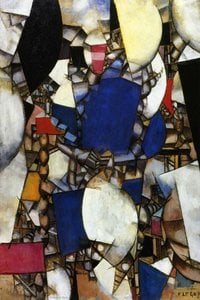
In the quiet tension of Fernand Léger’s 1919 masterpiece, Study for the Card Game, one finds a profound paradox that defines the very essence of early twentieth-century modernism. The canvas presents an arresting stillness, yet beneath its surface, there is a rhythmic, almost mechanical vitality that refuses to be ignored. At first glance, the composition appears deceptively simple, presenting three figures—a man and two women—standing in a shared moment against a muted backdrop of ochre and grey. However, to look closer is to witness a revolution of form. Léger does not merely depict people; he deconstructs them into an intricate orchestration of interlocking cubes, cylinders, and planes. This is the birth of a visual language where the human silhouette begins to merge with the structural precision of the machine age.
The technique employed in this study reveals Léger’s obsessive dedication to volume and light. Utilizing a meticulous process he termed multiplication, the artist layered thin washes of color to establish a foundational tonal structure before applying heavy, opaque pigments. This method allowed him to build up forms with a sculptural weight, capturing the internal volume of each figure without relying on traditional, soft-focus shading. Instead, Léger embraced bold contrasts and sharp outlines, creating a sense of depth through geometric intersection rather than atmospheric perspective. For the discerning collector or interior designer, this technique offers a striking visual texture that commands attention, providing a sophisticated focal point that feels both structurally grounded and vibrantly alive.
To understand the emotional resonance of Study for the Card Game, one must look to the era from which it emerged. Painted in the immediate aftermath of World War I, the work is steeped in the burgeoning anxieties and technological triumphs of a changing Europe. As industrialization accelerated, Léger found inspiration in the rhythmic, metallic hum of the modern city. The card game itself serves as a poignant symbol; much like the deterministic forces of the machine age, the game suggests a world governed by patterns, chance, and structural logic. There is a certain muscular energy in his use of primary colors and bold shapes that mirrors the strength and resilience of a society rebuilding itself through innovation.
For those seeking to infuse a contemporary space with historical depth, this piece offers an unparalleled opportunity. It bridges the gap between the organic human experience and the disciplined beauty of Constructivism. The painting does not merely decorate a wall; it invites a dialogue about how we perceive reality in an increasingly mechanized world. Whether placed in a minimalist gallery setting or as a bold statement in a curated residential collection, Léger’s work brings a sense of intellectual rigor and aesthetic dynamism. It is an invitation to embrace the beauty of the essential form—a timeless tribute to the era when art first learned to speak the language of the future.
Dzięki swojemu Elegant nastrojowi, "Study for the card game" idealnie sprawdzi się w Living Room.
W „Study for the card game” – Fernand Léger nurt Cubism łączy się z epoką Modernizm.
Nurt związany z „Study for the card game” – Fernand Léger to Cubism. Ta klasyfikacja sytuuje dzieło wśród pokrewnych artystów i dzieł sztuki.


1881 - 1955 , Francja
 Podgląd w skali 1:1
 Wyślij jako kartkę
 Udostępnij
 Szczegóły dzieła
 Przewodnik

 Pobierz obraz
 Podobne obiekty
 RTG
RTG Pokaz slajdów
 Pytania i odpowiedzi
 Statystyki

 Rozwiń treść