DARMOWA KONSULTACJA ARTYSTYCZNA

x
Zamów wydruk Zamów wydrukZamów reprodukcję Zamów reprodukcję UdostępnijUdostępnij
DetailsDetails Dodaj do ulubionych Dodaj do ulubionych PobierzPobierz Podobne obiektyPodobne obiekty X-RayX-Ray Pokaz slajdówPokaz slajdów

Landscape animated 1st study

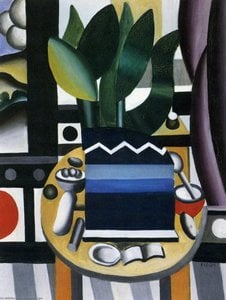
Explore Fernand Léger’s evocative Landscape animated 1st study – a dynamic depiction of urban life in 1921, blending geometric abstraction with realistic elements to capture the energy of the machine age. Discover this captivating artwork and bring its modernist vision home.

Fernand Léger (1881-1955) – francuski malarz i rzeźbiarz, pionier Kubizmu i Tubismu. Jego obrazy celebrują nowoczesność, maszynę i ludzką formę. Kluczowy dla sztuki XX wieku.

Kup wysokiej rozdzielczości, ulepszony obraz cyfrowy, znacznie lepszy niż podgląd online.

Każdy plik jest starannie przygotowywany przez naszych specjalistów przy użyciu zaawansowanych narzędzi oraz profesjonalnej, ręcznej retuszy. Dbamy o to, aby każdy obraz cechował się wyjątkową ostrością, precyzyjnym odwzorowaniem kolorów i subtelnymi detalami.

Ostateczny plik dostarczany jest drogą mailową w ciągu 72 godzin, zoptymalizowany do natychmiastowego wykorzystania w profesjonalnych zastosowaniach redakcyjnych i poligraficznych. To ta sama jakość, której ufają czołowe studia projektowe, wydawnictwa oraz galerie sztuki.

Obraz cyfrowy

Pobierz plik o wysokiej rozdzielczości do osobistego wyświetlania, druku oraz projektów kreatywnych.

Suma do zapłaty

$9.99

Zawarte w każdym zamówieniu na obraz cyfrowy

Profesjonalna dostawa cyfrowa, gwarantowana

Wybierając WahooArt.com, nie otrzymujesz jedynie obrazu – otrzymujesz profesjonalnie udoskonalone cyfrowe dzieło sztuki, stworzone z najwyższą precyzją i objęte gwarancją satysfakcji. Oto wszystko, co automatycznie dołączane jest do Twojego zamówienia:

shipping_icon
Błyskawiczna wysyłka e-mailowa

Plik z obrazem cyfrowym w wysokiej rozdzielczości zostanie przesłany na Twój adres e-mail w ciągu 72 godzin od złożenia zamówienia – gotowy do natychmiastowego użycia.

canvas_icon
Plik cyfrowy wzbogacony przez AI

Twoja grafika została profesjonalnie zoptymalizowana przy użyciu zaawansowanych narzędzi AI oraz ręcznej edycji, co zapewnia maksymalną szczegółowość, klarowność i wierność kolorów.

insurance_icon
Dożywotnia darmowa ponowna dostawa

Przypadkowo usunąłeś lub zgubiłeś swój plik? Bez obaw – prześlemy go Tobie ponownie w dowolnym momencie, bez żadnych opłat.

tax_icon
Bez opłat importowych – zawsze

Ciesz się swoją sztuką natychmiast, bez żadnych opłat celnych, należności ani kosztów dostawy – pliki cyfrowe są zawsze wolne od podatku.

color_icon
Gwarancja wierności kolorów

Dzięki zastosowaniu profesjonalnych narzędzi i procesów zarządzania barwą zapewniamy, że Twoje cyfrowe zdjęcie odzwierciedla oryginalne kolory tak wiernie, jak to tylko możliwe.

return_icon
60-dniowa gwarancja satysfakcji

Jeśli nie będziesz zadowolony ze swojego cyfrowego obrazu, poprawimy go lub zwrócimy 100% kosztów w ciągu 60 dni – bez żadnych pytań.

guarantee_icon
100% Gwarancja zwrotu pieniędzy

Nie zadowoleni? Otrzymaj pełny zwrot kosztów w ciągu 60 dni od otrzymania pliku cyfrowego – bez zbędnych pytań.

discount_icon
Rabaty na zamówienia hurtowe

Kup 3 obrazy, oszczędź 10% - Kup 5, oszczędź 15% - Kup 10+, oszczędź 20%. Idealne do projektów kreatywnych, galerii i agencji.

Szybkie fakty

  • Artist: Fernand Léger
  • Subject or theme: Urban/Figurative Scene
  • Title: Landscape animated 1st study
  • Year: 1921

Quiz o sztuce

Na każde pytanie istnieje tylko jedna poprawna odpowiedź.

Pytanie 1:
What is the general subject matter depicted in 'Landscape animated 1st study'?
Pytanie 2:
The artist associated with this work, Fernand Léger, was heavily influenced by which aspect of modern life?
Pytanie 3:
Based on the description, what element suggests that the scene takes place in a busy or public area?
Pytanie 4:
What period does the date 1921 place this artwork within, relative to Léger's life?
Pytanie 5:
Léger's artistic goal, as described in the biography, was to:

Opis obiektu kolekcjonerskiego

The Rhythm of Modern Life: An Encounter with Léger's Urban Study

To stand before Fernand Léger’s Landscape animated 1st study is to step directly into the vibrant, pulsating heart of early twentieth-century modernity. This painting, dating from 1921, is far more than a mere depiction of a street scene; it is a meticulously constructed symphony of human activity and mechanical presence. Léger captures a moment brimming with potential energy—a confluence of figures, architecture, and the relentless march of time, symbolized by the visible clock face. The composition immediately draws the eye into the foreground where a formally dressed man anchors the scene, his suit and tie suggesting a participation in the structured routines of urban life. Yet, this structure is anything but static; it pulses with the energy of surrounding figures and the organic chaos of nature represented by the flanking trees and plants.

Mastery of Form: Léger's Machine Aesthetic

Léger’s signature style, which masterfully integrates the dynamism of the machine age into a recognizable reality, is on full display here. His technique eschews soft edges for bold, geometric clarity. He treats the human form and the built environment not as organic masses, but as interlocking cylinders, cones, and planes—the very vocabulary of industrial design. This approach allows him to elevate the mundane details of daily life into something monumental and rhythmically powerful. One senses his fascination with the mechanical undercurrent beneath the surface of polite society; everything, from the architecture to the people's movements, is rendered through a lens that celebrates structure and repetition.

Historical Echoes: Paris at the Dawn of Modernity

Painted in 1921, this work sits at a fascinating crossroads in art history. The initial fervor of pure abstraction had given way to a more grounded engagement with the observable world, yet Léger refused to simply replicate it. Instead, he filtered reality through his unique modernist prism. This painting speaks volumes about the burgeoning metropolis—a place where tradition (the red-roofed building) collides head-on with relentless progress (the implied machinery and crowd). It is a visual document of an era grappling with rapid industrialization, finding beauty not in pastoral idylls, but in the organized chaos of human endeavor.

Emotional Resonance for the Contemporary Collector

For the collector or designer seeking to infuse a space with intellectual depth and vibrant energy, this reproduction offers profound resonance. It is an artwork that demands engagement; it invites the viewer not just to look, but to participate in the scene’s implied narrative. The emotional impact is one of energized contemplation—a feeling of being caught in a beautiful, complex moment where individual stories unfold against a backdrop of universal, mechanical rhythm. Owning this piece means embracing a sophisticated dialogue between humanity and technology, making it a striking focal point for any discerning interior setting.


Biografia artysty

A Life Forged in Form: The World of Fernand Léger

Fernand Léger, born Joseph Fernand Henri Léger in 1881 amidst the rural landscapes of Argentan, Normandy, stands as a pivotal figure in the evolution of modern art. His journey from the farmlands of his youth to the forefront of Parisian avant-garde circles is a testament to an unwavering artistic vision and a relentless pursuit of capturing the spirit of the machine age. Unlike many of his contemporaries who embraced abstraction as a retreat from representation, Léger sought to *integrate* modernity – its dynamism, its mechanical forms, its very essence – into a new visual language that was both powerfully abstract and deeply rooted in the observable world. His early life, steeped in the physicality of agricultural labor, provided a grounding contrast to the industrialized future he would so passionately depict. Initially destined for architecture, Léger’s path shifted towards painting after arriving in Paris around 1900, supporting himself through drafting work while honing his artistic skills. This period was marked by traditional academic training, but it wasn't until encountering the groundbreaking work of Paul Cézanne that a true transformation began to unfold.

The Birth of ‘Tubism’ and the Section d’Or

Cézanne’s retrospective in 1907 acted as a catalyst, liberating Léger from conventional representation and propelling him towards a more geometric and structural approach. He began dismantling forms, analyzing their underlying structures, and rebuilding them on canvas with a newfound emphasis on solidity and volume. This exploration quickly led him into the orbit of Cubism, but Léger wasn’t content to simply replicate the styles of Picasso or Braque. Instead, he developed his own distinct idiom – a personal form of Cubism that critics playfully dubbed “Tubism.” Characterized by cylindrical forms, flattened planes, and bold color contrasts, Tubism celebrated the machine aesthetic long before it became a widespread artistic preoccupation. It was an art born from observing the burgeoning industrial world, recognizing beauty in its functional shapes and mechanical rhythms. Léger’s approach differed significantly; he retained a sense of volume and depth, unlike some Cubists who completely flattened their subjects. This resulted in a dynamic interplay between solidity and flatness, creating a unique visual experience. The period also saw him actively participating in the avant-garde scene, joining forces with artists like Jean Metzinger, Henri Le Fauconnier, Francis Picabia, and Marcel Duchamp within the Puteaux Group, also known as the Section d’Or (The Golden Section). This group, comprised of intellectuals and artists, explored mathematical principles of harmony and proportion, seeking to infuse their art with a sense of order and rationality. Their collective investigations pushed the boundaries of artistic expression, laying the groundwork for future developments in abstract art.

War, Mechanization, and a New Aesthetic

The outbreak of World War I profoundly impacted Léger’s life and work. Serving at the front from 1914 to 1916 exposed him to the brutal realities of modern warfare – artillery barrages, aerial combat, and the dehumanizing effects of mechanized conflict. This experience didn't lead to disillusionment or a rejection of modernity; rather, it solidified his fascination with machines and their power. Sketches made during his service documented the stark beauty of military technology, transforming instruments of destruction into subjects of artistic contemplation. The repetitive patterns of trenches, the gleaming metal of tanks, and the angular forms of aircraft became sources of inspiration for his later paintings. Upon returning to civilian life, Léger’s aesthetic underwent a further evolution. His paintings began to reflect a more streamlined, mechanistic sensibility, celebrating the dynamism and efficiency of the industrial world. *Soldier with a Pipe* (1916) exemplifies this shift, showcasing simplified forms and bold colors that evoke the feeling of mechanical precision. This wasn't merely an aesthetic choice; it was a philosophical statement – an affirmation of modernity’s potential for progress and renewal, even in the wake of devastating conflict.

The Development of Style: From Cubism to ‘Tubism’ and Beyond

Léger’s artistic journey wasn’t static. While “Tubism” defined his early work, he continually experimented with different approaches. He moved away from the strict geometric forms of his initial Tubist paintings, incorporating more figurative elements and exploring new color palettes. During the 1920s, influenced by Surrealism and the rise of urban life, Léger’s style became increasingly dynamic and expressive. His *Paysages animés* (Animated Landscapes) series from 1921 showcased figures and animals seamlessly integrated into streamlined compositions, blurring the boundaries between organic and inorganic forms. He also experimented with sculpture and filmmaking, creating innovative works that combined painting, ceramics, and moving images. The influence of Marcel Duchamp’s “ready-mades” is evident in Léger's use of industrial objects as subjects for his paintings, further demonstrating his engagement with the modern world. His work during this period can be characterized by a vibrant energy, a sense of movement, and an optimistic vision of the future.

Legacy and Lasting Influence

In his post-war years, Léger continued to explore the intersection of art and industry, creating works that celebrated modern life with a unique blend of abstraction and figuration. His *Cityscapes* series reflected the bustling energy of urban centers, while his portraits captured the essence of everyday people. Léger’s influence on subsequent generations of artists is undeniable. His bold simplification of form, his embrace of industrial imagery, and his celebration of popular culture anticipated the emergence of Pop Art decades later. Artists like Roy Lichtenstein and Andy Warhol owe a clear debt to Léger's pioneering work. He bridged the gap between abstract art and figurative representation, demonstrating that it was possible to create works that were both intellectually rigorous and visually engaging. Today, Fernand Léger’s paintings are held in major museums worldwide, including the Musée d'Art et d'Histoire in France and the Musée National Fernand Léger, dedicated solely to his work. He remains a towering figure of 20th-century art – a visionary who dared to find beauty in the machine age and to translate its energy onto canvas with unparalleled boldness and originality. His legacy is not merely as a painter, but as a prophet of modernity. A true pioneer whose work continues to resonate with audiences today.
Fernand Léger

Fernand Léger

1881 - 1955 , Francja

Krótka nota

  • Artistic Movement Or Style: Cubizm, Tubizm
  • Artists Or Movements Influenced By This Artist: ['Pop Art']
  • Artists Who Influenced This Artist: ['Paul Cézanne']
  • Date Of Birth: 4 lutego 1881
  • Date Of Death: 17 sierpnia 1955
  • Full Name: Fernand Léger
  • Nationality: Francuz
  • Notable Artworks:
    • Nudes in the Forest
    • Machine Element
    • The Great Parade
  • Place Of Birth: Argentan, Francja