A Study in Melancholy: Ferdinand Hodler’s “Figure Study”
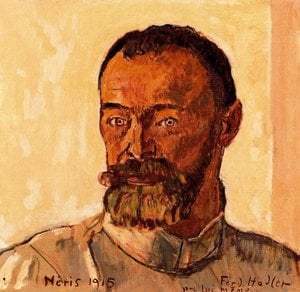
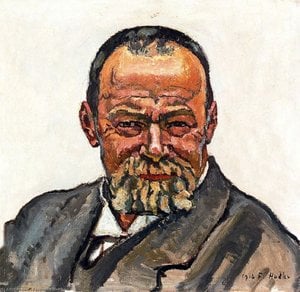
Ferdinand Hodler's "Figure Study," a deceptively small watercolor painting measuring just 5 x 10 centimeters, is far more than a miniature portrait. Completed in 1899, it encapsulates the core of Hodler’s Symbolist aesthetic – a poignant exploration of human emotion and vulnerability rendered with an exquisite sensitivity to line and tone. The work depicts two male figures locked in what appears to be a struggle or perhaps a moment of intense contemplation. Their postures are subtly tense, their faces partially obscured, inviting viewers to project their own interpretations onto the scene. Hodler masterfully employs loose, expressive lines, eschewing rigid anatomical detail for a more fluid and emotionally charged representation. The painting’s power lies not in precise depiction but in its ability to evoke a sense of quiet melancholy – a feeling that resonates deeply within the viewer.
- Style & Movement: Rooted firmly in Symbolism, “Figure Study” reflects the broader artistic currents of late 19th-century Europe. Hodler’s style is characterized by its dreamlike quality and emphasis on subjective experience rather than objective reality.
- Technique: The watercolor medium itself contributes significantly to the painting's mood. Hodler utilizes layering washes, creating subtle tonal variations and a delicate sense of texture. Dry brush techniques add further definition to the figures’ forms while maintaining an overall fluidity.
The Symbolist Soul: Hodler’s Artistic Vision
Ferdinand Hodler's artistic journey was profoundly shaped by personal tragedy – the early deaths of his father and two brothers instilled within him a deep contemplation of mortality and the ephemeral nature of existence. This preoccupation with loss and vulnerability became a recurring theme in his work, informing his Symbolist approach to art. Unlike many of his contemporaries who sought to capture external reality, Hodler focused on conveying internal states – emotions, memories, and spiritual experiences. “Figure Study” exemplifies this shift, prioritizing emotional resonance over literal representation.
Hodler’s artistic philosophy, termed "parallelism," posited that repetition and pattern intensify experience, serving as a source of revelation. He believed that by observing the interconnectedness of things – the mirroring of forms, the recurrence of motifs – one could gain access to deeper truths about the human condition. This concept is evident in his meticulous compositional studies, where he often employed grids and symmetrical arrangements to explore the relationships between figures and their environment.
Historical Context & Hodler’s Legacy
Created in 1899, “Figure Study” emerged during a period of significant artistic experimentation and social upheaval. The Symbolist movement was challenging traditional notions of representation, while simultaneously grappling with the anxieties and uncertainties of the modern world. Hodler's work reflects this broader cultural context, offering a nuanced portrayal of human interaction within a rapidly changing society. He was part of a group of Swiss artists who sought to establish a distinctly national artistic identity, drawing inspiration from both European traditions and their own unique heritage.
Hodler’s influence extends far beyond Switzerland. His pioneering use of watercolor, his evocative imagery, and his exploration of psychological themes have resonated with artists across generations. He is considered a key figure in the development of modern art, paving the way for movements such as Expressionism and Surrealism. Reproductions of “Figure Study” continue to captivate audiences today, offering a glimpse into the profound emotional depth of this remarkable artist.
A Timeless Reflection: The Emotional Impact
“Figure Study” is not merely a depiction of two men; it’s an invitation to contemplate the complexities of human relationships and the enduring power of emotion. The painting's ambiguity – the uncertain nature of their interaction, the veiled expressions on their faces – encourages viewers to project their own feelings and experiences onto the scene. It evokes a sense of quiet introspection, prompting us to consider our own vulnerabilities and the ways in which we connect with others. The subdued palette and masterful use of line contribute to its haunting beauty, solidifying “Figure Study” as a timeless reflection on the human condition.
Pytania i odpowiedzi
Co łączy "Figure study" z resztą twórczości Ferdinand Hodler?
"Figure study" należy do nurtu Symbolism w twórczości Ferdinand Hodler, której rozpoznawalne motywy obejmują exploration of emotion, figures in isolation, alpine series focus, symbolist aesthetics, impressionistic brushwork, alpine landscapes, human vulnerability, spiritual introspection.
Kto jest autorem dzieła "Figure study"?
„Figure study” zostało stworzone przez Ferdinand Hodler. Informacje na tej stronie opisują oryginalne dzieło autorstwa Ferdinand Hodler.
Czy „Figure study” autorstwa Ferdinand Hodler znajduje się w domenie publicznej?
Status praw autorskich dla „Figure study” autorstwa Ferdinand Hodler: dzieło znajduje się w stanowi domenę publiczną – autorskie prawa majątkowe wygasły. Określa to, czy reprodukcje obrazu mogą być sporządzane swobodnie.



 Zobacz w skali 1:1
 Przełącz na wersję drukowaną
 Wyślij
 Udostępnij
 Szczegóły
 Przewodnik

 Pobierz plik obrazu
 Podobne obiekty
 RTG
RTG Pokaz slajdów
 Statystyki


 Czytaj więcej






































 Opcja ze szkłem jest dostępna wyłącznie w rozmiarach poniżej 110 cm