Podgląd w skaliPodgląd w skali Podgląd ARPodgląd AR Przełącz na wydruki Przełącz na wydrukiZamów ręcznie malowaną reprodukcję Zamów ręcznie malowaną reprodukcję Wyślij jako kartkęWyślij jako kartkę
Szczegóły dziełaSzczegóły dzieła Dodaj do ulubionych Dodaj do ulubionych PobierzPobierz Podobne obiektyPodobne obiekty RTGRTG Pokaz slajdówPokaz slajdów StatystykiStatystyki

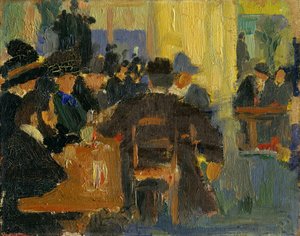
Tavern

Experience the vibrant energy of Ernst Ludwig Kirchner’s ‘Tavern,’ a cornerstone Expressionist masterpiece capturing social anxieties with bold brushstrokes and distorted forms—a captivating glimpse into German art history, perfect for collectors.

Ernst Ludwig Kirchner (1880-1938): Kluczowy ekspresjonista i współzałożyciel Die Brücke. Odkryj jego wyraziste obrazy miasta, nagości i krajobrazów – głos wczesnych lat XX wieku.

Kup wysokiej rozdzielczości, ulepszony obraz cyfrowy o znacznie wyższej jakości niż podgląd online.

Każdy plik jest starannie przygotowywany przez naszych specjalistów przy użyciu zaawansowanych narzędzi oraz profesjonalnej, ręcznej retuszy. Dbamy o to, aby każdy obraz cechował się wyjątkową ostrością, precyzyjnym odwzorowaniem kolorów i subtelnymi detalami.

Ostateczny plik dostarczany jest drogą mailową w ciągu 72 godzin, zoptymalizowany do natychmiastowego wykorzystania w profesjonalnych zastosowaniach redakcyjnych i poligraficznych. To ta sama jakość, której ufają czołowe studia projektowe, wydawnictwa oraz galerie sztuki.

Obraz cyfrowy

Pobierz plik o wysokiej rozdzielczości do osobistego wyświetlania, druku oraz projektów kreatywnych. (Przełącz na wydruki Przełącz na wydrukiZamów ręcznie malowaną reprodukcję Zamów ręcznie malowaną reprodukcję)

Suma do zapłaty

$ 24,90

W każdym zamówieniu na obraz cyfrowy znajduje się

Profesjonalna dostawa cyfrowa z gwarancją

Wybierając WahooArt.com, nie otrzymujesz jedynie obrazu – otrzymujesz profesjonalnie udoskonalone cyfrowe dzieło sztuki, stworzone z najwyższą precyzją i objęte gwarancją satysfakcji. Oto wszystko, co automatycznie dołączane jest do Twojego zamówienia:

shipping_icon
Błyskawiczna wysyłka e-mailowa

Plik z obrazem cyfrowym w wysokiej rozdzielczości zostanie przesłany na Twój adres e-mail w ciągu 72 godzin od złożenia zamówienia – gotowy do natychmiastowego użycia.

canvas_icon
Plik cyfrowy wzbogacony przez AI

Twoja grafika została profesjonalnie zoptymalizowana przy użyciu zaawansowanych narzędzi AI oraz ręcznej edycji, co zapewnia maksymalną szczegółowość, klarowność i wierność kolorów.

insurance_icon
Dożywotnia darmowa ponowna dostawa

Przypadkowo usunąłeś lub zgubiłeś swój plik? Bez obaw – prześlemy go Tobie ponownie w dowolnym momencie, bez żadnych opłat.

tax_icon
Bez opłat importowych – zawsze

Ciesz się swoją sztuką natychmiast, bez żadnych opłat celnych, należności ani kosztów dostawy – pliki cyfrowe są zawsze wolne od podatku.

color_icon
Gwarancja wierności kolorów

Dzięki zastosowaniu profesjonalnych narzędzi i procesów zarządzania barwą zapewniamy, że Twoje cyfrowe zdjęcie odzwierciedla oryginalne kolory tak wiernie, jak to tylko możliwe.

return_icon
100-dniowa gwarancja satysfakcji

Jeśli nie będziesz zadowolony ze swojego cyfrowego obrazu, poprawimy go lub zwrócimy 100% kosztów w ciągu 100 dni – bez zbędnych pytań.

guarantee_icon
100% Gwarancja zwrotu pieniędzy

Nie jesteś zadowolony? Otrzymaj pełny zwrot kosztów w ciągu 100 dni od otrzymania pliku cyfrowego – bez zbędnych pytań.

discount_icon
Rabaty przy zamówieniach hurtowych

Kup 3 obrazy, oszczędź 10% - Kup 5, oszczędź 15% - Kup 10+, oszczędź 20%. Idealne do projektów kreatywnych, galerii i agencji.

Szybki podgląd

  • Artistic style: Distorted forms
  • Location: Kunsthalle Mannheim
  • Dimensions: 71 x 81 cm
  • Title: Tavern
  • Movement: Expressionism
  • Notable elements or techniques: Bold brushstrokes, vibrant colors
  • Medium: Oil on canvas

A Window Into Anxiety: Exploring Ernst Ludwig Kirchner’s Tavern

Kirchner's "Tavern," completed in 1909, isn’t merely a depiction of a barroom; it’s a visceral embodiment of the anxieties simmering beneath the surface of early twentieth-century Europe. Painted on a canvas measuring 71 x 81 cm, this monumental work exemplifies the core tenets of Expressionism – prioritizing emotional intensity over objective representation—a stylistic choice profoundly influenced by the turbulent socio-political climate of the time. The artist himself, Ernst Ludwig Kirchner, wrestled with personal demons alongside his artistic endeavors, mirroring the pervasive unease felt across German society as it navigated the cusp of war and revolution.

Style and Technique: Bold Strokes and Distorted Reality

Kirchner’s signature style is immediately recognizable through its audacious brushstrokes—thick, impastoed layers of pigment that convey a palpable sense of movement and urgency. Unlike Impressionists who sought to capture fleeting moments of light, Kirchner deliberately distorted forms and perspectives, rejecting academic realism in favor of conveying inner psychological states. The figures within the tavern are rendered with angular contours and flattened planes, creating an unsettling effect that disrupts our comfortable visual assumptions. Color plays a crucial role; Kirchner employs vibrant hues—particularly reds and yellows—to heighten emotional impact and contribute to the painting’s overall atmosphere of tension. These colors aren't used descriptively but symbolically, amplifying feelings of restlessness and apprehension.

Historical Context: The Shadow of Uncertainty

“Tavern” emerged during a period marked by significant societal shifts – industrialization accelerated, urbanization swelled, and anxieties about national identity intensified. Kirchner’s artistic vision reflects these concerns, portraying individuals isolated within the confines of public spaces, grappling with unspoken emotions. The scene captures a moment of social interaction fraught with unspoken tensions; glances exchanged, postures stiffened—Kirchner subtly communicates the psychological pressures experienced by those attempting to navigate this rapidly changing world. It's a reaction against the optimism prevalent in earlier decades and speaks to the disillusionment felt by many artists and intellectuals facing an uncertain future.

Symbolism: Bottles, Bowls, and the Burden of Presence

Beyond its formal stylistic choices, “Tavern” is laden with symbolic significance. The scattered bottles represent not just beverages but also a preoccupation with consumption—both literal and metaphorical—suggesting a desire to escape from anxieties through indulgence. Similarly, the bowl on one table symbolizes emptiness or perhaps the yearning for solace amidst the chaos of daily life. Kirchner’s deliberate use of these objects underscores the painting's exploration of psychological states and invites contemplation about human vulnerability in confronting existential dilemmas.

Emotional Impact: A Portrait of Inner Turmoil

Ultimately, “Tavern” succeeds in conveying a profound emotional resonance. It’s not a celebratory depiction of camaraderie but rather a haunting portrayal of solitude and apprehension—a visual distillation of Kirchner's own anxieties. The painting compels viewers to confront uncomfortable truths about human experience, prompting reflection on themes of isolation, uncertainty, and the struggle for authenticity. Its enduring power lies in its ability to capture the psychological landscape of a generation grappling with profound transformations, cementing Kirchner’s place as one of Expressionism’s most compelling voices.

Biografia artysty

A Life Forged in Expression: The World of Ernst Ludwig Kirchner

Ernst Ludwig Kirchner, a name inextricably linked to the raw emotional intensity of German Expressionism, emerged from a Germany poised on the cusp of profound transformation. His birth in Aschaffenburg, Bavaria, in 1880, wasn’t merely an arrival into the world; it was the beginning of a life deeply interwoven with artistic innovation and shadowed by personal struggles. The shifting landscapes that defined his early years – dictated by his father's profession as a paper chemist – instilled within him a persistent sense of displacement, a feeling that would become a recurring theme in his art. From Frankfurt to Perlen, nestled beside Lake Lucerne, and finally settling in Chemnitz, Kirchner absorbed the anxieties and rapid modernization sweeping across Germany. Initially pursuing architecture at the Königliche Technische Hochschule in Dresden, he ultimately found his true calling in painting, fueled by an admiration for masters like Albrecht Dürer – particularly his masterful woodcuts – and a growing disillusionment with the constraints of academic tradition. He discovered kinship amongst fellow rebels: Fritz Bleyl, Karl Schmidt-Rottluff, and Erich Heckel, forging bonds that would irrevocably shape the trajectory of 20th-century art.

The Bridge Between Worlds: Die Brücke and Artistic Revolution

In 1905, Kirchner became a founding member of *Die Brücke* (“The Bridge”), an artistic collective dedicated to bridging the gap between established aesthetics and a more visceral, emotionally charged form of expression. This wasn’t simply a stylistic decision; it represented a fundamental philosophical stance. The group sought inspiration from sources often overlooked by the art establishment – the primal art of Africa and Oceania, the intensely colored works of Vincent van Gogh, and the haunting psychological depth of Edvard Munch. Rejecting the idealized beauty championed by academic painting, *Die Brücke* embraced distortion, jarring color palettes, and expressive brushwork to convey the anxieties and alienation inherent in modern life. Kirchner’s early works, born from this collaborative spirit, pulsed with a restless energy, reflecting the group's shared desire to break free from artistic conventions. The studio became a crucible for experimentation, a space where social norms were challenged alongside artistic traditions. The exploration of the human form, particularly the female nude, within both urban and natural settings, became a recurring motif, allowing Kirchner to delve into themes of movement, emotion, and the complexities of modern existence.

Berlin’s Concrete Heart: Urban Landscapes and Psychological Depth

Following his relocation to Berlin in 1911, Kirchner's artistic focus intensified, centering on the city’s stark realities. He captured the frenetic energy of urban life with a distinctive intensity – not merely depicting streets and buildings, but conveying the psychological impact of being immersed within them. Paintings like *The Street* (1908) are powerful portraits of alienation, reflecting the anonymity and isolation experienced by individuals navigating the sprawling metropolis. Kirchner’s use of color became even more dramatic, employing bold contrasts to heighten the sense of unease and disorientation. He wasn't interested in romanticizing urban life; instead, he presented a brutally honest depiction of its anxieties, capturing the feeling of being overwhelmed by the sheer scale and relentless pace of modern existence. This unflinching gaze established him as a chronicler of his time, an artist who dared to confront the darker undercurrents of societal progress.

A Style Defined: Color, Distortion, and Emotional Resonance

Kirchner’s artistic style is immediately recognizable for its distinctive characteristics. He wielded color not as a tool for faithful representation, but as a means of evoking powerful emotional responses – vibrant, often non-naturalistic hues that amplified the sense of unease or intensity within his compositions. His brushstrokes were energetic and visible, contributing to the overall feeling of immediacy and raw emotion. Figures and objects were frequently distorted or elongated, reflecting a subjective rather than objective reality. Kirchner’s work is characterized by a deliberate rejection of traditional perspective and a preference for flattened planes and simplified forms. This stylistic approach wasn't merely an aesthetic choice; it was a conscious effort to convey the psychological impact of his subjects – to capture their inner turmoil and emotional state. The influence of artists like Van Gogh, with his expressive brushwork and intense color palettes, is readily apparent in Kirchner’s work, as is the haunting psychological depth found in Munch's paintings.

Tragedy and Legacy: A Lasting Impact

Kirchner’s life was tragically marked by personal struggles. The horrors of World War I triggered a severe mental breakdown, forcing him to retreat to Switzerland in search of solace. However, even during his exile, he continued to create, his work reflecting the lingering trauma and isolation he experienced. The rise of Nazism brought further hardship; over 600 of his works were confiscated and deemed “degenerate” art – a devastating blow that underscored the political climate’s hostility towards modern artistic expression. Facing persecution and declining health, Kirchner tragically took his own life in Davos, Switzerland, in 1938. Despite this heartbreaking end, Ernst Ludwig Kirchner's legacy remains profoundly influential. He stands as a central figure of German Expressionism, inspiring generations of artists with his bold style, emotionally resonant depictions of modern life, and unwavering commitment to artistic truth. His work continues to be exhibited in major museums worldwide, serving as a powerful reminder of the enduring power of art to confront, challenge, and ultimately illuminate the human condition.
  • Influenced By: Albrecht Dürer, Vincent van Gogh, Edvard Munch, Primitive Art (African & Oceanic)
  • Influenced: Kirchner’s work profoundly impacted subsequent generations of Expressionist and Modern artists. His exploration of psychological themes and his innovative use of color and form continue to inspire contemporary art practices.
Current Meta Description: Ernst Ludwig Kirchner (1880-1938): Key German Expressionist & Die Brücke co-founder. Explore bold, emotive paintings of urban life, nudes & landscapes. Current Meta Keywords: Ernst Ludwig Kirchner, Kirchner paintings, German Expressionism, Die Brücke, Expressionist art, Berlin street scenes, Woodcut prints, Modern German art, Nude figures, Kirchner artwork

Ernst Ludwig Kirchner

Ernst Ludwig Kirchner

1880 - 1938 , Niemcy

Krótka nota

  • Artistic Movement Or Style: Ekspresjonizm
  • Artists Or Movements Influenced By This Artist:
    • Die Brücke
    • Nowoczesny sztuka
  • Artists Who Influenced This Artist:
    • Dürer
    • Van Gogh
    • Munch
  • Date Of Birth: 6 maja 1880
  • Date Of Death: 15 czerwca 1938
  • Full Name: Ernst Ludwig Kirchner
  • Nationality: Niemiec
  • Notable Artworks:
    • The Street
    • Leaping Dancer
  • Place Of Birth: Aschaffenburg, Niemcy