Podgląd w skali 1:1 Podgląd AR Zamów ręcznie malowaną reprodukcję Przejdź do wersji cyfrowej Wyślij jako kartkę
Szczegóły dzieła Przewodnik Dodaj do ulubionych Pobierz obraz Podobne obiekty RTG Pokaz slajdów Pytania i odpowiedzi Pobierz prezentację Statystyki

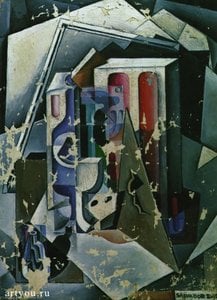
Untitled (547)

Explore Emilio Tadini’s "Untitled (547)", a chaotic Expressionist collage of fleshy pinks & reds depicting violent struggle. Layered textures, symbolic objects – death, love, & conflict. A unique, unsettling artwork.

Italian abstract expressionist Emilio Tadini captivated audiences with bold colors and textured canvases exploring themes of isolation and social observation. Discover his evocative paintings – including ‘Untitled (447)’ and ‘Viaggio in Italia’ – at WahooArt.

Dzieło sztuki prezentowane na tej stronie podlega ochronie prawem autorskim, co oznacza, że nie mamy prawa do tworzenia ani sprzedaży jego identycznej reprodukcji. Ochrona ta jest egzekwowana na mocy umów międzynarodowych, takich jak Konwencja berneńska oraz przez przepisy prawa krajowego, w tym te określone w Prawo autorskie USA – Tytuł 17.

Metoda ta jest w pełni zgodna z przepisami prawa autorskiego, ponieważ nie polega na kopiowaniu ani powielaniu chronionego dzieła. Stanowi ona kreatywną reinterpretację – nowy obraz, który czerpie inspirację z oryginału, ale nie jest z nim tożsamy.

Giclée / Wydruk artystyczny

Wydruki giclée lub płótna o jakości muzealnej, szybka realizacja i szeroki wybór opcji wykończenia. ( Zamów ręcznie malowaną reprodukcję Przejdź do wersji cyfrowej)

Corner sample of the P118B picture frame: polistyren formowany, 5 cm wide and 3 cm thick
P118B zł10
Corner sample of the P118H picture frame: polistyren formowany, 5 cm wide and 3 cm thick
P118H zł10
Corner sample of the P118W picture frame: polistyren formowany, 5 cm wide and 3 cm thick
P118W zł10
Corner sample of the P438Z picture frame: polistyren formowany, 5.5 cm wide and 3.5 cm thick
P438Z zł10
Corner sample of the P508JH picture frame: polistyren formowany, 7 cm wide and 3.5 cm thick
P508JH zł12
Corner sample of the P508YH picture frame: polistyren formowany, 7 cm wide and 3.5 cm thick
P508YH zł12
Corner sample of the P805H picture frame: polistyren formowany, 5 cm wide and 3.5 cm thick
P805H zł10
Corner sample of the P805Z picture frame: polistyren formowany, 5 cm wide and 3.5 cm thick
P805Z zł10
Corner sample of the P919BZ picture frame: polistyren formowany, 7 cm wide and 3.5 cm thick
P919BZ zł10
Corner sample of the P919G picture frame: polistyren formowany, 7 cm wide and 3.5 cm thick
P919G zł10
Corner sample of the P919XJ picture frame: polistyren formowany, 7 cm wide and 3.5 cm thick
P919XJ zł10
Corner sample of the P959ZH picture frame: polistyren formowany, 5 cm wide and 3 cm thick
P959ZH zł10
Corner sample of the P968JZ picture frame: polistyren formowany, 6 cm wide and 4 cm thick
P968JZ zł12
Corner sample of the W106C picture frame: lite drewno, 5 cm wide and 3 cm thick
W106C zł8
Corner sample of the W218G picture frame: lite drewno, 5 cm wide and 3 cm thick
W218G zł10
Corner sample of the W218JH picture frame: lite drewno, 5 cm wide and 3 cm thick
W218JH zł8
Corner sample of the W218Y picture frame: lite drewno, 5 cm wide and 3 cm thick
W218Y zł10
Corner sample of the W307PJ picture frame: lite drewno, 6 cm wide and 3 cm thick
W307PJ zł10
Corner sample of the W316G picture frame: lite drewno, 6 cm wide and 3 cm thick
W316G zł10
Corner sample of the W316PJ picture frame: lite drewno, 6 cm wide and 3 cm thick
W316PJ zł8
Corner sample of the W316Y picture frame: lite drewno, 6 cm wide and 3 cm thick
W316Y zł10
Corner sample of the W398PJ picture frame: lite drewno, 5 cm wide and 3 cm thick
W398PJ zł8
Corner sample of the W4111J picture frame: lite drewno, 6.5 cm wide and 3.5 cm thick
W4111J zł10
Corner sample of the W500HY picture frame: lite drewno, 7 cm wide and 5 cm thick
W500HY zł15
Corner sample of the W500JH picture frame: lite drewno, 7 cm wide and 5 cm thick
W500JH zł15
Corner sample of the W692G picture frame: lite drewno, 8 cm wide and 4 cm thick
W692G zł12
Corner sample of the W849H picture frame: lite drewno, 5 cm wide and 3 cm thick
W849H zł8
Corner sample of the W940BG picture frame: lite drewno, 7.5 cm wide and 4.5 cm thick
W940BG zł15
Corner sample of the W953PJ picture frame: lite drewno, 6 cm wide and 3.5 cm thick
W953PJ zł8

Standardowy format
personalizowane
CM
INCH

Wybierz spośród naszych standardowych rozmiarów, które zachowują oryginalne proporcje dzieła sztuki.

szerokość
wysokość

Wpisz wymaganą szerokość i wysokość, aby dopasować grafikę do ramy lub ściany. Wydruk można jedynie przyciąć, nigdy nie powiększając go poza oryginalny obraz, dlatego format o innych proporcjach spowoduje utratę części kompozycji. Przed rozpoczęciem druku prześlemy Ci cyfrowy podgląd do zatwierdzenia. Obraz wyświetlany na tej stronie nie pokazuje rzeczywistego przycięcia — jedynie podgląd oddaje ten efekt.

Dostawa na cały świat () w ciągu 2 tygodni zamiast standardowych 4/5 tygodni. (13 Listopad)

Bezpłatna ekspresowa wysyłka na cały świat
Wysokiej jakości płótno lniane
Pełne ubezpieczenie przesyłki
Gwarancja zwrotu należności celnych i podatków importowych
Gwarancja wiernego odwzorowania kolorów
100-dniowa polityka zwrotów (tylko w przypadku wad)
Gwarancja 100% zwrotu pieniędzy
Zniżka przy zakupie wielu sztuk

Suma całkowita

zł 269

Untitled (547)

Giclée / Wydruk artystyczny

Wymiary reprodukcji

-

Cena całkowita

zł 269

Najważniejsze informacje

  • medium: Paint, collage (paper), possibly other materials
  • artist: Emilio Tadini
  • notable elements: Tombstones, arrows, rose, shoe, fragmented figures
  • movement: Expressionism

Quiz o sztuce

Do każdego pytania dotyczy tylko jedna poprawna odpowiedź.

Pytanie 1:
The dominant color palette of 'Untitled (547)' is best described as:
Pytanie 2:
Which artistic movement most closely aligns with the style of 'Untitled (547)'?
Pytanie 3:
What symbolic element in the artwork often represents death or loss?
Pytanie 4:
The composition of 'Untitled (547)' can be described as:
Pytanie 5:
What technique is prominently used in the creation of this artwork?

A Visceral Struggle: Decoding Emilio Tadini’s “Untitled (547)”

Emilio Tadini's “Untitled (547)” is a powerfully unsettling work that plunges the viewer into a chaotic scene of conflict and emotional turmoil. Executed with a raw, Expressionistic energy, this collage-style painting isn’t merely *depicted*; it’s *felt*. Dominated by a fleshy palette of pinks and reds – colors typically associated with life but here imbued with a sense of violence and decay – the artwork presents two figures locked in an ambiguous struggle amidst a fragmented landscape of symbolic objects. The lack of traditional perspective or depth intensifies the claustrophobic atmosphere, drawing the viewer directly into the heart of the drama.

Technique & Style: A Layered Exploration of Emotion

Tadini masterfully employs a mixed-media technique, layering paint and collage elements – notably paper – to create a richly textured surface. This isn’t a smooth, polished composition; it's deliberately rough and fragmented, mirroring the fractured emotional state at its core. The style is deeply rooted in Expressionism, prioritizing subjective experience over objective representation. Jagged lines and angular shapes contribute to the overall sense of tension and instability, while the uneven lighting – stark contrasts between highlights and deep shadows – further heightens the dramatic effect. This approach aligns Tadini with a broader post-war Italian artistic sensibility that embraced experimentation and emotional honesty. While biographical information on Tadini is scarce, his work suggests an engagement with the anxieties and uncertainties of the mid-20th century. His style shares some thematic resonance with contemporary artists like Emilio Isgrò, who also explored themes of fragmentation and memory through innovative techniques.

Decoding the Symbols: Death, Desire & Disarray

“Untitled (547)” is laden with symbolic elements that invite interpretation. The presence of tombstones immediately evokes themes of death and loss, while arrows suggest conflict, aggression, or perhaps a sense of being targeted. A single rose, traditionally a symbol of love and beauty, appears corrupted within this violent context, hinting at a distorted or unattainable desire. Even the seemingly mundane inclusion of a shoe adds layers of meaning – representing vulnerability, abandonment, or the loss of identity. These objects aren’t simply *present* in the composition; they are actively engaged in the struggle, contributing to the overall sense of disarray and emotional chaos. The geometric shapes interspersed throughout add an element of abstraction, preventing any easy narrative reading and forcing the viewer to confront the raw emotion directly.

Emotional Resonance & Interior Impact

This artwork is not intended to be passively observed; it demands a response. “Untitled (547)” evokes feelings of unease, anxiety, and perhaps even a primal fear. Its unsettling imagery and chaotic composition make it a powerful statement about the darker aspects of human experience. For an interior space, this piece would serve as a striking focal point – a conversation starter that adds depth and complexity to any collection. While its intensity might not suit every environment, for those seeking artwork with emotional weight and intellectual substance, Tadini’s “Untitled (547)” offers a compelling and unforgettable experience. A high-quality reproduction of this work would bring a touch of raw artistic energy and thought-provoking symbolism into any home or office.

Pytania i odpowiedzi

Jak duży jest kontrast w „Untitled (547)” – Emilio Tadini?

„Untitled (547)” – Emilio Tadini prezentuje Statement kontrast między jasnymi a ciemnymi partiami dzieła.

Co przedstawia „Untitled (547)” – Emilio Tadini?

Tematyka obecna w „Untitled (547)” – Emilio Tadini obejmuje violent struggle, death and decay, symbolic imagery, fragmented composition, pink & red palette, collage art style, emotional intensity. Razem stanowią one podsumowanie tematyki dzieła.

Czy mogę zobaczyć „Untitled (547)” – Emilio Tadini na własnej ścianie przed zakupem?

Strona Podgląd w AR dzieła „Untitled (547)” – Emilio Tadini wykorzystuje rozszerzoną rzeczywistość, aby dzięki kompatybilnemu urządzeniu pokazać obraz w Twojej własnej przestrzeni.


Biografia artysty

The Literary Soul of the Canvas

Emilio Tadini was far more than a painter; he was a profound architect of meaning within the Italian cultural landscape. Born in Milan in 1927, his journey began not with a brush, but with the written word. A poet, novelist, and essayist, Tadini first emerged onto the prestigious literary stage in 1947 through Elio Vittorini's magazine, Politecnico. This deep-seated connection to literature would forever inform his visual practice, leading his contemporary Umberto Eco to famously describe him as “a writer who paints, a painter who writes.” His transition into the realm of fine arts during the late 1950s was not a departure from his literary roots but an expansion of them, as he began to treat the canvas as a space for deconstructing and reconstructing text through color and form.

A Tapestry of Memory and Texture

Tadini’s technique is characterized by a restless, layered exploration of existence. He viewed painting as an act of building a text, where the superimposing of different temporal planes creates a continuous dialogue between memory and reality. His works often eschew smooth, polished surfaces in favor of a visceral, expressionistic energy. By masterfully employing mixed-media techniques—layering paint with collage elements such as paper—he achieved a richly textured surface that mirrors the fractured nature of human experience. In pieces like “Untitled (547),” one encounters a fleshy palette of pinks and reds that simultaneously evokes the vitality of life and the unsettling specter of decay, pulling the viewer into a chaotic scene of emotional turmoil and symbolic struggle.

Navigating the Human Condition

The thematic depth of Tadini’s oeuvre lies in his ability to capture the profound tensions of the post-war era: isolation, social observation, and the interplay between the tragic and the comic. His visual language is remarkably versatile, ranging from the surreal architectural blends found in “Viaggio in Italia” to the dynamic, unsettling beauty of his more abstract, line-driven compositions. Through his use of bold colors and ambiguous figures, Tadini invites a deep, introspective gaze, prompting us to question the world around us. His legacy remains that of an artist who used irony and wit to bridge the gap between reality and imagination, leaving behind a body of work that continues to stimulate curiosity and reflect the complexities of the modern soul.
Emilio Tadini

Emilio Tadini

1927 - 2002 , Italy

Krótka nota

  • Full Name: Emilio Grau Sala
  • Nationality: Spanish
  • Date Of Birth: 1927
  • Date Of Death: 2003
  • Place Of Birth: Italy
  • Notable Artworks:
    • The Poet
    • The Guitarist
  • Artistic Movement Or Style: Catalan Modernisme
  • Artists Who Influenced This Artist:
    • Gustav Klimt
    • James Abbott McNeill Whistler
  • Artists Or Movements Influenced By This Artist:
    • Cubism
    • Expressionism