DARMOWA KONSULTACJA ARTYSTYCZNA

x
Zamów wydruk Zamów wydrukKup cyfrowy obraz Kup cyfrowy obraz UdostępnijUdostępnij
DetailsDetails Dodaj do ulubionych Dodaj do ulubionych PobierzPobierz Podobne obiektyPodobne obiekty X-RayX-Ray Pokaz slajdówPokaz slajdów

Spring frost

Discover 'Spring Frost' by Elioth Gruner – a captivating Australian landscape painting of cows bathed in golden light. Explore the serene beauty and artistic mastery of this iconic work.

Elioth Gruner (1882-1939) – wybitny australijski malarz krajobrazowy znany z idyllicznych obrazów ruralnych NSW i siedmiokrotnego zdobycia prestiżowego Wynne Prize. Odkryj jego studium światła w stylu impresjonistycznym!

Ręcznie malowana reprodukcja olejowa

Ręcznie malowany olej na płótnie w Twoim wymiarze i ramie, tworzony na zamówienie przez naszych artystów.

P118B $10
P118H $10
P118W $10
P438Z $10
P508JH $12
P508YH $12
P805H $10
P805Z $10
P919BZ $10
P919G $10
P919XJ $10
P959ZH $10
P968JZ $12
W106C $8
W218G $10
W218JH $8
W218Y $10
W307PJ $10
W316G $10
W316PJ $8
W316Y $10
W398PJ $8
W4111J $10
W500HY $15
W500JH $15
W692G $12
W849H $8
W940BG $15
W953PJ $8

Standard
custom
CM
INCH

Wybierz spośród naszych predefiniowanych rozmiarów, które zachowują oryginalne proporcje dzieła sztuki.

szerokość
wysokość

Możesz wprowadzić własne wymiary, aby dopasować obraz do konkretnej ramy lub przestrzeni. Jeśli wybrany rozmiar nie będzie odpowiadał proporcjom oryginału, przytniecie dzieło sztuki lub rozszerzymy je o dodatkowe elementy, ręcznie domalowane przez artystę. Przed rozpoczęciem produkcji wyślemy projekt cyfrowy do Twojej akceptacji.
Należy pamiętać, że podgląd na ekranie nie odzwierciedla rzeczywistego przycinania ani rozszerzania obrazu. Tylko projekt dokładnie pokaże ostateczną kompozycję.
Choć oferujemy możliwość zamówienia niestandardowych rozmiarów, zalecamy wybór wymiaru z gotowej listy, aby zachować oryginalne proporcje dzieła.

Przykłady możliwych zmian: Zamień twarz na zdjęcie klienta; Dodaj zwierzę domowe (np. zamień kota na psa); Ukryj wiadomość w tle; Zmień krajobraz lub elementy tła.
Po złożeniu zamówienia zespół WahooArt.com skontaktuje się z klientem drogą mailową w celu uzyskania instrukcji i prześle wizualizację projektu

Dostawa na całym świecie () w ciągu 3/4 tygodni zamiast standardowych 5 tygodni. (2 Lipiec). Bez kompromisów w kwestii jakości.

why_choose_icon
Bezpłatna ekspresowa wysyłka na cały świat
why_choose_icon
Wysokiej jakości płótno lniane
why_choose_icon
Pełne ubezpieczenie przesyłki
why_choose_icon
Gwarancja zwrotu należności celnych
why_choose_icon
Gwarancja pełnego zgodności kolorystycznej
why_choose_icon
Polityka 60-dniowego zwrotu (tylko w przypadku wad)
why_choose_icon
Gwarancja 100% zwrotu pieniędzy
why_choose_icon
Zniżka przy większych zamówieniach

Suma całkowita

-

reproduction

Spring frost

Technika reprodukcji

Wymiary reprodukcji

-

Cena całkowita

-

Szybkie fakty

  • Notable elements: Impressionistic light
  • Location: Art Gallery NSW
  • Dimensions: 157 x 206 cm
  • Year: 1919
  • Style: Landscape painting
  • Artist: Elioth Gruner
  • Title: Spring Frost

Quiz o sztuce

Na każde pytanie istnieje tylko jedna poprawna odpowiedź.

Pytanie 1:
What is the primary subject of Elioth Gruner’s ‘Spring Frost’?
Pytanie 2:
In what year was ‘Spring Frost’ painted?
Pytanie 3:
According to the provided text, what was a key factor in Gruner’s approach to painting ‘Spring Frost’?
Pytanie 4:
Which prize did ‘Spring Frost’ win in 1919?
Pytanie 5:
What artistic movement is most closely associated with Elioth Gruner’s style, as indicated by the text?

Opis dzieła

A Dawn of Tranquility: Elioth Gruner’s “Spring Frost”

Elioth Gruner's "Spring Frost," painted in 1919, isn’t merely a depiction of a rural scene; it’s an immersion into the very essence of Australian light and landscape. This evocative work, now residing within the Art Gallery of New South Wales, captures a fleeting moment – the nascent warmth of early morning breaking over a pastoral vista—with a remarkable sensitivity to atmosphere and texture. Gruner, a pivotal figure in Australian Impressionism, masterfully translates the raw beauty of the Emu Plains countryside into a painting that resonates with both serenity and vibrant energy.

The scene unfolds before us: a small herd of dairy cows stands bathed in the soft glow of the rising sun, their forms rendered with a loose, expressive brushstroke. The foreground is dominated by a field of grass, its texture achieved through short, choppy strokes that seem to shimmer with reflected light. Beyond this immediate focus, the eye drifts into a hazy distance, where rolling hills and a muted sky create an expansive sense of space. Gruner’s choice of palette—a symphony of earthy browns, ochres, and subtle blues—evokes the cool tones of dawn while simultaneously injecting warmth through the golden highlights that dance across the cows' hides and the dew-kissed grasses.

The Influence of Light and Color

Gruner’s technique is deeply rooted in the Impressionist tradition, yet he possesses a distinctly Australian sensibility. He wasn’t simply aiming to replicate what he saw; instead, he sought to capture the *feeling* of that moment—the crispness of the air, the warmth on the skin, and the transformative power of light. His use of broken color, characteristic of Impressionism, creates a sense of movement and vibrancy within the painting. The colors aren’t blended smoothly; rather, they are applied in small, distinct strokes, allowing each hue to retain its individual identity and contribute to the overall luminosity of the scene.

Notably, Gruner was influenced by Max Meldrum's theories on color and light, a prominent figure in early 20th-century Australian art. Meldrum’s emphasis on “tone” – the fundamental quality of light—guided Gruner to prioritize capturing the subtle shifts in illumination across the landscape. This pursuit is evident in the painting’s masterful rendering of shadows and highlights, which create a dynamic interplay of form and atmosphere.

A Portrait of Rural Australia

"Spring Frost" isn't just a beautiful landscape; it’s also a poignant reflection on rural life in early 20th-century Australia. The presence of the cows—symbols of industry, sustenance, and connection to the land—underscores the importance of agriculture within the Australian identity. The solitary figure of the farmer, subtly integrated into the scene, suggests a quiet dignity and a deep understanding of his environment. This painting offers a glimpse into a world where life was intimately connected to the rhythms of nature.

Symbolism and Emotional Resonance

Beyond its representational qualities, “Spring Frost” is rich in symbolism. The title itself—"Spring Frost"—evokes a sense of delicate beauty and transient grace. The frost, barely perceptible yet undeniably present, hints at the fragility of life and the ephemeral nature of beauty. The painting’s overall mood is one of peaceful contemplation, inviting the viewer to slow down, appreciate the simple pleasures of rural existence, and connect with the natural world.

Reproductions of “Spring Frost” capture a significant portion of this original atmosphere. The artwork's enduring appeal lies in its ability to transport us to a bygone era—a time when life moved at a slower pace and the beauty of the Australian landscape was deeply revered. It remains a cornerstone of Australian art, embodying both the artistic innovation of its creator and the timeless allure of the bush.

Podobne dzieła sztuki


Biografia artysty

Elioth Gruner - Biographical Overview

Elioth Lauritz Leganyer Gruner (1882-1939) stands as one of Australia’s most revered landscape painters, a figure inextricably linked to the Heidelberg School movement and celebrated for his profound ability to distill the essence of rural New South Wales onto canvas. Born December 16, 1882, in Gisborne, New Zealand—a region steeped in Māori heritage—Gruner descended from Norwegian-born bailiff Elliott Grüner and Irish mother Mary Ann Brennan. This familial grounding instilled within him a core belief in resilience and an intimate connection to the land – values that would become central themes throughout his artistic oeuvre. His early life was marked by considerable upheaval when his family relocated to Sydney shortly after Elioth’s birth, immersing him in an environment buzzing with burgeoning artistic activity. Recognizing his innate talent for drawing from a young age—a passion nurtured by his mother who secured lessons with Julian Ashton around twelve—Gruner embarked on a formative artistic journey. However, tragedy struck swiftly when both his father and older brother succumbed to illness, thrusting him into the daunting role of caregiver at just fourteen years old. Demonstrating remarkable fortitude, he persevered through arduous labor to provide for his family while simultaneously nurturing his artistic pursuits during weekends—sending works to exhibitions organized by the Society of Artists in Sydney around 1901—a testament to his unwavering dedication.

Developing an Impressionistic Vision

Gruner’s artistic style is undeniably rooted in Impressionism, though it evolved over time and absorbed influences from diverse sources. He possessed a singular gift for capturing the ephemeral effects of light and atmosphere within the Australian landscape, imbuing his paintings with a palpable serenity and poetic beauty. The encouragement he received from fellow artist Norman Lindsay proved pivotal in shaping his artistic trajectory, bolstering his confidence and refining his vision. Lindsay’s admiration—expressed as “painted the purest light that ever has been seen on a bit of canvas”—served as an enduring inspiration. A transformative period unfolded between 1923 and 1925 when Gruner undertook an extended sojourn in Europe, profoundly impacting his artistic sensibilities. This experience spurred him to simplify his compositions—reducing unnecessary detail—and prioritizing pattern and brushwork—allowing for greater expressive freedom. Critiques from Sir William Orpen during this time challenged Gruner to hone his technique and approach, pushing him toward a more nuanced understanding of artistic expression. He embraced the challenge with gusto, experimenting with new palettes and techniques that reflected the influence of European Impressionists.

Recognition & Major Achievements: The Wynne Prize Legacy

Gruner’s unwavering commitment to capturing the sublime beauty of the Australian bush culminated in unparalleled success at the prestigious Wynne Prize for landscape painting—a distinction he achieved seven times consecutively – an unprecedented accomplishment that cemented his place as Australia's foremost landscape artist alongside Hans Heysen. His crowning achievement, “Spring Frost” (1919)—depicting Jim Innes and his cattle bathed in the golden light of dawn—became arguably the most beloved Australian landscape painting of its time. The Art Gallery of New South Wales acquired this masterpiece, recognizing its artistic merit and enduring appeal. Furthermore, Gruner’s contribution to art education was substantial; he served as an assistant instructor at Sydney Art School during Ashton's illness, overseeing classes for approximately three months—a period that solidified his role as a mentor and champion of aspiring artists.

Later Life & Artistic Legacy

Gruner’s life was tragically curtailed by chronic nephritis—a debilitating ailment—which ultimately claimed his life on October 17, 1939, at his home in Waverley. He was cremated with Anglican rites, leaving behind a legacy of breathtaking landscapes that continue to inspire awe and admiration decades after his passing. Elioth Gruner’s paintings transcend mere representation; they embody the spirit of Australia—its vastness, its beauty, and its profound connection to nature—making him an enduring icon within Australian art history. His masterful technique—characterized by luminous color palettes and delicate brushstrokes—continues to captivate audiences today, ensuring that his artistic vision persists as a beacon of inspiration for generations to come.
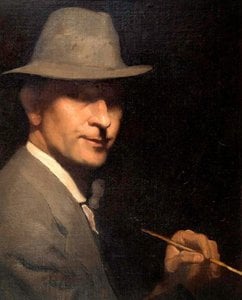
Elioth Gruner

Elioth Gruner

1882 - 1939 , Nowa Zelandia

Kluczowe informacje

  • Artistic Movement Or Style: Impressionism
  • Artists Who Influenced This Artist:
    • Julian Ashton
    • Norman Lindsay
  • Date Of Birth: December 16, 1882
  • Date Of Death: October 17, 1939
  • Full Name: Elioth Lauritz Leganyer Gruner
  • Nationality: Australian
  • Notable Artworks:
    • Morning Light
    • Spring Frost
    • The Valley of the Tweed
  • Place Of Birth (City And Country): Gisborne, New Zealand