Biografia artysty
A Pioneer of Progressive Design: The Life and Work of Edward William Godwin
Edward William Godwin, born in Bristol in 1833 and passing away in 1886, was a remarkably forward-thinking English architect and designer whose career spanned a period of intense stylistic transition. He wasn’t merely a participant in the Victorian aesthetic landscape; he actively shaped it, moving from the heavily ornamented “Ruskinian Gothic” favored in mid-Victorian Britain to embrace the burgeoning “Anglo-Japanese taste” that characterized the Aesthetic Movement. Godwin's influence resonates even today, subtly woven into the fabric of the Arts and Crafts movement which followed closely on his heels. His early successes included significant public commissions like the Guildhall in Northampton – a testament to his initial mastery of Ruskinian principles – and the Town Hall in Congleton, alongside restorative work at Dromore Castle in Limerick and Castle Ashby. These projects demonstrated a skill for reviving historical forms, but they were merely stepping stones towards a more radical vision. Godwin’s architectural training was largely self-directed, beginning with an apprenticeship to an engineer in Bristol before relocating to London around 1862 where he encountered the influential Gothic Revival designer William Burges. This encounter sparked a lifelong fascination with medieval costume, furniture and architecture, fueling his antiquarian interests.
Godwin's formative years instilled within him a profound appreciation for craftsmanship and meticulous detail—qualities that would permeate his entire artistic output. He honed his skills through independent study alongside Burges, absorbing the grandeur of Gothic cathedrals and immersing himself in the rich traditions of medieval art. This early exposure profoundly impacted Godwin’s aesthetic sensibilities, shaping his approach to architectural design and informing his later explorations into Japanese aesthetics. The Guildhall in Northampton exemplifies Godwin's mastery of Ruskinian Gothic, showcasing soaring arches, intricate tracery, and a harmonious blend of stone and timber—a deliberate homage to the revived medieval style championed by Ruskin himself. Similarly, Congleton Town Hall embodies Godwin’s commitment to reviving historical forms while simultaneously incorporating innovative structural solutions. His work at Dromore Castle involved painstaking restoration efforts, meticulously recreating the castle's original façade and interior spaces. These commissions underscored Godwin’s ability to blend traditional techniques with modern ingenuity—a hallmark of his distinctive artistic style.
Personal Life and Artistic Entanglements
Godwin’s personal life was as dynamic and unconventional as his artistic pursuits. Widowed in 1865, he embarked on a significant relationship with the celebrated actress Ellen Terry between 1868 and 1874. This period saw Terry retire from the stage to live with Godwin in Hertfordshire, where they had two children: Edith Craig (1869-1947) and Edward Gordon Craig (1872–1966), the latter becoming a pivotal figure in early 20th-century European theatre as an actor, designer, director, and theorist. The connection with Terry profoundly impacted Godwin’s work, inspiring him to dedicate considerable time to designing theatrical costumes and scenery—a natural extension of his interest in historical dress and dramatic presentation. He was a man driven by intellectual curiosity and artistic passion, constantly seeking new sources of inspiration and experimenting with innovative techniques. Following the end of his affair with Terry, Godwin married Beatrice Birnie Philip, a talented designer in his office, who bore him another son named Edward. A fascinating postscript to this story is that after Godwin’s death, Beatrice would marry none other than James McNeill Whistler, forging yet another significant artistic connection.
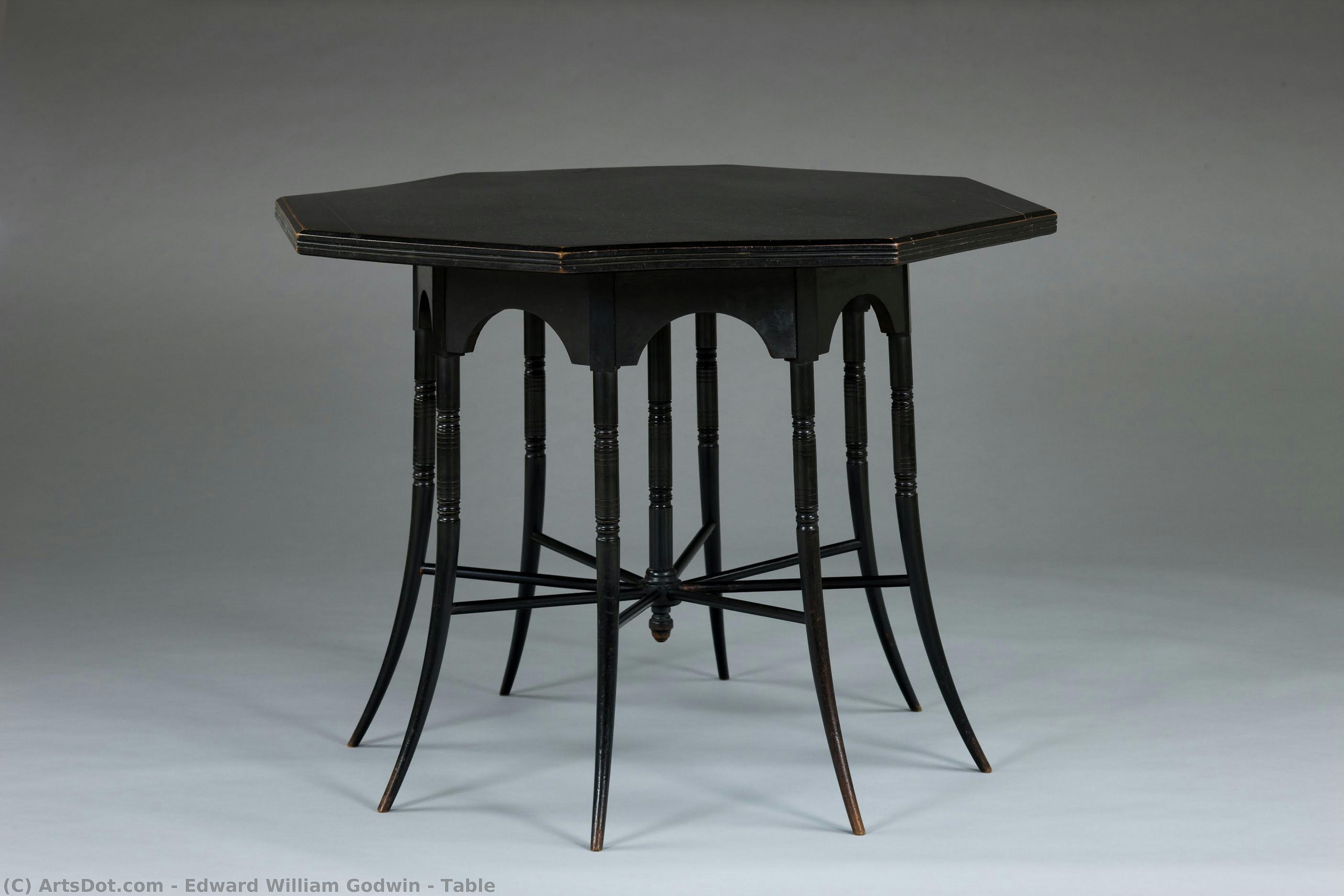
Godwin's artistic collaborations extended beyond theatrical design; he partnered with William Watt and Collinson & Lock on numerous projects—producing stunning wallpapers, textiles, tiles, and furniture designs that epitomized the Aesthetic Movement’s embrace of beauty and simplicity. His involvement with Bedford Park, a new garden suburb conceived as an antidote to Victorian urban sprawl, represents a notable departure from his earlier work—though it ultimately yielded disappointing results due to challenges in realizing his ambitious architectural vision. Despite setbacks, Godwin remained steadfast in his pursuit of artistic excellence, consistently pushing boundaries and redefining conventions within the realm of design. His enduring legacy resides not only in the magnificent buildings he erected but also in his pioneering exploration of Japanese aesthetics—a testament to his unwavering belief in the transformative power of art.
The Embrace of Japan and the Anglo-Japanese Aesthetic
Godwin’s fascination with Japan stemmed from a deep appreciation for its artistic traditions—particularly woodblock printing, ceramics, and garden design—which offered a compelling alternative to the ornate excesses of Victorian taste. Unlike many contemporaries who merely incorporated decorative elements inspired by Japanese motifs, Godwin undertook a comprehensive investigation into Japanese spatial awareness and craftsmanship—seeking to embody the spirit of Zen Buddhism and the principles of harmonious balance. This is vividly apparent in his furniture designs—characterized by sleek lines, restrained ornamentation, and the skillful use of natural materials like ebony and ivory—which exemplify the Anglo-Japanese aesthetic’s rejection of superfluous embellishment. The Butterfly Cabinet, commissioned for Collinson & Lock, stands as a particularly striking example—a masterpiece of minimalist design that reflects Godwin's profound understanding of Japanese aesthetics. This cabinet is housed in the Museum of Modern Art in New York and represents an enduring symbol of Godwin’s contribution to modern design sensibilities.
Godwin’s influence extended beyond furniture; he collaborated with Whistler on the creation of “White House,” a groundbreaking theatrical space designed to complement Whistler's Impressionist paintings—a bold experiment in artistic synergy that challenged conventional notions of architectural aesthetics. The project faced considerable obstacles—including bureaucratic resistance and financial difficulties—yet Godwin persevered, demonstrating unwavering dedication to his creative vision. His commitment to innovation and experimentation cemented his position as one of the foremost architects and designers of his era—leaving an indelible mark on the history of British art and design.
A Lasting Legacy
Edward William Godwin’s architectural style blended Ruskinian Gothic with Anglo-Japanese influences, resulting in a distinctive aesthetic that prioritized elegance, restraint, and harmony. His designs transcended mere ornamentation; they sought to capture the essence of beauty—reflecting Godwin's belief in art as a means of elevating human experience. He championed innovative approaches to theatrical design—creating spaces that fostered artistic expression and captivated audiences—and established himself as a respected voice within the intellectual landscape of Victorian Britain. Godwin’s enduring legacy resides not only in his impressive architectural achievements but also in his pioneering spirit—a willingness to embrace new ideas and challenge conventions that continues to inspire artists and designers today. His work stands as a testament to the transformative power of artistic vision—demonstrating how creativity can reshape our understanding of beauty and contribute to the advancement of human culture.