Przełącz na wersję drukowaną Przełącz na wersję cyfrową Wyślij
Szczegóły Przewodnik Dodaj do ulubionych Pobierz plik obrazu Podobne obiekty Pokaz slajdów Statystyki

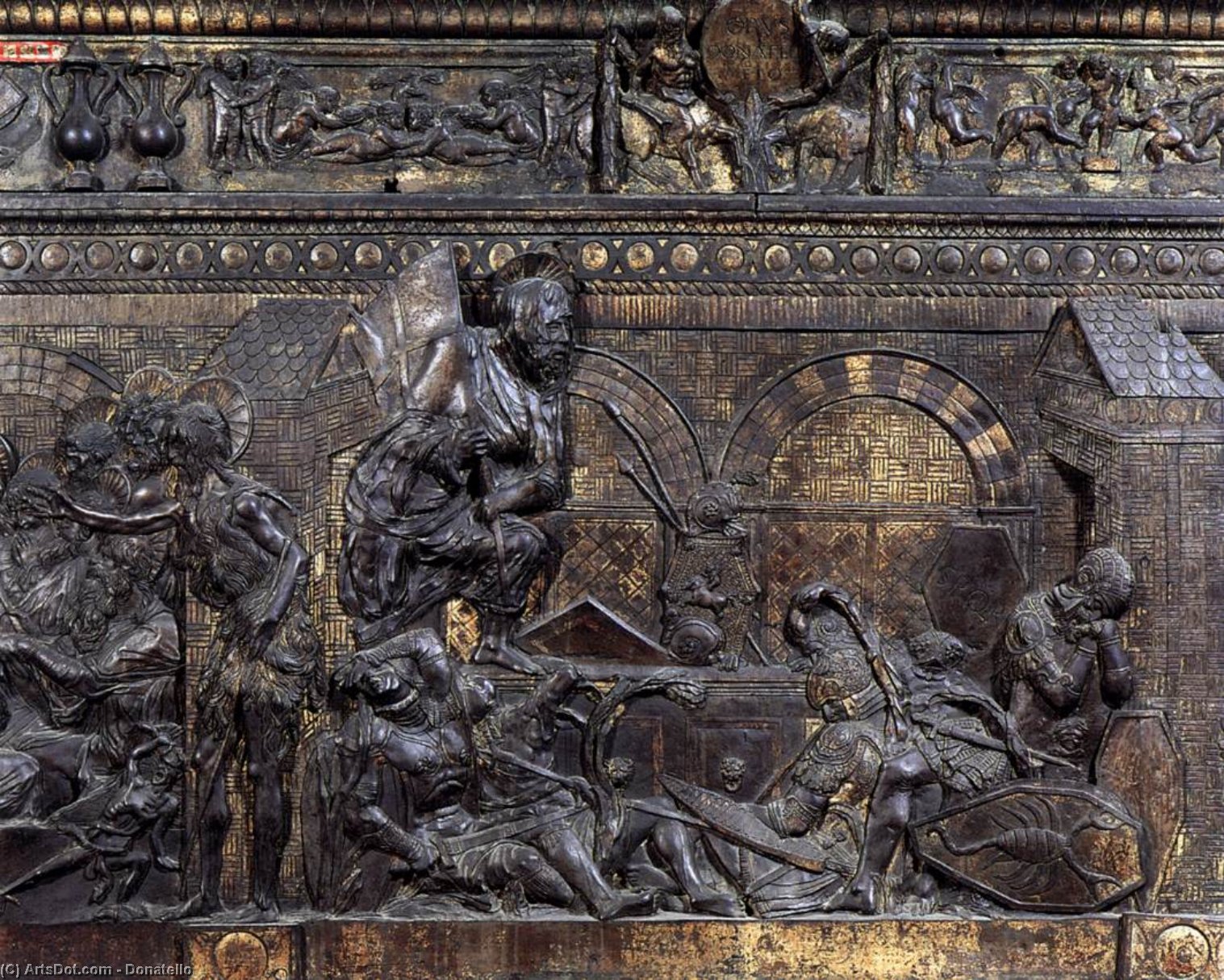
Christ before Pilate and Caiaphas

Explore Donatello's masterpiece, 'Christ before Pilate and Caiaphas,' a monumental bronze sculpture depicting Jesus’s trial before Roman authorities and Jewish leaders—a pivotal moment in Christian history.

Donatello (1386-1466): Włoski renesansowy rzeźbiarz, pionier rzeźby nerkowej, znany z ekspresyjnych i klasycznie inspirowanych dzieł, takich jak "Dawid". Jego twórczość wpłynęła na rozwój sztuki włoskiego Renesansu.

Ręcznie malowana reprodukcja olejowa

Ręcznie malowany obraz olejny na płótnie, wykonany na zamówienie przez naszych artystów w wybranym przez Ciebie wymiarze i oprawie. ( Przełącz na wersję drukowaną Przełącz na wersję cyfrową)

Standardowy
na zamówienie
CM
INCH

Wybierz spośród naszych standardowych rozmiarów, które zachowują oryginalne proporcje dzieła sztuki.

szerokość
wysokość

Możesz wprowadzić własne wymiary, aby dopasować obraz do konkretnej ramy lub przestrzeni. Jeśli wybrany rozmiar nie będzie odpowiadał proporcjom oryginału, przytniecie dzieło sztuki lub rozszerzymy je o dodatkowe elementy, ręcznie domalowane przez artystę. Przed rozpoczęciem produkcji wyślemy projekt cyfrowy do Twojej akceptacji.
Należy pamiętać, że podgląd na ekranie nie odzwierciedla rzeczywistego przycinania ani rozszerzania obrazu. Tylko projekt dokładnie pokaże ostateczną kompozycję.
Choć oferujemy możliwość zamówienia niestandardowych rozmiarów, zalecamy wybór wymiaru z gotowej listy, aby zachować oryginalne proporcje dzieła.

Przykłady możliwych zmian: Zamień twarz na zdjęcie klienta; Dodaj zwierzę domowe (np. zamień kota na psa); Ukryj wiadomość w tle; Zmień krajobraz lub elementy tła.
Po złożeniu zamówienia zespół WahooArt.com skontaktuje się z klientem drogą mailową w celu uzyskania instrukcji i prześle wizualizację projektu

Dostawa na całym świecie () w ciągu 3–4 tygodni zamiast standardowych 5 tygodni. (23 Wrzesień). Bez kompromisów w kwestii jakości.

why_choose_icon
Bezpłatna ekspresowa wysyłka na cały świat
why_choose_icon
Wysokiej jakości płótno lniane
why_choose_icon
Pełne ubezpieczenie transportowe
why_choose_icon
Gwarancja zwrotu należności celnych i podatków importowych
why_choose_icon
Gwarancja idealnego odwzorowania barw
why_choose_icon
100-dniowy okres na zwrot dzieła w przypadku wykrycia wad produkcyjnych
why_choose_icon
Gwarancja 100% zwrotu pieniędzy
why_choose_icon
Oferta przy zakupie wielu sztuk

Cena całkowita

$ 572

reproduction

Christ before Pilate and Caiaphas

Technika wykonania

Rozmiar reprodukcji

-

Suma do zapłaty

$ 572

Kluczowe informacje

  • Medium: Bronze
  • Artist: Donatello
  • Movement: Early Renaissance
  • Notable elements or techniques: Complex relief sculpture; Anatomical detail
  • Location: San Lorenzo Museum, Florence
  • Year: 1460
  • Influences: Classical Sculpture

Quiz wiedzy o sztuce

Do każdego pytania dotyczy tylko jedna poprawna odpowiedź.

Pytanie 1:
What artistic movement is Donatello’s Christ before Pilate and Caiaphas primarily associated with?
Pytanie 2:
In which museum is the sculpture ‘Christ before Pilate and Caiaphas’ housed?
Pytanie 3:
Donatello employed what sculptural technique to create this masterpiece?
Pytanie 4:
The sculpture depicts a biblical scene featuring Christ before whom two figures are prominent: Pilate and Caiaphas. What is the significance of this confrontation?
Pytanie 5:
What stylistic characteristic distinguishes Donatello’s sculpture from earlier Gothic art?

Donatello’s ‘Christ Before Pilate and Caiaphas’: A Crucible of Renaissance Emotion

Donatello's 1460 bronze sculpture, “Christ Before Pilate and Caiaphas,” stands as a monumental achievement within the burgeoning artistic landscape of the Italian Renaissance. Housed in the San Lorenzo museum in Florence, this work transcends mere biblical representation; it’s a visceral exploration of human drama, political intrigue, and spiritual torment – a testament to Donatello's revolutionary approach to sculpture that profoundly shaped the course of Western art. The sheer density of figures, meticulously rendered in warm bronze tones, immediately draws the viewer into the heart of the scene: Christ, positioned at the apex of the composition, confronts the Roman governor and the Jewish high priest, their faces etched with a potent blend of authority, doubt, and perhaps even veiled judgment.

  • A Masterclass in Renaissance Realism: Donatello’s genius lies not just in his technical skill but in his ability to imbue stone – or in this case, bronze – with palpable emotion. The figures are not idealized abstractions; they possess a raw humanity, evident in the strained expressions and subtly shifting postures that convey the weight of the moment.
  • The Power of Bronze Casting: The sculpture’s creation involved the complex process of bronze casting, a technique perfected by Donatello himself. This method, utilizing molds and molten metal, allowed for incredible detail – from the folds of Christ's garment to the stern features of Pilate – while simultaneously lending the piece an inherent sense of age and gravitas.

Historical Context and Symbolism

Created during a period of intense religious and political upheaval, “Christ Before Pilate and Caiaphas” reflects the anxieties and tensions of its time. The Renaissance was witnessing a renewed interest in classical antiquity, yet simultaneously grappling with the profound questions posed by Christianity. Donatello’s depiction of Christ is deliberately ambiguous, refusing to offer easy answers or simplistic moral judgments. The scene isn't merely a historical record; it’s an allegory for human fallibility and the struggle between good and evil. The inclusion of Roman soldiers and Jewish leaders underscores the political context of Christ’s trial – a microcosm of power struggles and accusations.

  • Pilate’s Hesitation: Pilate's posture, often interpreted as one of reluctant compromise, is particularly compelling. His hands are clasped in a gesture of uncertainty, suggesting the moral dilemma he faced.
  • Caiaphas’s Sternness: Conversely, Caiaphas embodies unwavering authority and religious zeal, his gaze fixed upon Christ with an expression of resolute condemnation.

Technique and Materiality

Donatello's mastery is immediately apparent in the sculpture’s surface treatment. The bronze has been skillfully patinated to achieve a rich, aged appearance, enhancing the sense of history and lending a tactile quality to the work. The artist employed strong lines to define the figures and their drapery, while finer details – such as the expressions on Christ's face and the folds in Pilate’s toga – are rendered with remarkable precision. The use of light and shadow further emphasizes the three-dimensionality of the sculpture, creating a dramatic effect that draws the viewer into the scene. The choice of bronze itself was significant; it was a material associated with strength, durability, and divine authority, perfectly suited to represent this pivotal moment in Christian history.

A Legacy of Innovation

"Christ Before Pilate and Caiaphas" is more than just a beautiful sculpture; it’s a cornerstone of Renaissance art. Donatello's innovative approach – his emphasis on realism, emotional expression, and the exploration of complex human themes – paved the way for generations of artists to come. Its influence can be seen in countless subsequent works, solidifying its place as one of the most important sculptures of the era. A hand-painted reproduction offers a remarkable opportunity to experience this masterpiece firsthand, bringing its power and beauty into your own space.


Biografia artysty

Early Life and Artistic Beginnings

Donatello, a name synonymous with the dawn of the Italian Renaissance, was born in Florence around 1386 – though the precise date remains shrouded in some uncertainty. He emerged from a family rooted in commerce; his father, Niccolò di Betto Bardi, was a wool carder, a profession that provided a modest but respectable place within Florentine society. This background, while not of aristocratic lineage, undoubtedly exposed young Donatello to the vibrant artistic and intellectual currents flowing through the city’s workshops and studios. His early training likely began with one of the many sculptors working on the ambitious construction of Florence's Duomo – a project that would dominate much of the city’s artistic landscape for decades. This apprenticeship, steeped in the techniques of stone carving, provided him with a foundational understanding of form, texture, and the inherent beauty of materials. Crucially, Donatello’s formative years coincided with a renewed interest in classical antiquity, fueled by burgeoning humanist thought – an intellectual movement that sought to revive the values and aesthetics of ancient Greece and Rome. This rediscovery profoundly shaped his artistic vision, leading him to break away from the stylized conventions of Gothic sculpture and embrace a more naturalistic and expressive approach.

Key Works and Revolutionary Techniques

Donatello’s career blossomed during a period of intense experimentation and innovation. He quickly established himself as a master sculptor, renowned for his ability to imbue his figures with life, emotion, and psychological depth – qualities largely absent from previous Florentine sculpture. His most celebrated work, the *David* (circa 1408-1409), stands as a watershed moment in art history. Unlike earlier depictions of the biblical hero, which often portrayed him as a mature warrior, Donatello’s *David* is rendered as a youthful and vulnerable figure – a testament to the humanist ideal of celebrating human potential and beauty. This daring departure from tradition immediately captivated audiences and established Donatello's reputation for pushing artistic boundaries. Beyond *David*, his oeuvre encompasses a remarkable range of subjects and styles, including monumental bronze figures like *St. Louis of Toulouse* (circa 1422-1425) and the dramatic *Sacrifice of Isaac* (circa 1433-1437), which showcases his mastery of narrative composition and emotional intensity. Donatello’s innovative use of *rilievo schiacciato*, or “flattened relief,” is particularly noteworthy. This technique, characterized by figures emerging from a shallow plane, created an illusion of depth and volume, drawing the viewer into the scene with unprecedented realism. He also pioneered new methods for casting bronze, achieving a remarkable level of detail and expressiveness previously unattainable in this medium.

The Influence of Classical Antiquity and Humanist Ideals

Donatello’s artistic vision was deeply rooted in his fascination with classical antiquity. Unlike many of his contemporaries who simply imitated Roman forms, Donatello sought to understand the underlying principles of classical sculpture – its emphasis on proportion, anatomy, and ideal beauty. He meticulously studied ancient statues, dissecting their forms and analyzing their expressive qualities. This deep engagement with the past informed his own work, resulting in sculptures that possessed a timeless quality and a profound sense of humanity. Furthermore, Donatello’s art was inextricably linked to the rise of humanist thought. Humanists believed in the inherent worth and dignity of humankind, emphasizing reason, observation, and individual experience. Donatello’s figures – whether biblical heroes, mythological subjects, or portraits of contemporary individuals – are imbued with a sense of psychological realism that reflects this humanist sensibility. He captured not just the outward appearance of his subjects but also their inner lives, conveying their emotions, motivations, and vulnerabilities with remarkable sensitivity.

Later Years and Legacy

In 1443, Donatello moved to Padua, where he spent several years working on a monumental equestrian statue for the city’s civic center – a project that would ultimately remain unfinished upon his death. Despite this setback, he continued to produce significant works throughout his later life, including the dramatic *Judith Slaying Holofernes* (circa 1453), a powerful depiction of violence and triumph. Donatello's influence on subsequent generations of artists was immense. Michelangelo, Leonardo da Vinci, and countless other sculptors drew inspiration from his innovative techniques and expressive style. His legacy extends far beyond the specific works he created; he fundamentally transformed the course of Western art, paving the way for the High Renaissance and establishing new standards for realism, emotional depth, and artistic innovation. Donatello’s sculptures continue to captivate audiences today, serving as a testament to his genius and enduring contribution to the world of art.

Museum Collections Featuring His Work

Several museums house significant examples of Donatello's work, offering visitors a chance to experience his artistry firsthand. The Museo Nazionale del Bargello in Florence proudly displays *St. George*, a masterpiece showcasing his dynamic composition and dramatic narrative. The Galleria dell’Accademia in Florence houses the iconic *David*, a symbol of Renaissance humanism and artistic achievement. The Uffizi Gallery in Florence also holds several important works by Donatello, including fragments from the *Sacrifice of Isaac*. Furthermore, the Museo della Collegiata in Empoli showcases a hidden gem of the Renaissance, featuring works by Francesco Botticini and Raffaello Botticini. Finally, the Metropolitan Museum of Art in New York City houses a remarkable marble Madonna in *rilievo schiacciato*, demonstrating Donatello’s mastery of this innovative technique.

Donatello

Donatello

1386 - 1466 , Włochy

Najważniejsze informacje

  • Artistic Movement Or Style: Renesans włoski
  • Artists Or Movements Influenced By This Artist: ['Renesans']
  • Artists Who Influenced This Artist: ['Ghiberti']
  • Date Of Birth: ok. 1386
  • Date Of Death: 13 grudnia 1466
  • Full Name: Donato di Niccolò di Betto Bardi
  • Nationality: Włoski
  • Notable Artworks:
    • Dawid
    • St. Ludwika
    • Sacrificial Isaac
  • Place Of Birth: Florencja, Italia
Odkryj dzieła sztuki uporządkowane według tematów, stylów i cech charakterystycznych.