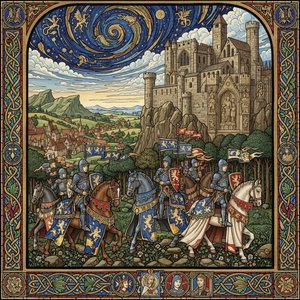
Catalan Atlas (1375) autorstwa Cresques Abraham, ręcznie malowana reprodukcja olejowa wykonana przez mistrza
Podgląd w skali 1:1 Podgląd AR Przełącz na wydania drukowane Przejdź do wersji cyfrowej Wyślij jako kartkę
Szczegóły dzieła Przewodnik Dodaj do ulubionych Pobierz obraz Podobne obiekty RTG Pokaz slajdów Pytania i odpowiedzi Pobierz prezentację Statystyki

Catalan Atlas Ręcznie malowana reprodukcja obrazu olejnego

Discover the Catalan Atlas (1375) by Cresques Abraham – a stunning medieval map showcasing intricate detail & global knowledge. Explore Jewish cartography & historical trade!

Cresques Abraham (1325-1387) was a 14th-century Jewish cartographer renowned for the Catalan Atlas, a masterpiece of nautical charts & vibrant detail. Explore his legacy in medieval mapmaking, blending art, astronomy & trade from Majorca.

Ręcznie malowana reprodukcja olejowa

Ręcznie malowany obraz olejny na płótnie, wykonany na zamówienie przez naszych artystów w wybranym przez Ciebie wymiarze i oprawie. ( Przełącz na wydania drukowane Przejdź do wersji cyfrowej)

Standardowy format
personalizowane
CM
INCH

Wybierz spośród naszych standardowych rozmiarów, które zachowują oryginalne proporcje dzieła sztuki.

szerokość
wysokość

Wpisz wymaganą szerokość i wysokość, aby obraz pasował do Twojej ramy lub ściany. Ponieważ jest to dzieło malowane ręcznie, w przypadku rozmiaru o innych proporcjach artysta może domalować nieco więcej wokół obrazu lub przyciąć jego fragmenty — wybór należy do Ciebie. Przed rozpoczęciem pracy prześlemy Ci cyfrową wizualizację do zatwierdzenia. Obraz widoczny na tej stronie nie przedstawia rzeczywistego efektu — jedynie wizualizacja oddaje realny rezultat.

Przykłady możliwych zmian: Zamień twarz na zdjęcie klienta; Dodaj zwierzę domowe (np. zamień kota na psa); Ukryj wiadomość w tle; Zmień krajobraz lub elementy tła.
Po złożeniu zamówienia zespół WahooArt.com skontaktuje się z klientem drogą mailową w celu uzyskania instrukcji i prześle wizualizację projektu

Dostawa na całym świecie () w ciągu 3–4 tygodni zamiast standardowych 5 tygodni. (8 Listopad). Bez kompromisów w kwestii jakości.

Bezpłatna ekspresowa wysyłka na cały świat
Wysokiej jakości płótno lniane
Pełne ubezpieczenie przesyłki
Gwarancja zwrotu należności celnych i podatków importowych
Gwarancja wiernego odwzorowania kolorów
100-dniowa polityka zwrotów (tylko w przypadku wad)
Gwarancja 100% zwrotu pieniędzy
Zniżka przy zakupie wielu sztuk

Suma całkowita

zł 1260

Catalan Atlas

Technika reprodukcji

Wymiary reprodukcji

-

Cena całkowita

zł 1260

This nautical chart or

Pytania i odpowiedzi

Gdzie można kupić ręcznie malowane reprodukcje dzieła „Catalan Atlas” – Cresques Abraham?

Ręcznie malowaną reprodukcję dzieła „Catalan Atlas” – Cresques Abraham można zamówić bezpośrednio na stronie Ręcznie malowana reprodukcja: ręcznie malowana reprodukcja olejowa na płótnie lnianym, tworzoną na specjalne zamówienie.

Co przedstawia „Catalan Atlas” – Cresques Abraham?

„Catalan Atlas” – Cresques Abraham przedstawia: medieval mapmaking, jewish cartography, global trade routes, ancient civilizations, religious symbolism, historical geography, 14th century world.

Czy kolory w „Catalan Atlas” – Cresques Abraham są nasycone, czy stonowane?

Kolorystyka dzieła "Catalan Atlas" charakteryzuje się nasyceniem na poziomie Balanced Soft oraz intensywnością wynoszącą Vivid.


Biografia artysty

Early Life and Origins

  • Name: Cresques Abraham (his given name was actually Cresques, Abraham being his father's name)
  • Alternative Names: Eliça, son of Rabbi Abraham
  • Born: Palma de Mallorca, Spain, circa 1325
  • Died: 1387
  • Background: Cresques was born into a Jewish family in Majorca, then part of the Crown of Aragon. His grandfather, Vidal Cresques, was a prominent figure within the local Jewish community. The family’s involvement in cartography and related crafts likely began before his birth.

The Catalan Atlas and Cartographic Expertise

  • Major Work: Cresques is most renowned for his authorship of the Catalan Atlas, completed around 1375 in collaboration with his son, Jehuda Cresques.
  • Commissioned by: Prince John of Aragon, intended as a gift for Charles VI of France.
  • Content and Significance: The Catalan Atlas was more than just a map; it served as an encyclopedia of geographical, political, economic, and zoological information. It included the first incorporation of a compass rose on a portolan chart.
  • Cartographic Style: Cresques’s work combined practical navigational charts (portolans) with decorative elements and detailed illustrations. He demonstrated expertise in geography, astronomy, and navigation.

Influences and Development

  • Majorcan Cartographic School: Cresques was a leading member of the Majorcan cartographic school, which flourished during the 14th century. This school produced some of Europe’s finest nautical charts.
  • Jewish Tradition in Cartography: Jews played a significant role in medieval mapmaking and instrument creation, leveraging their skills in mathematics, astronomy, and international trade.
  • Arabic Influence: The cartographic traditions of the Islamic world likely influenced Cresques' work, particularly in terms of astronomical knowledge and map projections.

Legacy and Historical Significance

  • Pioneering Cartographer: Cresques is considered a pioneer in nautical cartography, contributing significantly to the development of accurate and detailed sea charts.
  • Impact on Navigation: His maps facilitated trade and exploration by providing sailors with reliable navigational tools.
  • Cultural Significance: The Catalan Atlas reflects the cultural and scientific advancements of 14th-century Europe, showcasing a blend of art, science, and commerce.
  • Family Legacy: Cresques’s son, Jehuda Cresques, continued his father's work and later became a cartographer in Portugal under Henry the Navigator, further extending the family’s influence on mapmaking.

Later Years and Conversion of His Son

  • Royal Protection: Cresques and his son received royal protection from Pedro IV of Aragon, including financial support and exemptions from certain regulations.
  • Jehuda's Conversion: Following anti-Jewish outbreaks in Spain in 1391, Jehuda converted to Christianity and changed his name to Jaime Ribes. He continued his cartographic work under the patronage of John I and later Martin of Aragon.
  • Mestre Jacome de Mallorca: Jehuda became known as Mestre Jacome de Mallorca and worked for Henry the Navigator in Portugal, contributing to Portuguese explorations along the African coast.
Cresques Abraham

Cresques Abraham

1325 - 1387 , Spain

Krótka nota

  • Full Name: Cresques Abraham
  • Nationality: Spanish
  • Date Of Birth: 1325
  • Date Of Death: 1387
  • Place Of Birth: Palma de Mallorca, Spain
  • Notable Artworks: ['Catalan Atlas']
  • Artistic Movement Or Style: Nautical cartography