DARMOWA KONSULTACJA ARTYSTYCZNA

x
Zamów wydruk Zamów wydrukKup cyfrowy obraz Kup cyfrowy obraz UdostępnijUdostępnij
SzczegółySzczegóły Dodaj do ulubionych Dodaj do ulubionych PobierzPobierz Podobne obiektyPodobne obiekty RTGRTG Pokaz slajdówPokaz slajdów

Untitled (653)

Explore 'Untitled (653)' by Corneille – a vibrant and enigmatic painting featuring figures outdoors. Discover its unique style and captivating composition.

Discover Corneille (1922-2010), a Dutch COBRA artist renowned for vibrant abstract paintings, playful forms & African art influence. Explore his colorful legacy!

Ręcznie malowana reprodukcja olejowa

Ręcznie malowany olej na płótnie w Twoim wymiarze i ramie, tworzony na zamówienie przez naszych artystów.

Standard
custom
CM
INCH

Wybierz spośród naszych predefiniowanych rozmiarów, które zachowują oryginalne proporcje dzieła sztuki.

szerokość
wysokość

Możesz wprowadzić własne wymiary, aby dopasować obraz do konkretnej ramy lub przestrzeni. Jeśli wybrany rozmiar nie będzie odpowiadał proporcjom oryginału, przytniecie dzieło sztuki lub rozszerzymy je o dodatkowe elementy, ręcznie domalowane przez artystę. Przed rozpoczęciem produkcji wyślemy projekt cyfrowy do Twojej akceptacji.
Należy pamiętać, że podgląd na ekranie nie odzwierciedla rzeczywistego przycinania ani rozszerzania obrazu. Tylko projekt dokładnie pokaże ostateczną kompozycję.
Choć oferujemy możliwość zamówienia niestandardowych rozmiarów, zalecamy wybór wymiaru z gotowej listy, aby zachować oryginalne proporcje dzieła.

Przykłady możliwych zmian: Zamień twarz na zdjęcie klienta; Dodaj zwierzę domowe (np. zamień kota na psa); Ukryj wiadomość w tle; Zmień krajobraz lub elementy tła.
Po złożeniu zamówienia zespół WahooArt.com skontaktuje się z klientem drogą mailową w celu uzyskania instrukcji i prześle wizualizację projektu

Dostawa na całym świecie () w ciągu 3/4 tygodni zamiast standardowych 5 tygodni. (4 Lipiec). Bez kompromisów w kwestii jakości.

why_choose_icon
Bezpłatna ekspresowa wysyłka na cały świat
why_choose_icon
Wysokiej jakości płótno lniane
why_choose_icon
Pełne ubezpieczenie przesyłki
why_choose_icon
Gwarancja zwrotu należności celnych
why_choose_icon
Gwarancja pełnego zgodności kolorystycznej
why_choose_icon
Polityka 60-dniowego zwrotu (tylko w przypadku wad)
why_choose_icon
Gwarancja 100% zwrotu pieniędzy
why_choose_icon
Zniżka przy większych zamówieniach

Suma całkowita

-

reproduction

Untitled (653)

Technika reprodukcji

Wymiary reprodukcji

-

Cena całkowita

-

Szybkie fakty

  • Artistic style: Colorful, visually appealing
  • Artist: corneille
  • Notable elements or techniques:
    • Birds flying
    • Clock on wall
  • Title: Untitled (653)
  • Influences: American funk and soul music

Quiz o sztuce

Na każde pytanie istnieje tylko jedna poprawna odpowiedź.

Pytanie 1:
Based on the provided information, which artistic period does this artwork, "Untitled (653)", appear to be associated with?
Pytanie 2:
The description mentions several elements within the painting. Which of these is NOT explicitly mentioned in the photo description?
Pytanie 3:
The artist, Corneille, is primarily known for what profession?
Pytanie 4:
According to the provided biography, what genre of music significantly influences Corneille's work?

Opis dzieła

Untitled (653) by Corneille: A Vibrant Exploration of Human Connection

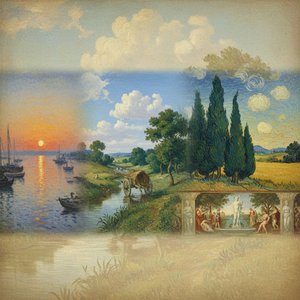
This intriguing artwork, titled "Untitled (653)," presents a captivating scene brimming with color and life. The painting immediately draws the viewer into an intimate moment featuring two figures in the foreground. One individual reclines gracefully, legs extended, while another sits attentively beside them. The outdoor setting is suggested by the presence of birds soaring overhead and a radiant sun illuminating the background, creating a sense of warmth and tranquility.

Subject Matter and Composition

The composition itself is thoughtfully arranged, guiding the eye through various elements within the frame. Beyond the central figures, we observe details such as a perched bird near the upper left corner, a clock affixed to a wall, and a vase positioned towards the right side of the canvas. These additions contribute to a layered narrative, hinting at a broader context beyond the immediate interaction between the two individuals. The dynamic interplay of these elements creates a visually appealing balance, inviting contemplation on their significance within the scene.

Style and Technique

While the precise artistic style remains open to interpretation without further historical documentation, the vibrant color palette and the depiction of figures suggest influences from Baroque art. The use of bold colors and dynamic composition are hallmarks of this period. The artist's technique appears confident, with a clear attention to detail in rendering both the human forms and the surrounding environment. Further research into Corneille’s artistic development would be needed to definitively categorize his style within broader art historical movements.

The Artist: Corneille – A Life Shaped by Music and Tragedy

It's important to note that the "Corneille" who created this artwork is not a traditional painter in the classical sense. The artist known as Corneille (born Cornelius Nyungura, 1922-2010) is primarily recognized as a celebrated singer and musician. Born in Germany to Rwandan parents, he spent his formative years in Rwanda before emigrating to Quebec, Canada. His musical style blends American funk and soul influences with French and English lyrics. The biographical information reveals a life profoundly impacted by the Rwandan genocide, witnessing immense personal loss which undoubtedly shaped his artistic expression, even if it manifests primarily through music rather than painting. The provided image suggests this is indeed the Corneille known for his musical career, adding another layer of complexity to understanding this artwork.

Possible Interpretations and Emotional Impact

The title "Untitled (653)" itself encourages viewers to engage with the work on a personal level, free from preconceived notions. The scene evokes feelings of intimacy, connection, and perhaps even vulnerability. The presence of everyday objects—the clock, the vase—grounds the moment in reality while the birds and sun introduce elements of freedom and hope. Given Corneille’s life story, it's possible that this painting reflects themes of resilience, memory, or a search for peace amidst adversity. The artwork invites viewers to project their own interpretations onto the scene, fostering a unique and deeply personal experience.


Biografia artysty

A Life Painted in Joy: The World of Corneille

Born Cornelis Guillaume van Beverloo in Liège, Belgium, in 1922, Corneille—as he would become universally known—was an artist whose very name became synonymous with vibrant color and playful abstraction. His early life was marked by a return to his Dutch roots at the age of twelve, a relocation that subtly shaped his artistic sensibility, bridging two cultural landscapes. Though he formally studied at the Academy of Art in Amsterdam beginning in 1940, Corneille’s true education unfolded through self-discovery and an unwavering belief in the power of intuitive expression. He wasn't interested in replicating reality; instead, he sought to capture a more primal, emotional truth—a vision deeply influenced by the uninhibited creativity of children’s art and the evocative simplicity found in the works of artists like Miró and Klee. This fascination with childlike wonder would remain a cornerstone of his aesthetic throughout his prolific career.

The COBRA Revolution

Corneille's artistic trajectory took a pivotal turn with the formation of several key experimental groups. He co-founded REFLEX in 1948, a Dutch collective dedicated to pushing boundaries and challenging conventional norms. However, it was his involvement in the groundbreaking COBRA movement in 1949 that truly cemented his place in art history. Alongside artists from Copenhagen, Brussels, and Amsterdam—Karel Appel, Asger Jorn, and others—Corneille embraced spontaneity, experimentation, and a rejection of rigid artistic doctrines. The name itself, an acronym derived from the founding cities, embodied the group’s international spirit and collaborative ethos. COBRA wasn't merely about painting; it was a holistic approach to art-making that encompassed poetry, literature, and a fervent desire to reconnect with fundamental forms of expression. Corneille actively participated in the *Cobra magazine*, seamlessly integrating his artwork with poetic verses, further blurring the lines between disciplines. This period marked a liberation from pre-war artistic constraints, a bold declaration of creative freedom in the aftermath of conflict.

A Kaleidoscope of Forms and Influences

Corneille’s distinctive style is instantly recognizable: playful, colorful abstract paintings brimming with eccentric forms and imaginative settings. His canvases are populated by recurring motifs—birds taking flight, enigmatic cats, alluring women, and figures drawn from mythology—all rendered in a vibrant palette that seems to radiate joy. While elements of Surrealism and Expressionism subtly inform his work, Corneille’s art defies easy categorization. A significant turning point came with his extensive travels throughout Africa in the 1950s and his subsequent collection of African art. These artifacts weren't merely objects of aesthetic appreciation; they served as a profound source of inspiration, influencing his compositions, color choices, and overall artistic vision. The bold geometries, symbolic imagery, and spiritual resonance of African sculpture found their way into his paintings, adding layers of depth and meaning. After the dissolution of COBRA, Corneille relocated to Paris, where he continued to refine his unique style, expanding his repertoire to include ceramics and printmaking.

Legacy and Enduring Impact

Throughout his career, Corneille received numerous accolades, including the prestigious Guggenheim Netherlands Prize in 1956. His work has been exhibited internationally, gracing the walls of esteemed institutions such as the Centre Georges Pompidou and museums across Europe and North America—the Fine Arts Museums of San Francisco, the Cobra Museum of Modern Art, the Art Institute of Chicago, to name a few. Beyond gallery walls, Corneille’s art also found expression in public spaces, most notably with sculptures like *De Vliegende Kat* (The Flying Cat) in Amstelveen, Netherlands—a whimsical testament to his playful spirit. His influence extended beyond his immediate circle, profoundly impacting the development of modern Scandinavian art through his involvement with COBRA. Corneille passed away in Paris in 2010 and was laid to rest near Vincent van Gogh’s grave in Auvers-sur-Oise, a fitting tribute to an artist who shared Van Gogh's passion for color and emotional intensity. Today, Corneille’s work continues to captivate audiences worldwide, remaining highly sought after by collectors and celebrated as a vibrant expression of post-war artistic innovation. His legacy is one of joy, spontaneity, and an unwavering belief in the power of art to connect us to our deepest selves.
Corneille

Corneille

1922 - 2010 , Belgium

Kluczowe informacje

  • Artistic Movement Or Style: COBRA, Abstract Expressionism
  • Artists Or Movements Influenced By This Artist: ['Scandinavian art']
  • Artists Who Influenced This Artist:
    • Miró
    • Klee
  • Date Of Birth: July 3, 1922
  • Date Of Death: September 5, 2010
  • Full Name: Guillaume Cornelis van Beverloo
  • Nationality: Dutch
  • Place Of Birth: Liège, Belgium