Zobacz w skali 1:1 Zobacz w AR Kup ręcznie malowany obraz Przełącz na wersję cyfrową Wyślij
Szczegóły Przewodnik Dodaj do ulubionych Pobierz plik obrazu Podobne obiekty RTG Pokaz slajdów Statystyki

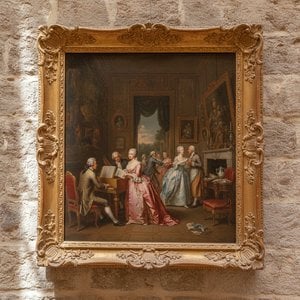
The Angler

Experience the peaceful riverside scene of The Angler by Constant Troyon; capture this beautiful 19th-century landscape art for your collection.

Poznaj Constant Troyona (1810-1865), pioniera szkoły Barbizon! Jego niezwykłe pejzaże i realistyczne przedstawienia zwierząt zainspirowały wielu twórców. Zamów reprodukcję jego ikonografii!

Giclée / Wydruk artystyczny

Wydruki giclée lub płótna o jakości muzealnej, szybka realizacja i szeroki wybór opcji wykończenia. ( Kup ręcznie malowany obraz Przełącz na wersję cyfrową)

Corner sample of the P118B picture frame: polistyren formowany, 5 cm wide and 3 cm thick
P118B zł10
Corner sample of the P118H picture frame: polistyren formowany, 5 cm wide and 3 cm thick
P118H zł10
Corner sample of the P118W picture frame: polistyren formowany, 5 cm wide and 3 cm thick
P118W zł10
Corner sample of the P438Z picture frame: polistyren formowany, 5.5 cm wide and 3.5 cm thick
P438Z zł10
Corner sample of the P508JH picture frame: polistyren formowany, 7 cm wide and 3.5 cm thick
P508JH zł12
Corner sample of the P508YH picture frame: polistyren formowany, 7 cm wide and 3.5 cm thick
P508YH zł12
Corner sample of the P805H picture frame: polistyren formowany, 5 cm wide and 3.5 cm thick
P805H zł10
Corner sample of the P805Z picture frame: polistyren formowany, 5 cm wide and 3.5 cm thick
P805Z zł10
Corner sample of the P919BZ picture frame: polistyren formowany, 7 cm wide and 3.5 cm thick
P919BZ zł10
Corner sample of the P919G picture frame: polistyren formowany, 7 cm wide and 3.5 cm thick
P919G zł10
Corner sample of the P919XJ picture frame: polistyren formowany, 7 cm wide and 3.5 cm thick
P919XJ zł10
Corner sample of the P959ZH picture frame: polistyren formowany, 5 cm wide and 3 cm thick
P959ZH zł10
Corner sample of the P968JZ picture frame: polistyren formowany, 6 cm wide and 4 cm thick
P968JZ zł12
Corner sample of the W106C picture frame: lite drewno, 5 cm wide and 3 cm thick
W106C zł8
Corner sample of the W218G picture frame: lite drewno, 5 cm wide and 3 cm thick
W218G zł10
Corner sample of the W218JH picture frame: lite drewno, 5 cm wide and 3 cm thick
W218JH zł8
Corner sample of the W218Y picture frame: lite drewno, 5 cm wide and 3 cm thick
W218Y zł10
Corner sample of the W307PJ picture frame: lite drewno, 6 cm wide and 3 cm thick
W307PJ zł10
Corner sample of the W316G picture frame: lite drewno, 6 cm wide and 3 cm thick
W316G zł10
Corner sample of the W316PJ picture frame: lite drewno, 6 cm wide and 3 cm thick
W316PJ zł8
Corner sample of the W316Y picture frame: lite drewno, 6 cm wide and 3 cm thick
W316Y zł10
Corner sample of the W398PJ picture frame: lite drewno, 5 cm wide and 3 cm thick
W398PJ zł8
Corner sample of the W4111J picture frame: lite drewno, 6.5 cm wide and 3.5 cm thick
W4111J zł10
Corner sample of the W500HY picture frame: lite drewno, 7 cm wide and 5 cm thick
W500HY zł15
Corner sample of the W500JH picture frame: lite drewno, 7 cm wide and 5 cm thick
W500JH zł15
Corner sample of the W692G picture frame: lite drewno, 8 cm wide and 4 cm thick
W692G zł12
Corner sample of the W849H picture frame: lite drewno, 5 cm wide and 3 cm thick
W849H zł8
Corner sample of the W940BG picture frame: lite drewno, 7.5 cm wide and 4.5 cm thick
W940BG zł15
Corner sample of the W953PJ picture frame: lite drewno, 6 cm wide and 3.5 cm thick
W953PJ zł8

Standardowy
na zamówienie
CM
INCH

Wybierz spośród naszych standardowych rozmiarów, które zachowują oryginalne proporcje dzieła sztuki.

szerokość
wysokość

Wpisz wymaganą szerokość i wysokość, aby dopasować grafikę do ramy lub ściany. Wydruk można jedynie przyciąć, nigdy nie powiększając go poza oryginalny obraz, dlatego format o innym proporcji spowoduje utratę części kompozycji. Przed rozpoczęciem druku prześlemy Ci cyfrowy podgląd do zatwierdzenia. Obraz wyświetlany na tej stronie nie pokazuje rzeczywistego przycięcia — jedynie podgląd oddaje ten efekt.

Dostawa na cały świat () w ciągu 2 tygodni zamiast standardowych 4/5 tygodni. (22 Październik)

Bezpłatna ekspresowa wysyłka na cały świat
Wysokiej jakości płótno lniane
Pełne ubezpieczenie transportowe
Gwarancja zwrotu należności celnych i podatków importowych
Gwarancja idealnego odwzorowania barw
100-dniowy okres na zwrot dzieła w przypadku wykrycia wad produkcyjnych
Gwarancja 100% zwrotu pieniędzy
Oferta przy zakupie wielu sztuk

Cena całkowita

zł 261

The Angler

Giclée / Wydruk artystyczny

Rozmiar reprodukcji

-

Suma do zapłaty

zł 261

Kluczowe informacje

  • Subject or theme: Landscape; fishing by a river
  • Title: The Angler

Quiz wiedzy o sztuce

Do każdego pytania dotyczy tylko jedna poprawna odpowiedź.

Pytanie 1:
What is the primary activity depicted in the painting titled 'The Angler'?
Pytanie 2:
According to the description, what elements are visible in the background of 'The Angler'?
Pytanie 3:
Which artist is credited with creating 'The Angler'?
Pytanie 4:
What early professional experience influenced Constant Troyon's meticulous attention to detail?
Pytanie 5:
Besides people and a river, what other animals are noted to be present in the scene?

A Tranquil Afternoon by the Water's Edge

The scene unfolds like a cherished memory, capturing a moment of profound stillness amidst the gentle activity of life. In The Angler, Constant Troyon invites us to pause our hurried modern pace and simply observe. Before us lies a pastoral tableau: a meandering river reflecting the soft light of an unknown day. At the heart of this composition stands the solitary figure of the angler, his posture suggesting patience—a virtue as timeless as the flowing water itself. The surrounding landscape is rich with verdant tones, framed by distant trees that whisper tales of countryside tranquility. It is a scene steeped in the quiet dignity of nature's embrace.

Mastery of Landscape and Figure

Troyon’s technique here speaks to his deep roots as an artist trained not only in the meticulous detail of porcelain decoration but also in the expansive sweep of landscape painting. Observe how the brushwork guides the eye: from the foreground where the figures gather near the water's edge, to the more distant elements that suggest depth and endless possibility. The inclusion of other figures, some closer to the bank and others further afield, lends a sense of community without ever becoming chaotic. These human interactions are subtly woven into the natural tapestry. Furthermore, the presence of two horses—one anchoring the center, the other drifting toward the right—adds an element of rustic grandeur, grounding the pastoral setting with palpable life.

Historical Echoes and Artistic Context

Painted during a period when landscape art was reaching new heights of emotional resonance, The Angler reflects a broader cultural yearning for escape. For Troyon, whose early life connected him to the refined arts of Sèvres porcelain, this painting represents a beautiful synthesis: the precision learned in ornamentation applied to the boundless freedom of nature. While the specific historical context remains wonderfully ambiguous, the feeling evoked is one of enduring leisure—a gentlemanly pursuit far removed from the bustle of urban existence. It speaks to an idealized vision of country life cherished by artists and collectors alike.

Symbolism of Patience and Connection

Beyond its visual beauty, the painting resonates with deeper symbolism. The act of fishing itself is a potent metaphor for patience—the understanding that the greatest rewards often require quiet waiting and unwavering attention. The river symbolizes the relentless passage of time, while the grouping of people suggests shared human experience against the backdrop of nature's constancy. For those who find solace in contemplation or value the connection between humanity and the wild, this artwork offers a visual balm. Reproducing this piece allows one to bring that same sense of peaceful contemplation into a modern interior space.

Bringing the Serenity Home

To acquire a reproduction of The Angler is to invite a curated moment of peace into your home or studio. The rich, earthy palette and the masterful composition make it an exceptional focal point for any room seeking an air of cultivated calm. It appeals equally to the collector who appreciates historical technique and the designer who seeks evocative, narrative art. Let this painting serve as a daily reminder to slow down, observe the details around you, and find beauty in the quiet rhythm of life.

Pytania i odpowiedzi

Jak kolory w dziele "The Angler" współgrają ze sobą?

Kolory dzieła „The Angler” autorstwa Konstanty Troyon wykazują Unified Palette harmonię. Harmonia opisuje wzajemne relacje między kolorami.

Z jakiego kraju pochodzi dzieło Barbizon School pt. "The Angler"?

Dzieło z nurtu Barbizon School, zatytułowane "The Angler", zostało stworzone przez artystę urodzonego w Francja.

W jakiej technice wykonano "The Angler" i jakie są jego wymiary?

Technika wykonania dzieła „The Angler” autorstwa Konstanty Troyon to Oil On Canvas, a jego wymiary to 161 x 130 cm.


Biografia artysty

Wczesne lata i kształcenie

  • Urodzony: Sèvres, Francja (1810)
  • Zmarł: 1865
  • Wczesne lata Constant Troyona zostały ukształtowane przez silną więź jego rodziny z manufakturą porcelany w Sèvres. Jego ojciec i matka pracowali w tym miejscu, tworząc środowisko, w którym artystyczne umiejętności były głęboko cenione.
  • Swoją drogę rozpoczął jako dekorator w manufakturze, od najmłodszych lat skrupulatnie doskółając kunszt ornamentyki porcelanowej. To rzemieślnicze szkolenie zaszczepiło w nim niezwykłą dbałość o detal i precyzję, które w późniejszym okresie stały się fundamentem jego stylu malarskiego.
  • Mając 21 lat, Troyon wyruszył w podróże po kraju, poświęcając się malarstwu pejzażowemu zawsze wtedy, gdy pozwalały na to środki finansowe. Te wyprawy dostarczyły mu bezcennego doświadczenia i kontaktu z różnorodnymi środowiskami naturalnymi.
  • W okresach niedostatku powracał do dekorowania porcelany, wykazując się pragmatycznym podejściem w dążeniu do wspierania swoich artystycznych ambicji.
  • Korzystał z mentorstwa Camille'a Roqueplana, który wprowadził go w krąg innych wybitnych artystów szkoły Barbizon, takich jak Rousseau czy Jules Dupré. Choć początkowo czerpał inspirację z ich estetyki, Troyon z czasem wypracował własny, niepowtarzalny głos.

Rozwój artystyczny i wpływ holenderski

    Przełomowy moment w rozwoju artystycznym Troyona nastąpił podczas podróży do Holandii w 1846 roku.
  • Zainspirowany dziełem „Młody byk” Paulusa Pottera oraz arcydziełami Cuypa i Rembrandta, przeszedł on ku malarstwu zwierzęcemu, odkrywając w nim swoje prawdziwe powołanie.
  • To doświadczenie przyniosło znaczącą zmianę w jego stylu, odchodząc od czystego pejzażu w stronę przedstawień zwierząt osadzonych w ich naturalnym środowisku.
  • Nacisk kładziony przez mistrzów holenderskich na realizm oraz próbę uchwycenia istoty zwierząt głęboko rezonował z Troyonem, kształtując jego wizję artystyczną.

Styl artystyczny i dziedzictwo

    Dzieła Troyona charakteryzowały się autentycznością, ukazując zwierzęta w ich naturalnych, dynamicznych stanach. Artysta dążył do uchwycenia nie tylko ich wyglądu zewnętrznego, ale także charakteru i zachowania.
  • Krytyk sztuki Albert Wolff zauważył transformujący styl Troyona, chwaląc jego zdolność do tchnięcia życia w zwierzęta i tworzenia przejmujących pejzaży.
  • Mimo osiągnięcia znacznego sukcesu, Troyon pozostawał nieco sceptyczny wobec własnych dokonań, co odzwierciedlało jego pokorną i introspektywną naturę.
  • W trakcie swojej kariery otrzymał liczne wyróżnienia, w tym Legię Honorową oraz pięć medali na paryskim Salonie, co dowodzi powszechnego uznania dla jego talentu.
  • Do grona jego klientów należał sam Napoleon III, co dodatkowo ugruntowało jego reputację jako czołowego artysty epoki.
  • Niestety, sukces odcisnął piętno na zdrowiu psychicznym Troyona i zmarł on w 1865 roku po okresach niepokoju.

Wybitne dzieła i trwały wpływ

    Większość jego najsławniejszych prac datuje się na lata 1850–1864, przy czym wcześniejsze dzieła uważa się za mniej znaczące, gdyż powstały przed okresem inspirowanym stylem holenderskim.
  • Jego dziedzictwo obejmuje Nagrodę Troyona za malarstwo zwierzęce w École des Beaux Arts, ustanowioną przez jego matkę, aby uczcić jego pamięć i wspierać przyszłych artystów.
  • Jego najważniejsze dzieła można odnaleźć w prestiżowych galeriach na całym świecie, w tym w Wallace Gallery w Glasgow, Luwrze oraz Metropolitan Museum of Art.
  • Obraz „Vallée de la Toucque, Normandy” stanowi przykład jego geniuszu, ukazując zdolność do uchwycenia zarówno piękna krajobrazu, jak i witalności jego zwierzęcych mieszkańców.
  • Wpłynął na późniejszych artystów, takich jak Émile van Marcke, co dowodzi trwałego wpływu jego wizji artystycznej.

Związek ze szkołą Barbizon

  • Troyon był znaczącym członkiem szkoły Barbizon – grupy francuskich malarzy pejzażowych, którzy preferowali malowanie w plenerze i przedstawianie realistycznych scen zaczerpniętych z natury.
  • Szkoła Barbizon kładła nacisk na bezpośrednią obserwację i dążyła do uchwycenia esencji życia wiejskiego oraz krajobrazu, odrzucając idealizowane przedstawienia dominujące w sztuce akademickiej.
  • Choć początkowo Troyon podążał śladem innych artystów z kręgu Barbizon, jego unikalny talent do malowania zwierząt wyróżnił go w obrębie tej grupy.
Konstanty Troyon

Konstanty Troyon

1810 - 1865 , Francja

Najważniejsze informacje

  • Artistic Movement Or Style: Szkoła z Barbizon
  • Artists Or Movements Influenced By This Artist: ['Émile van Marcke']
  • Artists Who Influenced This Artist:
    • Paulus Potter
    • Aelbert Cuyp
  • Date Of Birth: August 28, 1810
  • Date Of Death: February 21, 1865
  • Full Name: Constant Troyon
  • Nationality: Francuski
  • Notable Artworks:
    • Vallée de la Toucque, Normandy
    • Cattle in Stormy Weather
  • Place Of Birth: Sèvres, France