


Dzieło sztuki prezentowane na tej stronie podlega ochronie prawem autorskim, co oznacza, że nie mamy prawa do tworzenia ani sprzedaży jego identycznej reprodukcji. Ochrona ta jest egzekwowana na mocy umów międzynarodowych, takich jak Konwencja berneńska oraz przez przepisy prawa krajowego, w tym te określone w Prawo autorskie USA – Tytuł 17.
Metoda ta jest w pełni zgodna z przepisami prawa autorskiego, ponieważ nie polega na kopiowaniu ani powielaniu chronionego dzieła. Stanowi ona kreatywną reinterpretację – nowy obraz, który czerpie inspirację z oryginału, ale nie jest z nim tożsamy.
Wydruki giclée lub płótna o jakości muzealnej, szybka realizacja i szeroki wybór opcji wykończenia. ( Zamów ręcznie malowaną reprodukcję Przejdź do wersji cyfrowej)
Wybierz spośród naszych standardowych rozmiarów, które zachowują oryginalne proporcje dzieła sztuki.

Wpisz wymaganą szerokość i wysokość, aby dopasować grafikę do ramy lub ściany. Wydruk można jedynie przyciąć, nigdy nie powiększając go poza oryginalny obraz, dlatego format o innych proporcjach spowoduje utratę części kompozycji. Przed rozpoczęciem druku prześlemy Ci cyfrowy podgląd do zatwierdzenia. Obraz wyświetlany na tej stronie nie pokazuje rzeczywistego przycięcia — jedynie podgląd oddaje ten efekt.
Dostawa na cały świat () w ciągu 2 tygodni zamiast standardowych 4/5 tygodni. (14 Listopad)
1950 A No. 2
Wymiary reprodukcji
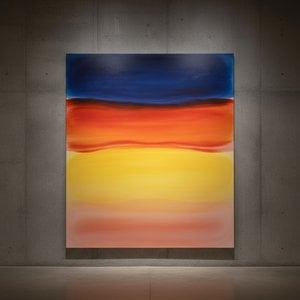
To stand before 1950 A No. 2 is to witness a profound dialogue between light and shadow, a visceral confrontation with the elemental forces of nature. As a seminal work from the height of Clyfford Still’s creative powers, this masterpiece transcends mere abstraction to become an existential landscape. The canvas erupts in a dramatic interplay of deep, pulsating reds and brilliant, sun-drenched yellows, creating a sense of movement that feels both ancient and urgently modern. There is no recognizable horizon or figure here; instead, the viewer is submerged in a sea of jagged, vertical forms that seem to tear through the very fabric of the composition, much like tectonic plates shifting beneath a primordial earth.
The technique employed by Still is nothing short of revolutionary, characterized by a heavy, impasto-like application that gives the surface a rugged, sculptural quality. Unlike the fluid drips of his contemporary Jackson Pollock, Still’s method involves thick, deliberate strokes that create irregular, flame-like edges. These "splintered" boundaries between colors prevent the eye from resting, forcing a continuous exploration of the canvas's textured topography. The way the red dominates the field, interrupted by sudden, sharp incursions of yellow, suggests a volcanic energy—a moment of creation captured in mid-explosion. For the discerning collector or interior designer, this piece offers a commanding presence, acting as a focal point that breathes life and raw emotion into any sophisticated space.
Historically, 1950 A No. 2 serves as a cornerstone of the American Abstract Expressionist movement. Created during a period when artists were seeking to move beyond the constraints of figurative representation, Still’s work offered a new visual language for the human condition. His background, rooted in the vast and often harsh landscapes of the American West and Canada, is subtly woven into the DNA of this painting. The jagged forms and intense color fields evoke the sublime—that specific feeling of awe mixed with a touch of terror when faced with the infinite. It is an art of the spirit, designed to bypass the intellect and strike directly at the soul.
For those seeking to integrate fine art into a curated environment, this reproduction offers more than just aesthetic beauty; it provides a sense of depth and intellectual gravity. The painting’s ability to evoke themes of life, death, and the enduring strength of nature makes it an evocative choice for spaces intended to inspire contemplation and strength. Whether placed in a minimalist gallery setting or a richly textured study, the vibrant energy of Still's 1950 masterpiece remains undiminished, inviting every observer to lose themselves in its magnificent, unbridled complexity.
W "1950 A No. 2" kolorystyka Dark współgra z Passionate nastrojem.
Podgląd dzieła „1950 A No. 2” – Clyfford Still można znaleźć na stronie Podgląd w pomieszczeniu.
"1950 A No. 2" powstało w 1950 roku przy użyciu Oil On Canvas.


1904 - 1980 , Stany Zjednoczone
Explore the profound emotional depth of Mark Rothko's abstract expressionism. Discover the history, techniques & lasting impact of this pivotal Color Field painter. Expert insights for collectors and art enthusiasts.

Odkryj świat abstrakcji! Przewodnik po minimalizmie, ekspresjonizmie i innych kierunkach sztuki współczesnej. Eksperckie porady dla kolekcjonerów i inspiracje do wnętrz. Znajdź idealny obraz na WahooArt.com.

Step into the revolutionary world of Édouard Manet. Explore 25 iconic Impressionist masterpieces, from scandalous classics to timeless portraits. Find inspiration for your decor with museum-quality art reproductions. Discover all masterpieces on WahooArt.com.

Explore the profound world of Clyfford Still's Abstract Expressionism with WahooArt. Discover his unique style, existential themes & investment potential. Expert analysis for discerning collectors.

Explore the profound spiritual resonance of Color Field Painting with insights into Rothko, Newman & Still. Discover the techniques & legacy of this influential abstract art movement.
 Podgląd w skali 1:1
 Wyślij jako kartkę
 Udostępnij
 Szczegóły dzieła
 Przewodnik

 Pobierz obraz
 Podobne obiekty
 RTG
RTG Pokaz slajdów
 Pytania i odpowiedzi
 Statystyki

 Rozwiń treść






































 Opcja ze szkłem jest dostępna wyłącznie w rozmiarach poniżej 110 cm


