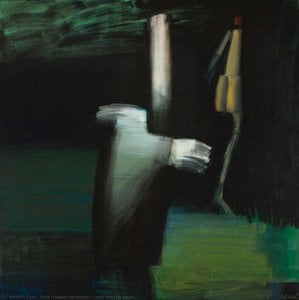
Dzieło sztuki prezentowane na tej stronie podlega ochronie prawem autorskim, co oznacza, że nie mamy prawa do tworzenia ani sprzedaży jego identycznej reprodukcji. Ochrona ta jest egzekwowana na mocy umów międzynarodowych, takich jak Konwencja berneńska oraz przez przepisy prawa krajowego, w tym te określone w Prawo autorskie USA – Tytuł 17.
Metoda ta jest w pełni zgodna z przepisami prawa autorskiego, ponieważ nie polega na kopiowaniu ani powielaniu chronionego dzieła. Stanowi ona kreatywną reinterpretację – nowy obraz, który czerpie inspirację z oryginału, ale nie jest z nim tożsamy.
Wydruki giclée lub płótna o jakości muzealnej, szybka realizacja i szeroki wybór opcji wykończenia. ( Zamów ręcznie malowaną reprodukcję Przejdź do wersji cyfrowej)
Wybierz spośród naszych standardowych rozmiarów, które zachowują oryginalne proporcje dzieła sztuki.

Wpisz wymaganą szerokość i wysokość, aby dopasować grafikę do ramy lub ściany. Wydruk można jedynie przyciąć, nigdy nie powiększając go poza oryginalny obraz, dlatego format o innych proporcjach spowoduje utratę części kompozycji. Przed rozpoczęciem druku prześlemy Ci cyfrowy podgląd do zatwierdzenia. Obraz wyświetlany na tej stronie nie pokazuje rzeczywistego przycięcia — jedynie podgląd oddaje ten efekt.
Dostawa na cały świat () w ciągu 2 tygodni zamiast standardowych 4/5 tygodni. (8 Listopad)
The Painter Francis Bacon
Wymiary reprodukcji

Chronis Botsoglou stands as one of the most profound and uncompromising voices in contemporary Greek art, a painter whose work served as the very conscience of figurative painting for over half a century. Born in Thessaloniki, Greece, his artistic journey was shaped by a rigorous academic foundation, beginning at the Athens School of Fine Arts under the mentorship of the legendary Yiannis Moralis. This early training, followed by a transformative period of study at the École nationale supérieure des Beaux-Arts in Paris, allowed him to weave together a unique aesthetic language—one that rejected the purely decorative in favor of a raw, psychological directness.
His return to Greece marked a pivotal moment in his career as he helped found the New Greek Realists group in 1971. At a time when the international art world was drifting toward conceptual experimentation, Botsoglou remained steadfastly committed to a realism that explored the human condition. His practice was never merely about representation; it was an excavation of existence. Through his large-format figure compositions, he addressed themes of brutality, violence, and cynicism, yet always tempered this critical gaze with an unmistakable sense of empathy and tenderness.
The technical breadth of Botsoglou’s oeuvre is as vast as its emotional depth. While his large-scale paintings often commanded the most critical attention, his mastery extended across a diverse range of media, including engraving, sculpture, pastels, and watercolours. His work frequently oscillates between the heavy physicality of painting material and an almost ethereal, existential lightness. In series such as Personal Nekyia, he delves into the shadows of mortality, using muted tones and haunting imagery to explore the relationship between the self and the void.
In contrast, other works like his Haiku series reveal a different facet of his genius, capturing serene coastal scenes through pastel hues that blend elements of impressionism with nature's quiet beauty. This duality—the ability to move from the visceral weight of human suffering to the delicate observation of light and landscape—defines his artistic legacy. His paintings do not merely depict bodies; they biographize death, using the human form to speak of solitude, fragility, and the enduring struggle of the spirit.
Beyond the canvas, Botsoglou was a monumental figure in the academic and intellectual life of Greece. His dedication to the craft was matched by his commitment to artistic education, serving as a professor at the Athens School of Fine Arts and later as its Rector. He was an artist who thought deeply about the labor of creation, publishing writings that explored the very essence of artistic study and the necessity of honesty in one's work.
His immense contribution to art history is reflected in the widespread presence of his works in prestigious institutions. His legacy is preserved through:
Through decades of solo and group exhibitions spanning from South America to Israel, Chronis Botsoglou remained an artist of profound sincerity, leaving behind a body of work that continues to resonate with its unflinching gaze into the depths of human existence.

1941 - 2022 , Greece

Immerse yourself in the visceral world of Francis Bacon. Explore 25 iconic masterpieces, from distorted figures to haunting portraits. Discover the stories behind these expressionist legends and find museum-quality art reproductions for your collection at WahooArt.com.
 Podgląd w skali 1:1
 Wyślij jako kartkę
 Udostępnij
 Szczegóły dzieła
 Przewodnik

 Pobierz obraz
 Podobne obiekty
 RTG
RTG Pokaz slajdów
 Pytania i odpowiedzi
 Statystyki

 Rozwiń treść






































 Opcja ze szkłem jest dostępna wyłącznie w rozmiarach poniżej 110 cm