x
Podgląd w skaliPodgląd w skali Podgląd ARPodgląd AR Zamów ręcznie malowaną reprodukcję Zamów ręcznie malowaną reprodukcjęKup obraz wysokiej rozdzielczości Kup obraz wysokiej rozdzielczości Wyślij jako kartkęWyślij jako kartkę
Szczegóły dziełaSzczegóły dzieła Dodaj do ulubionych Dodaj do ulubionych PobierzPobierz Podobne obiektyPodobne obiekty RTGRTG Pokaz slajdówPokaz slajdów

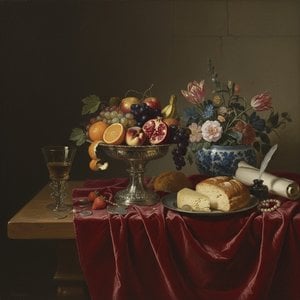
Still Life

Explore Cheong Soo Pieng’s ‘Still Life,’ a Cubist-influenced oil painting capturing Southeast Asian life through fragmented forms & earthy tones. A key Nanyang style piece.

Cheong Soo Pieng (1917-1983) was a pioneering Singaporean artist of the Nanyang style, known for his modernist oil paintings & watercolors depicting Southeast Asian life, particularly stylized figures and scenes. A key figure in 20th-century art.

Giclée / Wydruk artystyczny

Druk giclée lub płótno o jakości muzealnej, szybka realizacja i szeroki wybór opcji wykończenia. (Zamów ręcznie malowaną reprodukcję Zamów ręcznie malowaną reprodukcjęKup obraz wysokiej rozdzielczości Kup obraz wysokiej rozdzielczości)

P118B $10
P118H $10
P118W $10
P438Z $10
P508JH $12
P508YH $12
P805H $10
P805Z $10
P919BZ $10
P919G $10
P919XJ $10
P959ZH $10
P968JZ $12
W106C $8
W218G $10
W218JH $8
W218Y $10
W307PJ $10
W316G $10
W316PJ $8
W316Y $10
W398PJ $8
W4111J $10
W500HY $15
W500JH $15
W692G $12
W849H $8
W940BG $15
W953PJ $8

Standardowy rozmiar
na wymiar
CM
INCH

Wybierz spośród naszych standardowych rozmiarów, które zachowują oryginalne proporcje dzieła sztuki.

szerokość
wysokość

Możesz wprowadzić własne wymiary, aby dopasować dzieło do konkretnej ramy lub przestrzeni. Jeśli wybrany rozmiar nie będzie odpowiadał proporcjom oryginalnego obrazu, przytniecie dzieło lub rozszerzymy obraz za pomocą odbicia lustrzanego lub jednolitego wypełnienia krawędzi. Przed rozpoczęciem produkcji prześlemy cyfrową wizualizację do Twojej akceptacji.
Prosimy pamiętać, że podgląd na ekranie nie odzwierciedla faktycznego przycinania ani rozszerzania. Tylko wizualizacja dokładnie pokaże końcową kompozycję.
Mimo dostępności niestandardowych rozmiarów, zalecamy wybór wymiaru z listy zdefiniowanej, aby zachować oryginalne proporcje.

Dostawa na cały świat () w ciągu 2 tygodni zamiast standardowych 4/5 tygodni. (1 Wrzesień)

why_choose_icon
Bezpłatna ekspresowa wysyłka na cały świat
why_choose_icon
Wysokiej jakości płótno lniane
why_choose_icon
Pełne ubezpieczenie przesyłki
why_choose_icon
Gwarancja zwrotu należności celnych i podatków importowych
why_choose_icon
Gwarancja wiernego odwzorowania kolorów
why_choose_icon
Polityka 60-dniowego zwrotu (tylko w przypadku wad)
why_choose_icon
Gwarancja 100% zwrotu kosztów
why_choose_icon
Zniżka przy zamówieniu wielu produktów

Suma całkowita

$ 68

reproduction

Still Life

Giclée / Wydruk artystyczny

Wymiary reprodukcji

-

Cena całkowita

$ 68

Szybki podgląd

  • Medium: Oil paint on canvas
  • Subject or theme: Fruits and objects on a table
  • Artistic style: Abstract realism
  • Notable elements or techniques: Cubist-influenced, thick impasto, fragmented
  • Title: Still Life
  • Dimensions: 49 x 59 cm

A Symphony of Form and Fragmented Light

In the quiet intimacy of Cheong Soo Pieng’s Still Life, the viewer is invited into a world where the mundane becomes monumental. This captivating composition transcends a simple arrangement of fruit; it is a profound exploration of structure, light, and the tactile essence of objects. At first glance, one encounters a rhythmic dance of bananas, oranges, and grapes, nestled alongside the translucent elegance of a glass bottle and a delicate vessel. Yet, as the eye lingers, the traditional boundaries of the subject begin to dissolve. Through a masterful application of Cubist-influenced abstraction, the artist deconstructs these familiar elements into a series of overlapping planes and geometric echoes. The composition breathes with a controlled chaos, where angular lines and broken shapes create a sense of movement that feels both spontaneous and meticulously orchestrated.

The technique employed in this piece is nothing short of visceral. Utilizing the rich, heavy medium of oil on canvas, Cheong Soo Pieng employs a thick impasto application that lends the work a sculptural quality. Each brushstroke is visible and expressive, contributing to a rugged, layered texture that invites the touch. This tactile depth is complemented by a sophisticated play of light; rather than relying on a single, predictable source, the illumination seems to emanate from multiple directions, casting highlights and shadows that define the three-dimensionality of the fruit while simultaneously flattening the perspective in a nod to modernism. The color palette, dominated by earthy, grounded tones with subtle whispers of blue and white, creates a muted yet emotionally resonant atmosphere that feels timeless.

The Legacy of Nanyang Modernism

To understand the soul of this painting, one must look toward the historical currents of the Nanyang style. As a pioneer of this movement, Cheong Soo Pieng achieved something extraordinary: the seamless fusion of Western modernist techniques—such as the fragmentation of Cubism and the dreamlike qualities of Surrealism—with the vibrant, soulful essence of Southeast Asian life. This particular work serves as a testament to that synthesis. While the structural language is undeniably rooted in the European avant-garde, the warmth of the palette and the organic arrangement evoke the tropical abundance of the region. It is a piece that bridges continents, merging the intellectual rigor of academic training from the Xiamen Academy of Fine Art with the lived experience of a master artist navigating a changing cultural landscape.

Beyond its formal brilliance, the Still Life carries a subtle, poetic symbolism. The genre itself has long served as a meditation on abundance and the fleeting nature of time—a memento mori expressed through the ripeness of fruit. In Cheong’s hands, this theme is elevated by the abstraction; as the forms fragment, there is a sense of the ephemeral, a reminder that beauty exists in the tension between permanence and decay. For the discerning collector or interior designer, this artwork offers more than mere decoration. It provides a sophisticated focal point that commands attention through its complexity and depth. Whether placed in a contemporary gallery setting or a curated residential space, the painting acts as an anchor of intellectual and aesthetic prestige, offering a window into a pivotal moment in 20th-century art history.


O artyście

The Architect of Nanyang Modernism

In the vibrant tapestry of twentieth-century Asian art, few threads shine as brightly or as uniquely as those woven by Cheong Soo Pieng. A visionary who bridged the vast distance between the ancient traditions of the East and the avant-garde movements of the West, Cheong stands as a monumental figure in Singaporean art history. Born in 1917 in Amoy, China, his early life was marked by a profound connection to the classical aesthetics of his heritage, yet his spirit was destined for the tropical rhythms of Southeast Asia. His formative education at the Xiamen Academy of Fine Art and later in Shanghai provided him with a rigorous foundation in Chinese ink painting, but it was his move to Singapore in 1946 that would ignite his true artistic revolution.

Cheong did not merely adopt a new landscape; he reimagined it through a lens of modernism. Alongside contemporaries like Chen Wen Hsi, he became a primary architect of the Nanyang style—a movement that sought to capture the soul of the Malay Peninsula and the Indonesian archipelago. This was not a mere imitation of European trends, but a sophisticated fusion. He took the structural lessons of Cubism and the dreamlike qualities of Surrealism and breathed into them the warmth, color, and cultural vitality of Southeast Asian life. His work became a dialogue between the geometric precision of the West and the organic, flowing essence of the tropics.

A Symphony of Form and Local Essence

To gaze upon a Cheong Soo Pieng masterpiece is to witness a masterful command of both line and light. His technique was characterized by an extraordinary ability to use bold, saturated colors and thick black contours to delineate forms that felt both grounded and ethereal. He possessed a signature way of depicting indigenous tribal people, often portraying figures with elongated limbs and almond-shaped eyes—a stylistic choice that lent his subjects a graceful, almost mythic quality. This rhythmic approach to the human figure allowed him to transform everyday scenes into something timeless and iconic.

His subject matter served as a love letter to the regional identity. Through his brush, the mundane became magnificent:

  • The Rhythms of Labor: He captured the communal spirit of Weaver and the industriousness of fishermen hauling nets or farmers tending to rice paddies.
  • Cultural Heritage: Works like Kayan Musician celebrate the traditional musical performances that define the region's cultural heartbeat.
  • Tropical Serenity: In pieces such as Bali Beach, he invited viewers into a world of relaxation and sun-drenched landscapes, using fragmented geometric shapes to mirror the heat and movement of the shore.
  • The Beauty of the Ordinary: Even in his more intimate studies, such as Drying Salted Fish or his various still lifes, there is an unwavering dedication to the palpable essence of human experience within a specific cultural context.

Legacy and the Enduring Spirit of Innovation

As his career progressed, Cheong’s experimentation knew no bounds. He was never content with staying within the safety of oil or watercolor; he fearlessly pushed the limits of his medium by exploring metal reliefs, lacquer, Masonite, and mixed media. This relentless pursuit of innovation ensured that his work remained dynamic, evolving from the figurative clarity of his early Nanyang years toward more complex, layered, and abstract compositions. His later works, such as Abstract Composition, demonstrate a profound depth where texture and color take center stage, reflecting a mature artist grappling with the very essence of spatial relationships.

Cheong Soo Pieng passed away in 1983, but his influence remains an indelible part of the global art canon. He did more than create paintings; he helped forge a visual identity for a region in transition. By rejecting rigid European academic conventions in favor of a style that honored local textures and rhythms, he gave Southeast Asia a modern voice. Today, his works reside in prestigious collections such as the National Gallery Singapore, serving as a permanent testament to a man who saw the beauty in the fragmented, the strength in the stylized, and the eternal in the everyday.

cheong soo pieng

cheong soo pieng

1917 - 1983

Krótka nota

  • Artistic Movement Or Style: Nanyang Style
  • Artists Or Movements Influenced By This Artist: ['Modernism']
  • Artists Who Influenced This Artist: ['Cubism']
  • Date Of Birth: 1917
  • Date Of Death: July 1, 1983
  • Full Name: Cheong Soo Pieng
  • Nationality: Singaporean
  • Notable Artworks:
    • Still Life
    • Drying Salted Fish
    • Abstract Composition
  • Place Of Birth: Xiamen