Zobacz w skali 1:1 Zobacz w AR Przełącz na wersję drukowaną Przełącz na wersję cyfrową Wyślij
Szczegóły Przewodnik Dodaj do ulubionych Pobierz plik obrazu Podobne obiekty RTG Pokaz slajdów Statystyki

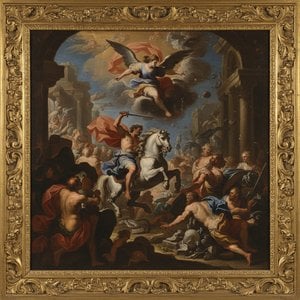
Hercules (detail)

Explore Charles Le Brun's 'Hercules (detail)' – a Baroque masterpiece showcasing mythological strength & divine intervention. Discover the painting’s rich symbolism and artistic brilliance.

Charles Le Brun (1619-1690) – francuski malarz barokowy, znany z dekoracji Pałacu Wersalskiego i monumentalnych dzieł historycznych oraz roli teoretyka sztuki w czasach Ludwika XIV.

Ręcznie malowana reprodukcja olejowa

Ręcznie malowany obraz olejny na płótnie, wykonany na zamówienie przez naszych artystów w wybranym przez Ciebie wymiarze i oprawie. ( Przełącz na wersję drukowaną Przełącz na wersję cyfrową)

P118B $10
P118H $10
P118W $10
P438Z $10
P508JH $12
P508YH $12
P805H $10
P805Z $10
P919BZ $10
P919G $10
P919XJ $10
P959ZH $10
P968JZ $12
W106C $8
W218G $10
W218JH $8
W218Y $10
W307PJ $10
W316G $10
W316PJ $8
W316Y $10
W398PJ $8
W4111J $10
W500HY $15
W500JH $15
W692G $12
W849H $8
W940BG $15
W953PJ $8

Standardowy
na zamówienie
CM
INCH

Wybierz spośród naszych standardowych rozmiarów, które zachowują oryginalne proporcje dzieła sztuki.

szerokość
wysokość

Możesz wprowadzić własne wymiary, aby dopasować obraz do konkretnej ramy lub przestrzeni. Jeśli wybrany rozmiar nie będzie odpowiadał proporcjom oryginału, przytniecie dzieło sztuki lub rozszerzymy je o dodatkowe elementy, ręcznie domalowane przez artystę. Przed rozpoczęciem produkcji wyślemy projekt cyfrowy do Twojej akceptacji.
Należy pamiętać, że podgląd na ekranie nie odzwierciedla rzeczywistego przycinania ani rozszerzania obrazu. Tylko projekt dokładnie pokaże ostateczną kompozycję.
Choć oferujemy możliwość zamówienia niestandardowych rozmiarów, zalecamy wybór wymiaru z gotowej listy, aby zachować oryginalne proporcje dzieła.

Przykłady możliwych zmian: Zamień twarz na zdjęcie klienta; Dodaj zwierzę domowe (np. zamień kota na psa); Ukryj wiadomość w tle; Zmień krajobraz lub elementy tła.
Po złożeniu zamówienia zespół WahooArt.com skontaktuje się z klientem drogą mailową w celu uzyskania instrukcji i prześle wizualizację projektu

Dostawa na całym świecie () w ciągu 3–4 tygodni zamiast standardowych 5 tygodni. (23 Wrzesień). Bez kompromisów w kwestii jakości.

why_choose_icon
Bezpłatna ekspresowa wysyłka na cały świat
why_choose_icon
Wysokiej jakości płótno lniane
why_choose_icon
Pełne ubezpieczenie transportowe
why_choose_icon
Gwarancja zwrotu należności celnych i podatków importowych
why_choose_icon
Gwarancja idealnego odwzorowania barw
why_choose_icon
100-dniowy okres na zwrot dzieła w przypadku wykrycia wad produkcyjnych
why_choose_icon
Gwarancja 100% zwrotu pieniędzy
why_choose_icon
Oferta przy zakupie wielu sztuk

Cena całkowita

$ 272

reproduction

Hercules (detail)

Technika wykonania

Rozmiar reprodukcji

-

Suma do zapłaty

$ 272

Kluczowe informacje

  • Subject or theme: Hercules Apotheosis
  • Location: Private Collection
  • Movement: Baroque Classicism
  • Influences:
    • Poussin
    • Raphael
  • Medium: Oil on canvas
  • Year: 1658
  • Notable elements or techniques: Detailed figures, dynamic composition

Quiz wiedzy o sztuce

Do każdego pytania dotyczy tylko jedna poprawna odpowiedź.

Pytanie 1:
What mythological figure is depicted ascending to heaven in Charles Le Brun’s ‘Hercules (detail)?”
Pytanie 2:
The painting ‘Hercules (detail)’ is primarily associated with which artistic movement?
Pytanie 3:
What is a key characteristic of Charles Le Brun’s style as evidenced in this work?
Pytanie 4:
According to the description
Pytanie 5:
In what year was Charles Le Brun born?

The Grandeur of Myth and Majesty

Charles Le Brun’s “Hercules (detail)” is not merely a depiction of a mythological hero; it's an immersive experience, a vibrant tableau vivant that transports the viewer to the heart of 17th-century French courtly life. Painted in 1658, this exquisite work embodies the height of Baroque artistry – a potent blend of classical ideals, dramatic dynamism, and opulent detail. It’s a testament to Le Brun's mastery as both a painter and a theorist, reflecting his profound influence on the artistic landscape of his era.

Hercules (detail) by Charles Le Brun

Image from Wikimedia Commons

A Symphony of Classical Elements

Le Brun’s composition is a carefully orchestrated dance of classical motifs. At the center, Hercules dominates the scene, his muscular physique and resolute gaze radiating strength and divine authority. He ascends towards heaven, guided by a host of radiant angels – their wings spread wide in a gesture of benediction and protection. The clouds swirling behind them create an ethereal backdrop, lending a sense of weightlessness and transcendence to the narrative. The painting’s foundation rests firmly on classical principles: the balanced composition, the idealized forms, and the use of light and shadow to sculpt volume and drama are hallmarks of Le Brun's training under Poussin.

Technique and Palette – A Masterclass in Baroque Detail

Le Brun’s technique is characterized by a remarkable level of detail and virtuosity. He employs a rich, layered approach, building up the image through countless glazes and scumbles to achieve an astonishingly luminous surface. The colors are predominantly earthy—ochres, siennas, and umbers—creating a sense of groundedness and gravitas. However, these muted tones are punctuated by flashes of gold and crimson in the angels’ robes and the celestial light, adding moments of intense brilliance. The artist's meticulous attention to texture – from the folds of Hercules’ drapery to the delicate feathers of the angels – is a testament to his skill and dedication.

Symbolism and Royal Patronage

Beyond its purely visual appeal, “Hercules” is laden with symbolism. The hero represents strength, courage, and virtue—qualities highly valued by Louis XIV and his court. His apotheosis – his ascent into heaven – signifies divine recognition and the fulfillment of heroic destiny. The painting was commissioned for the Salon d’Hercule at Vaux-le-Vicomte, a lavish chateau built by Nicolas Fouquet as a display of wealth and power. Le Brun's work served to elevate the space with mythological grandeur, reflecting the king’s own ambition and desire for immortality. The inclusion of figures like Hercules, associated with Roman virtue and military prowess, reinforced the ideals of royal authority and the glory of France.

A Legacy Enduring

“Hercules (detail)” stands as a pivotal work in Charles Le Brun’s oeuvre and a defining example of French Baroque painting. Its influence can be seen in countless subsequent works, shaping the artistic sensibilities of generations of artists. Reproductions of this magnificent piece continue to captivate viewers today, offering a glimpse into the splendor of the French court and the enduring power of classical mythology. It is a reminder that art can not only reflect history but also embody its most cherished values.


Biografia artysty

Early Life and Training

Charles Le Brun, a name synonymous with the grandeur of Louis XIV’s France, was born in Paris on February 24th, 1619. His artistic talent manifested early; at just eleven years old, he entered the studio of Simon Vouet, a prominent painter and influential figure in the burgeoning world of art. This apprenticeship was further enriched by the patronage of Chancellor Séguier, providing Le Brun with invaluable opportunities for development. He continued his studies under François Perrier, absorbing techniques and styles from another respected master, and quickly gained commissions from Cardinal Richelieu at a remarkably young age – a testament to his burgeoning skill. These early experiences laid the foundation for a career that would ultimately define an era.

Artistic Development and Style

A pivotal moment in Le Brun’s artistic journey occurred with his four-year sojourn in Rome between 1642 and 1646. Here, under the guidance of Nicolas Poussin, he immersed himself in the classical ideals of ancient Roman sculpture and meticulously copied works by Raphael. This period profoundly shaped his understanding of art theory and technique, moving him beyond mere imitation towards a deeper appreciation for composition, form, and color. Returning to Paris in 1646, Le Brun swiftly established himself as a leading artist, quickly surpassing the influence of his earlier mentors. His style began to evolve, distancing itself from the strict adherence to classical models favored by Poussin while retaining elements of both. He embraced the dynamism and emotional intensity characteristic of the Baroque period, developing a distinctive approach marked by dramatic compositions, rich palettes, and meticulous detail.

Le Brun’s artistic evolution culminated in his appointment as First Painter to the King in 1664 under Louis XIV. This prestigious position granted him unparalleled influence over French art, allowing him to shape the visual landscape of the court and nation. He became a central figure in the creation of monumental works that embodied the power and magnificence of the monarchy – grand historical paintings, elaborate portraits, and breathtaking decorative schemes.

Major Achievements and Royal Service

Le Brun’s career reached its zenith during Louis XIV's reign, a period of unprecedented artistic flourishing. He played an integral role in transforming the Palace of Versailles into a symbol of royal power and splendor. His designs were instrumental in shaping the Ambassadors’ Staircase, the iconic Hall of Mirrors – a dazzling display of light and reflection – and the serene Peace and War Rooms, each reflecting a distinct facet of the king's vision. These projects, alongside countless other commissions throughout the palace complex, cemented Le Brun’s reputation as one of France’s greatest architects and designers. Beyond Versailles, he contributed significantly to the decoration of numerous royal residences, including Sceaux and Marly-le-Roi, showcasing his versatility across various artistic disciplines.

Furthermore, in 1648, Le Brun founded the Académie Royale de Peinture et de Sculpture (Royal Academy of Painting and Sculpture), a pivotal institution that served as both a training ground for aspiring artists and a regulator of artistic standards. As its director for many years, he exerted considerable influence over the development of French art, shaping the education and practice of generations of painters.

Legacy and Historical Significance

Charles Le Brun’s legacy extends far beyond his individual works. He was not merely a painter; he was a theorist, a designer, and a key architect of the Baroque style in France. His emphasis on intellectual engagement alongside visual beauty profoundly influenced artistic education for decades to come. The scale and grandeur of his decorative schemes at Versailles set a new standard for royal palaces across Europe, inspiring countless imitators. Le Brun’s influence is inextricably linked to the rise of Louis XIV's power and the flourishing of French culture during the 17th century. His work remains a testament to the transformative potential of art and its ability to shape not only visual landscapes but also the very fabric of society.

Charles Le Brun

Charles Le Brun

1619 - 1690 , Francja

Najważniejsze informacje

  • Artistic Movement Or Style: Barok
  • Artists Or Movements Influenced By This Artist: ['Styl Ludwika XIV']
  • Artists Who Influenced This Artist:
    • Simon Vouet
    • Nicolas Poussin
  • Date Of Birth: 24 lutego 1619
  • Date Of Death: 12 lutego 1690
  • Full Name: Charles Le Brun
  • Nationality: Francuz
  • Notable Artworks:
    • Schody Ambasadorów
    • Sala Lustrzana
    • Historia Aleksandra Wielkiego
  • Place Of Birth: Paryż, Francja