Zobacz w skali 1:1 Zobacz w AR Przełącz na wersję drukowaną Przełącz na wersję cyfrową Wyślij
Szczegóły Przewodnik Dodaj do ulubionych Pobierz plik obrazu Podobne obiekty RTG Pokaz slajdów Statystyki

Swnage

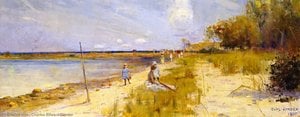
Charles Conder's 'Swnage' captures a vibrant beach scene with figures enjoying the coastal landscape. A stunning example of Heidelberg School art, showcasing warm hues and relaxed atmosphere.

Poznaj piękno impresjonizmu i szkoły heidelberskiej w obrazach Charlesa Edwarda Condera (1868-1909)! Odkryj jego żywe pejzaże portów, plaż i francuskiej prowincji na WahooArt.

Ręcznie malowana reprodukcja olejowa

Ręcznie malowany obraz olejny na płótnie, wykonany na zamówienie przez naszych artystów w wybranym przez Ciebie wymiarze i oprawie. ( Przełącz na wersję drukowaną Przełącz na wersję cyfrową)

P118B $10
P118H $10
P118W $10
P438Z $10
P508JH $12
P508YH $12
P805H $10
P805Z $10
P919BZ $10
P919G $10
P919XJ $10
P959ZH $10
P968JZ $12
W106C $8
W218G $10
W218JH $8
W218Y $10
W307PJ $10
W316G $10
W316PJ $8
W316Y $10
W398PJ $8
W4111J $10
W500HY $15
W500JH $15
W692G $12
W849H $8
W940BG $15
W953PJ $8

Standardowy
na zamówienie
CM
INCH

Wybierz spośród naszych standardowych rozmiarów, które zachowują oryginalne proporcje dzieła sztuki.

szerokość
wysokość

Możesz wprowadzić własne wymiary, aby dopasować obraz do konkretnej ramy lub przestrzeni. Jeśli wybrany rozmiar nie będzie odpowiadał proporcjom oryginału, przytniecie dzieło sztuki lub rozszerzymy je o dodatkowe elementy, ręcznie domalowane przez artystę. Przed rozpoczęciem produkcji wyślemy projekt cyfrowy do Twojej akceptacji.
Należy pamiętać, że podgląd na ekranie nie odzwierciedla rzeczywistego przycinania ani rozszerzania obrazu. Tylko projekt dokładnie pokaże ostateczną kompozycję.
Choć oferujemy możliwość zamówienia niestandardowych rozmiarów, zalecamy wybór wymiaru z gotowej listy, aby zachować oryginalne proporcje dzieła.

Przykłady możliwych zmian: Zamień twarz na zdjęcie klienta; Dodaj zwierzę domowe (np. zamień kota na psa); Ukryj wiadomość w tle; Zmień krajobraz lub elementy tła.
Po złożeniu zamówienia zespół WahooArt.com skontaktuje się z klientem drogą mailową w celu uzyskania instrukcji i prześle wizualizację projektu

Dostawa na całym świecie () w ciągu 3–4 tygodni zamiast standardowych 5 tygodni. (22 Wrzesień). Bez kompromisów w kwestii jakości.

why_choose_icon
Bezpłatna ekspresowa wysyłka na cały świat
why_choose_icon
Wysokiej jakości płótno lniane
why_choose_icon
Pełne ubezpieczenie transportowe
why_choose_icon
Gwarancja zwrotu należności celnych i podatków importowych
why_choose_icon
Gwarancja idealnego odwzorowania barw
why_choose_icon
100-dniowy okres na zwrot dzieła w przypadku wykrycia wad produkcyjnych
why_choose_icon
Gwarancja 100% zwrotu pieniędzy
why_choose_icon
Oferta przy zakupie wielu sztuk

Cena całkowita

$ 272

reproduction

Swnage

Technika wykonania

Rozmiar reprodukcji

-

Suma do zapłaty

$ 272

Kluczowe informacje

  • Notable elements: Beach scene, figures
  • Title: Swnage
  • Location: Tate Britain
  • Artist: Charles Conder
  • Medium: Oil on canvas
  • Subject or theme: Coastal landscape
  • Influences:
    • Roberts
    • Streeton

Quiz wiedzy o sztuce

Do każdego pytania dotyczy tylko jedna poprawna odpowiedź.

Pytanie 1:
What is the primary subject depicted in Charles Edward Conder’s ‘Swnage’?
Pytanie 2:
In what artistic movement is Charles Edward Conder primarily associated?
Pytanie 3:
Approximately when was ‘Swnage’ painted by Charles Edward Conder?
Pytanie 4:
Which of the following best describes Charles Edward Conder’s artistic style?
Pytanie 5:
What is the significance of the figures in ‘Swnage’?

Charles Edward Conder’s “Swnage”: A Coastal Symphony of Light and Leisure

“Swnage,” painted by Charles Edward Conder in approximately 1901, isn't merely a depiction of a beach scene; it’s an immersive experience of the Australian coastline captured with Impressionistic fervor. This captivating work, now housed within the Tate Britain collection, transports the viewer to a moment of serene leisure amidst the rugged beauty of South Wales – specifically, Swnage Bay. Conder, a pivotal figure in Australia's Heidelberg School movement, masterfully employed light and color to evoke not just a visual representation but also a palpable sense of atmosphere and emotion.

Conder’s artistic journey began in England, yet it was his relocation to Sydney in 1884 that truly ignited his creative spirit. He quickly abandoned surveying for the more immediate allure of landscape painting, finding inspiration in the vibrant hues and dramatic light of the Australian bush. “Swnage” reflects this newfound passion, showcasing a deliberate shift away from rigid realism towards a looser, more expressive style. The brushstrokes are visible, creating a textured surface that seems to shimmer with reflected sunlight. Notice how Conder doesn’t meticulously render every detail; instead, he focuses on capturing the essence of the scene – the play of light on water and sand, the suggestion of figures enjoying the day.

Impressionistic Techniques and Color Palette

The painting's strength lies in its masterful use of Impressionistic techniques. Conder’s approach mirrors that of his contemporaries like Monet and Renoir, prioritizing the fleeting effects of light and atmosphere over precise detail. He employed broken color – applying small dabs of paint side-by-side rather than blending them seamlessly – to create a vibrant, luminous quality. The dominant colors are warm ochres, yellows, and blues, reflecting the intense sunlight bathing the beach. These hues aren’t applied uniformly; Conder strategically uses darker tones in the shadows to heighten the sense of depth and volume, particularly in the foreground dunes. The subtle gradations of color create a dynamic visual experience, as if the scene is constantly shifting with the movement of light.

Furthermore, Conder’s use of atmospheric perspective—a technique where distant objects appear paler and less distinct—effectively conveys the vastness of the coastline. The figures in the painting are small and indistinct, emphasizing their insignificance against the grandeur of nature. This compositional choice invites the viewer to become part of the scene, sharing in the feeling of peaceful contemplation.

Symbolism and Context

“Swnage” is more than just a pretty beach scene; it’s imbued with symbolic meaning rooted in Conder's personal experiences and artistic philosophy. As an expatriate Englishman living in Australia, Conder often explored themes of displacement and the search for belonging. The painting can be interpreted as a yearning for a simpler life, a retreat from the complexities of urban existence. The figures on the beach represent leisure, friendship, and connection with nature – values that were particularly appealing to artists of the Heidelberg School.

Considering Conder’s background, it's also important to note the painting’s context within the broader artistic landscape. The Heidelberg School, which emerged in Melbourne during the late 19th century, challenged traditional academic art by embracing a more informal and subjective approach. Conder’s work exemplifies this shift, prioritizing personal observation and emotional expression over strict adherence to classical conventions. The influence of Impressionism is undeniable, but Conder infused it with his own unique Australian sensibility.

A Legacy of Light and Landscape

“Swnage” remains a powerful testament to Charles Edward Conder’s artistic vision. It's a painting that invites viewers to slow down, breathe deeply, and appreciate the beauty of the natural world. Reproductions of this evocative work capture not only its visual splendor but also the spirit of leisure and connection with nature that defined the Heidelberg School. Whether displayed in a contemporary home or a prestigious gallery, “Swnage” continues to resonate with audiences today, reminding us of the enduring power of art to transport us to another time and place.


Biografia artysty

Early Life and Artistic Journey

Charles Edward Conder (1868 – 1909) was an English-born painter, lithographer and designer who emigrated to Australia and became a pivotal figure in the Heidelberg School*, arguably marking the genesis of a distinctive Australian tradition within Western art. Born in Tottenham, Middlesex, on October 24, 1868, Conder’s formative years were shaped by his mother's untimely passing in India when he was merely four; he subsequently returned to England and attended several schools including Eastbourne Preparatory School from 1877. Despite his father’s inclination towards a civil engineering career—a path antithetical to Conder’s innate artistic inclinations—he pursued this profession nonetheless, recognizing the practical necessities of securing financial stability.

Artistic Career in Australia

In 1884, at the age of 16, Conder ventured to Sydney, Australia, where he commenced employment with his uncle, a surveyor for the New South Wales government. However, he quickly discerned that surveying was not his true calling and gravitated towards drawing landscapes—a passion that would define much of his artistic output. By 1886, he secured a position as an artist for *Illustrated Sydney News*, collaborating alongside prominent artists such as Albert Henry Fullwood and Frank Mahony. This association fostered connections with fellow creatives like Julian Ashton and Tom Roberts, establishing him within the burgeoning Heidelberg School movement. His engagement with G. P. Nerli—an itinerant Italian painter who championed European artistic currents—significantly impacted his artistic evolution.

The Heidelberg School and Notable Works

Conder’s magnum opus, *Departure of the Orient – Circular Quay* (1888), stands as a testament to his newfound mastery of form and brushwork. This evocative depiction of Sydney Harbour at the moment of the *Orient*'s departure for England captured the essence of the Heidelberg School's aesthetic—characterized by luminous color palettes and expressive handling of light—and swiftly garnered acclaim from the Art Gallery of New South Wales, securing its place as Conder’s inaugural work within a public collection. Alongside Roberts and Ashton, he participated in the Heidelberg School’s seminal exhibition in Melbourne, cementing his position as one of Australia's foremost Impressionist painters. His artistic endeavors extended beyond landscape painting; he produced captivating portraits and executed lithographs that showcased his versatility and technical prowess.

Legacy and Later Life

Conder’s later years were marred by debilitating illness—primarily paralysis resulting from syphilis—which nonetheless spurred him to continue creating art until his untimely demise in 1909. Despite facing considerable physical challenges, Conder persevered in his artistic pursuits, leaving behind a legacy as an indispensable contributor to Australian Impressionism and cementing his place within the annals of art history. His paintings are prominently displayed at Tate Britain and the Art Gallery of New South Wales, serving as enduring reminders of his remarkable talent and contribution to the visual arts.
Charles Edward Conder

Charles Edward Conder

1868 - 1909 , Anglia

Najważniejsze informacje

  • Artistic Movement Or Style: Heidelberg School
  • Artists Who Influenced This Artist:
    • Alfred Daplyn
    • Victor Mann
    • Julian Ashton
  • Date Of Birth: October 24, 1868
  • Date Of Death: February 9, 1909
  • Full Name: Charles Edward Conder
  • Nationality: British
  • Notable Artworks:
    • Departure of the Orient – Circular Quay
    • A holiday at Mentone
    • Under The Southern Sun
  • Place Of Birth: Tottenham, United Kingdom
Odkryj dzieła sztuki uporządkowane według tematów, stylów i cech charakterystycznych.