Zobacz w skali 1:1 Zobacz w AR Kup ręcznie malowany obraz Przełącz na wersję cyfrową Wyślij
Szczegóły Przewodnik Dodaj do ulubionych Pobierz plik obrazu Podobne obiekty RTG Pokaz slajdów Statystyki

Perseus and Andromeda

Experience Rococo elegance with Charles-André van Loo's Perseus and Andromeda, a graceful mythological triumph from the 18th century; discover this masterpiece today.

Poznaj sztukę Karla van Loo (Carle van Loo), wybitnego malarza Rococonu XVIII wieku Francji. Znany z portretów, scen mitologicznych i życia arystokratycznego. Jego dzieła znajdziesz w WahooArt!

Giclée / Wydruk artystyczny

Wydruki giclée lub płótna o jakości muzealnej, szybka realizacja i szeroki wybór opcji wykończenia. ( Kup ręcznie malowany obraz Przełącz na wersję cyfrową)

Corner sample of the P118B picture frame: moulded polystyrene, 5 cm wide and 3 cm thick
P118B zł10
Corner sample of the P118H picture frame: moulded polystyrene, 5 cm wide and 3 cm thick
P118H zł10
Corner sample of the P118W picture frame: moulded polystyrene, 5 cm wide and 3 cm thick
P118W zł10
Corner sample of the P438Z picture frame: moulded polystyrene, 5.5 cm wide and 3.5 cm thick
P438Z zł10
Corner sample of the P508JH picture frame: moulded polystyrene, 7 cm wide and 3.5 cm thick
P508JH zł12
Corner sample of the P508YH picture frame: moulded polystyrene, 7 cm wide and 3.5 cm thick
P508YH zł12
Corner sample of the P805H picture frame: moulded polystyrene, 5 cm wide and 3.5 cm thick
P805H zł10
Corner sample of the P805Z picture frame: moulded polystyrene, 5 cm wide and 3.5 cm thick
P805Z zł10
Corner sample of the P919BZ picture frame: moulded polystyrene, 7 cm wide and 3.5 cm thick
P919BZ zł10
Corner sample of the P919G picture frame: moulded polystyrene, 7 cm wide and 3.5 cm thick
P919G zł10
Corner sample of the P919XJ picture frame: moulded polystyrene, 7 cm wide and 3.5 cm thick
P919XJ zł10
Corner sample of the P959ZH picture frame: moulded polystyrene, 5 cm wide and 3 cm thick
P959ZH zł10
Corner sample of the P968JZ picture frame: moulded polystyrene, 6 cm wide and 4 cm thick
P968JZ zł12
Corner sample of the W106C picture frame: solid wood, 5 cm wide and 3 cm thick
W106C zł8
Corner sample of the W218G picture frame: solid wood, 5 cm wide and 3 cm thick
W218G zł10
Corner sample of the W218JH picture frame: solid wood, 5 cm wide and 3 cm thick
W218JH zł8
Corner sample of the W218Y picture frame: solid wood, 5 cm wide and 3 cm thick
W218Y zł10
Corner sample of the W307PJ picture frame: solid wood, 6 cm wide and 3 cm thick
W307PJ zł10
Corner sample of the W316G picture frame: solid wood, 6 cm wide and 3 cm thick
W316G zł10
Corner sample of the W316PJ picture frame: solid wood, 6 cm wide and 3 cm thick
W316PJ zł8
Corner sample of the W316Y picture frame: solid wood, 6 cm wide and 3 cm thick
W316Y zł10
Corner sample of the W398PJ picture frame: solid wood, 5 cm wide and 3 cm thick
W398PJ zł8
Corner sample of the W4111J picture frame: solid wood, 6.5 cm wide and 3.5 cm thick
W4111J zł10
Corner sample of the W500HY picture frame: solid wood, 7 cm wide and 5 cm thick
W500HY zł15
Corner sample of the W500JH picture frame: solid wood, 7 cm wide and 5 cm thick
W500JH zł15
Corner sample of the W692G picture frame: solid wood, 8 cm wide and 4 cm thick
W692G zł12
Corner sample of the W849H picture frame: solid wood, 5 cm wide and 3 cm thick
W849H zł8
Corner sample of the W940BG picture frame: solid wood, 7.5 cm wide and 4.5 cm thick
W940BG zł15
Corner sample of the W953PJ picture frame: solid wood, 6 cm wide and 3.5 cm thick
W953PJ zł8

Standardowy
na zamówienie
CM
INCH

Wybierz spośród naszych standardowych rozmiarów, które zachowują oryginalne proporcje dzieła sztuki.

szerokość
wysokość

Możesz wprowadzić własne wymiary, aby dopasować dzieło do konkretnej ramy lub przestrzeni. Jeśli wybrany rozmiar nie będzie odpowiadał proporcjom oryginalnego obrazu, przytniecie dzieło lub rozszerzymy obraz za pomocą odbicia lustrzanego lub jednolitego wypełnienia krawędzi. Przed rozpoczęciem produkcji prześlemy cyfrową wizualizację do Twojej akceptacji.
Prosimy pamiętać, że podgląd na ekranie nie odzwierciedla faktycznego przycinania ani rozszerzania. Tylko wizualizacja dokładnie pokaże końcową kompozycję.
Mimo dostępności niestandardowych rozmiarów, zalecamy wybór wymiaru z listy zdefiniowanej, aby zachować oryginalne proporcje.

Dostawa na cały świat () w ciągu 2 tygodni zamiast standardowych 4/5 tygodni. (10 Październik)

Bezpłatna ekspresowa wysyłka na cały świat
Wysokiej jakości płótno lniane
Pełne ubezpieczenie transportowe
Gwarancja zwrotu należności celnych i podatków importowych
Gwarancja idealnego odwzorowania barw
100-dniowy okres na zwrot dzieła w przypadku wykrycia wad produkcyjnych
Gwarancja 100% zwrotu pieniędzy
Oferta przy zakupie wielu sztuk

Cena całkowita

zł 253

Perseus and Andromeda

Giclée / Wydruk artystyczny

Rozmiar reprodukcji

-

Suma do zapłaty

zł 253

Kluczowe informacje

  • Dimensions: 73 x 92 cm
  • Subject or theme: Mythology; Heroic Narrative
  • Location: Private Collection
  • Artistic style: Elegant Rococo
  • Movement: Rococo
  • Notable elements or techniques: Dramatic composition; Fluid brushstrokes
  • Influences: Italian Baroque

Quiz wiedzy o sztuce

Do każdego pytania dotyczy tylko jedna poprawna odpowiedź.

Pytanie 1:
What mythological story is depicted in Charles-André van Loo’s ‘Perseus and Andromeda’?
Pytanie 2:
Charles-André van Loo’s style is primarily associated with which artistic movement?
Pytanie 3:
The painting portrays Perseus as slaying what creature?
Pytanie 4:
What artistic technique is prominently used in ‘Perseus and Andromeda’ to convey elegance and grandeur?
Pytanie 5:
In what historical period was Charles-André van Loo active as a painter?

Perseus and Andromeda: A Triumph of Mythological Grace

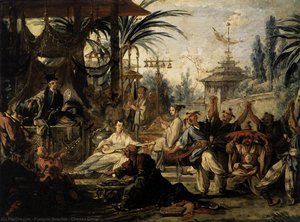
Charles-André van Loo’s “Perseus and Andromeda” stands as a quintessential emblem of Rococo artistry—a visual feast celebrating aristocratic grandeur and imbued with profound mythological symbolism. Painted circa 1740, this monumental canvas captures the heroic tale of Perseus slaying Medusa to rescue Andromeda from the monstrous Cetus, cementing its place within the artistic canon of Louis XV’s reign.

  • Subject Matter: The painting meticulously portrays the dramatic confrontation between Perseus and Medusa. Perseus, depicted with unwavering resolve, wields his sword against the Gorgon’s serpentine gaze—a symbol of terror and transformation—while Andromeda lies vulnerable at Cetus's feet, awaiting deliverance. Supporting figures underscore the narrative’s importance, highlighting divine intervention and human courage.
  • Style: Van Loo’s masterful command of Rococo style is immediately apparent. The composition exudes elegance and fluidity, prioritizing decorative ornamentation over strict realism. Delicate pastel hues dominate the palette—primarily blues and golds—creating an atmosphere of ethereal beauty and conveying a sense of aristocratic refinement characteristic of the period.
  • Technique: Executed with meticulous brushwork and layering of glazes, Van Loo’s technique exemplifies the Rococo penchant for textural richness. The artist skillfully captures the dynamism of the scene through subtle movements and drapery folds, enhancing the visual impact and conveying a palpable sense of drama. Attention to detail extends beyond mere representation; it aims to evoke emotion and immerse the viewer in the narrative's unfolding events.
  • Historical Context: Commissioned during Louis XV’s opulent court, “Perseus and Andromeda” reflects the prevailing artistic tastes of the era—a desire for idealized beauty and a fascination with classical mythology. The painting served as a powerful visual statement reinforcing royal authority and glorifying heroic deeds.
  • Symbolism: Beyond its narrative depiction, the artwork resonates with deeper symbolic meanings. Perseus embodies courage and intellect, overcoming formidable obstacles through cunning and bravery—values revered by the French monarchy. Andromeda represents innocence and vulnerability, rescued from peril by divine grace—a motif frequently employed in Rococo art to convey moral virtue.

A hand-painted reproduction of “Perseus and Andromeda” offers an unparalleled opportunity to experience the sublime artistry of Charles André van Loo. Its luminous colors, intricate detailing, and evocative composition continue to inspire admiration and captivate collectors worldwide. Bring this masterpiece into your home or office and immerse yourself in the timeless beauty of Rococo art.

Pytania i odpowiedzi

Jaki poziom kontrastu prezentuje „Perseus and Andromeda” autorstwa Charles André van Loo?

„Perseus and Andromeda” autorstwa Charles André van Loo prezentuje Balanced kontrast między jasnymi a ciemnymi partiami dzieła.

Jaki jest zalecany sposób druku dla "Perseus and Andromeda" – jaki rozmiar i jaka orientacja?

Rozmiar Medium, orientacja Landscape: to sugerowane ustawienia druku dla „Perseus and Andromeda” autorstwa Charles André van Loo.

W jaki sposób tematyka dzieła "Perseus and Andromeda" odnosi się do typowych motywów twórczości Charles André van Loo?

Wśród utrwalonych w twórczości Charles André van Loo motywów – greek mythology, regal narrative, baroque elegance, heroic triumph, dynastic legacy – dzieło „Perseus and Andromeda” wprowadza własne skupienie na mythology, heroism, mythology narrative, sea monster, perseus, andromeda, classical art.

W jakim wieku Charles André van Loo stworzył(a) "Perseus and Andromeda"?

Gdy w 1735 roku powstało dzieło „Perseus and Andromeda”, Charles André van Loo – urodzony/a w 1705 – miał/a 30 lat.

Kto stworzył "Perseus and Andromeda"?

Dzieło "Perseus and Andromeda" przypisuje się Charles André van Loo.

Jaka jest data powstania dzieła „Perseus and Andromeda” autorstwa Charles André van Loo?

Dzieło „Perseus and Andromeda” autorstwa Charles André van Loo powstało w 1735.

W jakim rozmiarze zaleca się wydruk dzieła "Perseus and Andromeda"?

Zalecanym rozmiarem wydruku dla dzieła "Perseus and Andromeda" jest Medium. Dostępne są również inne rozmiary o tych samych proporcjach.


Biografia artysty

Wczesne lata i kształcenie

  • Urodzony: 15 lutego 1705 r. w Nicei, Francja
  • Pochodzenie: Syn Louisa-Abrahama van Loo i młodszy brat Jean-Baptiste van Loo; członek odnoszącej sukcesy dynastii malarzy niderlandzkich.
  • Wczesna edukacja: Początkowe szkolenie w Turynie, a następnie studia w Rzymie (1romat 1712) pod okiem Benedetto Luti oraz Pierre Legrosa.
  • Studia paryskie: Uczestnik Académie royale, zdobywca pierwszej nagrody w dziedzinie rysunku w 1723 roku oraz malarstwa historycznego w 1727 roku.

Kariera artystyczna i wybitne dzieła

  • Styl: Przede wszystkim znany jako malarz rokoka, charakteryzujący się elegancją, gracją i bogactwem detali.
  • Tematyka: Szeroki wachlarz tematów, obejmujący portrety, sceny mitologiczne, malarstwo historyczne, alegorie oraz sceny rodzajowe.
  • Znaczące dzieła:
    • Wenus i Amor (Kunsthalle Bremen) – demonstruje mistrzostwo stylu rokoko.
    • Przystanek na polowaniu (The Metropolitan Museum of Art) – oddaje atmosferę arystokratycznych rozrywek.
    • Portret Marii Leszczyńskiej, Królowej Francji – znamienity portret królewski.
    • Jowisz i Antiope – ukazuje tematy mitologiczne.
    • Autoportret – pozwala zajrzeć w głąb samoświadomości artysty.
    • Perseusz i Andromeda (wiele wersji) – ilustruje umiejętność przedstawiania mitologii klasycznej.
    • Mademoiselle Clairon jako Medea (mała wersja) – urzekający portret rokokowy z 1760 roku.

Mecenat i królewskie uznanie

  • Mecenat królewski: Cieszył się protekcją Madame de Pompadour oraz dworu francuskiego.
  • Nominacja na dworze: W 1762 roku został Pierwszym Malarzem Króla Ludwika XV, co było niezwykle prestiżowym stanowiskiem.
  • Order św. Michała: Odznaczony Orderem św. Michała, co stanowiło symbol królewskiej łaski.

Wpływy i dziedzictwo

  • Wpływ rodziny: Silnie zainspirowany twórczością ojca i brata, obaj wybitni malarze.
  • Rywalizacja: Rywalizował z François Boucherem, innym znaczącym artystą epoki rokoka.
  • Nowoczesna szkoła francuska: Jego „prostota stylu i poprawność projektu” wywarły istotny wpływ na rozwój nowoczesnej szkoły malarstwa francuskiego.
  • Losy krytyczne: Choć jego pozycja w oczach krytyków zmieniała się w czasie, kunszt i rozmach jego twórczości budzą nieustanny szacunek.

Kolekcje muzealne i dalsze zgłębianie tematu

Charles André van Loo

Charles André van Loo

1705 - 1765 , Francja

Najważniejsze informacje

  • Artistic Movement Or Style: Rococo
  • Artists Or Movements Influenced By This Artist: ['Nowoczesna szkoła francuska']
  • Artists Who Influenced This Artist:
    • Benedetto Luti
    • Pierre Le Gros
  • Date Of Birth: 1705
  • Full Name: Charles André van Loo
  • Nationality: Francuzi
  • Notable Artworks:
    • Wenus i Amor
    • Przerywacz Łowów
    • Portret Marii Leszczynskiej
    • Jupiter i Antiope
  • Place Of Birth: Nice, Francja
Odkryj dzieła sztuki uporządkowane według tematów, stylów i cech charakterystycznych.