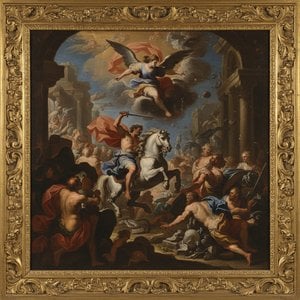
Rzymski mistrz baroku klasycystycznego
Carlo Maratta, często znany jako Maratti, to postać kluczowa dla włoskiego malarstwa XVII wieku, stanowiąca żywy pomost między pełnym przepychu dojrzałym barokiem a bardziej wyrafinowaną, inspirowaną antykiem estetyką. Urodzony 15 maja 1625 roku w Camerano, w obrębie Państwa Kościelnego – dzisiejszych Włoch – rozpoczął swoją artystyczną wędrówkę od przeprowadzki do Rzymu w wieku zaledろ lat. Ta zmiana miejsca zamieszkania okazała się przełomowa, gdyż otworzyła mu drzwi do pracowni Andrea Sacchi, malarza słynącego z umiarkowanych kompozycji i głębokiego przywiązania do ideałów klasycznych. Wpływ Sacchi w sposób fundamentalny ukształtował rozwijający się styl Maratty, zaszczepiając w nim dążenie do klarowności, równowagi oraz powściągliwego emocjonalizmu, który odróżniał go od bardziej ekstrawaganckich współczesnych mu twórców baroku. Ta nauka nie była jedynie technicznym szkoleniem; było to zanurzenie w filozoficznym podejściu do sztuki, stawiającym rygor intelektualny i harmonijny projekt ponad teatralny spektakl. Maratta przyswoił te zasady, lecz nie zamknął się wyłącznie w ich granicach, wykazując niezwykłą zdolność do syntezy klasycznych fundamentów z dominującymi nurtami barokowej wrażliwości.
Rozkwit kariery w Rzymie
Talent Maratty rozkwitł niezwykle szybko, a już w połowie lat 50. XVII wieku zaczął przyciągać znaczące zamówienia. Jego wczesne dzieła, takie jak
Nawiedzenie (1656) dla Santa Maria della Pace, ujawniają mistrzowską władzę nad światłem i ruchem, połączoną z rodzącą się zdolnością do nasycania scen religijnych namacalnym poczuciem duchowej głębi. Nie był on jedynie naśladowcą ustalonych wzorców; tchnął w nie własną, unikalną wizję, charakteryzującą się pełnymi wdzięku postaciami, eleganckimi draperiami oraz subtelnym, a zarazem potężnym operowaniem kolorem. W tym okresie powstało również
Objawienie Tajemnicy Trójcy św. Augustynowi (ok. 1655), dzieło będące doskonałym przykładem jego umiejętności balansowania między klasycznym idealizmem a barokowym dynamizmem. Wraz ze wzrostem sławy, rosła także skala i prestiż jego zleceń. Stał się ulubionym artystą wpływowych rzymskich rodów, a co najważniejsze – samego papiestwa. Przez sześć dekady Maratta cieszył się mecenatem nie mniejszej liczby niż sześciu papieży, co stanowi świadectwo jego artystycznej biegłości i politycznego wyczucia. Ta niezmienna wsparcie ze strony Stolicy Apostolskiej nie tylko zapewniło mu bezpieczeństwo finansowe, ale także umieściło go w samym sercu rzymskiego życia artystycznego i kulturalnego.
Synteza stylów i wpływów
Styl Maratty często określa się mianem „baroku klasycystycznego”, co doskonale oddaje jego wyjątkową pozycję w krajobrazie historii sztuki. Choć głęboko zakorzeniony w tradycji klasycznej wywodzącej się od Rafaela, nie był on odporny na wpływ bardziej teatralnych tendencji baroku. Jego współczesny, Giovanni Bellori, dostrzegł tę syntezę, dokumentując podejście artystyczne Maratty we wczesnej biografii. Artysta po mistrzowsku integrował dramatyczne użycie światłocienia, charakterystyczne dla malarstwa barokowego, z klarownością formy i kompozycyjną równowagą preferowaną przez klasyków. Ta fuzja zaowocowała dziełami, które były jednocześnie angażujące emocjonalnie i satysfakcjonujące intelektualnie. Jego paleta, choć żywa, często pozostawała powściągliwa, przedkładając harmonijne relacje kolorystyczne nad gwałtowne kontrasty. Doskonale radził sobie z przedstawianiem narracji religijnych, nasycając je poczuciem czci i duchowej intensywności.
Zjawienie się Matki Bożej św. Filipowi Neri (ok. 1675), znajdujące się obecnie w Palazzo Pitti we Florencji, jest doskonałym przykładem jego zdolności do interpretowania takich tematów z gracją i głębokim rezonansem emocjonalnym.
Poza malarstwo: Restauracja i dziedzictwo
Wkład Maratty wykraczał poza tworzenie nowych dzieł; powierzono mu również zadanie ochrony artystycznego dziedzictwa Rzymu. W latach 1702–1703 Innocenty XI mianował go
surintendent des chambres du vatican i powierzył mu naprawę fresków Rafaela w watykańskich Stanze – odpowiedzialność, która podkreślała jego status jako czołowego autorytetu w dziedzinie sztuki klasycznej. Podjęcie tego zadania nie było jedynie kwestią technicznej renowacji; był to akt czci wobec jednego z największych skarbów Włoch, powierzony mistrzowi, który w pełni rozumiał jego wagę. Maratta pracował płodnie aż do śmierci w Rzymie 15 grudnia 1713 roku, pozostawiając po sobie ogromny i wpływowy dorobek. Jego dziedzictwo jako mistrza późnobarokowego maniery klasycystycznej przetrwało przez cały XVIII wiek, inspirując kolejne pokolenia artystów poprzez nacisk na klarowność, równowagę i harmonijną kompozycję. Dziś jego obrazy można odnaleźć w muzeach na całym świecie, co sprawia, że jego artystyczna wizja nieustannie inspiruje i zachwyca odbiorców.
Kluczowe dzieła i trwały wpływ
- Apollo ścigający Dafne: Dynamiczne przedstawienie mitu klasycznego, ukazujące kunszt Maratty w oddawaniu ruchu i emocji.
- Adoracja Trzech Króli (w girlandzie): Bogato szczegółowa kompozycja, będąca przykładem jego mistrzostwa w operowaniu kolorem i formą.
- Adoracja Pasterzy: Barokowe arcydzieło z 1690 roku, cenione za boską symbolikę i dynamiczną aranżację.
- Nawiedzenie: Wczesne dzieło demonstrujące rodzący się talent Maratty do operowania światłem i ruchem w kontekście religijnym.
- Objawienie Tajemnicy Trójcy św. Augustynowi: Przekonujący przykład jego zdolności do łączenia klasycznego idealizmu z elementami barokowymi.
Wpływ Maratty wykracza poza konkretne obrazy; tkwi on w sformułowaniu stylu, który połączył dwie epoki, oferując wyrafinowaną i intelektualnie angażującą alternatywę dla bardziej jaskrawych tendencji dojrzałego baroku. Pozostaje on postacią niezwykle istotną dla zrozumienia ewolucji sztuki włoskiej oraz jej trwałego dziedzictwa w całej tradycji artystycznej Zachodu.



 Zobacz w skali 1:1
 Przełącz na wersję drukowaną
 Wyślij
 Udostępnij
 Szczegóły
 Przewodnik

 Pobierz plik obrazu
 Podobne obiekty
 RTG
RTG Pokaz slajdów
 Statystyki


 Czytaj więcej






































 Opcja ze szkłem jest dostępna wyłącznie w rozmiarach poniżej 110 cm