Podgląd w skali 1:1 Podgląd AR Przełącz na wydania drukowane Przejdź do wersji cyfrowej Wyślij jako kartkę
Szczegóły dzieła Przewodnik Dodaj do ulubionych Pobierz obraz Podobne obiekty RTG Pokaz slajdów Q&A Statystyki

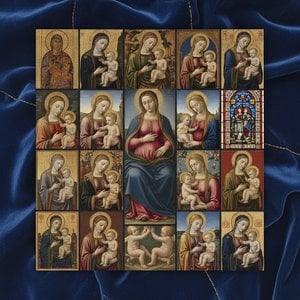
Enthroned Madonna Hand-painted oil painting reproduction

Admire Carlo Crivelli’s ‘Enthroned Madonna’ (1473). A stunning Renaissance panel painting showcasing rich detail, symbolism & devotional beauty. Explore this masterpiece!

Carlo Crivelli (1435-1495) był weneckim malarzem renesansowym, znanym z bogatego stylu późnogotyckiego, technik trompe l'oeil i dzieł religijnych, takich jak Madonny. Poznaj jego sztukę i dziedzictwo.

Ręcznie malowana reprodukcja olejowa

Ręcznie malowany obraz olejny na płótnie, wykonany na zamówienie przez naszych artystów w wybranym przez Ciebie wymiarze i oprawie. ( Przełącz na wydania drukowane Przejdź do wersji cyfrowej)

Corner sample of the P118B picture frame: polistyren formowany, 5 cm wide and 3 cm thick
P118B zł10
Corner sample of the P118H picture frame: polistyren formowany, 5 cm wide and 3 cm thick
P118H zł10
Corner sample of the P118W picture frame: polistyren formowany, 5 cm wide and 3 cm thick
P118W zł10
Corner sample of the P438Z picture frame: polistyren formowany, 5.5 cm wide and 3.5 cm thick
P438Z zł10
Corner sample of the P508JH picture frame: polistyren formowany, 7 cm wide and 3.5 cm thick
P508JH zł12
Corner sample of the P508YH picture frame: polistyren formowany, 7 cm wide and 3.5 cm thick
P508YH zł12
Corner sample of the P805H picture frame: polistyren formowany, 5 cm wide and 3.5 cm thick
P805H zł10
Corner sample of the P805Z picture frame: polistyren formowany, 5 cm wide and 3.5 cm thick
P805Z zł10
Corner sample of the P919BZ picture frame: polistyren formowany, 7 cm wide and 3.5 cm thick
P919BZ zł10
Corner sample of the P919G picture frame: polistyren formowany, 7 cm wide and 3.5 cm thick
P919G zł10
Corner sample of the P919XJ picture frame: polistyren formowany, 7 cm wide and 3.5 cm thick
P919XJ zł10
Corner sample of the P959ZH picture frame: polistyren formowany, 5 cm wide and 3 cm thick
P959ZH zł10
Corner sample of the P968JZ picture frame: polistyren formowany, 6 cm wide and 4 cm thick
P968JZ zł12
Corner sample of the W106C picture frame: lite drewno, 5 cm wide and 3 cm thick
W106C zł8
Corner sample of the W218G picture frame: lite drewno, 5 cm wide and 3 cm thick
W218G zł10
Corner sample of the W218JH picture frame: lite drewno, 5 cm wide and 3 cm thick
W218JH zł8
Corner sample of the W218Y picture frame: lite drewno, 5 cm wide and 3 cm thick
W218Y zł10
Corner sample of the W307PJ picture frame: lite drewno, 6 cm wide and 3 cm thick
W307PJ zł10
Corner sample of the W316G picture frame: lite drewno, 6 cm wide and 3 cm thick
W316G zł10
Corner sample of the W316PJ picture frame: lite drewno, 6 cm wide and 3 cm thick
W316PJ zł8
Corner sample of the W316Y picture frame: lite drewno, 6 cm wide and 3 cm thick
W316Y zł10
Corner sample of the W398PJ picture frame: lite drewno, 5 cm wide and 3 cm thick
W398PJ zł8
Corner sample of the W4111J picture frame: lite drewno, 6.5 cm wide and 3.5 cm thick
W4111J zł10
Corner sample of the W500HY picture frame: lite drewno, 7 cm wide and 5 cm thick
W500HY zł15
Corner sample of the W500JH picture frame: lite drewno, 7 cm wide and 5 cm thick
W500JH zł15
Corner sample of the W692G picture frame: lite drewno, 8 cm wide and 4 cm thick
W692G zł12
Corner sample of the W849H picture frame: lite drewno, 5 cm wide and 3 cm thick
W849H zł8
Corner sample of the W940BG picture frame: lite drewno, 7.5 cm wide and 4.5 cm thick
W940BG zł15
Corner sample of the W953PJ picture frame: lite drewno, 6 cm wide and 3.5 cm thick
W953PJ zł8

Standardowy format
personalizowane
CM
INCH

Wybierz spośród naszych standardowych rozmiarów, które zachowują oryginalne proporcje dzieła sztuki.

szerokość
wysokość

Wpisz wymaganą szerokość i wysokość, aby obraz pasował do Twojej ramy lub ściany. Ponieważ jest to dzieło malowane ręcznie, w przypadku rozmiaru o innych proporcjach artysta może domalować nieco więcej wokół obrazu lub przyciąć jego fragmenty — wybór należy do Ciebie. Przed rozpoczęciem pracy prześlemy Ci cyfrową wizualizację do zatwierdzenia. Obraz widoczny na tej stronie nie przedstawia rzeczywistego efektu — jedynie wizualizacja oddaje realny rezultat.

Przykłady możliwych zmian: Zamień twarz na zdjęcie klienta; Dodaj zwierzę domowe (np. zamień kota na psa); Ukryj wiadomość w tle; Zmień krajobraz lub elementy tła.
Po złożeniu zamówienia zespół WahooArt.com skontaktuje się z klientem drogą mailową w celu uzyskania instrukcji i prześle wizualizację projektu

Dostawa na całym świecie () w ciągu 3–4 tygodni zamiast standardowych 5 tygodni. (30 Październik). Bez kompromisów w kwestii jakości.

Bezpłatna ekspresowa wysyłka na cały świat
Wysokiej jakości płótno lniane
Pełne ubezpieczenie przesyłki
Gwarancja zwrotu należności celnych i podatków importowych
Gwarancja wiernego odwzorowania kolorów
100-dniowa polityka zwrotów (tylko w przypadku wad)
Gwarancja 100% zwrotu pieniędzy
Zniżka przy zakupie wielu sztuk

Suma całkowita

zł 1736

Enthroned Madonna

Technika reprodukcji

Wymiary reprodukcji

-

Cena całkowita

zł 1736

Najważniejsze informacje

  • Medium: Tempera on wood
  • Artistic style: Conservative Gothic
  • Subject or theme: Virgin Mary & Child
  • Artist: Carlo Crivelli
  • Year: 1473

Quiz o sztuce

Do każdego pytania dotyczy tylko jedna poprawna odpowiedź.

Pytanie 1:
What artistic movement is most closely associated with Carlo Crivelli’s ‘Enthroned Madonna’?
Pytanie 2:
The painting utilizes tempera on wood panel. What does this technique suggest about the artwork’s intended display location?
Pytanie 3:
The composition of the ‘Enthroned Madonna’ is characterized by a hierarchical arrangement. What does this typically signify in Renaissance art?
Pytanie 4:
What is a key characteristic of Carlo Crivelli’s style, as evidenced by the description?
Pytanie 5:
The painting depicts the Virgin Mary enthroned with the Christ Child. What symbolic element is prominently featured in this depiction?

A Throne of Faith: Carlo Crivelli’s “Enthroned Madonna”

The year is 1473, and within the bustling workshops of Venice, Carlo Crivelli was meticulously crafting an image destined to resonate through centuries – the “Enthroned Madonna.” This isn't merely a portrait; it’s a profound meditation on faith, royalty, and divine motherhood, rendered with the meticulous detail characteristic of the early Renaissance. The panel painting, measuring an unknown size but radiating an undeniable presence, immediately draws the viewer into its richly layered composition, a testament to Crivelli’s skill in blending Venetian influences with his own developing artistic voice.

Crivelli's journey began in Venice, absorbing the linear elegance of Jacopo Bellini and the vibrant color palettes of Giovanni Bellini. However, he soon sought his own path, establishing a base in the March of Ancona, where he cultivated a style that prioritized clarity, decorative elements, and a subtly restrained emotionality. This piece exemplifies that approach perfectly – it’s not an explosion of feeling, but rather a carefully constructed tableau of piety and reverence.

A Symphony of Figures: Composition and Technique

The painting centers on the Virgin Mary, seated upon a magnificent throne adorned with intricate gold leaf and geometric patterns. She holds the Christ Child in her lap, his gaze serene and accepting. Surrounding them is a carefully orchestrated procession of saints and biblical figures – St. John the Baptist, St. Peter, and various other prophets and martyrs – each rendered with remarkable precision. The arrangement follows a clear hierarchical structure, reflecting the importance of Mary and Christ within Christian theology. Crivelli masterfully employs perspective, creating a sense of depth through overlapping forms and subtle shading, though it’s characteristic of the period's panel painting techniques rather than a fully developed Renaissance approach.

The technique itself is rooted in tempera on wood panel, a medium favored for its durability and ability to achieve luminous colors. The surface has a slightly textured quality, indicative of multiple layers of paint applied over time. Close examination reveals the artist’s deliberate attention to detail – the folds of the drapery, the intricate patterns on the throne, and the delicate rendering of each figure's facial features all speak to Crivelli’s dedication to his craft.

Symbolism Woven into the Fabric

Beyond its formal composition, the “Enthroned Madonna” is laden with symbolic meaning. The throne itself represents Mary’s divine status and her role as Queen of Heaven. The gold leaf symbolizes wealth, glory, and the sacredness of the subject matter. The lilies held by Mary are a traditional symbol of purity and innocence. Christ's presence signifies his divinity and humanity, while his gestures suggest acceptance and grace. Even the positioning of the figures – Mary seated centrally, with Christ nestled in her lap – reinforces their central importance within the Christian narrative.

The inclusion of various saints serves to underscore the universality of faith and the interconnectedness of the heavenly court. Each figure is carefully chosen to represent a specific virtue or aspect of Christian belief, contributing to the painting’s overall message of spiritual authority and devotion. The use of halos, a common feature in Renaissance art, further emphasizes the holiness of these figures.

A Legacy of Devotion

Carlo Crivelli's “Enthroned Madonna” is more than just a beautiful artwork; it’s a window into the religious and artistic sensibilities of 15th-century Italy. Its enduring appeal lies in its masterful composition, meticulous technique, and profound symbolism – a testament to the power of art to convey complex theological ideas with grace and elegance. Reproductions of this piece offer a captivating glimpse into a world where faith, royalty, and beauty converged, continuing to inspire contemplation and reverence today.

Pytania i odpowiedzi

Jak opisany jest nastrój dzieła „Enthroned Madonna” – Carlo Crivelli?

Nastrój dzieła „Enthroned Madonna” – Carlo Crivelli opisuje się jako Elegant. Klasyfikacja ta może pomóc w dopasowaniu pracy do konkretnego wnętrza.

Czy w „Enthroned Madonna” – Carlo Crivelli zastosowano silne kontrasty czy raczej łagodne harmonie?

W "Enthroned Madonna" Statement kontrast łączy się z Strong Color Unity harmonią.

Na którym etapie kariery Carlo Crivelli znajduje się dzieło „Enthroned Madonna”, biorąc pod uwagę jego datę powstania?

Biorąc pod uwagę datę powstania (1473), dzieło „Enthroned Madonna” wpisuje się w Mature Period twórczości Carlo Crivelli.


Biografia artysty

wczesne życie i kształcenie

Carlo Crivelli, włoski malarz renesansowy, przyszedł na świat w Wenecji około lat 1430-35. Wywodząc się z rodziny malarskiej, swoją artystyczną formację zdobywał w Wenecji oraz Padwie. Uważa się, że jego wczesne nauki odbywały się pod okiem Jacobello del Fiore, który pozostawał aktywny w 1436 roku. Artysta kształcił się również w szkole Vivariniego w Wenecji.

kariera i styl

Swoje wczesne lata Crivelli spędził w regionie Veneto, chłonąc wpływy płynące od Vivariniego, Squarcione oraz Mantegny. Około 1458 roku opuścił Veneto i większość swojej kariery poświęcił Marchii Ancony, gdzie wypracował niezwykle charakterystyczny, osobisty styl, stanowiący wyraźną przeciwwagę dla twórczości jego weneckiego współczesnego, Giovanniego Belliniego. Twórczość Crivelliego wyróżnia się konserwatywną, późnogotycką wrażliwością dekoracyjną, nacechowaną linearnością, niezwykłą dbałością o detal oraz mistrzowskim wykorzystaniem technik trompe l'oeil.

wybitne dzieła i współpraca

* Malarstwo Carlo Crivelliego pt. „Madonna z Dzieciątkiem na tronie” (106 x 55 cm, Muzeum Sztuk Pięknych w Budapeszcie, Węgry) stanowi doskonały przykład jego stylu. * Artysta współpracował przy wielu projektach ze swoim młodszym bratem, Vittorio Crivellim. * Jego uczniem i współpracownikiem był również Pietro Alemanno, malarz, który przybył do Marchii Ancony z terenów Niemiec lub Austrii.

muzea i kolekcje

* W Pinacotece di Brera w Mediolanie, we Włoszech, znajduje się kilka dzieł Crivelliego, w tym „Pietà” (128 x 241 cm). * Muzeum San Giovanni in Bragora w Wenecji, we Włoszech, posiada kolekcję dzieł sztuki z różnych epok i stylów, w tym prace przypisywane Crivelliemu.

Dziedzictwo Crivelliego nieustannie inspiruje zarówno miłośników sztuki, jak i uczonych, a jego twórczość pozostaje świadectwem trwałej mocy konserwatywnej, późnogotyckiej wrażliwości dekoracyjnej.

Carlo Crivelli

Carlo Crivelli

1435 - 1495 , Włochy

Krótka nota

  • Artistic Movement Or Style: Późny gotyk/Renesans
  • Artists Or Movements Influenced By This Artist: ['Giovanni Bellini']
  • Artists Who Influenced This Artist:
    • Jacobello del Fiore
    • Vivarini
    • Squarcione
    • Mantegna
  • Date Of Birth: ok. 1430-35 Wenecja
  • Date Of Death: ok. 1495 Włochy
  • Full Name: Carlo Crivelli
  • Nationality: Włoska
  • Notable Artworks:
    • Madonna z Dzieciątkiem
    • Święty Bartłomiej
    • Święty Roch
  • Place Of Birth: Wenecja, Włochy
Odkryj dzieła sztuki uporządkowane według tematów, stylów i cech charakterystycznych.