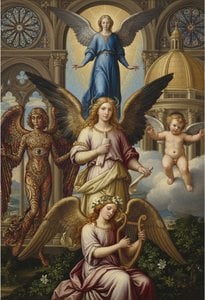
Angels Pity (1470) autorstwa Carlo Crivelli, ręcznie malowana reprodukcja olejowa wykonana przez mistrza
Podgląd w skali 1:1 Podgląd AR Przełącz na wydania drukowane Przejdź do wersji cyfrowej Wyślij jako kartkę
Szczegóły dzieła Przewodnik Dodaj do ulubionych Pobierz obraz Podobne obiekty RTG Pokaz slajdów Pytania i odpowiedzi Presentation Statystyki

Angels Pity Ręcznie malowana reprodukcja obrazu olejnego

Wymiary
72.0 x 55.0 cm

Discover Carlo Crivelli’s ‘Angels Pity’ (1470), a stunning Early Renaissance oil painting. Admire its devotional beauty, intricate details & serene composition – a timeless masterpiece.

Carlo Crivelli (1435-1495) był weneckim malarzem renesansowym, znanym z bogatego stylu późnogotyckiego, technik trompe l'oeil i dzieł religijnych, takich jak Madonny. Poznaj jego sztukę i dziedzictwo.

Ręcznie malowana reprodukcja olejowa

Ręcznie malowany obraz olejny na płótnie, wykonany na zamówienie przez naszych artystów w wybranym przez Ciebie wymiarze i oprawie. ( Przełącz na wydania drukowane Przejdź do wersji cyfrowej)

Corner sample of the P118B picture frame: polistyren formowany, 5 cm wide and 3 cm thick
P118B zł10
Corner sample of the P118H picture frame: polistyren formowany, 5 cm wide and 3 cm thick
P118H zł10
Corner sample of the P118W picture frame: polistyren formowany, 5 cm wide and 3 cm thick
P118W zł10
Corner sample of the P438Z picture frame: polistyren formowany, 5.5 cm wide and 3.5 cm thick
P438Z zł10
Corner sample of the P508JH picture frame: polistyren formowany, 7 cm wide and 3.5 cm thick
P508JH zł12
Corner sample of the P508YH picture frame: polistyren formowany, 7 cm wide and 3.5 cm thick
P508YH zł12
Corner sample of the P805H picture frame: polistyren formowany, 5 cm wide and 3.5 cm thick
P805H zł10
Corner sample of the P805Z picture frame: polistyren formowany, 5 cm wide and 3.5 cm thick
P805Z zł10
Corner sample of the P919BZ picture frame: polistyren formowany, 7 cm wide and 3.5 cm thick
P919BZ zł10
Corner sample of the P919G picture frame: polistyren formowany, 7 cm wide and 3.5 cm thick
P919G zł10
Corner sample of the P919XJ picture frame: polistyren formowany, 7 cm wide and 3.5 cm thick
P919XJ zł10
Corner sample of the P959ZH picture frame: polistyren formowany, 5 cm wide and 3 cm thick
P959ZH zł10
Corner sample of the P968JZ picture frame: polistyren formowany, 6 cm wide and 4 cm thick
P968JZ zł12
Corner sample of the W106C picture frame: lite drewno, 5 cm wide and 3 cm thick
W106C zł8
Corner sample of the W218G picture frame: lite drewno, 5 cm wide and 3 cm thick
W218G zł10
Corner sample of the W218JH picture frame: lite drewno, 5 cm wide and 3 cm thick
W218JH zł8
Corner sample of the W218Y picture frame: lite drewno, 5 cm wide and 3 cm thick
W218Y zł10
Corner sample of the W307PJ picture frame: lite drewno, 6 cm wide and 3 cm thick
W307PJ zł10
Corner sample of the W316G picture frame: lite drewno, 6 cm wide and 3 cm thick
W316G zł10
Corner sample of the W316PJ picture frame: lite drewno, 6 cm wide and 3 cm thick
W316PJ zł8
Corner sample of the W316Y picture frame: lite drewno, 6 cm wide and 3 cm thick
W316Y zł10
Corner sample of the W398PJ picture frame: lite drewno, 5 cm wide and 3 cm thick
W398PJ zł8
Corner sample of the W4111J picture frame: lite drewno, 6.5 cm wide and 3.5 cm thick
W4111J zł10
Corner sample of the W500HY picture frame: lite drewno, 7 cm wide and 5 cm thick
W500HY zł15
Corner sample of the W500JH picture frame: lite drewno, 7 cm wide and 5 cm thick
W500JH zł15
Corner sample of the W692G picture frame: lite drewno, 8 cm wide and 4 cm thick
W692G zł12
Corner sample of the W849H picture frame: lite drewno, 5 cm wide and 3 cm thick
W849H zł8
Corner sample of the W940BG picture frame: lite drewno, 7.5 cm wide and 4.5 cm thick
W940BG zł15
Corner sample of the W953PJ picture frame: lite drewno, 6 cm wide and 3.5 cm thick
W953PJ zł8

Standardowy format
personalizowane
CM
INCH

Wybierz spośród naszych standardowych rozmiarów, które zachowują oryginalne proporcje dzieła sztuki.

szerokość
wysokość

Wpisz wymaganą szerokość i wysokość, aby obraz pasował do Twojej ramy lub ściany. Ponieważ jest to dzieło malowane ręcznie, w przypadku rozmiaru o innych proporcjach artysta może domalować nieco więcej wokół obrazu lub przyciąć jego fragmenty — wybór należy do Ciebie. Przed rozpoczęciem pracy prześlemy Ci cyfrową wizualizację do zatwierdzenia. Obraz widoczny na tej stronie nie przedstawia rzeczywistego efektu — jedynie wizualizacja oddaje realny rezultat.

Przykłady możliwych zmian: Zamień twarz na zdjęcie klienta; Dodaj zwierzę domowe (np. zamień kota na psa); Ukryj wiadomość w tle; Zmień krajobraz lub elementy tła.
Po złożeniu zamówienia zespół WahooArt.com skontaktuje się z klientem drogą mailową w celu uzyskania instrukcji i prześle wizualizację projektu

Dostawa na całym świecie () w ciągu 3–4 tygodni zamiast standardowych 5 tygodni. (7 Listopad). Bez kompromisów w kwestii jakości.

Bezpłatna ekspresowa wysyłka na cały świat
Wysokiej jakości płótno lniane
Pełne ubezpieczenie przesyłki
Gwarancja zwrotu należności celnych i podatków importowych
Gwarancja wiernego odwzorowania kolorów
100-dniowa polityka zwrotów (tylko w przypadku wad)
Gwarancja 100% zwrotu pieniędzy
Zniżka przy zakupie wielu sztuk

Suma całkowita

zł 1161

Angels Pity

Technika reprodukcji

Wymiary reprodukcji

-

Cena całkowita

zł 1161

Najważniejsze informacje

  • Subject or theme: Jesus with children, angels, and piety
  • Medium: Oil on wood panel
  • Notable elements or techniques: Glazing, trompe l'oeil, linear quality
  • Movement: Early Renaissance
  • Artistic style: Late Gothic decorative sensibility

A Vision of Divine Compassion

In the quiet, hallowed atmosphere of the Early Renaissance, few works capture the intersection of human sorrow and divine grace as poignantly as Carlo Crivelli’s "Angels Pity." Painted in 1470, this masterpiece serves as a profound meditation on tenderness and spiritual devotion. The scene unfolds with an intimate warmth, presenting Jesus cradling two children within his arms—a gesture that transcends mere historical depiction to become a universal symbol of protection and innocence. Surrounded by a celestial assembly of angels and watchful figures, the composition draws the viewer into a sacred circle of empathy. Even the subtle presence of a solitary bird in the upper corner acts as a silent witness, lending an air of tranquility to a moment heavy with emotional significance.

The artistry of Crivelli is on full display through his masterful command of color and light. Utilizing soft, luminous hues and delicate brushstrokes, the artist creates a sense of palpable intimacy that makes the divine feel reachable. The painting is a triumph of the Early Renaissance style, where every detail is rendered with an almost obsessive realism. Crivelli’s technique involves the meticulous application of oil glazes on wood panel, building layers of color to achieve a radiant depth. This method allows light to appear as if it is emanating from within the figures themselves, highlighting the soft textures of skin and the intricate folds of drapery, thereby inviting the observer to linger on the subtle nuances of the composition.

Symbolism and the Language of Devotion

Beyond its visual splendor, "Angels Pity" is a rich tapestry of Christian iconography designed to provoke deep reflection. The arrangement of the figures within an arched niche creates a sense of sacred enclosure, separating the holy event from the mundane world. Every element serves a symbolic purpose: the tender way Jesus holds the children reflects the theological concept of divine mercy, while the surrounding angels represent the bridge between heaven and earth. Crivelli’s use of trompe l'oeil—a technique intended to trick the eye into perceiving three-dimensional reality—adds a layer of tactile presence to the work, making the spiritual themes feel grounded in a tangible, physical reality.

For the discerning collector or interior designer, this painting offers more than mere decoration; it provides an emotional anchor for any space. The somber yet serene mood makes it an ideal centerpiece for rooms dedicated to contemplation, study, or quiet luxury. Whether one is drawn to its historical significance as a product of the Venetian-influenced March of Ancona or moved by its profound expression of compassion, "Angels Pity" remains a timeless testament to the power of art to evoke the sublime. Owning a high-quality reproduction of this work allows for the preservation of this Renaissance spirit, bringing a sense of historical weight and aesthetic harmony into the modern home.

Pytania i odpowiedzi

Czy mogę zobaczyć „Angels Pity” – Carlo Crivelli na własnej ścianie przed zakupem?

Dzieło „Angels Pity” – Carlo Crivelli możesz zobaczyć na własnej ścianie dzięki stronie Podgląd w AR, wykorzystując rozszerzoną rzeczywistość na kompatybilnym urządzeniu.

Jak mogę odkryć dzieła podobne do „Angels Pity” – Carlo Crivelli?

Dzieła podobne do „Angels Pity” można znaleźć na stronie Podobne dzieła danego dzieła.

Z jakiej epoki pochodzi „Angels Pity” – Carlo Crivelli?

„Angels Pity” – Carlo Crivelli pochodzi z okresu Renaissance. Epoka ta stanowi kontekst historyczny dla tego dzieła.


Biografia artysty

wczesne życie i kształcenie

Carlo Crivelli, włoski malarz renesansowy, przyszedł na świat w Wenecji około lat 1430-35. Wywodząc się z rodziny malarskiej, swoją artystyczną formację zdobywał w Wenecji oraz Padwie. Uważa się, że jego wczesne nauki odbywały się pod okiem Jacobello del Fiore, który pozostawał aktywny w 1436 roku. Artysta kształcił się również w szkole Vivariniego w Wenecji.

kariera i styl

Swoje wczesne lata Crivelli spędził w regionie Veneto, chłonąc wpływy płynące od Vivariniego, Squarcione oraz Mantegny. Około 1458 roku opuścił Veneto i większość swojej kariery poświęcił Marchii Ancony, gdzie wypracował niezwykle charakterystyczny, osobisty styl, stanowiący wyraźną przeciwwagę dla twórczości jego weneckiego współczesnego, Giovanniego Belliniego. Twórczość Crivelliego wyróżnia się konserwatywną, późnogotycką wrażliwością dekoracyjną, nacechowaną linearnością, niezwykłą dbałością o detal oraz mistrzowskim wykorzystaniem technik trompe l'oeil.

wybitne dzieła i współpraca

* Malarstwo Carlo Crivelliego pt. „Madonna z Dzieciątkiem na tronie” (106 x 55 cm, Muzeum Sztuk Pięknych w Budapeszcie, Węgry) stanowi doskonały przykład jego stylu. * Artysta współpracował przy wielu projektach ze swoim młodszym bratem, Vittorio Crivellim. * Jego uczniem i współpracownikiem był również Pietro Alemanno, malarz, który przybył do Marchii Ancony z terenów Niemiec lub Austrii.

muzea i kolekcje

* W Pinacotece di Brera w Mediolanie, we Włoszech, znajduje się kilka dzieł Crivelliego, w tym „Pietà” (128 x 241 cm). * Muzeum San Giovanni in Bragora w Wenecji, we Włoszech, posiada kolekcję dzieł sztuki z różnych epok i stylów, w tym prace przypisywane Crivelliemu.

Dziedzictwo Crivelliego nieustannie inspiruje zarówno miłośników sztuki, jak i uczonych, a jego twórczość pozostaje świadectwem trwałej mocy konserwatywnej, późnogotyckiej wrażliwości dekoracyjnej.

Carlo Crivelli

Carlo Crivelli

1435 - 1495 , Włochy

Krótka nota

  • Artistic Movement Or Style: Późny gotyk/Renesans
  • Artists Or Movements Influenced By This Artist: ['Giovanni Bellini']
  • Artists Who Influenced This Artist:
    • Jacobello del Fiore
    • Vivarini
    • Squarcione
    • Mantegna
  • Date Of Birth: ok. 1430-35 Wenecja
  • Date Of Death: ok. 1495 Włochy
  • Full Name: Carlo Crivelli
  • Nationality: Włoska
  • Notable Artworks:
    • Madonna z Dzieciątkiem
    • Święty Bartłomiej
    • Święty Roch
  • Place Of Birth: Wenecja, Włochy
Odkryj dzieła sztuki uporządkowane według tematów, stylów i cech charakterystycznych.